
Summary
Editor's rating
Is it good value for money compared to other doorbells?
Design and build: practical but nothing fancy
Battery and solar: does it really run itself?
Build quality, weather, and anti‑theft features
Video quality, detection, and app: where it shines and where it struggles
What you actually get in the box and how it works
Pros
- Dual cameras give a clear view of visitors and packages on the ground
- No subscription needed thanks to built‑in 32 GB local storage
- Solar panel keeps the 5200 mAh battery topped up in normal sunlight
- IP65 weatherproofing and anti‑theft alarm/account binding for better security
Cons
- App is a bit clunky with occasional lag on live view
- AI detection and motion alerts still generate some false positives
- Solar panel is less effective in shaded or very cloudy locations, may require hardwiring or manual charging

Specifications
View full product page →| Brand | EZVIZ |
A wireless doorbell for people who don’t want subscriptions
I’ve been using the EZVIZ EP3X Pro wireless video doorbell with the chime and solar panel kit for a little while now. I wanted something simple: no monthly subscription, clear video, and a way to see parcels on the ground. This model caught my eye because of the dual cameras, the built‑in 32 GB storage, and the solar panel. On paper it ticks a lot of boxes for a mid‑range smart doorbell.
In reality, it’s a mixed bag. Some parts are genuinely handy, like the local storage and the second camera that looks down at the floor. Other parts are a bit rough, especially the app experience and Wi‑Fi stability if your signal at the door is not great. It’s not a disaster, but it’s not perfect either, and you feel that 3.9/5 rating once you’ve lived with it.
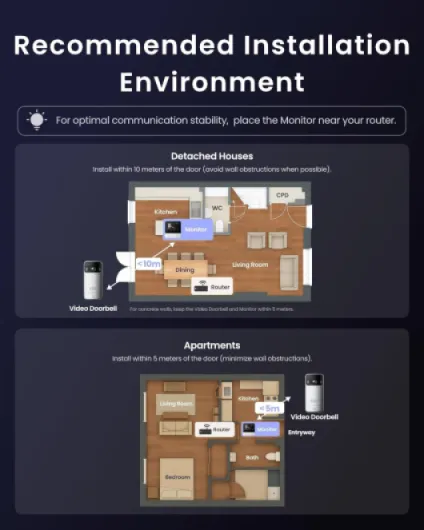
I installed it on a standard front door of a small house, about 8–9 meters from the router, with one wall in between. I hooked up the solar panel on the same wall, slightly above the bell, south‑facing. I also linked it to Alexa to test smart home stuff. I used only the built‑in storage, no cloud subscription. That’s the context of this review.
So if you’re wondering whether this specific EZVIZ kit is worth your money, I’ll go through what actually works day to day, what feels half‑baked, and where I think they cut corners. It’s a pretty solid package overall, but you need to know its limits before you commit to drilling holes in your wall.
Is it good value for money compared to other doorbells?
In terms of value, the EP3X Pro kit sits in that mid‑range slot: not as expensive as the big names with mandatory subscriptions, but not budget either. For the price, you’re getting quite a lot: dual cameras, solar panel, local 32 GB storage, indoor chime, colour night vision, and AI detection. If you add up those features on some competing brands, you often end up paying more, especially once you factor in monthly cloud fees.
The big advantage here is no subscription required. If you’re like me and don’t want another monthly bill just to see who rang your bell, this is a strong point. The built‑in eMMC means you don’t have to buy a microSD card either. Over a couple of years, that saves a decent chunk of money compared to brands that almost force you into their cloud service. You still have the option to pay for extra cloud features if you want, but it’s not mandatory to get basic recording and playback.
On the downside, you do feel some compromises: the app is okay but not great, the AI detection is decent but not perfect, and the overall polish is a step below something like Ring or Nest. If you’re willing to pay more for smoother software and tighter integration, those systems are still ahead. Also, if your Wi‑Fi is weak at your front door, you might need to invest in a mesh or repeater, which adds to the total cost.
So, value wise, I’d say it’s pretty solid for someone who wants a one‑off purchase with no ongoing fees. If you’re on a tight budget, there are cheaper single‑camera models without solar that will do the basics. If you want the most polished experience and don’t mind subscriptions, you might lean towards the big brands. This EZVIZ sits in the middle: fair price for what it offers, with a few compromises you should be aware of.
Design and build: practical but nothing fancy
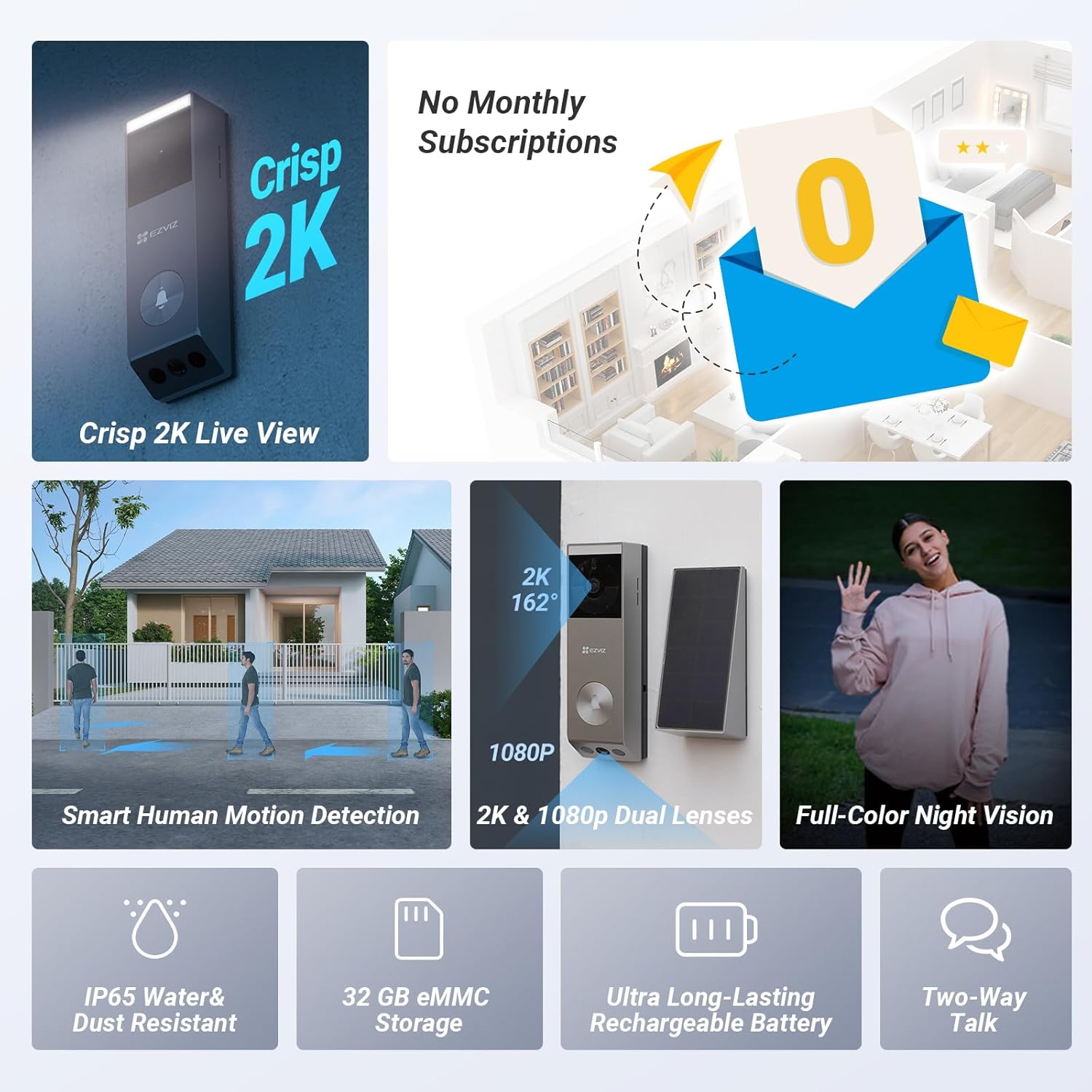
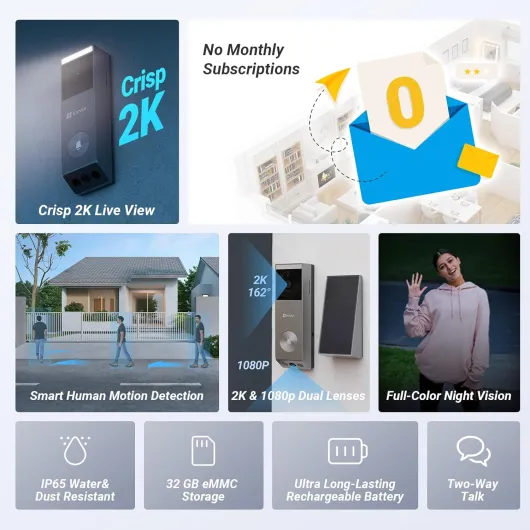
The design is pretty straightforward: a tall, narrow rectangle about 16.6 cm high, with the two lenses stacked vertically and a button at the bottom. It’s thicker than a basic wired doorbell, but not ridiculous. Once it’s on the wall, it doesn’t look cheap, but it also doesn’t look premium. It’s very much a functional gadget, black plastic everywhere, and that’s it. If you’re expecting something that blends in like a classic doorbell, this is a bit more obvious.
The IP65 rating is reassuring. Mine has already seen some rain and wind; no condensation or weird behavior so far. The front plastic does pick up fingerprints if you touch it a lot during setup, and dust shows a bit, but for an outdoor device I don’t really care. The button has a clear click and lights up, so visitors know where to press, even at night. I’ve had no missed presses so far, which was a problem with another cheaper doorbell I tried before.
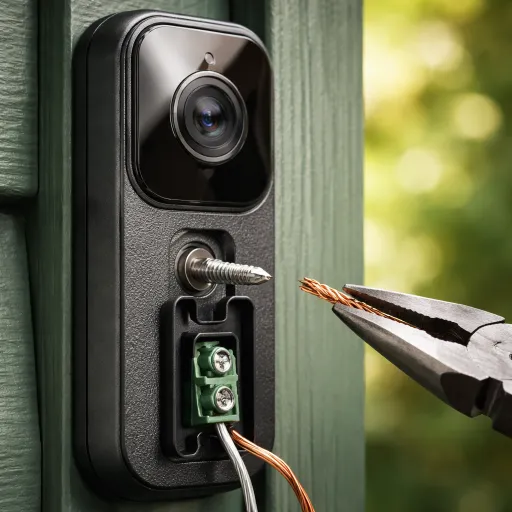
The solar panel is small and lightweight, with a simple mounting bracket. It doesn’t scream quality, but it holds on the wall fine and doesn’t rattle. The cable from the panel to the doorbell is the part you need to think about: you have to route it in a way that doesn’t look messy and isn’t easy to yank. I ended up drilling a small extra hole to pass the cable through a corner, which is not ideal if you’re renting. It would have been nicer to have a more discreet cable or angled connectors.
Overall, the design is functional: it’s not ugly, it’s not stylish, it just looks like a modern doorbell camera. The dual‑lens layout is obvious, which I actually like because it’s a visual warning for delivery people and random visitors that they’re being recorded. If you’re obsessed with minimal aesthetics, you’ll find it a bit bulky, but for a regular home entrance it blends in enough after a few days.
Battery and solar: does it really run itself?
The doorbell comes with a 5200 mAh battery, which is not massive for a camera, but the whole point here is the included solar panel. In my setup (moderately sunny area, panel facing roughly south, no big shade), the battery percentage basically stayed between 85% and 100% the whole time. I didn’t have to recharge it once during the test period. On days with more visitors and more motion events, it dipped a bit, but the next sunny day brought it back up.
If you live somewhere cloudy or with a shaded entrance, it’s another story. I purposely tilted the panel badly for a few days and let some dirt collect on it. In that case, the battery slowly went down over a week. It was still usable, but I can see how in winter or in a north‑facing doorway, you might have to top it up with a cable or consider hardwiring. So the solar panel is helpful, but it’s not magic. You still need a decent amount of light and a reasonable angle for it to actually maintain the charge.
The good point is that the power consumption seems reasonable. I didn’t notice any crazy drain from normal use: a few doorbell rings per day, some motion alerts, and occasional live views. If you spam live view all day or crank sensitivity to the max so it records every car driving by, you’ll obviously use more power. The H.265 encoding helps keep things efficient on the storage and bandwidth side as well.
What I like is that you don’t have to think about the battery much as long as the solar panel is set up properly. For a wireless doorbell, that’s exactly what you want: install it once, then mostly forget it. Just be honest with yourself about your sun exposure. If your entrance is in a dark corridor, the solar panel is a nice bonus but not a full solution, and in that case I’d seriously consider hardwiring it instead of relying only on the battery.
Build quality, weather, and anti‑theft features
From a durability point of view, the IP65 waterproof rating seems to hold up. I’ve had a couple of solid rain showers and some wind, and the unit hasn’t shown any weird condensation or water spots in the camera. The buttons and seals still look fine. The plastic housing doesn’t feel premium in the hand, but once it’s on the wall you don’t really notice. Weight is under a kilo for the whole kit, so it doesn’t stress the mounting point too much.
The anti‑theft system is a nice touch. The mount is designed so that you can’t just slide the doorbell off without using the release tool. If someone does try to rip it off by force, it triggers a loud alarm from the doorbell itself and you get a notification on your phone. I tested it by slightly forcing the unit off the bracket, and the alarm is sharp enough to be heard clearly indoors. It’s not going to stop a determined thief, but it will at least draw attention and make it less attractive to mess with.
EZVIZ also ties the device to your account, so if someone steals it, they can’t just reset it and use it on their own account. That doesn’t bring your hardware back, but it reduces the incentive to steal it. For an outdoor gadget sitting on the front of your house, that’s the minimum I want. I wouldn’t say it’s impossible to steal, but it’s definitely harder than some cheaper brands that just use a simple clip.
Long‑term, the only concern I’d have is the exposure of the solar panel cable. If you route it lazily, it’s an easy target for someone to cut it or accidentally snag it. With proper cable management and maybe a bit of trunking, it should be fine. The doorbell itself feels solid enough for regular outdoor use. It’s not a tank, but for a normal home environment, I don’t see any obvious weak point after handling and mounting it.
Video quality, detection, and app: where it shines and where it struggles
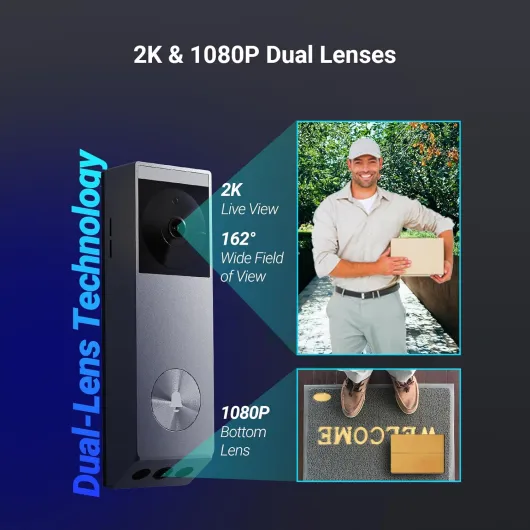
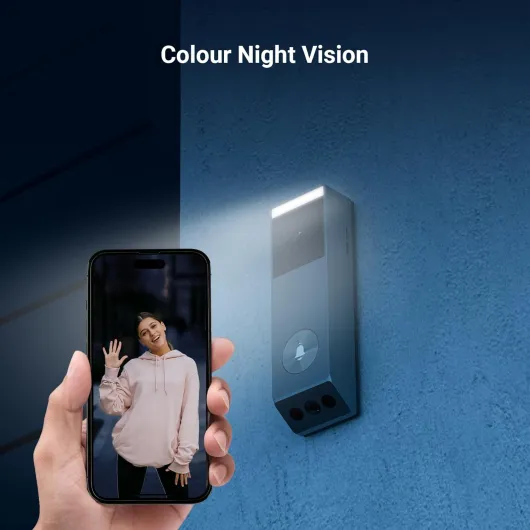
On the performance side, the 2K video is pretty solid. During the day, faces are sharp enough to recognise people easily, and the 162° field of view covers pretty much the whole porch area. The downward camera does what it’s supposed to do: you see packages clearly, even small ones, and you can tell if someone has moved them. The colour night vision works decently as long as there’s at least a bit of ambient light or the built‑in LEDs kick in. It’s not cinema quality, but you can see who’s there without guessing.
Motion detection is where it’s a bit hit‑and‑miss. The AI human and package detection cuts down on false alerts compared to basic motion detection, but you still get some random notifications when a big bug flies close or a shadow moves. I had to tweak the detection zone and sensitivity in the app a few times. Once dialed in, it was acceptable, but it’s not perfect. Packages are usually detected fine, though sometimes a flat envelope didn’t trigger a specific “package” tag, it just showed as motion.
The app is usable but a bit clunky. Live view can take a few seconds to load, especially if your Wi‑Fi signal is not strong at the door. Scrubbing through recorded clips is okay, but there’s a slight delay. The two‑way audio is clear enough to talk to delivery drivers, but there’s a small lag and sometimes a bit of echo. The voice changer is a funny extra: it works, but the changed voice sounds slightly robotic. If you’re really worried about privacy, it’s a nice touch, but most people will probably leave it off after testing it once or twice.
Overall, the performance is good for the price range, but you feel it’s not high‑end. It does the basics well: you see who’s at the door, you can talk to them, you get notifications, and you can review what happened. Just don’t expect flawless AI detection or instant live view every single time, especially if your network is borderline. For a mid‑tier wireless doorbell, I’d call it reliable enough, with some occasional hiccups.
What you actually get in the box and how it works
In the box you get the EP3X Pro doorbell, the indoor chime, the solar panel, some cables, screws, and the usual paperwork. The doorbell itself is battery‑powered with a claimed 5200 mAh battery, but the idea is that you leave it connected to the little solar panel so you barely have to touch it. There’s also the option to hardwire it if your place already has doorbell wiring, but I tested it purely as wireless with solar.
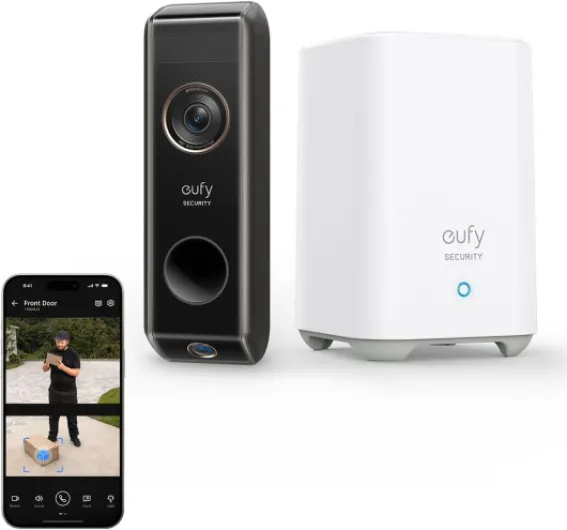
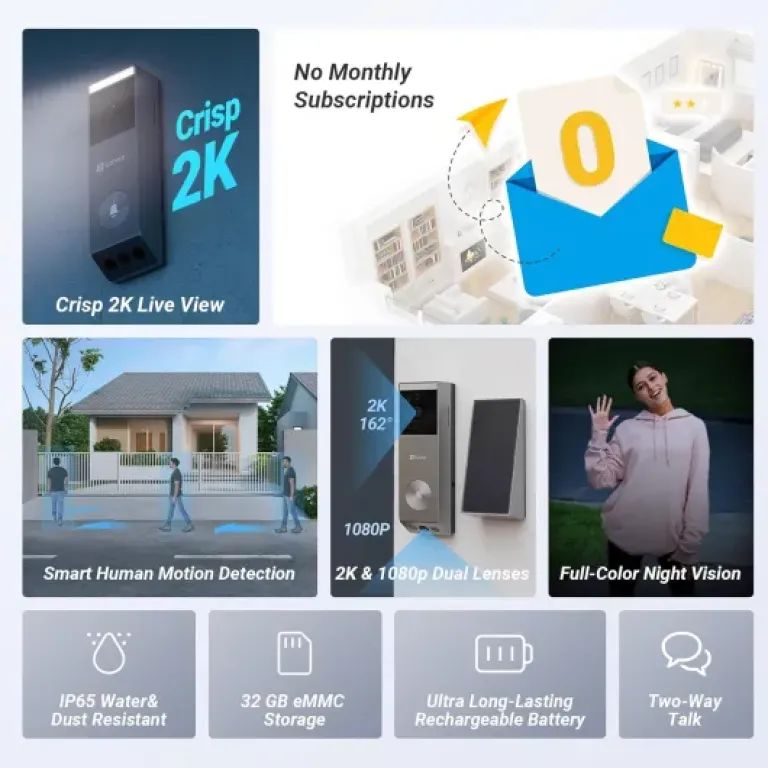
The big selling point is the dual camera setup: one 2K camera facing forward at visitors, and a second one pointing down toward the ground. In practice, this means you don’t just get a face shot, you also see packages right at your doorstep. For me, this was useful: I could clearly see when a courier left a small box or envelope directly at the threshold, which I usually miss with a single‑lens doorbell that points too high.
Another key feature is the built‑in 32 GB eMMC storage. No microSD card, no extra purchase, and most importantly, no forced subscription. Clips are stored directly in the doorbell. From the app, you scrub through a timeline of motion events and doorbell presses. It’s not super fancy, but it gets the job done. The flip side is that if the unit dies or gets stolen, your recordings go with it, since they’re not mirrored somewhere else unless you pay for cloud.
The whole thing runs on 2.4 GHz Wi‑Fi only. No 5 GHz, which is pretty normal for this type of device but still worth mentioning. If your router is far away or you have thick walls, expect some lag or dropped live views. Overall, the EP3X Pro is a fairly complete kit if you want a wire‑free setup with local storage and a chime included, but it does lean heavily on you having decent Wi‑Fi coverage at the door.
Pros
- Dual cameras give a clear view of visitors and packages on the ground
- No subscription needed thanks to built‑in 32 GB local storage
- Solar panel keeps the 5200 mAh battery topped up in normal sunlight
- IP65 weatherproofing and anti‑theft alarm/account binding for better security
Cons
- App is a bit clunky with occasional lag on live view
- AI detection and motion alerts still generate some false positives
- Solar panel is less effective in shaded or very cloudy locations, may require hardwiring or manual charging
Conclusion
Editor's rating
Overall, the EZVIZ EP3X Pro wireless video doorbell is a solid mid‑range option if you care about local storage, no subscription, and being able to see both visitors and packages clearly. The dual‑camera setup actually makes sense in real life, the 2K image is clear enough, and the solar panel does its job as long as you have decent sun exposure. The built‑in 32 GB eMMC is a big plus for people who don’t want to mess with microSD cards or pay for cloud just to have basic recordings.
It’s not perfect though. The app feels a bit clunky at times, live view can lag if your Wi‑Fi isn’t strong, and the AI detection still lets a few useless alerts slip through. The design is functional rather than pretty, and you need to think about cable routing for the solar panel if you want a clean install. Compared to big brands like Ring or Nest, you lose some polish but you also avoid being locked into subscriptions.
If you want a doorbell that works well without ongoing costs, covers your doorstep from head to toe, and you’re okay with a slightly rougher app experience, this is a good fit. If you’re super picky about software smoothness, or your entrance is very dark and shaded (bad for solar and Wi‑Fi), I’d look at either a fully wired solution or a higher‑end model. For most regular households that just want decent security and package visibility without extra fees, this EZVIZ kit is a reasonable and practical choice.