
Summary
Editor's rating
Value for money: cheap multi-apartment option with some compromises
Looks and ergonomics: cheap plastic but usable layout
Build quality and durability: feels cheap but holds up (so far)
Video, audio and everyday use: decent, with some small annoyances
What you actually get in the box and what it can (and can’t) do
How well it actually solves the problem: controlling access for several flats
Pros
- Affordable way to equip 4 apartments with video + intercom + door unlock
- RFID support with up to 500 users, handy for tenants and regular visitors
- Simple wired system with no Wi‑Fi or subscriptions, stable once installed
Cons
- Cheap plastic build and dated screen/image quality
- No smartphone app, no recording, no motion detection or advanced features
- Requires running 4‑core cables and some DIY/electrician work, not plug‑and‑play

Specifications
View full product page →| Brand | ANJIELO SMART |
A budget video intercom that does the job, with a few quirks
I installed this ANJIELO SMART 4.3'' wired video door phone in a small rental building with four apartments, so it’s the 4 monitors + 1 outdoor unit version. I’m not an electrician, but I’m used to doing basic DIY stuff at home: drilling, wiring light fixtures, that kind of thing. I wanted something cheap that let each flat see who’s at the door, talk, and open the lock with either the monitor or an RFID key. After a few weeks of use, I’ve got a pretty clear idea of what it does well and where it’s just “meh”.
First thing: this is a no-frills, wired system. No Wi‑Fi, no app, no cloud, nothing smart in the modern sense. If you’re looking for a Ring-style doorbell you can answer from your phone, this is not it at all. Here, everything goes through cables between the outdoor camera and each indoor monitor. Old-school, but also more stable once it’s in place. No internet, no subscription, and fewer things to mess up.
In daily use, it basically does what it promises: someone rings, the screen turns on, you see them, you talk, you press the unlock button and the electric strike opens. The picture isn’t pretty, the sound is a bit cheap, but the core function works. For a budget multi-apartment setup, that’s already not bad. Most of the complaints I have are more about comfort, finish, and installation than about it failing to work.
If you’re picky about design, image quality, or want a plug‑and‑play device, you’ll probably be disappointed. But if you just need a simple wired video intercom for several flats, and you’re okay fiddling with cables and settings, it’s a fairly honest product for the price. Just don’t expect miracles and be ready to spend some time on the install.
Value for money: cheap multi-apartment option with some compromises
On the money side, this ANJIELO SMART kit sits clearly in the budget range for a 4‑monitor + 1 door station video intercom. If you look at big brands that offer similar multi-apartment wired systems, you usually pay quite a bit more, especially once you add extra monitors and RFID options. Here, you get the full setup for a price that’s closer to a single mid-range smart doorbell. So if your goal is to equip several flats without emptying your wallet, it’s hard to ignore.
That said, you do feel where they saved costs: plastic build, average image quality, basic sound, no app, no recording, and a manual that could be clearer. You also have to buy your own cables, and depending on your building layout, that can add a noticeable extra cost, especially if you go for good quality 4‑core cable over 20–30 meters per line. If you need to hire an electrician to do the wiring, the installation cost might easily exceed the price of the kit itself.
Compared to a modern Wi‑Fi doorbell per flat, this system is cheaper per apartment, but you lose the smartphone convenience. On the flip side, you also avoid subscriptions and compatibility issues. Once it’s wired and working, it just keeps doing its job without you thinking about it. For a rental property or shared entrance where you don’t want tenants fiddling with apps and accounts, that’s actually a plus and improves the overall value.
So in my opinion, the value for money is pretty solid if you know what you’re buying: a simple, wired, no-cloud multi-apartment intercom that covers the basics. If you want polish, nicer materials, and smart features, you’ll need to spend more elsewhere. But if your budget is tight and your expectations are realistic, this kit gives you a fair amount for what you pay.
Looks and ergonomics: cheap plastic but usable layout
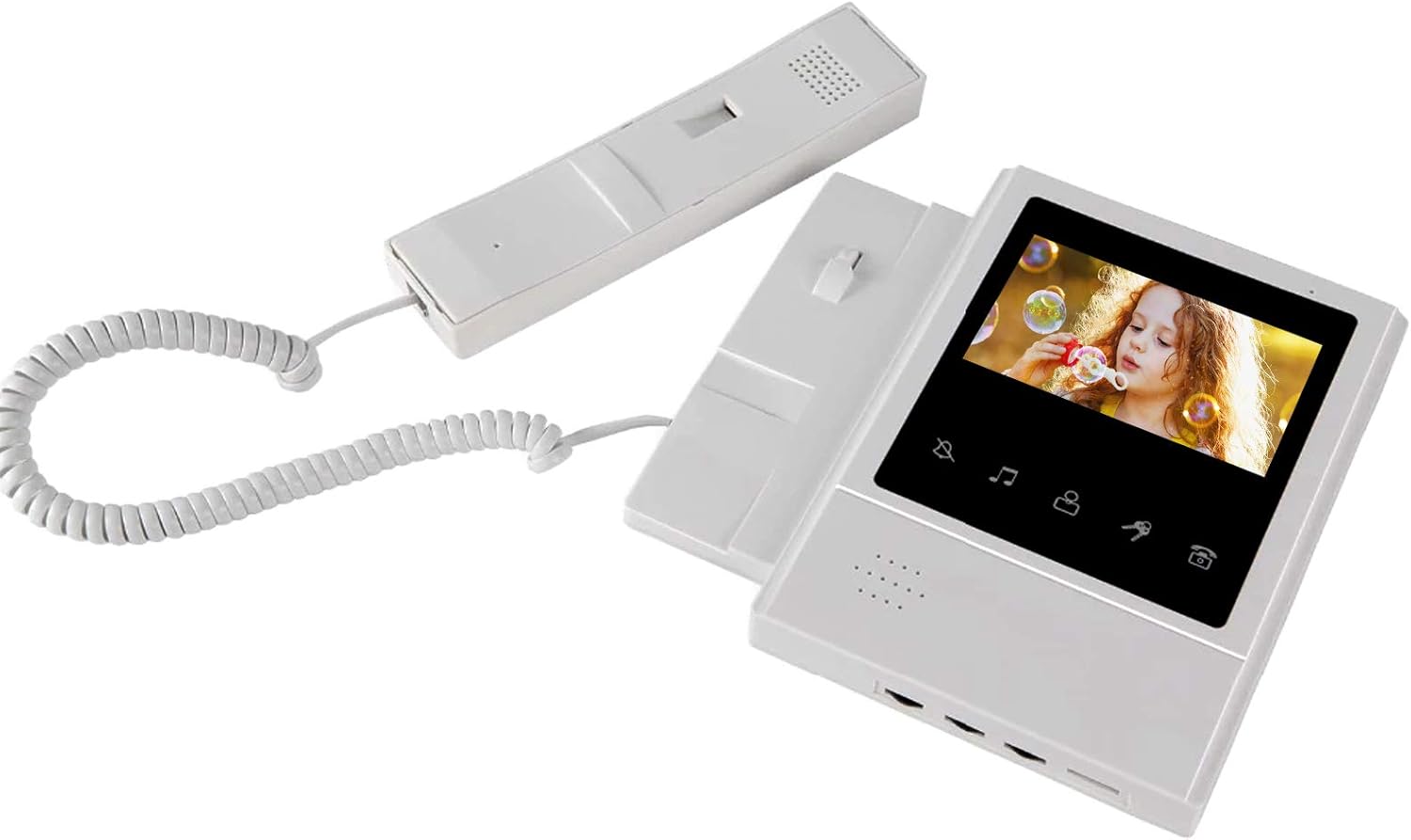
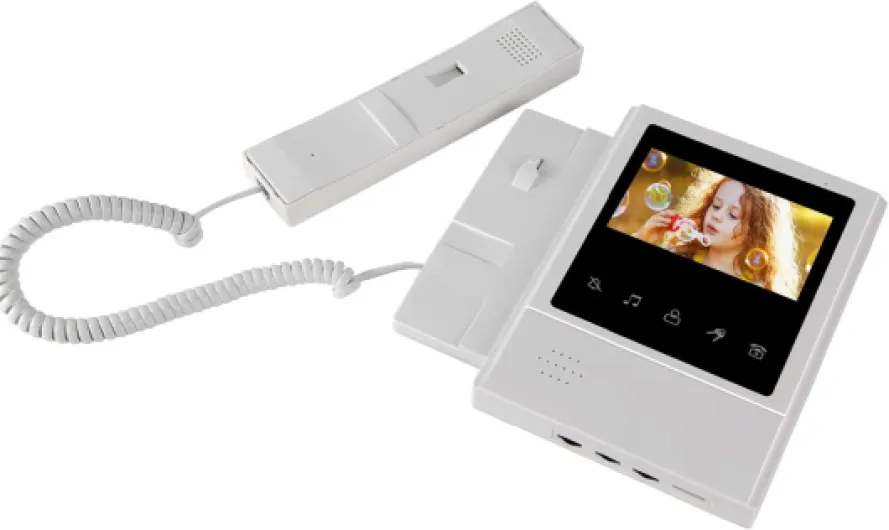
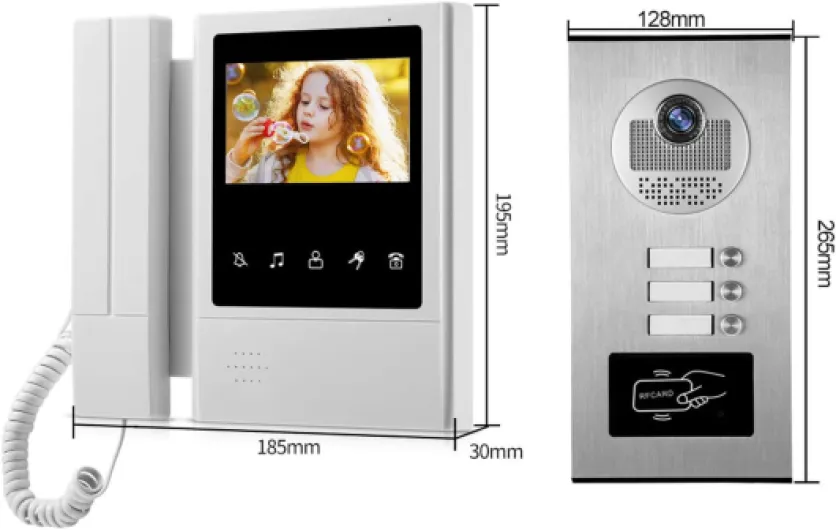
Design-wise, you can tell straight away this is budget gear. The indoor monitors are light, mostly ABS plastic, and they don’t feel premium in the hand. The bezels around the 4.3'' screen are quite thick, and the screen itself looks small by today’s standards. This is not the kind of device you show off on your wall; it’s more the kind you stop noticing after a week because it just sits there doing its thing. For a rental building, I don’t really care, but in a nicely renovated flat it might look a bit cheap.
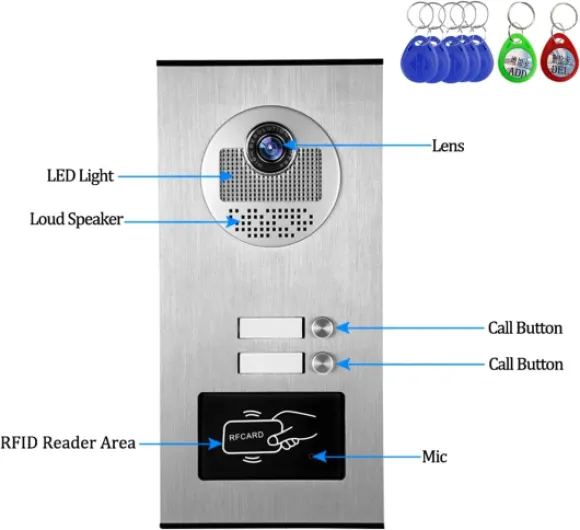
The outdoor unit is a bit better. The front has an aluminum-brushed look, with the camera at the top, the call button, the speaker, and the RFID reader area. It still feels like budget hardware, but it looks decent enough next to a front door. The buttons are clearly marked, and visitors generally figure out where to press without asking questions. The angle of the camera, around 85–90°, is okay: you see the person in front quite well, but it’s not a wide-angle like on some modern video doorbells, so you don’t see much of the sides.
On the monitors, the main buttons (answer, unlock, menu, etc.) are on the side or under the screen depending on orientation, and they’re physical buttons, not touch. I actually prefer that: even with wet or dirty fingers, it still works. The downside is that they feel a bit spongy, and the click feedback isn’t very satisfying. But once you memorize which button does what, you don’t really think about it anymore.
In short, design is clearly not the focus here. It’s functional, a bit bulky, and looks like generic Chinese intercom gear. For a buddy who just wants something that works and doesn’t care about style, it’s fine. If you’re into minimalistic interiors and carefully chosen wall devices, you’ll probably find it ugly and dated.
Build quality and durability: feels cheap but holds up (so far)
Durability is always hard to judge quickly, but after handling and installing it, I can say this: it doesn’t feel fragile, but it also doesn’t feel like heavy-duty pro hardware. The indoor monitors are very light, all ABS plastic, and if you twist them a bit in your hands you can feel some flex. Once they’re mounted on the wall, though, they don’t move anymore and I’m not really worried about them breaking unless someone actually hits them hard. For a normal home or rental, I think they’ll be fine as long as people don’t abuse them.
The outdoor unit gets more abuse: sun, rain, temperature changes, people hitting the button all day. It’s rated for -20°C to +60°C, which is more than enough where I live. We had a couple of cold nights and some rain, and so far there’s no water inside, no fogging on the camera, and it still works like on day one. The front panel with the aluminum effect gives a bit more confidence than pure plastic, even if it’s clearly not super thick metal. I did add a small rain cover above it, just in case, because I don’t fully trust the sealing over several years.
On the electronic side, the fact that it’s a simple wired 4‑wire analog system is actually a plus for durability. There’s no Wi‑Fi module to die, no app updates to break things, and no complicated firmware. As long as the power supply is stable and the cables are correctly sized and protected, there’s not much that can go wrong besides the odd component failure. The manufacturer claims up to 100 meters of cable run; I used around 25–30 meters to the furthest flat with decent quality cable and didn’t see any signal issues.
So my feeling is: it’s not built like a tank, but for residential use it should last a few years without drama. If you want something for a busy office entrance or a big building with constant traffic, I’d probably spend more on a more robust brand. But for a small multi-apartment house or a shared entrance with moderate use, the durability seems acceptable given the low price.
Video, audio and everyday use: decent, with some small annoyances
On the performance side, the core thing is the 700TVL analog camera, and you feel it. The image is good enough to recognize faces and see who’s at the door, but don’t expect HD quality. It’s a bit grainy, especially in lower light, but still readable. During the day, you can clearly see facial features, clothes, packages, etc. At night, the 4 IR LEDs kick in and switch the picture to black and white. Within about 1–2 meters from the door, you can still see the person pretty well. Beyond that, it gets darker and fuzzier, so if your door is set back or people stand further away, it’s not ideal.
Audio is okay but not great. There’s a slight background hiss when you talk through the intercom, and if there’s a lot of street noise outside, you have to speak up a bit. Inside, the speaker on the monitor is loud enough once you set the volume higher, but the sound is a bit tinny. For actual use – “Who is it?”, “I’m coming”, “Leave it at the door” – it works. It’s just not crystal-clear. There’s also a short delay when you pick up and start talking, maybe half a second, which is normal for this type of system.
Door unlocking works reliably. When I press the unlock button on the monitor, the strike opens right away. The RFID tags also work as expected: you tap, it beeps, and the lock opens. I had maybe one or two missed reads when someone didn’t place the tag properly, but once people get the hang of it, it’s fine. The room-to-room intercom is a nice bonus: you can call another flat from your monitor, and the sound quality is the same as with the door – not pretty, but usable.
In daily life, after a couple of weeks, everyone in the building got used to it. Tenants see who’s ringing, open the door, and that’s it. Nobody complained about not hearing the bell anymore, and the monitors switch off automatically after about 60 seconds if nobody answers, which avoids having screens permanently lit. So in terms of pure performance, I’d say it’s pretty solid for the price, even if you clearly feel it’s a budget system and not pro-grade equipment.
What you actually get in the box and what it can (and can’t) do
In the box, I got: 4 indoor monitors (4.3'' TFT screens), 1 outdoor camera/door station with RFID reader, a handful of mounting accessories, 2 management RFID keys, 5 user RFID keys, and a few short test cables (about 5 meters). There’s no long cable included for the real installation, so for a building you have to buy your own 4‑core cable, which adds to the total cost. The manual is basic and the English is a bit rough, but you can still figure out what goes where if you’re patient.
Function-wise, it covers the basics pretty well: video of the person at the door, two-way audio, door unlock from the monitors, RFID tag unlock from outside, and even room-to-room intercom between indoor units. The manufacturer says it supports up to 500 RFID users, which is way more than I need, but it’s good to know if you plan to hand out tags to tenants, cleaners, etc. There are also around 25 different ringtones you can pick, and you can change the volume independently, which is actually handy in a building where some people hate loud bells.
What it doesn’t do: there’s no Wi‑Fi, no smartphone support, no recording, no motion detection, and no photo capture when someone rings. It’s really just live video and audio. Also, there’s no PoE or fancy power options; it uses a simple 15V DC adapter that you plug into the wall. For some people, that’s fine, for others it will feel outdated compared to what you get with modern smart doorbells.
Overall, the presentation matches the price point: functional but basic. You get enough features to manage a small building without going into pro-grade stuff, but nothing extra. If you know what you’re buying – a simple wired system – it’s okay. If you expect a high-tech security solution with apps and cloud storage, you’ll feel like you bought something from another decade.
How well it actually solves the problem: controlling access for several flats
For me, the main goal was simple: stop people from blindly opening the main door and give each flat a quick way to see and talk to whoever’s outside. On that front, this system does the job. Tenants now check the screen before buzzing people in, which already reduces random visitors and salespeople. Delivery drivers ring, say who they are, and either someone opens or asks them to leave the parcel in a safe spot. It’s not high-tech security, but it’s clearly better than a dumb audio-only buzzer.
The RFID feature is also genuinely useful. I gave tags to the tenants and kept the management keys. People like being able to open the main door with a small tag instead of fiddling with keys, especially when they’re carrying groceries or parcels. Programming new tags is a bit clunky at first – you have to follow the manual and pay attention to the beeps – but once you’ve done it a couple of times, it’s manageable. Being able to support up to 500 RFID users is more than enough for a small building.
Another point where it’s effective is the room-to-room intercom. It’s not a feature I thought I’d use much, but it turned out to be handy: one tenant called another to check if they were home for a delivery, and I used it once to talk to a flat without going upstairs. The audio quality is the same as with the door – a bit rough but clear enough – and it saves a few trips up and down the stairs.
Of course, it doesn’t cover everything. There’s no recording or motion detection, so if someone rings when nobody’s home, you have no trace of it. And if you want to open the door while you’re out, forget it – there’s no phone connection. But if the question is “does it make access control for 4 apartments easier and more secure than before?”, then yes, it gets the job done quite well, as long as you accept its limits.
Pros
- Affordable way to equip 4 apartments with video + intercom + door unlock
- RFID support with up to 500 users, handy for tenants and regular visitors
- Simple wired system with no Wi‑Fi or subscriptions, stable once installed
Cons
- Cheap plastic build and dated screen/image quality
- No smartphone app, no recording, no motion detection or advanced features
- Requires running 4‑core cables and some DIY/electrician work, not plug‑and‑play
Conclusion
Editor's rating
After using the ANJIELO SMART 4.3'' wired video door phone in a small 4-apartment building, my conclusion is pretty straightforward: it’s not fancy, but it works. The image is old-school analog but clear enough, the sound is a bit rough but understandable, and the RFID plus door unlock functions do exactly what they’re supposed to. Once installed, everyone in the building quickly got used to it, and daily use is simple: see, talk, open.
Where it falls short is in finish and modern features. The plastic build feels cheap, the screens look dated, and there’s no smartphone integration, no recording, no motion alerts. Installation also isn’t plug‑and‑play: you need to run 4‑core cables, size them correctly for distance, and deal with a manual that’s not very polished. If you’re not comfortable with basic wiring, you’ll probably need help, which adds to the bill.
So who is it for? It suits landlords, small buildings, or shared entrances where you want a low-cost, wired multi-apartment intercom that just does the basics and doesn’t depend on Wi‑Fi or apps. If you’re looking for a sleek device for your stylish home or you want to manage visitors from your phone, you should skip this and look at more modern (and pricier) options. But for a practical, budget solution where function matters more than looks, it’s a reasonable choice.