
Summary
Editor's rating
Value for money: where this kit actually makes sense
Design: functional but clearly budget
Battery life and behavior in real use
Build quality and long‑term confidence
Performance: works fine, but the numbers are a bit optimistic
What you actually get in the box
Pros
- Two batteries plus a dual charging station for about the price of one official Ring battery
- Fully recognized and functional with Ring Doorbell 3 and Stick Up Cam in my tests
- Convenient dual charger with separate LEDs, keeps spare batteries always ready
Cons
- Real‑world battery life feels lower than the advertised 7200mAh and roughly similar to OEM
- Build quality and materials are clearly more budget, with an outdated micro‑USB port on the charger

Specifications
View full product page →| Brand | JYJZPB |
Extra batteries for Ring without emptying your wallet
I picked up this JYJZPB 7200mAh quick release battery kit because I was tired of my Ring Doorbell 3 going dead at the worst possible moment. I already have the official Ring batteries, but they’re not exactly cheap, and I wanted a backup set plus a dedicated charger. This bundle gives you two batteries and a dual charging base for less than the price of one original battery, so on paper it looked like a pretty good deal.
I’ve been using the kit for a few weeks with a Ring Doorbell 3 and a Stick Up Cam (3rd gen). I rotated the batteries a few times to see how they behave: full discharge, recharge, swap, repeat. I wasn’t trying to baby them; I used them exactly the same way I use the official Ring ones. Motion alerts on, a fair amount of live view, and a busy street, so the cameras don’t exactly rest.
Overall, the first impression is: it works and it’s convenient, but it’s not perfect. The charger is handy, the batteries are recognized by Ring, and they do power the devices without drama. On the other hand, the capacity they claim (7200mAh) feels a bit optimistic in real life, and the finish doesn’t give the same confidence as the original Ring batteries. Nothing shocking, but it’s clear this is a budget option.
If you’re expecting something identical to the official Ring batteries in every way, you might be a bit disappointed. If you just need more uptime and don’t want to spend too much, this kit starts to make sense. The rest of the review goes through the design, performance, battery life, durability and whether the price really justifies going third-party.
Value for money: where this kit actually makes sense
This is where the JYJZPB kit is most interesting. For roughly the price of one official Ring battery, you get two batteries plus a dual charger. If you have several Ring devices or if your camera is in a spot that’s annoying to reach, having spares always ready is a real comfort. Instead of taking the whole doorbell down to charge or waiting half a day for the only battery to refill, you just pop in a charged one and you’re done in 10 seconds.
Of course, there are trade‑offs. You don’t get the same perceived quality as the original accessories, and the real capacity seems lower than the advertised 7200mAh. That said, in daily use, the batteries do their job: they power the cameras, they charge, and they last a reasonable amount of time. For the price, I’d say it’s good value if you accept that this is a more basic, third‑party solution. If one of the batteries fails after two years, I still won’t feel cheated given how much I paid compared to buying only Ring branded units.
Another thing to consider is how many Ring devices you have. If you only have one doorbell and it doesn’t trigger that often, you could probably just buy one extra official battery and be done. But if you’ve got a doorbell plus one or two Stick Up Cams or a Spotlight Cam, the cost of multiple original batteries adds up very quickly. In that case, this kind of kit starts to make real financial sense: you keep your original as a reference and add these as backups.
So, in terms of price‑to‑usefulness ratio, I’m pretty satisfied. It’s not perfect, the specs are a bit dressed up, and the finish is average, but for someone who just wants more uptime without burning their budget, it’s a pretty solid deal. If you’re extremely picky about having only official accessories or you hate micro‑USB with a passion, you’ll probably grumble. For everyone else, it’s a practical and affordable way to keep their Ring stuff running.
Design: functional but clearly budget
On the design side, everything is pretty basic. The batteries copy the general shape of the original Ring ones, with the same quick‑release style and contacts in the right place. They slide into the Doorbell 3 and Stick Up Cam without forcing, and they click in with a decent feel, though the latch is a bit looser than the official ones. It doesn’t feel like they’re going to fall out, but you can tell the tolerances are not as tight.
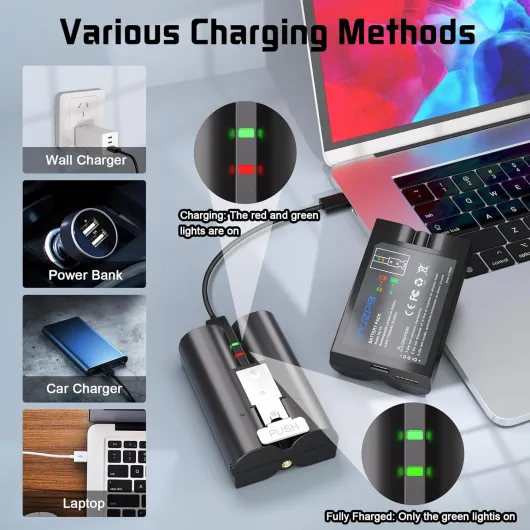
The charger is a small black plastic block with two slots on top. The plastic feels a bit light and a bit hollow, but at least it doesn’t creak when you squeeze it. The LED indicators are clear: red while charging, green when done. There’s nothing else on it apart from the micro‑USB port at the back. No rubber feet underneath, which is a small annoyance; on a smooth desk it can slide a bit when you insert or remove a battery. I ended up putting it on a mousepad so it would stay in place.
Compared to the official Ring charger (when you use the cable directly in the battery), this base is more practical if you have several batteries. You just drop them in and forget about them. On the downside, the use of micro‑USB instead of USB‑C feels a bit outdated. It works, but it means another old cable to keep around. If you’ve moved everything else in your house to USB‑C, this is a small step backwards.
A small detail: the printing on the batteries (logo, specs) looks a bit cheap, and I wouldn’t be surprised if it fades over time. It doesn’t affect functionality, but it contributes to that generic accessory feeling. In short, design is functional and coherent, but you never forget you’re dealing with a third‑party product and not something from Ring itself.
Battery life and behavior in real use
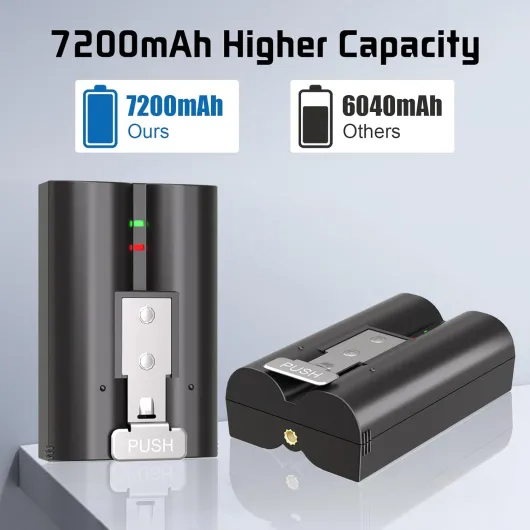
Battery life is really the key point for this kit, since they advertise 7200mAh quite prominently. In real life, it’s more “good enough” than impressive. As I said earlier, on my Doorbell 3 with quite a bit of traffic, I got close to 3 weeks per charge. With Ring’s own battery, I’m usually between 3 and 4 weeks depending on the season and settings. So the third‑party pack doesn’t suddenly give you double the days, but it’s also not dramatically worse. It lands in the “similar but maybe slightly under” category.
What I watched closely was how the battery percentage drops in the Ring app. On the original battery, the drop feels pretty linear. On this JYJZPB battery, the first 50% seemed to last a bit longer, then the last 30% dropped faster. For example, I stayed around 70–80% for several days, then went from 30% to 10% much quicker. So the internal calibration is clearly not identical to the original. That’s not a big deal as long as you don’t wait until 5% to recharge, but it’s something to keep in mind if you’re used to the behavior of the official batteries.
One thing I was worried about was self‑discharge when the battery is not in use. I left the second battery fully charged on a shelf for about two weeks before using it. When I plugged it into the Doorbell, the app still showed 100%, and it behaved normally. So at least in the short term, it doesn’t seem to lose much charge just sitting there. I can’t speak yet for several months of storage, but for normal rotation (one in the camera, one on the charger), it seems fine.
In short, if you’re expecting something that clearly outperforms the official battery, you’ll be disappointed. If your goal is simply to have more batteries available so you don’t have to rush to charge the only one you own, then the kit makes sense. The capacity claims are a bit optimistic, but in practice, it still gives you solid uptime and avoids your Ring going dark every time you forget to charge on time.
Build quality and long‑term confidence
On durability, I obviously don’t have a full year of hindsight yet, but there are a few things you can already feel. The plastic shell of the batteries feels slightly thinner and smoother than the official Ring ones. It’s not fragile to the point of cracking in your hands, but you don’t get the same solid impression when you swap them out. The quick release mechanism has held up fine so far, with several swaps per week, and I haven’t noticed any play in the contacts or weird wiggling once inserted.
The charger has been plugged in pretty much constantly on a shelf. It gets a bit warm when charging two nearly empty batteries, but never hot. The LEDs still work, no flickering, and the micro‑USB port hasn’t loosened despite me unplugging and plugging it a good number of times. The main weakness I see long‑term is the micro‑USB connector itself; they tend to wear out faster than USB‑C, but that’s more of a design choice than an immediate defect.
Given that the brand offers a 12‑month warranty, I’m moderately reassured. It’s not like buying from Ring directly, but at least you’re not completely on your own if one battery dies after two months. I haven’t had to contact their support yet, so I can’t comment on how reactive they are, only that the promise exists. Considering the price, I’m not expecting these batteries to last five years, but if they hold up for a couple of years with regular use, that’s already acceptable for me.
So far, after several charge/discharge cycles, I haven’t seen any obvious drop in capacity or weird behavior like sudden shutdowns at 20%. That can always change over time, but for now durability seems decent for the price. Just keep in mind you’re buying a budget set; if you want the maximum long‑term reliability and you don’t like taking risks, sticking to Ring’s own batteries is still the safer option.
Performance: works fine, but the numbers are a bit optimistic
In terms of performance, the good news is that the batteries work as expected: the Ring devices boot, connect, send notifications, and the app shows the battery level normally. I didn’t get any warning or error message from Ring saying “non‑official battery” or anything like that. The motion detection and live view worked exactly the same way as with the original batteries, so on a day‑to‑day basis, you don’t really notice you’re using a third‑party pack.
For battery life, I tried to compare it to my original Ring battery that’s about a year old. On the Doorbell 3, with a busy street (so a lot of motion alerts) and a few live views per day, my Ring battery usually lasts around 3–4 weeks. With this JYJZPB battery, I got a bit less than 3 weeks on the first full cycle, then roughly similar on the second. So, clearly not 7200mAh in practice, at least not in a way that you really feel. It’s not bad, but it doesn’t magically double your runtime either. I’d say it’s roughly in the same ballpark as the original, maybe a little lower.
On the Stick Up Cam (3rd gen), where usage is a bit lighter in my case (fewer motions), the battery held up for about a month and a half before dropping below 20%. That’s again in line with what I see with the original battery. So overall, performance is decent, just not better than OEM despite the big capacity claim on the box. If you’re buying these just for extra runtime, don’t expect miracles.
Charging speed is reasonable. From almost empty to full, it took around 5–6 hours per battery on my 5V/2A charger when both slots were used. The charger doesn’t seem to fast‑charge or anything like that, but for overnight charging it’s perfectly fine. The main advantage is really having two batteries charging at once so you always have one ready to swap. No overheating, no weird noises, and no flickering LEDs during my tests, which is reassuring for a budget charger.
What you actually get in the box
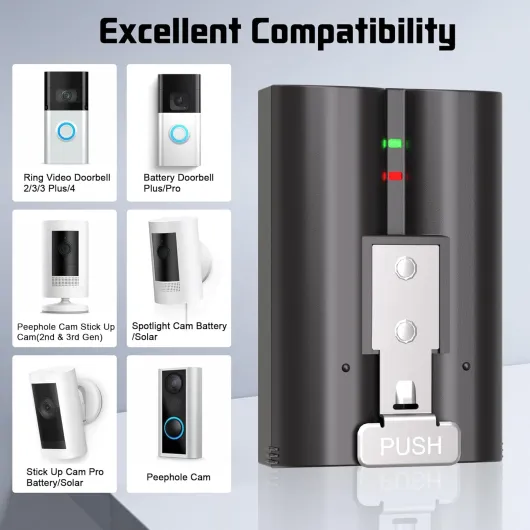
The package is simple: you get two V4 replacement batteries, one dual charging station, and one micro‑USB cable. No power adapter, so you have to reuse a phone charger or plug it into a USB port. The brand says it’s compatible with Ring Video Doorbell 2/3/3+/4, Stick Up Cam (2nd & 3rd gen), Spotlight Cam, and some Ring lighting products. I only tested it on a Doorbell 3 and a Stick Up Cam, but in both cases the cameras recognized the batteries right away and showed the usual battery icon in the Ring app.
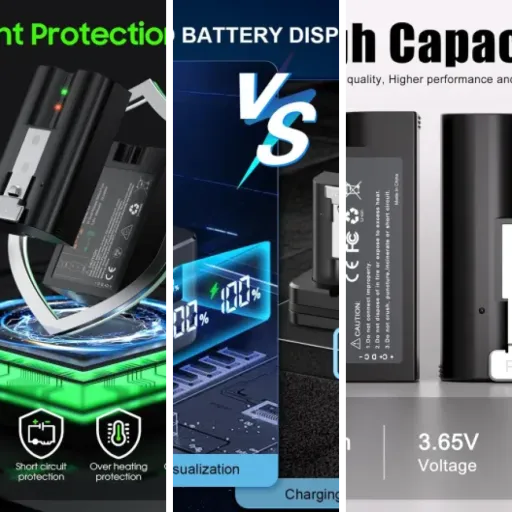
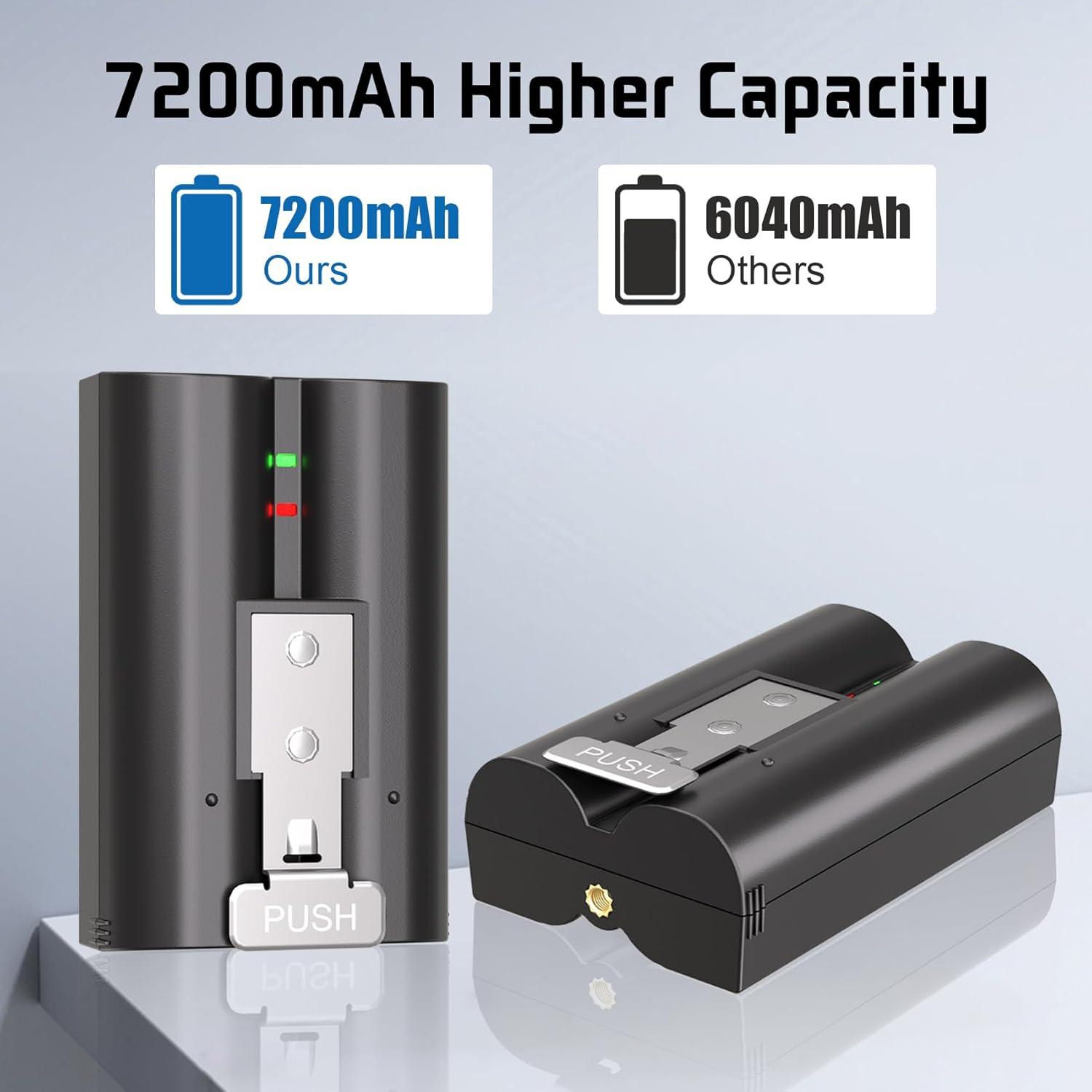
The claimed specs are 7200mAh / 26.28Wh at 3.65V, which is higher than the official Ring batteries on paper. There’s also the usual CE, FCC, RoHS certifications and the classic list of protections (over‑charge, over‑discharge, over‑current, etc.). Hard to verify all that as a normal user, but at least nothing overheated during my tests, and the charger never got more than warm to the touch, even when charging two empty batteries at the same time.
The charger has two slots and a single micro‑USB input. Each slot has its own status light, which is actually useful: one LED per battery so you can see if one is done while the other is still charging. According to the listing, it only supports being powered by 5V (standard USB). In practice, I tried it on a 5V/1A old phone brick and a 5V/2A newer one; both worked, but the 2A brick seemed to charge a bit faster, which is pretty logical.
In daily use, the kit behaves like a basic, no‑nonsense charging setup. You pop the batteries out of the Ring devices, click them into the base, plug in the micro‑USB, and that’s it. No app, no extra buttons, no advanced features. If you’re just looking for something that keeps two spare batteries topped up on a shelf, it does the job. Just don’t expect premium packaging or fancy design touches; it’s clearly built to hit a price point.
Pros
- Two batteries plus a dual charging station for about the price of one official Ring battery
- Fully recognized and functional with Ring Doorbell 3 and Stick Up Cam in my tests
- Convenient dual charger with separate LEDs, keeps spare batteries always ready
Cons
- Real‑world battery life feels lower than the advertised 7200mAh and roughly similar to OEM
- Build quality and materials are clearly more budget, with an outdated micro‑USB port on the charger
Conclusion
Editor's rating
After using this JYJZPB 7200mAh kit for a few weeks, my conclusion is simple: it gets the job done for a fair price, but it’s not flawless. The batteries work fine in Ring Doorbell 3 and Stick Up Cam, they’re recognized by the app, and the dual charger is genuinely handy if you juggle several devices. In day‑to‑day use, you don’t really notice that you’re using third‑party batteries, which is exactly what you want.
On the downside, the real battery life doesn’t match the marketing numbers. It’s roughly on par with the original Ring batteries, maybe slightly under, not some huge upgrade. The overall build quality is clearly more budget: plastics are lighter, micro‑USB instead of USB‑C, and the charger doesn’t feel premium. That said, nothing overheated, nothing glitched, and the kit stayed stable across several charge cycles, which is what matters most.
If you want the safest, most polished option and don’t mind paying more, stick with Ring’s own batteries. If your priority is saving money while keeping your cameras online as much as possible, this kit is a sensible compromise. It’s especially interesting if you have multiple Ring devices and you’re tired of rotating a single battery. Just go in with realistic expectations: decent performance, good value, but not miracle levels of capacity or finish.