
Summary
Editor's rating
Value: solid doorbell, but the real price includes the subscription and install
Design: clean look, but clearly a Ring device
Durability and reliability: built for outdoors, but watch the heat and wiring
Performance: good 2K video and motion, as long as your Wi‑Fi keeps up
What you actually get with this Ring doorbell
Effectiveness: does it actually make you feel more in control?
Pros
- Sharp 2K video with a tall 1:1 view that shows both faces and packages
- Radar-based 3D Motion Detection reduces false alerts once configured
- Hardwired power means no battery charging and more consistent performance
Cons
- Full functionality depends on a paid Ring subscription after the trial
- Hardwired installation can require a professional and adds to total cost
- Needs solid Wi‑Fi and upload speed to fully benefit from the 2K video

Specifications
View full product page →| Brand | Ring |
A wired doorbell that actually feels like an upgrade
I’ve been using the Ring Wired Video Doorbell Plus (the newest gen with the 2K video) for a few weeks, and I’ll be blunt: it does what a smart doorbell is supposed to do, without too many gimmicks. You get clear video, pretty reliable alerts, and the comfort of checking your front door from your phone or an Echo screen. But it’s not magic, and it’s not cheap once you add the subscription and maybe an installer.
Before this, I had an older 1080p Ring and a cheap no-name video doorbell from Amazon. The old Ring was fine but the picture was grainy, and the motion alerts were either too sensitive or too late. The no-name one… let’s just say it was more of a toy than a security product. So I was curious to see if this new 2K “Retinal” thing and the radar stuff actually changed anything in real life.
In daily use, the biggest change I noticed is how much more of my front area I can see and how quickly I get notified when someone walks up. The 1:1 aspect ratio (140° x 140°) is actually useful: I can see faces and also see if there’s a package on the floor. That part is genuinely practical, not just a spec sheet number. At night, the image is also easier to read than my old Ring, especially for faces.
But there are catches. You basically need the subscription to get the most out of it, the wiring part can be annoying if you’re not handy, and it really wants a decent internet connection. So if you’re thinking of buying this, it’s worth looking at your wiring, Wi‑Fi, and whether you’re okay with paying Ring every month. If that doesn’t scare you, it’s a pretty solid upgrade over older or budget video doorbells.
Value: solid doorbell, but the real price includes the subscription and install
On pure hardware, the Wired Video Doorbell Plus feels fair for what it offers: 2K video, radar motion, Wi‑Fi 6, and proper hardwired power. Compared to a lot of generic video doorbells, the image quality, motion detection, and app experience are clearly better. So if you only look at the device itself, I’d say the price is reasonable for a big-brand product that actually works well most of the time.
But the real cost is not just the doorbell. First, there’s the installation. Ring itself says that for the hardwired version, professional installation is recommended because of local electrical regulations and the DIN rail transformer. If you’re not comfortable opening your electrical panel or dealing with transformers, you’ll likely pay an electrician. That can easily add a chunk to the total cost. There’s also the variant with the Plug-in Adapter (sold separately), which is easier to install but adds another expense and requires you to accept a visible cable running inside.
Then there’s the Ring Subscription Plan. You get 30 days free, and after that, if you want recordings, person detection alerts, and 180 days of video history, you pay monthly or yearly. For one device, the fee is not crazy, but over several years it adds up. If you’re already in the Ring ecosystem with cameras and alarms, it makes more sense because you share the plan. If this is your only Ring device, you really have to decide if the ongoing cost is worth it to you.
Overall, I’d rate the value as good but not cheap. You’re paying for a well-known brand, a mature app, and features that actually work (2K, radar, motion zones, Alexa integration). If you want a one-off purchase with no subscription and no electrician, this is not the best choice. If you’re okay with the ecosystem and long-term costs, it’s a pretty solid investment for a front door that you can actually monitor properly.
Design: clean look, but clearly a Ring device
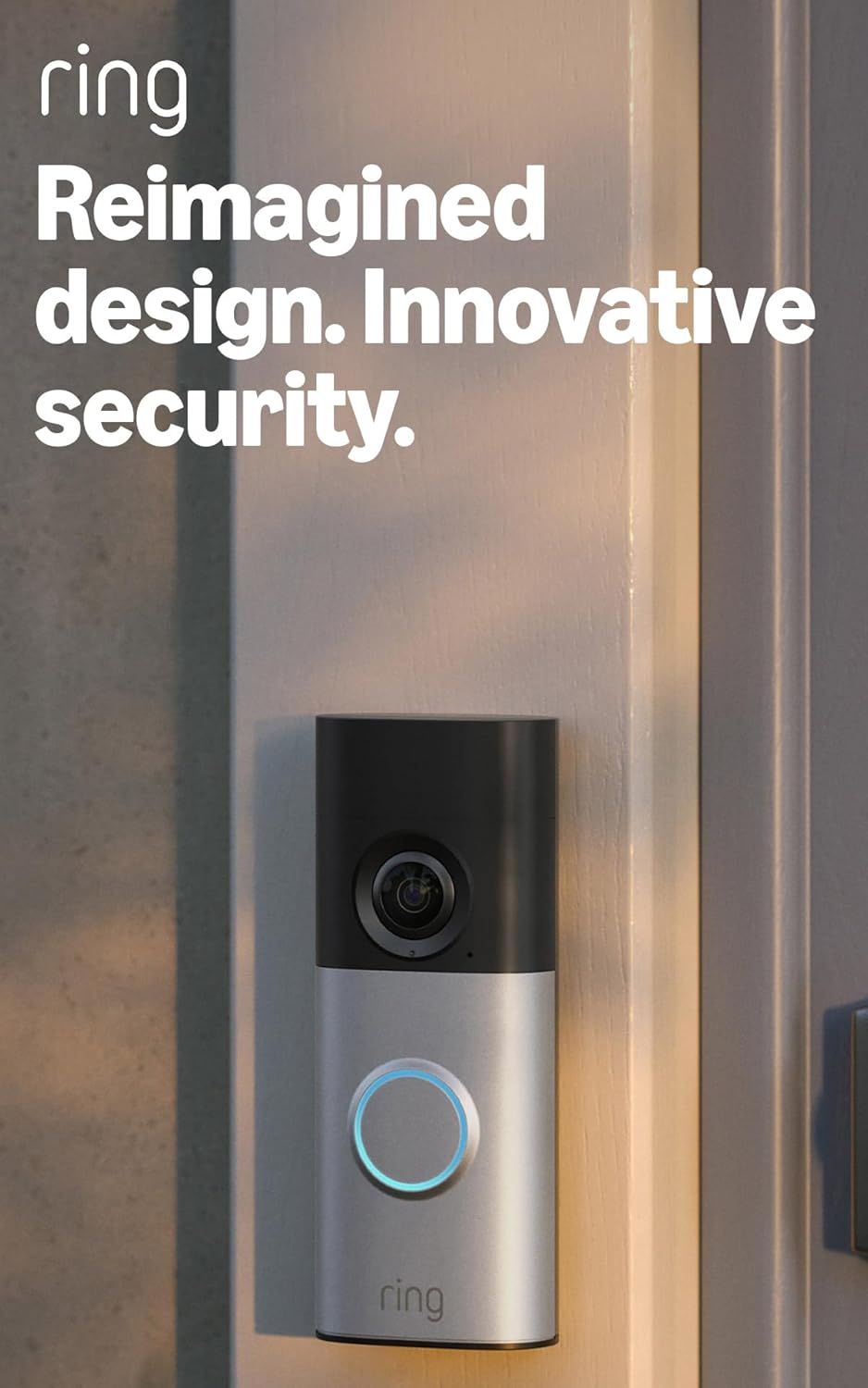
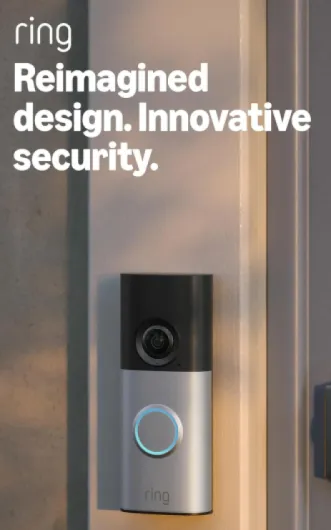
Design-wise, the Wired Video Doorbell Plus is exactly what you’d expect from Ring: a rectangular slab in Nickel Silver with the camera on top and the round button with an LED ring below. It measures about 13.26 cm high and 5.36 cm wide, so it’s not tiny, but it doesn’t look massive on the wall either. If you’ve seen previous Ring models, this one looks familiar. Personally, I think it looks fine: modern, not too flashy, and obviously a smart doorbell. If you want something that blends in completely, this is not it – people will know it’s a camera.
What I liked is that the 1:1 aspect ratio of the camera matches the tall, narrow body. It doesn’t feel like they just shoved a random sensor in there. The front is simple, with no useless decorations, and the big button is easy to spot and press, even for delivery drivers in a rush. At night, the LED ring makes it clear where to press. I had a couple of visitors comment that it’s obvious and easy to use, which sounds basic but matters more than fancy design tricks.
The mounting system with the universal mounting plate is practical. You screw the plate to the wall, then clip the doorbell on. You can take it off fairly easily if you need to reset or rewire it, but it still feels secure once locked in. It sits fairly flush against the wall, so it doesn’t stick out in an ugly way. If your door frame is narrow, measure first, but in most cases it should be fine. There’s no crazy thickness to it; it looks like a standard smart doorbell, not a brick.
On the downside, there’s basically no real colour choice here beyond that Nickel Silver look (at least in this version). If your house is very dark or very light, it might stand out more than you like. Also, Ring design is so common now that it almost screams “there’s probably a subscription and cloud behind this”. Not a technical issue, but if you’re trying to be low-key about surveillance, this is not the most discreet option. Overall, though, the design is practical, easy to live with, and feels thought through for everyday use, not for a design magazine.
Durability and reliability: built for outdoors, but watch the heat and wiring
The Ring Wired Video Doorbell Plus is rated for -20°C to 48.5°C and is weather resistant, which on paper covers most normal climates. Mine has handled rain and wind without any issue so far. The housing feels solid enough, nothing creaks, and the front doesn’t feel cheap. It’s not some armored tank, but for a doorbell that sits outside all year, it feels reasonably sturdy. The included DIN rail transformer also looks decent, not like the ultra-budget stuff you sometimes see.
Where I did notice some limits is in direct sunlight and heat. Ring even mentions that prolonged exposure to sun can increase temperature and affect performance. On a couple of very sunny afternoons, the doorbell got quite warm to the touch, and I had one or two moments where the video became a bit laggy and the app warned me about temperature. It didn’t shut down completely, but if you live somewhere very hot and the device is in full sun, expect some performance drops. A small porch roof or shade definitely helps.
The other durability angle is power and wiring. Because it’s fully wired and wants proper 24V DC or 16–24 VAC with enough VA, a bad transformer or dodgy wiring will cause issues over time. I had to replace an old underpowered transformer, and once that was done, the doorbell has been stable – no random reboots, no weird flickering. So the device itself seems reliable, but it’s picky about the environment you give it. If you cut corners on the power side, don’t be surprised if things act up.
In terms of long-term support, Ring offers a one-year limited warranty with theft protection, which is decent but not amazing. It’s good to know they cover theft, at least. Given Ring’s track record and the build quality I see here, I’d expect it to last a few years easily if installed properly and not cooked in direct sun all day. So I’d call durability pretty solid, with the main concerns being heat and making sure your electrical setup is up to spec.
Performance: good 2K video and motion, as long as your Wi‑Fi keeps up
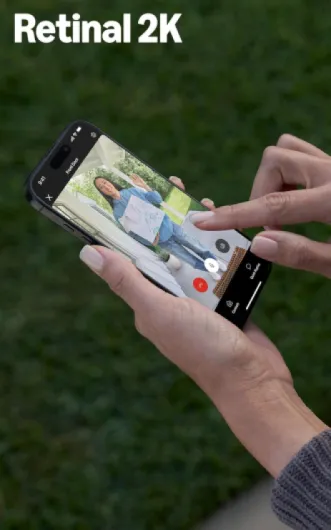
The Retinal 2K video is the main selling point, and in daily use it does make a difference compared to older 1080p models. Faces are clearer, you can read small details like logos on jackets or license plates at short distance, and the whole image looks sharper. The 140° x 140° field of view is honestly one of the best parts: I can see from head to toe, plus the doorstep where packages land. For practical stuff like checking if a parcel is still there or who actually rang the bell, it works well.
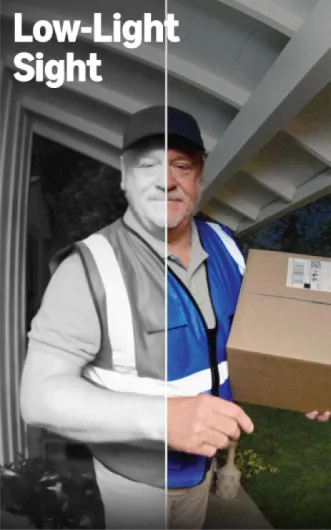
Night performance is also decent. The Adaptive Night Vision gives a clear black-and-white view in full darkness, and the Low-Light Sight kicks in when there’s some ambient light, giving a colour image that’s not perfect but much more readable than the usual grainy night shots. In my case, with a small porch light, I get colour most of the time in the evening, and you can clearly identify people. Only when it’s really dark does it switch to full IR mode, and even then you can see faces clearly enough.
Motion detection is handled by 3D Motion Detection with radar, and that’s where I noticed a difference compared to my older Ring. The radar lets it track distance more accurately, so you can set a fairly precise motion range. After a bit of tweaking of the motion zones, I cut down a lot of false alerts from cars and people walking on the sidewalk. I’d say I still get an occasional useless notification (like a cat too close to the door), but it’s far less spammy than before. Alerts hit my phone quickly – usually within a second or two of movement – assuming my Wi‑Fi is behaving.
There is a catch: this doorbell really wants a stable and fast connection. Ring recommends at least 10 Mbps upload, and I’d say that’s realistic. On a weaker connection, the video can drop from 2K quality to something softer, and in hot weather I noticed a couple of times the image got a bit choppy, probably because the device was warm and the bandwidth wasn’t great. It never became unusable, but if your router is far or your Wi‑Fi is bad at the front door, don’t expect perfect 2K all the time. In short: performance is pretty solid when your network and power are up to standard; if they’re not, you’ll feel it.
What you actually get with this Ring doorbell
On paper, the Ring Wired Video Doorbell Plus is a hardwired video doorbell with 2K video, radar-based 3D motion detection, Wi‑Fi 6, and the usual Ring ecosystem stuff (Alexa support, app, cloud recording with subscription). In the box (hardwired version), you get the doorbell itself, a DIN rail transformer, a universal mounting plate, screws, wall plugs, and the typical Ring sticker and manuals. So it’s clearly meant to be wired properly into your existing chime circuit or electrical panel, not just slapped on with a USB cable.
The video spec is Retinal 2K with a 140° horizontal by 140° vertical field of view and a square-ish 1:1 aspect ratio. In practice this means you see the person’s face and their feet in the same shot, plus any packages on the ground. It supports Wi‑Fi 6 (2.4 GHz and 5 GHz), which is nice if you’ve upgraded your router. Motion detection uses 3D Motion Detection with radar, and you can set custom motion zones so it doesn’t ping you for every car on the street. Two-way talk is standard, and you can answer from your phone or from Alexa devices like an Echo Show.
Power-wise, this thing is picky: it wants either the included 24V DC transformer or an existing 16–24 VAC doorbell system with 10–40 VA (and they recommend 30–40 VA). They’re very clear about not using random halogen or garden-lighting transformers or third-party DC supplies, or you risk damaging the device. So if your current doorbell transformer is weak or old, you might need to change it, which is not a five-minute job if you’re not used to electrical work.
The other big point: the subscription. Out of the box, you get a 30-day free trial of the Ring subscription. After that, if you want video history (up to 180 days), person alerts, and all the smart stuff, you have to pay monthly. Without it, you still get live view and notifications, but no recordings to go back to. For a doorbell at this price, it’s a bit annoying, but that’s the way Ring works. So in short: good hardware, decent app ecosystem, but be ready for some extra costs and a bit of setup effort.
Effectiveness: does it actually make you feel more in control?
In terms of pure usefulness, I’d say this doorbell does the job well. The combination of quick alerts, clear video, and two-way talk means I can deal with most visits without running to the door. For example, I’ve redirected delivery drivers to leave packages in a safer spot while I was out, and I’ve been able to ignore door-to-door salespeople after seeing them on the camera. That’s exactly what I wanted from a video doorbell: information and a bit of control, without overcomplicating things.
The 3D Motion Detection and customisable motion zones help a lot here. After a few days of calibration – moving the zones, adjusting the sensitivity – I reached a point where I mainly get alerts for people actually approaching the door, not for every random movement on the street. Compared to my older Ring, which either spammed me or missed people until they were already leaving, this is a clear step up. It’s not perfect, but it’s reliable enough that I trust it for day-to-day security and parcel watching.
Where it feels less great is the dependency on the subscription. Without a Ring plan, you lose video history, smart alerts, and the ability to go back and check what happened at a specific time. For real-world security – like checking who came by in the afternoon or reviewing an incident – recordings are essential. So realistically, to get the full effectiveness of this product, you’re paying monthly. I’m okay with that because I already had other Ring devices, but if you’re new to the ecosystem, it’s something to think about.
Overall, in practice, this doorbell does make the front of the house feel more monitored and manageable. It’s not some magic security shield, but it gives you enough information and control to handle deliveries, visitors, and random noise at the door. If your expectations are realistic – camera + alerts + talk – you’ll probably be satisfied. If you expect full security without a subscription and with bad Wi‑Fi, you might be disappointed.
Pros
- Sharp 2K video with a tall 1:1 view that shows both faces and packages
- Radar-based 3D Motion Detection reduces false alerts once configured
- Hardwired power means no battery charging and more consistent performance
Cons
- Full functionality depends on a paid Ring subscription after the trial
- Hardwired installation can require a professional and adds to total cost
- Needs solid Wi‑Fi and upload speed to fully benefit from the 2K video
Conclusion
Editor's rating
The Ring Wired Video Doorbell Plus does what a smart doorbell should do: it gives you a clear view of your front door, sends reliable alerts, and lets you talk to visitors from your phone or Alexa devices. The 2K video and 140° x 140° field of view are genuinely useful in real life, especially for seeing both faces and packages. The 3D Motion Detection with radar cuts down on pointless notifications once you’ve tuned the motion zones, and night performance is good enough to actually identify people, not just see blurry silhouettes.
On the flip side, this product is not plug-and-play magic. The hardwired installation can be a hassle if you’re not comfortable with electrical work, and you may end up paying an electrician or buying the separate plug-in adapter. The doorbell also leans heavily on a paid subscription if you want full functionality like video history and smart alerts. And if your Wi‑Fi or upload speed is weak, you won’t fully enjoy the 2K quality.
If you already use Ring or don’t mind paying a monthly fee for proper recordings and alerts, this is a pretty solid upgrade over older 1080p doorbells or cheap off-brand models. It suits people who want a reliable, always-powered doorbell with clear video and good integration with Alexa. If you’re on a tight budget, hate subscriptions, or have no way to run proper power, you might be happier with a simpler or battery-powered alternative, even if the image quality is a bit worse.