Summary
Editor's rating
Is it good value for money compared to Ring and others?
Chunky but practical design
Battery life and power options: worth hardwiring if you can
Build quality and long-term feel
Video, motion detection and notifications in real life
What you actually get with the S330 kit
Pros
- Clear 2K video with HDR that makes faces and details easy to recognise
- Local 16 GB storage on HomeBase with no mandatory subscription fees
- Dual motion detection and dual cameras reduce blind spots and false alerts
Cons
- Doorbell unit is quite large compared to some competitors
- App menus and advanced settings can feel cluttered and hard to find at first
- HomeBase in this kit isn’t the newest model, limiting compatibility with some future Eufy cameras
Specifications
View full product page →| Brand | eufy Security |
| Compatible devices | Camera |
| Power source | Battery or Hardwire |
| Connectivity protocol | HomePlug |
| Controller type | Amazon Alexa |
| Mounting type | Wall Mount |
| Video capture resolution | 2K |
| Number of items | 1 |
A doorbell for people who hate subscriptions
I’ve been using the Eufy Security Video Doorbell S330 with HomeBase for a few weeks now, after finally getting fed up with paying monthly fees for cloud storage on my old doorbell. I wanted something that records locally, still sends decent notifications, and doesn’t require me to become a networking engineer to set it up. This one caught my eye because of the 2K resolution, dual camera, and especially the local 16 GB storage on the base station.
My setup: small house, standard UK front door, router in the hallway, and I mounted the doorbell next to the frame at about eye level. I tried it both on battery and then hardwired it into the existing chime, just to see the difference. I also use Alexa at home, so I linked it to a couple of Echo devices and my phone. I’m not a professional installer, just a regular person who reads the manual when I’m stuck.
Overall, this doorbell gives a pretty solid mix of features and simplicity. It’s not perfect, and some details are a bit annoying (especially the app menus and the viewing angle stuff), but in day-to-day use it does what I expect: lets me see who’s at the door, records visitors clearly, and helps me keep an eye on packages. No monthly bills popping up later is a big relief compared to Ring or similar systems.
If you’re expecting a magic security system that catches every single movement instantly with no delay, you’ll probably be slightly disappointed. It’s still a consumer gadget, with some lag and quirks. But if you want a decent, reliable doorbell with strong video quality and no subscription, this one sits in a nice sweet spot from what I’ve seen so far.
Is it good value for money compared to Ring and others?
On value, the S330 sits in that mid-to-upper price range for video doorbells. It’s not the cheapest option, but you’re paying for features like 2K resolution, dual cameras, dual motion sensors, and especially the no-subscription local storage. If you compare it to something like a Ring with similar video quality, you usually end up paying less over time with the Eufy because you’re not locked into a monthly cloud plan just to access your own recordings. For anyone tired of subscriptions, that alone is a strong argument.
The 16 GB built into the HomeBase is enough for typical usage. You’re not archiving months of footage, but you get a rolling history of events without thinking about it. For most people, that’s all they need: see what happened in the last few days or weeks, download a clip if something important occurs, and move on. If you want massive storage or advanced cloud analytics, this isn’t really that kind of system. It’s more about simple, local security that doesn’t bleed you every month.
There are some trade-offs that affect value. The HomeBase in this kit is not the newest S380; it’s the earlier version, which means not every future Eufy camera will be compatible. If you already know you want to build a bigger system with several cameras, it might be smarter to invest in a bundle with the newer base, even if it costs more up front. Also, the app can feel a bit cluttered, and some options are buried. It works, but it’s not the cleanest experience, so you are paying for hardware quality more than software polish.
Overall, I’d say the S330 with HomeBase is good value if you specifically want a strong doorbell, clear video, and local recording without a subscription. If you’re on a very tight budget or you don’t care about ongoing cloud fees, then cheaper or more basic models might be enough for you. But compared to the big names, once you factor in the money you’re not spending on monthly plans, this kit starts to look pretty reasonable after the first year or so.
Chunky but practical design
Design-wise, the S330 is on the large side. If you’re used to a Ring or a basic wired doorbell button, this looks chunky in comparison. It’s tall and fairly deep, and on a narrow door frame it can feel a bit oversized. That said, once it’s mounted, you stop noticing the size after a few days. It’s not ugly, it just doesn’t try to be discreet. It’s more “security gadget” than “tiny door button”. If you’re very picky about minimalism, this might annoy you.
The build feels solid enough. The plastic doesn’t creak, and the front face with the camera lenses and button looks clean. The button has a clear press feel and lights up, so visitors know where to press, even at night. I’ve had it outside in rain and wind and it’s still fine; the waterproofing claim seems justified so far. I wouldn’t go hosing it directly for fun, but for normal UK weather, it handles it without any drama.
The dual lens layout is actually useful. The top lens focuses on faces and the general upper area; the bottom one points more towards the ground so you can see packages or if someone leaves something at your door. In practice, this helps a lot when deliveries are dropped close to the threshold, where a single camera often misses them. The downside is that the body needs to be taller to fit both lenses, which explains the size. Personally, I prefer a slightly bigger device if it means fewer blind spots.
Mounting is straightforward: a backplate on the wall, a release pin to detach the unit, and the optional 15° wedge if you need to angle it. The only thing that bugged me is that 15° isn’t enough for some door setups, especially if your door is recessed or the bell has to sit on a side wall. A second, steeper wedge in the box would make life easier. I’ve seen people 3D-print one as a workaround, which kind of proves it’s a common issue. Overall, the design is practical and solid, just not subtle.
Battery life and power options: worth hardwiring if you can
I tested the S330 first on battery only, then switched to hardwired with my existing mechanical chime. On battery, Eufy claims several months of use, but that heavily depends on how busy your front door is and how aggressive your motion settings are. In my case, with medium motion sensitivity, package detection on, and a few dozen events per day, the battery drain looked like it would last a couple of months, not a full season. That’s not terrible, but if your house is on a busy street, expect to charge more often unless you tweak settings.
Charging itself is straightforward: you pop the doorbell off the mount and plug it in via USB. That’s fine, but it does mean your doorbell is offline while charging unless you have a backup. If you rely on it heavily for security, this can be a bit annoying. You can reduce the frequency of charges by tightening motion zones, turning off some smart features, or using more conservative recording settings, but then you’re trading convenience for battery life. Personally, after seeing the drain over a couple of weeks, I decided to just hardwire it.
Once hardwired, things get a lot better. The battery essentially becomes a backup, and the device runs with constant power, so it’s not trying to save energy all the time. I noticed fewer delays, more consistent notifications, and my old mechanical chime rings instantly when someone presses the button. If your existing wiring is compatible, I’d strongly recommend going this route instead of relying purely on the battery. It’s a one-time effort that pays off in everyday use.
So in short: the battery option is fine if you rent, can’t touch the wiring, or just want something simple. It’s not terrible, and the doorbell manages power reasonably well. But if you own the place and have an existing chime setup, hardwiring is clearly the better experience. You get the convenience of a smart doorbell without the hassle of remembering to charge yet another device every few weeks or months.
Build quality and long-term feel
In terms of durability, I can’t pretend I’ve used this for years, but after a few weeks in typical mixed weather (rain, wind, some temperature swings), the S330 hasn’t shown any worrying signs. The front lens area stays clear, the button still clicks properly, and there’s no fogging or condensation inside the camera. The housing feels sturdy enough for outdoor use, and the waterproof rating seems realistic, not just something they slapped on the box.
The HomeBase sits inside, so it’s not under any stress beyond being powered on 24/7. It runs quietly; I don’t hear any fan noise or anything like that. It gets slightly warm, which is normal for a small hub like this. In terms of reliability, it hasn’t crashed or needed a reboot during my testing. It just sits there and does its job, which is what you want from a hub. The Ethernet connection is also more stable than pure Wi-Fi for this kind of device, so that helps with long-term reliability.
Where durability could become a question is the battery inside the doorbell over a couple of years. Like any lithium-ion battery, it will slowly lose capacity. If you run it on battery-only and charge it often, that process speeds up. That’s another reason I lean towards hardwiring it: the less stress on the battery, the longer the whole device will stay usable without needing a repair or replacement. Eufy gives a 12-month warranty, which is okay but not generous. For a security product that’s supposed to sit outside for years, I’d personally prefer at least two years of coverage.
Physically, I don’t see any obvious weak points, apart from the usual risk of someone trying to rip it off the wall. It does lock into the mounting plate with a pin release, so it’s not trivial to remove without the tool, but if someone really wants to steal it, they’ll probably manage. That’s the same story with most doorbells, to be fair. Overall, everything feels solid and built to handle normal outdoor life, but if you’re expecting industrial-grade toughness, that’s not what this is. It’s consumer-level sturdy, which is fine for most homes.
Video, motion detection and notifications in real life
On performance, the S330 is pretty solid where it matters. The 2K video is genuinely clear enough to recognise faces and read smaller details like logos on jackets or license plates close to the door. During the day, the image is sharp with decent colours, and HDR helps a lot when the person is backlit by the sun. You don’t just see a silhouette; you can actually see their face. At night, it switches between colour (when there’s enough light) and infrared black-and-white. In my case, sometimes one night it went colour and the next night black-and-white with similar conditions, which is a bit odd but not a real problem. Either way, the footage is usable.
The motion detection is where I noticed a clear improvement over my older doorbell. The combo of PIR and radar does a good job of ignoring cars on the street and focusing on people closer to the door. Out of the box it was a bit too sensitive and picked up people walking past on the pavement, but after playing with the activity zones and sensitivity, I managed to cut most of that noise. It still occasionally triggers on a neighbour walking very close, but I prefer that to missing events. False alarms are definitely lower than what I had before.
Notifications are decent but not instant in every situation. When someone presses the doorbell, the chime on the HomeBase and my Echo devices goes off almost right away, and my mechanical chime (when hardwired) is basically instant. The push notification to the phone has a small delay, but nothing dramatic in my case. For motion-only events, there’s a bit more lag, especially if you want to talk back using the two-way audio or trigger a pre-recorded message. It’s usable, just don’t expect real-time like a wired intercom. The voice quality both ways is clear enough to tell a courier where to leave a package.
The package detection and Delivery Guard features are actually handy. The system usually spots when a parcel is dropped and sends an alert, and if someone approaches it afterwards, you get another notification. It’s not 100% perfect — I had one small dark package that it didn’t recognise — but most of the time it works as advertised. The only catch is that some of these smarter notifications and thumbnail previews rely on temporary cloud usage. You’re not forced into a subscription, but if you enable certain features, some data will briefly hit Eufy’s servers. If you’re super strict about everything staying local, you’ll want to read the settings carefully and maybe turn a couple of options off.
What you actually get with the S330 kit
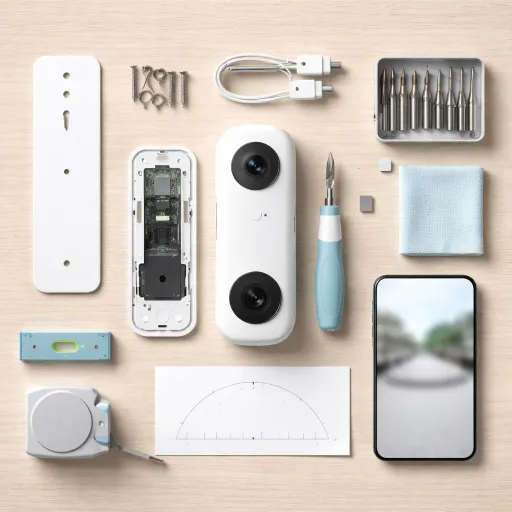
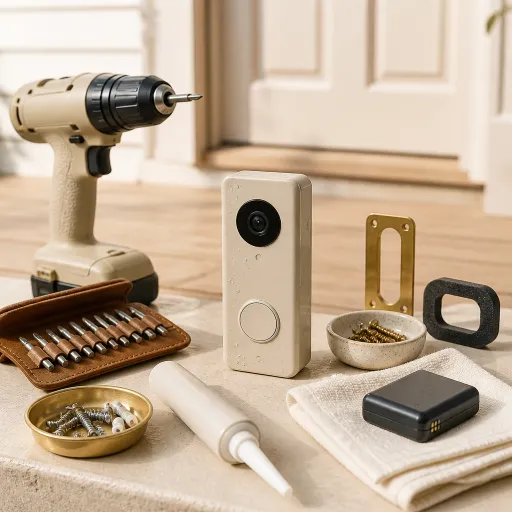
Out of the box, you get the doorbell itself, the HomeBase, mounting hardware, the angled bracket, a power adapter for the base, screws, and the wiring bits if you want to hardwire it. It’s a complete kit; you don’t feel like you need to run to the shop for extra screws or random connectors. The angled bracket is 15°, which is fine in many cases, but I’ll be honest, I would have liked a second, steeper one (like 25°) because of how my doorway is set up. You can work around it, but it feels like Eufy saved a few pennies there.
The HomeBase is basically the brain and storage. It plugs into your router via Ethernet and holds the 16 GB of internal memory. There’s no SD card to add, so you’re stuck with that capacity, but for normal home use it’s enough for rolling clips unless you have half the neighbourhood walking past your door all day. The base also acts as the chime, which is handy if you don’t have or don’t want to use the existing mechanical one.
The doorbell is battery-powered by default, but you can also hardwire it to an existing chime system. I tried both. On battery, it still works fine, but you notice Eufy being a bit more conservative with motion detection to save power unless you tweak the settings. Hardwired, the whole thing feels more responsive, and my old mechanical chime rings instantly when someone presses the button, while the HomeBase and Echo devices chime a fraction of a second later.
On the feature side, the box promises 2K resolution with HDR, dual motion detection (PIR + radar), dual cameras, package detection, and no subscription required. Most of that actually shows up in real use. The dual cam means you see both the visitor’s face and what’s on the ground (packages, bags, etc.). The motion detection is clearly better than older doorbells I’ve used, especially for ignoring distant cars. It’s not magic, but it’s a noticeable improvement. Just be prepared to spend some time in the app at the start to tune motion zones and sensitivity so it behaves the way you want.
Pros
- Clear 2K video with HDR that makes faces and details easy to recognise
- Local 16 GB storage on HomeBase with no mandatory subscription fees
- Dual motion detection and dual cameras reduce blind spots and false alerts
Cons
- Doorbell unit is quite large compared to some competitors
- App menus and advanced settings can feel cluttered and hard to find at first
- HomeBase in this kit isn’t the newest model, limiting compatibility with some future Eufy cameras
Conclusion
Editor's rating
After using the Eufy Video Doorbell S330 with HomeBase for a while, I’d sum it up like this: it’s a solid, practical video doorbell that focuses on clear video, decent motion detection, and local storage instead of pushing you into subscriptions. It’s not perfect — the unit is a bit big, the app can be a bit messy, and the battery life depends heavily on your settings — but in daily use it does the core job well. I can see who’s at my door, talk to delivery drivers, and check on packages without paying a monthly fee, and the 2K image quality makes the recordings actually useful.
This doorbell is a good fit if you want: no ongoing cloud costs, better-than-average motion filtering, and a fairly easy install with the option to go battery or hardwired. It’s also a decent choice if you already like Eufy/Anker gear and want to stick with the same brand. On the other hand, if you want the absolute fastest, cloud-heavy ecosystem with loads of integrations and don’t mind paying a subscription, you might be happier with Ring or Nest. Also, if you plan to build a bigger multi-camera setup, you may want to look at a bundle with the newer HomeBase model for better long-term compatibility.
Overall, I’d give it a 4 out of 5. It gets the important things right (video quality, local storage, motion detection) and the flaws are more about polish and some missing extras, not about basic reliability. If you’re tired of paying every month just to see who knocked on your door, this is a pretty sensible alternative.