
Summary
Editor's rating
Value for money: good starter kit, but add-ons can bite
Design: blends in and doesn’t scream “alarm system”
Battery and power: mostly low maintenance, but not magic
Durability and build: feels light but holds up fine
Day-to-day performance: reliable enough, with a few limits
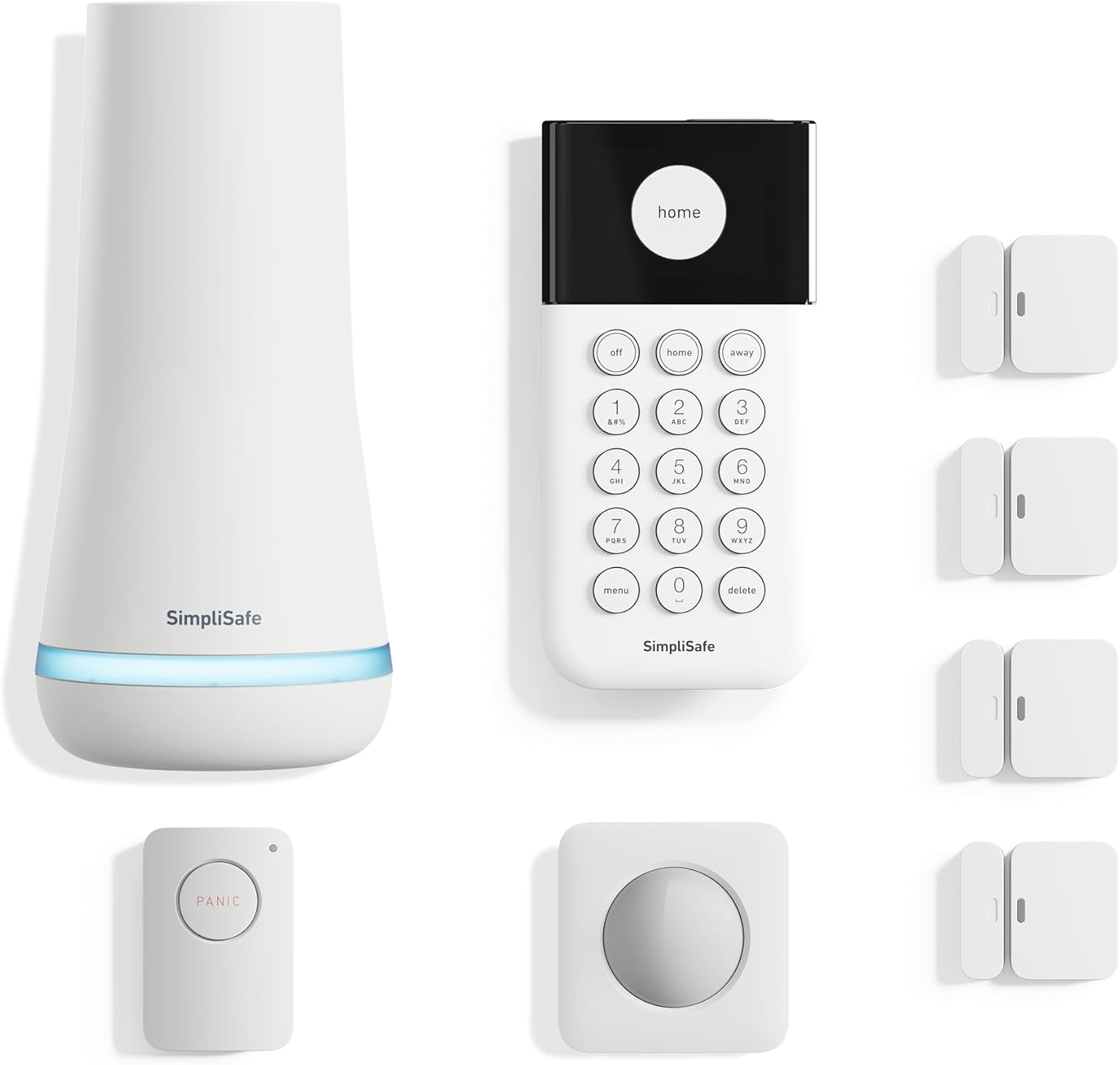
What you actually get in the 8-piece kit
Pros
- Very easy DIY installation with clear app guidance and no required drilling
- Solid basic performance with reliable sensors and quick alerts
- Optional monitoring with no long-term contract and built-in battery/cellular backup support
Cons
- Smart home and app features are fairly limited compared to higher-end systems
- Extra sensors and cameras are expensive, making full-house coverage costly
- Some useful features locked behind paid monitoring plans

Specifications
View full product page →| Brand | SimpliSafe |
A home security system that doesn’t make you hate technology
I’ve been running this SimpliSafe 8-piece wireless kit in my place for a few weeks now, and I’ll be straight: I bought it because I was tired of the usual alarm company nonsense. I didn’t want a long contract, a tech crawling through my attic, or a control panel that looks like it’s from 1998. This kit checked the main boxes on paper: DIY, wireless, app control, optional monitoring, and works with Alexa/Google.
Out of the box, it’s clearly aimed at regular people, not installers. The base station, keypad, four entry sensors, motion sensor, and panic button are basically all you need to cover a small house or an apartment. I have it on a modest two-bedroom layout and I still felt like I had a bit of flexibility on where to put stuff, even with just one motion sensor.
What struck me pretty fast was how low the “pain” level was. No drilling if you don’t want to, no weird wiring, and the app setup is pretty guided. I’ve set up other smart home gear that made me want to throw my phone; this wasn’t like that. That doesn’t mean it’s perfect. Some features are clearly locked behind the subscription, and the smart home integration feels more basic than what you’d get from some higher-end systems or from a fully integrated smart home hub.
So overall, my starting point is this: it’s a practical, middle-of-the-road system that focuses more on being easy and reliable than on being packed with fancy tricks. If you’re expecting ultra-deep automation or enterprise-level logging, you’ll probably be annoyed. If you just want something that screams when a door opens at night and can call for help if you pay for monitoring, it gets the job done.
Value for money: good starter kit, but add-ons can bite
On price, this 8-piece kit sits in a kind of sweet spot: it’s cheaper than having a traditional alarm company come out and wire your place, but more expensive than some ultra-budget DIY systems you’ll find online. For what you pay, you get a complete base setup that’s actually usable right away for a small home or apartment. Considering it includes the base station, keypad, four entry sensors, a motion sensor, and a panic button, I’d say the core package is fair value.
Where the cost starts creeping up is when you expand. Extra entry sensors, motion sensors, cameras, and other accessories aren’t cheap. If you have a big house with a lot of doors and windows, you could easily double the price of the system just by adding enough sensors. Same story with cameras – they’re sold separately and aren’t exactly budget items. So as a starter kit, it’s good value; as a fully decked-out whole-house system, it can get expensive fast.
Then there’s the monitoring. The nice thing is it’s optional and there’s no contract. You can run the system completely local if you want, and it still works as an alarm with app control. But some features and the cellular backup are tied to the subscription. Pricing is roughly "less than a dollar a day" depending on the plan, which isn’t outrageous, but it’s another monthly bill. If you want professional monitoring and you compare it to old-school alarm companies, SimpliSafe usually comes out cheaper and more flexible.
So, in terms of value, here’s my take: if you’re an apartment dweller or have a modest-sized house and you just want a simple, DIY system that you can install yourself, this is pretty solid for the money. If you’re trying to secure a large property with lots of entry points and want cameras everywhere, the cost of all the add-ons plus monitoring puts you into a higher bracket where you might start comparing other ecosystems too.
Design: blends in and doesn’t scream “alarm system”
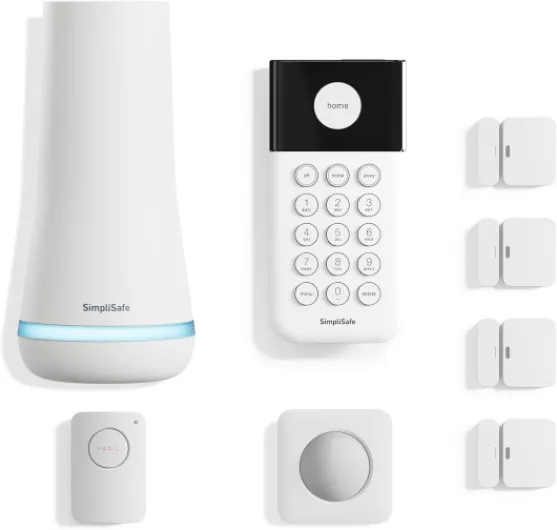
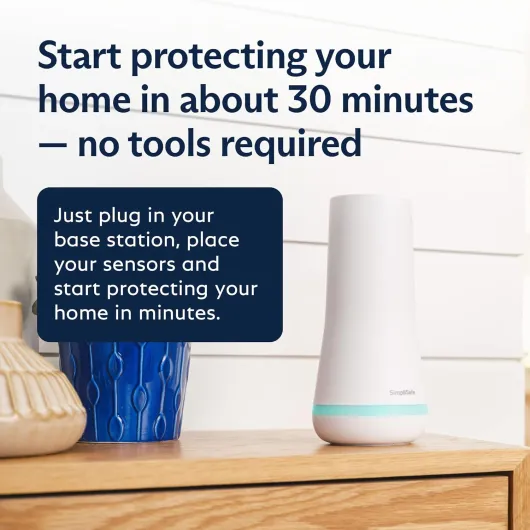
Design-wise, SimpliSafe went for that clean white, rounded look that kind of disappears in most modern homes. The base station looks more like a small speaker or router than an alarm brain. I stuck mine on a shelf in the living room and no one really notices it unless it talks or lights up. The light ring is clear enough to tell you if the system is armed or not, but it’s not so bright that it’s annoying at night.
The keypad is probably the part I interact with the most. It’s pretty slim, white, and the buttons only light up when you touch it, so it doesn’t glow on the wall 24/7. I actually like that. You can either mount it or just let it sit on a table; I tried both. On the wall next to the door felt more natural, but I did a few days with it on a side table and that worked too. The keys are soft to press, nothing fancy, but clear enough that even someone who isn’t techy can figure out "Off, Home, Away" quickly.
The sensors are small rectangles, and they don’t look ugly. The adhesive mounting means you can stick them on without tools, which is nice if you’re renting. I did end up screwing a couple of them in after a week just to be sure they wouldn’t get knocked off, but the tape held fine on painted wood. The motion sensor is a bit more visible, but if you tuck it in a corner near the ceiling, it blends in reasonably well. It’s not pretty, but it’s not an eyesore either.
Overall, I’d call the design simple and low-profile. It’s not some fancy interior design piece, but it also doesn’t make your home feel like a warehouse with industrial sensors everywhere. If you like clean, minimal gear that mostly disappears into the background, this fits that description. If you want big visible deterrents, like giant window stickers and chunky sensors that scream "alarm", this is more on the discreet side.
Battery and power: mostly low maintenance, but not magic
The system is a mix of plug-in and battery-powered parts. The base station needs wall power but has a built-in battery backup that’s rated for about 24 hours. I tested it during a short planned power outage in my building and also by just pulling the plug for a few hours. In both cases, the system stayed armed and responsive. The app even warned me that it was on backup power, which is useful. I didn’t run it for a full day straight, so I can’t swear it hits the full 24 hours, but for typical power blips or a few-hour outage, it seems fine.
The sensors and keypad run on AAA batteries (included in the box). After a few weeks, I haven’t had anything drop below usable level. Other users generally say they last many months to a couple of years depending on use. The nice part is you’re not dealing with weird proprietary batteries; if one dies, you just toss in standard AAA alkalines. The system will warn you about low battery in the app, so you’re not guessing which sensor is dead.
One thing to remember is that if you rely on the cellular backup (which requires the monitoring plan), that’s what keeps you connected during an outage where Wi-Fi is down. If you don’t pay for monitoring, you still get local alarm functionality on battery, but remote access could be compromised if your router is off. So, in practice, the backup is only fully useful if you pony up for at least some level of service.
Overall, I’d say battery maintenance is low effort. You plug in the base station and mostly forget it, and you’ll probably only swap sensor batteries once in a long while. It’s not totally set-and-forget, but it’s far from a hassle. Just keep a small pack of AAA batteries in a drawer and you’re covered.
Durability and build: feels light but holds up fine
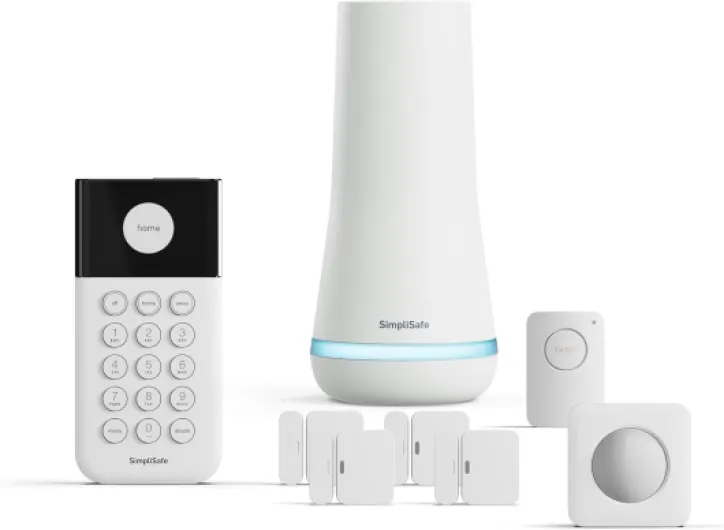
Build quality is pretty typical for consumer smart home gear: mostly plastic, lightweight, but not flimsy to the point of feeling like a toy. The base station feels the most solid, with some weight to keep it from sliding around. The keypad and sensors are lighter, which is fine since they live on walls and doors. Over the weeks I’ve had it, nothing has loosened, cracked, or fallen off, even with doors being opened and closed a lot.
SimpliSafe likes to advertise that the system is built to handle power cuts, Wi-Fi loss, and even physical tampering. I didn’t go at it with a hammer, obviously, but I did test the "smash-safe" idea in a more basic way: I yanked the keypad off the wall and pulled its batteries while the system was armed. The base station still stayed active and the system didn’t just die, which is the important part. So even if someone messes with the keypad, the core is still running somewhere else in the house.
As for environmental durability, this kit is clearly meant for indoor use. The sensors don’t have weatherproof housings. Some users online hack together little plastic boxes to use them outdoors on gates, but that’s not officially supported. Inside, I’ve had no issues with normal temperature changes or humidity from showers, but I also didn’t mount anything in a steamy bathroom. It’s home electronics, not industrial gear.
There’s a 1-year limited warranty, which is fairly standard. The catch is you’re supposed to buy from authorized sellers or they can say no to warranty claims. If you stick to normal retailers, you’re fine. Long term, I’d expect the system to last several years easily since there are no moving parts and everything is solid-state. If something fails, it’ll probably be a sensor or the base station electronics, not physical wear. For the price range, I’d call the durability decent and in line with what you’d expect from a mid-range consumer security setup.
Day-to-day performance: reliable enough, with a few limits
In daily use, the system is mostly about three things: how fast it reacts, how often it false-alarms, and how well the app keeps you in the loop. On the reaction side, the entry sensors trigger the base station basically instantly when a door opens while armed. There’s the usual entry delay if you set one, but if I set it to instant, the siren kicked in fast enough that I wouldn’t want to be the person opening that door. The motion sensor also reacts quickly – walking into the hallway when armed set it off within a second or two.
False alarms were my main worry, especially with a motion sensor and a pet. I tested it with a medium-sized dog (around 40 lbs), and as long as the sensor was angled correctly and mounted at the recommended height, it didn’t trigger on the dog wandering around. When I put it lower just to see, it did pick up more, so mounting it properly matters. With the entry sensors, the only time I had a near-miss was when a door wasn’t closing fully and the magnet alignment was slightly off; the app made it clear the sensor was "open" though, so that’s mostly on me.
The app performance is decent but not fancy. Notifications for alarms and entry events when armed come through quickly – I tested this by arming it and opening a door while standing outside with my phone. Push notification was basically immediate. Where it feels limited is logging and detail. You don’t get a super rich history of every open/close when the system is off, and it doesn’t announce which door opened by voice like some older wired systems do. If you’re into detailed logs for every movement, this will feel basic.
One thing to note: the smart assistant integration (Alexa/Google) is there, but it’s not very deep. You can arm the system with voice, but it’s not like you can build complex routines around every sensor event. It’s fine if you just want to say "arm away" on your way out, but if you’re used to high-end smart home setups, you’ll probably call this functional but limited. Overall, performance is solid enough for normal users: it arms, it disarms, it makes noise when it should, and it tells your phone what’s going on when the system is active.
What you actually get in the 8-piece kit
This 8-piece bundle is pretty straightforward. In the box you get: 1 base station, 1 keypad, 4 entry sensors, 1 motion sensor, and 1 panic button. That’s it. No cameras, no doorbell, no fancy touchscreen panel. For some people that’s going to feel a bit barebones, but for a small place or as a starter kit, it’s enough to cover the basics: doors, a hallway or living room, and a quick way to trigger an alarm.
The base station is the brain. It plugs into the wall, has a built-in battery that lasts about 24 hours, and can fall back to cellular if you pay for monitoring. In practice, I tested a power cut by literally unplugging it and flipping my breaker for a bit. The system stayed armed, the keypad still worked, and the app kept showing it as online once I reconnected things. So the backup claim seems legit for short outages. I didn’t drain it for a full 24 hours, but a few hours with power off didn’t kill it.
The four entry sensors are meant for doors and windows. In my case, I used three on exterior doors and one on a main window. If you live in a bigger house with lots of ground-floor windows, you’ll probably run out of sensors fast and need to buy more, which can get pricey. The single motion sensor is best used in a central area – I put it in the hallway that leads to the bedrooms so if someone somehow got in without hitting a door sensor, they’d still trigger it.
Finally, the panic button is simple but handy. I put mine on the nightstand. With monitoring, pressing it sends out an alert to the monitoring center; without monitoring, it just sets off the alarm. I like having a physical "oh crap" button that doesn’t require fumbling with my phone. Overall, the kit is clearly designed as a starter pack: enough to secure an apartment or small home, but you’ll be shopping for add-ons if you want cameras, more sensors, or extra keypads.
Pros
- Very easy DIY installation with clear app guidance and no required drilling
- Solid basic performance with reliable sensors and quick alerts
- Optional monitoring with no long-term contract and built-in battery/cellular backup support
Cons
- Smart home and app features are fairly limited compared to higher-end systems
- Extra sensors and cameras are expensive, making full-house coverage costly
- Some useful features locked behind paid monitoring plans
Conclusion
Editor's rating
Overall, the SimpliSafe 8 Piece Wireless Home Security System is a practical, easy-to-live-with option if you want real security without getting locked into a contract or dealing with an installer. It covers the basics well: door and window sensors, a motion sensor for a main area, a simple keypad, and a panic button. Setup is genuinely easy, the app is clear enough, and the system has handled power blips and daily use without drama. For apartments and small homes, it fits quite nicely.
It’s not perfect though. The smart home integration is pretty basic, the app logging and customization are limited compared to more advanced systems, and you’ll feel the cost if you start adding lots of extra sensors and cameras. Also, some of the more useful features and the cellular backup sit behind the monitoring subscription, so if you want the full package, you’re committing to a monthly fee – even if it’s still more flexible than traditional alarm companies.
If you want a no-nonsense DIY alarm that you can set up in under an hour, that doesn’t require drilling holes everywhere, and that offers optional monitoring at a reasonable monthly cost, this is a solid choice. If you’re a hardcore smart home tinkerer who wants deep automation, or you have a large property with lots of entry points, you might want to look at more advanced (and likely more expensive) systems. For most regular users, though, this hits a good balance between simplicity, reliability, and price.