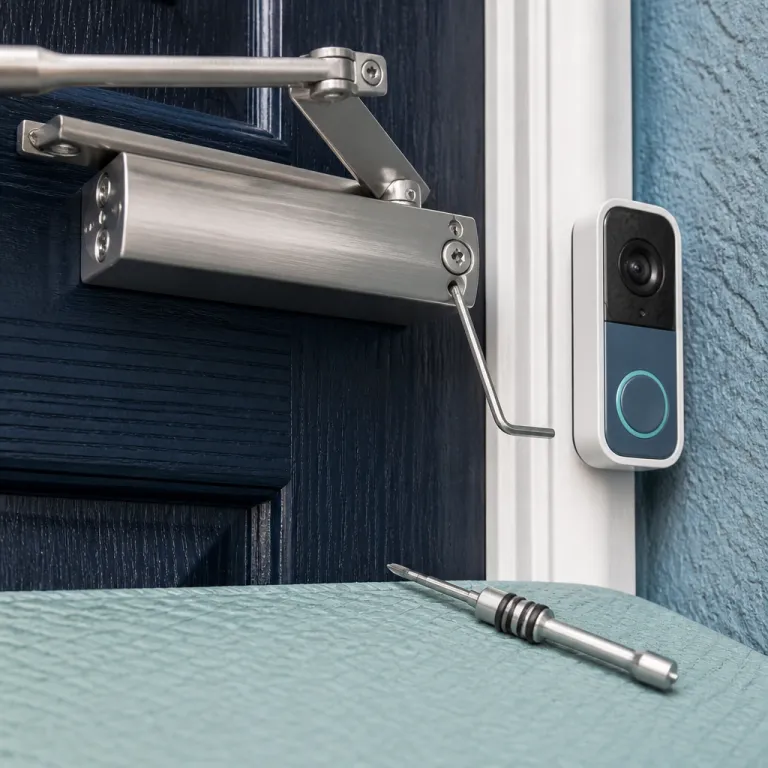
How to adjust a door closer for better smart doorbell security
Why adjusting your door closer matters for smart doorbell security
A smart doorbell is only as effective as the entrance it oversees. When you adjust a door closer correctly, the closing speed and latching speed keep the door movement controlled and predictable, which is vital for both cameras and visitors. A poorly tuned closer allows the door to slam, bounce back open, or fail to latch, and each of these behaviours weakens the overall security picture around your front step.
Think about how often your door open and door close cycles happen every day. Each time the door closes, the spring inside many door closers manages the spring tension that controls both the main closing speed and the final latch speed, and this mechanical rhythm directly affects how your smart doorbell records motion and events. If the door hardware is misaligned or the door hinges are loose, the door closer has to work harder, which can lead to inconsistent closing and more false alerts on your smart doorbell feed.
Front doors with automatic door features or heavier commercial door style hardware need especially careful closer adjustment. When you adjust door closer settings on these heavier doors, you protect the door locks, the handles, and the hinges from excessive impact, and you also ensure that the door closes fully so your smart doorbell’s motion zones match the real edge of the doorway. Stable closing also helps the smart doorbell microphone and camera capture clearer audio and video, because there is less vibration and fewer sudden shocks when the door closes against the frame.

Coordinating door closer adjustment with smart doorbell detection zones
Smart doorbell motion zones work best when the door closes in a smooth, repeatable way. If the closing speed is too fast, the door will swing through the camera’s field of view so quickly that motion detection may trigger late, while a very slow door close can keep the motion sensor active longer than necessary. By taking time to adjust door closer valves for both closing speed and latching speed, you create a predictable pattern that your smart doorbell can interpret more accurately.
On many residential doors, the closer adjustment relies on a small adjustment screw that controls the hydraulic flow. A quarter turn of this screw can change how the door closes, how firmly the latch engages, and how long the door remains slightly open before the final latching movement, and these details matter for how your smart doorbell records visitors approaching or leaving. When the latch speed is tuned so the latch meets the strike plate without a bounce, your door locks engage reliably and the video timeline from your smart doorbell shows a clean sequence of events.
If you use a smart home hub to manage your smart doorbell, align your door hardware tuning with your digital settings. For example, when you pair a smart doorbell with a dedicated assistant such as the system described in this guide on strengthening smart doorbell security and connectivity, the timing of alerts and automations will benefit from a stable door open and close pattern. Whether you are adjusting door closers on lightweight doors or heavier commercial door installations, the goal is always the same: a controlled motion that your smart system can track without confusion.
Balancing spring tension, hinges, and latching for a secure entrance
The internal spring inside a door closer is the engine that drives the closing motion. When you adjust door closer spring tension, you decide how strongly the door will pull itself from fully open to fully closed, and this force must match the weight of the door and the condition of the door hinges. Too much spring tension makes the door slam and strain the hardware, while too little tension leaves the door open just enough to compromise security and confuse your smart doorbell’s status notifications.
Before you start adjusting door settings, inspect the door hinges, the strike plate, and the handles for wear. A misaligned latch or sagging hinges can prevent the door from closing cleanly, no matter how carefully you perform closer adjustment with the adjustment screw or hydraulic valves, and this misalignment often shows up as repeated latching failures in your smart doorbell event history. When the door closes but the latch does not fully engage, your smart doorbell may keep detecting movement as the door bounces, which leads to unnecessary alerts and gaps in real protection.
Side doors, back doors, and even a sliding door near the main entrance all influence how people move around your property. If one door closer is weak and another is strong, intruders may test the softer point, while your smart doorbell focuses on the front door only, so harmonising spring tension and latch speed across all external doors creates a more coherent security perimeter. To deepen this perimeter, pairing your smart doorbell with a dedicated sensor system, such as the one explained in this article on how a smart door sensor transforms home security around your doorbell, ensures that every time a door open event occurs, the physical closing behaviour and the digital alert work together.
Practical steps to adjust a door closer without harming the hardware
Working on a door closer requires patience and small, deliberate changes. Start by identifying the adjustment screw or screws on the closer body, which usually control closing speed, latch speed, and sometimes backcheck, and always use the correct screwdriver so you do not damage the hardware. Mark the original position with a pencil so you can turn the screw in small increments and return to the starting point if the door closes worse than before.
Use a simple adjustment checklist: (1) prop the door safely open and keep fingers clear of the frame, (2) locate the labelled valves for main closing speed and latch speed, (3) turn each screw no more than a quarter turn at a time, (4) test the door from fully open after every change, and (5) stop immediately if you see oil leaking or the arm binding. This method keeps the closer within its safe operating range and prevents stripped screws or internal damage.
Homeowners sometimes forget that accessories such as heavy handles, decorative door hardware, or weatherstripping can change how the door closes. Extra weight on the handles or added friction at the frame may require a fresh closer adjustment so that the automatic door function still feels smooth and controlled, especially on taller doors that behave more like a light commercial door. When you finish adjusting door settings, confirm that the door locks engage cleanly, the door open angle suits your entry layout, and the smart doorbell view remains clear of the closer body and any new accessories.

Integrating door closers, smart locks, and smart doorbells for layered security
A well tuned door closer is one layer in a broader security stack. When you combine reliable door closers with smart door locks and a high quality smart doorbell, the way each door closes becomes part of a coordinated defence, not just a mechanical habit. The closer ensures that the door close action is consistent, the lock secures the latch, and the smart doorbell documents who approached and when.
On many modern front doors, the door hardware includes both traditional handles and electronic keypads. If the closing speed is too slow, some smart locks may not sense that the door closes fully, which can prevent the bolt from extending, while a very fast speed door movement can cause the latch to rebound and leave the door slightly open, so careful closer adjustment protects both the electronics and the frame. When you adjust door closer valves to match the timing of your smart lock’s auto lock feature, you reduce the chance that the lock will attempt to engage while the door is still moving.
For households that rely heavily on parcel deliveries, a stable door open and close pattern also helps the smart doorbell manage notifications. If the door swings wildly each time a courier leaves, your camera may trigger multiple clips that show only the door edge, whereas a controlled closing motion keeps the visitor centred in the frame and preserves clear evidence. To support this, consider pairing your tuned closer and smart lock with a robust smart doorbell camera system such as the one reviewed in this guide to a 2K wireless outdoor smart doorbell camera with auto tracking, which can take full advantage of predictable door movement.
When to call a professional for door closer and door hardware issues
There are limits to what a homeowner should attempt when adjusting door equipment. If the door closer leaks oil, the arm is bent, or the door hinges are visibly damaged, a professional technician should inspect the door before you turn any adjustment screw, because structural problems cannot be solved by changing speed settings alone. In these cases, forcing the closer adjustment may worsen the damage and even cause the door to fail unexpectedly, which is a serious risk for both safety and security.
Professional locksmiths and door hardware specialists understand how commercial door standards apply to residential entrances. They can assess whether the spring tension matches the door weight, whether the automatic door function complies with accessibility guidelines, and whether the door locks and latching components are strong enough for your neighbourhood’s risk profile, and this expertise complements the digital protection offered by your smart doorbell. If you notice that the door closes inconsistently despite careful adjustments, or that the latch speed never seems to produce a reliable latch, a specialist can often identify hidden frame issues or warped doors that a layperson might miss.
For homes with multiple external doors, including a sliding door to a patio or side yard, a professional can design a coherent plan. That plan may involve upgrading certain door closers, replacing worn handles and accessories, and aligning the timing of each door open and door close cycle with your smart doorbell and alarm system, so that every entrance behaves predictably under normal use and under stress. Investing in expert help at this stage protects your long term security and ensures that every adjust door closer effort you make supports, rather than undermines, the performance of your smart doorbell.
Key figures on door closers, smart locks, and smart doorbells
- Industry guidance on door hardware emphasises that correctly installed and maintained door closers dramatically reduce uncontrolled door slamming, which lowers the risk of damage to door hinges, glass panels, and frames over time.
- Market reports on connected home devices show steady year-on-year growth in residential smart lock adoption, and this trend closely tracks the rise in smart doorbell installations at main entrances.
- Security testing consistently finds that front doors which latch fully on every close are far less likely to be forced quickly, because a well aligned latch and strike plate increase the time and effort required for a break-in attempt.
- Energy efficiency assessments from building agencies highlight that doors which close and latch correctly, supported by tuned door closers, can reduce unwanted air leakage around the frame, contributing to measurable heating and cooling savings in well insulated homes.
FAQ about adjusting door closers around a smart doorbell
How do I know if my door closer needs adjustment ?
You should consider adjusting door settings when the door slams, fails to latch, or remains slightly open after closing. Watch how the door closes from a fully open position without assistance, and note whether the closing speed and latch speed feel controlled and consistent. Any sudden change in behaviour, especially after weather shifts or hardware changes, is a clear sign that closer adjustment is necessary.
Can I adjust a door closer myself, or do I need a professional ?
Many residential door closers allow safe homeowner adjustments using a screwdriver and careful observation. If the closer body is intact, there are no oil leaks, and the door hinges and frame look sound, you can usually turn the adjustment screw in small increments and test the results. When there is visible damage, persistent latching problems, or an automatic door system involved, calling a professional is the safer choice.
How does a door closer affect my smart doorbell performance ?
A stable door open and door close pattern helps your smart doorbell interpret motion more accurately. If the door closes too fast or bounces, the camera may trigger at odd times, miss faces, or record unnecessary clips of the door edge. By tuning the closing speed and latch speed, you create predictable movement that aligns with your motion zones and notification settings.
What is the difference between closing speed and latch speed on a door closer ?
Closing speed refers to how quickly the door moves from fully open to about the last few centimetres before the frame. Latch speed controls the final part of the swing, when the latch meets the strike plate and the door closes completely, and this phase is crucial for both security and noise control. Adjusting each speed separately allows you to avoid slamming while still ensuring a firm, reliable latch.
Should I change my door closer when upgrading to a smart lock and smart doorbell ?
You do not always need a new door closer when installing a smart lock and smart doorbell, but you should evaluate the existing hardware carefully. If the door closes smoothly, latches reliably, and does not strain the new lock or obstruct the camera view, a simple closer adjustment may be enough. When the door is heavy, warped, or fitted with older hardware, upgrading to a modern closer designed for your door weight can improve both physical security and the performance of your smart devices.
What if my door closer is slamming, not latching, or leaking oil ?
If the door slams, slightly slow the main closing speed using the appropriate valve and check that the spring tension is not set excessively high. When the door will not latch, increase latch speed in small steps and confirm that the strike plate and hinges are aligned. If you see oil leaking from the closer body, stop adjusting immediately and arrange for repair or replacement, because a leaking hydraulic closer cannot be restored with simple screw adjustments.