Why smart doorbells behave differently in extreme heat
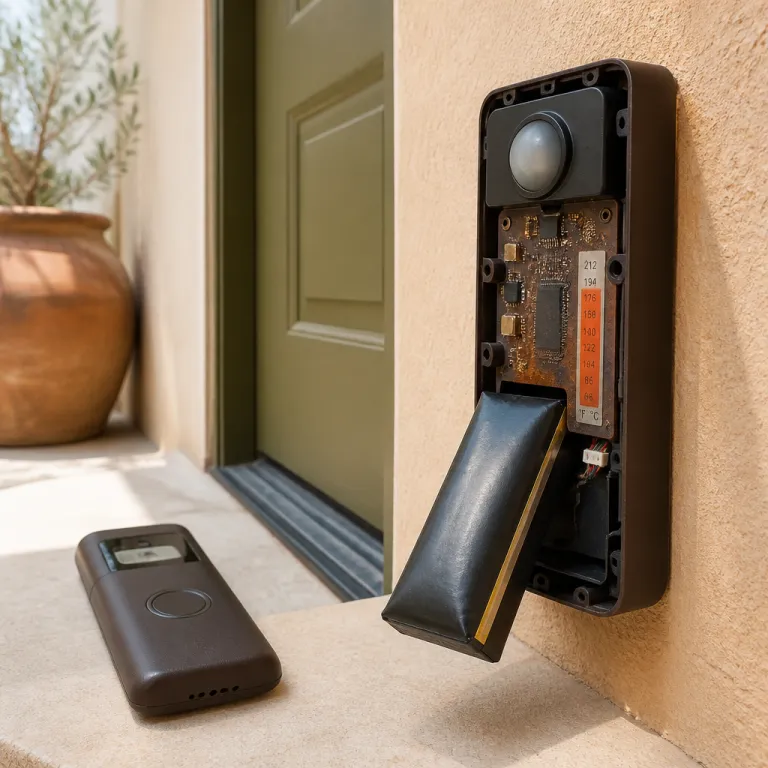
When a heat wave settles over your street, your smart doorbell does not just feel warm, it starts operating closer to its thermal limits. Prolonged hot weather above about 40 °C stresses every component, from the lithium battery and wired power regulators to the tiny video camera sensor that gives you a clear view of the front door. That is why a doorbell that felt rock solid in spring can suddenly miss motion alerts, overheat, or show a washed out video feed in late summer.
Most video doorbells are rated for a specific operating temperature field, yet those numbers assume brief peaks, not a concrete porch that radiates heat for hours. In real life, smart security hardware mounted beside a dark front door can sit in a pocket of 50 °C air, which shortens battery life, accelerates plastic aging, and makes the infrared motion sensor less reliable. The result is a smart doorbell that still powers on but quietly loses the peace of mind you bought it for, because alerts and notifications no longer match what actually happens at the door.
Heat also changes how you should think about placement and wiring, especially if you are choosing between a wired doorbell and a battery doorbell. A wired video installation avoids repeated battery swaps, but the transformer and chime wiring must also tolerate elevated temperatures inside cramped walls and junction boxes. Battery powered video doorbells are easier to mount, yet their battery chemistry is more vulnerable to repeated heat waves, so the same model can behave very differently on a shaded porch compared with a sun blasted stucco wall.
Battery life collapse in hot weather and how placement can save it
Lithium batteries inside a smart doorbell lose capacity faster when they sit for weeks in high ambient heat, and that is why your battery doorbell often seems fine for most of the year then suddenly needs charging every few days. Industry testing and vendor datasheets for lithium ion cells commonly show double digit capacity loss after sustained operation above 40 °C, which means a doorbell camera that once lasted three months between charges may struggle to reach four weeks after a brutal summer. For example, Panasonic NCR series and LG INR18650 cell curves published in manufacturer datasheets show markedly faster degradation when stored or cycled at 45–60 °C compared with 25 °C. If you rely on battery power for a video doorbell at the front door, you need to treat shade and airflow as seriously as resolution or night vision.
The best placement for doorbells in hot climates is usually under a solid overhang, where the field view still captures visitors head toe but the housing never bakes in direct sun. A small 15–30 cm awning or a deeper porch ceiling can drop the surface temperature of a smart doorbell by several degrees, which slows battery aging and keeps the video feed stable during long recording bursts. When you plan the exact mounting spot, use a guide focused on a drop zone strategy for package framing, such as this resource on where to position your doorbell so packages actually land in frame, then adjust slightly toward the shadiest viable patch of wall.
Homeowners who already have a wired doorbell circuit can often convert to a wired video model and sidestep most battery issues, though the transformer must match the smart doorbell’s voltage and power draw. A wired installation keeps the battery either absent or in a gentle backup role, which is far kinder during long hot spells than constant deep cycling. If you stay with a battery doorbell, expect a shorter replacement cadence in hot regions, and budget for a fresh battery pack or full unit swap a couple of years earlier than the marketing promises. As a quick troubleshooting checklist in very hot weather, move the doorbell into shade if possible, shorten clip length to 15–20 seconds, reduce live view use, and avoid back to back manual recordings.
Motion sensors, lens fogging, and night vision under heat stress
Most smart doorbells use passive infrared motion sensors that compare body heat against the background, and that design runs into trouble when high temperatures push the porch temperature close to human skin. As the ambient temperature climbs toward 35 °C and beyond, the contrast between a person at the door and the surrounding air shrinks, so the sensor may miss motion or trigger erratic alerts. That is why some homeowners notice fewer notifications from their doorbell camera on the hottest afternoons, even though the video feed clearly shows couriers dropping packages.
High heat also interacts with humidity, which can cause lens fogging inside the camera module when temperatures swing between scorching days and cooler nights. Over time, repeated cycles can pull moisture past seals, leaving a haze that softens the field view and makes night vision look grainy or blown out. Independent teardown reviews of popular models such as Ring Video Doorbell 3 and Arlo Essential have shown how small gaps around the lens stack can admit moisture when plastics expand and contract. If you live in a coastal or tropical climate, a small desiccant or silica pack tucked behind the mounting plate, where the manufacturer allows space, can help keep the doorbell camera optics clearer for longer.
Heat stressed electronics can also affect the infrared LEDs that power night vision, so a smart doorbell that once showed crisp detail from head toe may start to bloom bright areas and hide faces. In that situation, slightly angling the doorbell away from reflective surfaces, such as white railings or glossy doors, can reduce glare and keep the video doorbells usable after dark. For households where hearing impaired residents rely on visual alerts from a smart doorbell app, pairing the camera with a system that supports enhanced visual notifications, such as those described in this guide to smart doorbells with visual alerts for the hearing impaired, becomes even more important when heat makes audio chimes less reliable.
Choosing hardware and smart settings that survive a heat wave
When you shop for a smart doorbell in a region with regular heat waves, treat the operating temperature range as a core specification, not a footnote. Some newer models, such as certain Eufy units, advertise extended ranges from roughly −20 °C to 50 °C, which better matches real summer conditions on a south facing wall. Ring Video Doorbell Pro 2 and Nest Doorbell (battery), for instance, list upper operating limits near 40–50 °C in their support documentation, which is a useful reference point when you compare options. Look for a doorbell camera with a metal or UV stabilized housing, a clearly stated high temperature limit, and a warranty that does not quietly exclude heat related failures.
Power choice matters as much as the badge on the box, whether you pick a Nest doorbell, an ecobee smart doorbell, or another brand that integrates with Amazon Alexa and a smart thermostat. A wired doorbell that draws steady low voltage from a transformer usually handles heat more gracefully than a compact battery doorbell that must discharge hard during every motion event, especially when the app is set to record long clips and keep a constant live view. If you already own an ecobee thermostat or thermostat premium model, pairing it with an ecobee smart doorbell can centralize smart security controls, though you should still verify that the wired video power requirements match your existing chime circuit.
Software settings inside the smart doorbell app can also reduce thermal stress by cutting unnecessary work. Shorter clip lengths, slightly lower video quality, and smarter motion zones mean the camera, processor, and battery spend less time at peak load during extreme heat. As a rule of thumb, start with 1080p instead of 2K or 4K, limit continuous recording, and narrow motion zones to the walkway and package drop area. Enabling strong account protections, such as two factor authentication, also preserves peace of mind by keeping your cloud account secure even if you need to disable some aggressive alerts while you tune the system for a cooler, more stable operating profile.
Best placement for hot climate security and everyday usability
Getting the best placement for doorbells in hot climates is a balancing act between thermal protection, security coverage, and daily convenience. Mount the smart doorbell high enough to capture visitors from head toe, usually around 140 to 150 cm from the porch floor, but not so high that the field view points straight into the sun. Aim for a spot where the camera sees the front door, the main approach path, and the usual packages drop zone, while still sitting under an eave or small awning that shields it from direct midday rays.
Think about how the wired chime, transformer, and any indoor security hub connect to that location, because long cable runs through uninsulated attics can also experience very high temperatures. If you are upgrading an older wired doorbell, check that the existing wiring insulation is intact and that the transformer can handle a modern video doorbell without overheating, especially during long recording sessions triggered by frequent alerts. For renters or those using adhesive mounts instead of screws, choose high temperature rated outdoor adhesives, since many generic foam pads soften and fail on a sun baked wall, sending the doorbell camera tumbling just when you need it most.
Usability matters as much as thermal engineering, so test how quickly you can reach the door, see the live video feed, and respond through two way audio during the hottest part of the day. If you often talk to couriers through Amazon Alexa smart displays or phones, practice a few clear scripts and consider etiquette tips from resources on two way audio etiquette that works for couriers and neighbors. A well placed smart doorbell that balances shade, coverage, and easy communication will keep your smart security system effective even when the porch feels like an oven.
FAQ
How does extreme heat affect smart doorbell battery life over time ?
Prolonged high temperatures accelerate chemical aging inside lithium batteries, which permanently reduces their capacity. After repeated summers above about 40 °C, many battery doorbells hold less charge and need more frequent recharging, even if you do not change settings. In very hot regions, expect real world battery life to be significantly shorter than the optimistic figures quoted for milder climates.
Is a wired video doorbell better than a battery model in hot climates ?
A wired video doorbell usually handles heat better because it relies on a stable low voltage power supply instead of deep cycling a compact battery. The electronics still experience high ambient temperatures, but the absence of heavy battery discharge reduces thermal spikes during long recordings. If you already have a wired chime circuit, upgrading to a wired smart doorbell is often the most robust choice for very warm regions.
Can high temperatures cause missed motion alerts or false notifications ?
Yes, passive infrared sensors inside many smart doorbells become less sensitive when the background temperature approaches human body temperature. During intense summer heat, the reduced contrast can lead to missed motion events or inconsistent alerts, especially on sun exposed porches. Adjusting motion zones, reducing detection distance, and adding shade can help restore more reliable notifications.
Will a small awning or shade really extend the life of my doorbell camera ?
Even a modest awning or deeper porch overhang can lower the surface temperature of a smart doorbell by several degrees. That reduction slows battery degradation, protects plastic housings from warping, and keeps the camera sensor closer to its ideal operating range during hot weather. Over several summers, this simple shading often means the difference between replacing hardware early and enjoying the full expected lifespan.
Do cloud features or smart integrations change in a heat wave ?
Cloud recording, live streaming, and integrations with Amazon Alexa or a smart thermostat continue to function during a heat wave, but the hardware on your wall may throttle or reboot if it overheats. Long continuous video uploads and constant live view sessions add extra thermal load during very hot days. Tuning settings for shorter clips and smarter alerts can keep both the device and its cloud features more stable in extreme conditions.