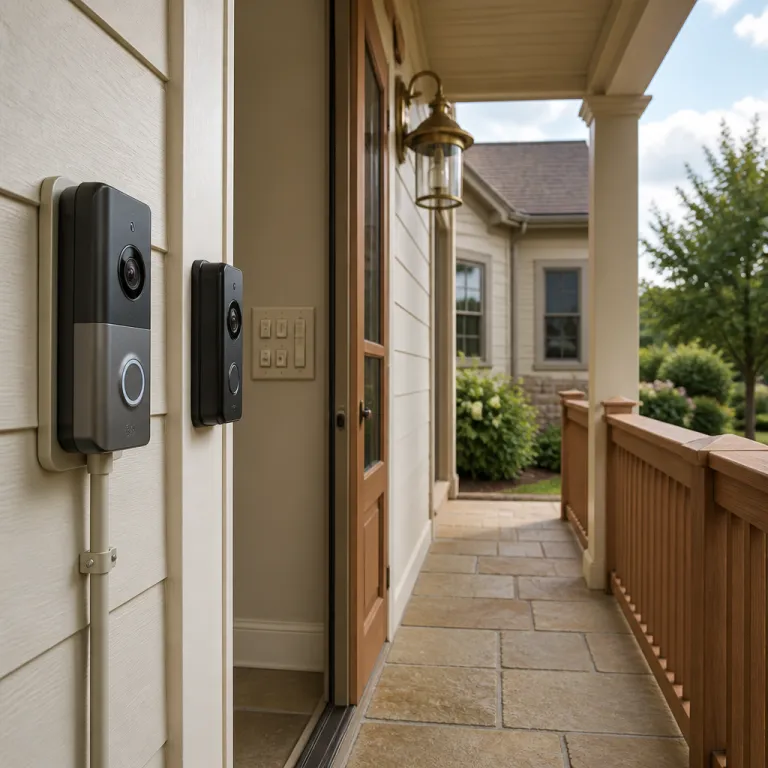

How home lighting control systems shape wired and wireless doorbell security
Smart doorbells change how you view your entrance, but home lighting control systems decide what you actually see. When a visitor approaches, coordinated lighting can raise security by flooding the porch with light while the camera records in high detail, which is why residential lighting design now treats the doorbell, the lights, and the control system as one security layer. A wired or wireless doorbell without smart lighting controls often leaves dark corners where a camera struggles and a visitor feels unwelcome.
In a typical smart home, the same controller that manages hallway lights can also control lighting scenes triggered by the doorbell. Pressing the button can activate a high or low brightness pattern on exterior LED lights, switch on a warm interior light, and send a notification to your phone, which turns a simple chime into a coordinated home control event. When you compare wired and wireless models, you should not only choose based on power and connectivity but also on how well each product integrates with your existing lighting control systems and automation platforms.
Wired smart doorbells often pair neatly with structured home control wiring and stable power for lighting. They can link to a central control system that already manages lighting controls for the driveway, porch, and hallway, which gives you reliable automation even if Wi‑Fi drops. Wireless models, by contrast, usually lean more on cloud services and smart lighting platforms, so you must view their compatibility with smart dimmer switches, LED products, and voice assistants as carefully as you check the camera resolution and field of view.
Wired smart doorbells and their impact on lighting control reliability
Wired smart doorbells draw constant power, which makes them ideal partners for home lighting control systems that need predictable triggers. When the transformer and chime wiring are already in place, a wired product can send consistent signals to a lighting controller every time someone presses the button or motion is detected, so your porch light and pathway lights respond without delay. This reliability matters when you use lighting controls to compensate for camera limitations in rain, fog, or low light, where even a 0.2 to 0.5 second delay can blur motion.
In many homes, the same electrical box that holds a dimmer switch for the porch light can be upgraded to a smart dimmer that talks to the doorbell. Systems such as Lutron Caséta or Brilliant Smart panels allow you to choose scenes where a doorbell press sets the exterior light to full brightness while interior lights stay low, which preserves privacy while improving video quality. A typical installation involves shutting off power at the breaker, swapping the existing switch for a compatible smart dimmer, pairing it with the doorbell in the app, and then testing scenes at night. When you evaluate the price of a wired doorbell bundle, you should compare the manufacturer’s MSRP with the total cost of adding compatible lighting controls, switches, and controllers over time.
Some wired security bundles combine a video doorbell, network video recorder, and outdoor cameras into one integrated control system for lighting and surveillance. A package like a PoE wired security bundle with continuous recording can work alongside smart lighting control to keep entrances illuminated whenever motion is detected, and you can read detailed testing reports on such a PoE wired security bundle with smart detection to understand how lighting and video interact. When you choose between wired products, pay attention to how each system exposes lighting controls in the app, whether it supports stepped dimming between bright and low levels, and how clearly it shows technical details about supported LED loads and maximum wattage.
Wireless smart doorbells, battery limits, and smart lighting automation
Wireless smart doorbells promise flexible placement, but their batteries and radio links shape how well they work with home lighting control systems. Because a battery powered product must conserve energy, it may limit how often it can trigger lights or send status updates to your lighting controller, which affects how smoothly your smart lighting scenes run. Typical battery powered models quote three to twelve months of life depending on motion activity, Wi‑Fi strength, and how frequently they wake to drive lighting events; in practice, heavy use with 20 to 30 recorded events per day can cut that to six to eight weeks, so when you compare wired versus wireless, you should view these constraints alongside the convenience of avoiding new wiring.
Most wireless models rely heavily on Wi‑Fi and smart home platforms such as Google Assistant, Amazon Alexa, or Apple HomeKit to control lighting. In practice, this means your doorbell sends an event to the cloud, which then tells your lighting control system or smart dimmer switch to change the light level, and every extra hop can add a small delay. In many homes this latency ranges from a fraction of a second for local integrations to two or three seconds for cloud based routines, so if you want fast reactions from porch lights or pathway lights, you should choose combinations where the doorbell and lighting controls share the same ecosystem, such as Caséta Wireless with Lutron Caséta dimmers or a Brilliant Smart panel that unifies lights and doorbell controls.
Radio standards also matter when you weigh wireless doorbells against wired models for lighting control. Some ecosystems use Zigbee or Z‑Wave to connect lighting products and controllers, and you can study how those protocols affect reliability in guides about choosing wired or wireless smart doorbells with confidence, then apply the same thinking to your lighting control systems. When a wireless doorbell and your lighting controls share a robust mesh network, you gain more dependable control of lighting scenes, but you still need to check battery life, LED compatibility, and the real world price of adding extra repeaters or hubs to strengthen coverage.
Voice assistants, home lighting control systems, and doorbell workflows
Voice assistants now sit at the center of many home lighting control systems, and they also mediate how you respond to a smart doorbell. When someone rings, you might ask Google Assistant to turn on the porch light, or use an Alexa routine that raises several lights while showing the doorbell view on a smart display, which blends lighting control with rapid situational awareness. The more tightly your doorbell and lighting controls integrate with these assistants, the less you need to reach for a phone or physical switch.
Platforms such as Apple HomeKit, Google Assistant, and Amazon Alexa allow you to build scenes that tie together doorbell events, LED lights, and other products. For example, a HomeKit scene can set exterior lights to high brightness, dim interior lights to a low level, and show the camera feed on an Apple TV when the doorbell detects motion, which uses lighting control to frame what you see on screen. When you choose combinations of doorbells and lighting controls, you should check whether the manufacturer exposes detailed automation hooks, or only basic on or off commands for each light, and confirm that motion, button presses, and night vision modes are all available as triggers.
Voice control also changes how you think about switches and controllers near the door. A traditional wall switch can be replaced with a smart dimmer or a multi button controller that works with your home control system, so you can tap one button to arm the doorbell, set exterior lights, and adjust interior residential lighting before bed. When you evaluate the price and MSRP of these products, remember that a single intelligent controller can replace several separate switches, simplify lighting tasks, and reduce the number of apps you juggle when someone appears at your door.
Energy efficiency, LED lighting, and doorbell triggered scenes
Energy efficient LED lighting has transformed how long you can safely leave lights on in response to smart doorbell events. Where halogen or incandescent bulbs made all night lighting expensive, modern LED products allow home lighting control systems to keep pathways illuminated for hours with modest energy use, which supports more generous motion based scenes. When you compare wired and wireless doorbells, you should also compare how each system lets you fine tune light durations and brightness levels.
Many smart lighting platforms let you define stepped dimming levels instead of a simple on or off switch. A doorbell press might set the porch light to high for five minutes, then drop to a low level that still supports the camera’s night view while saving energy, and this kind of graduated lighting control is especially useful in dense residential lighting layouts. When you choose bundles, look for detailed specifications about LED compatibility, minimum dimming levels, and whether the controller can handle mixed loads of interior and exterior lights, including recessed cans, sconces, and pathway fixtures.
Solar powered accessories add another layer to the relationship between smart doorbells and lighting controls. Some homeowners pair a wired or wireless doorbell with solar powered pathway lights and panels that reduce the effective price of running extended lighting scenes, and you can explore curated lists of top smart doorbells with solar panels to see how manufacturers design for this synergy. When you integrate solar products into your home control system, make sure the controller exposes clear energy usage details, supports smart dimmer functions for LED fixtures, and keeps lighting control predictable even when sunlight varies across seasons.
Practical buying guide: matching doorbells, lighting controls, and budgets
Choosing between wired and wireless smart doorbells becomes easier when you start with your lighting control goals. If you already own a structured home control system with Lutron Caséta dimmer switches, Caséta Wireless bridges, or a Brilliant Smart panel, a wired doorbell that integrates directly with those lighting controls usually offers the most reliable experience, because it shares the same backbone. Wireless models suit renters or homes without existing wiring, but you must check how well they talk to your chosen lighting controller and whether they support both individual light control and grouped scenes.
Budget planning should include more than the doorbell’s headline price or MSRP. A lower cost product that forces you to replace several switches, add extra hubs, or buy new LED fixtures can end up more expensive than a premium model that fits your current lighting control systems, so always compare total system cost over several years. When you read product details, look for clear statements about supported platforms such as Google Assistant, Amazon Alexa, and Apple HomeKit, as well as explicit notes about LED dimming ranges and maximum wattage per switch.
Security and usability also depend on how you physically interact with the system. Some households prefer tactile wall controls, using a smart dimmer or multi gang controller near the entrance to manage both lights and doorbell modes, while others rely on voice and app based controls to adjust residential lighting from anywhere in the home. Whatever you choose, aim for a coherent home lighting strategy where the doorbell, the lights, and the control system work together, so every ring automatically sets the right light, the right view, and the right level of comfort for both guests and residents.
Key statistics on smart doorbells and lighting control
- According to a report from Parks Associates on smart home adoption in broadband households (for example, the firm’s recurring “Smart Home Tracker” series), more than 20 percent of U.S. broadband homes now own at least one smart home security device, and video doorbells are among the fastest growing categories within that segment.
- Research from the U.S. Department of Energy on solid state lighting, including DOE fact sheets on LED efficiency, shows that LED lighting uses at least 75 percent less energy than incandescent lighting and lasts up to 25 times longer, which makes LED fixtures the preferred choice for doorbell triggered lighting scenes that may run for many hours each night.
- A study summarized by the National Institute of Justice on the impact of improved street and exterior lighting in residential areas reports that better nighttime illumination can reduce certain types of crime, which supports the practice of pairing smart doorbells with automated exterior lighting control to enhance perceived and actual security.
- Market analysis from firms such as Statista, which tracks the global smart lighting segment, indicates that the smart lighting market is growing at a double digit compound annual growth rate, driven partly by integration with smart home security devices including wired and wireless video doorbells.
FAQ
How do home lighting control systems improve smart doorbell security ?
Home lighting control systems improve smart doorbell security by ensuring that entrances are well lit whenever motion or a button press is detected. Coordinated scenes can turn on porch and pathway lights, adjust brightness for camera clarity, and make visitors more visible from inside the home. This combination reduces dark spots, supports clearer video recordings, and can deter opportunistic intruders.
Is a wired or wireless smart doorbell better for lighting automation ?
A wired smart doorbell usually offers more reliable lighting automation because it has constant power and often integrates directly with structured home control wiring. Wireless models provide easier installation and flexibility, but they depend on batteries and Wi‑Fi, which can introduce delays or missed triggers for lighting scenes. The best choice depends on whether you prioritize installation simplicity or rock solid coordination between the doorbell and your lighting controls.
Which platforms work best for combining smart lighting and doorbells ?
Platforms such as Lutron Caséta, Brilliant Smart, Apple HomeKit, Google Assistant, and Amazon Alexa all support combinations of smart lighting and doorbells. The most effective setup is usually one where both the doorbell and the lighting controls belong to the same ecosystem or have certified integrations, which reduces latency and configuration complexity. Before buying, check official compatibility lists and look for support of scenes, motion triggers, and dimming control rather than only basic on or off commands.
Do I need special LED bulbs for doorbell triggered lighting scenes ?
You do not always need special LED bulbs, but you do need LED fixtures that are compatible with your chosen dimmer switch or smart controller. Many smart lighting control systems specify which LED products have been tested for flicker free dimming and reliable on or off behavior, especially at low brightness levels. Using compatible LEDs ensures that your doorbell triggered scenes run smoothly and that lights respond predictably to every event.
How much should I budget for integrating lighting with a smart doorbell ?
The budget for integrating lighting with a smart doorbell can range from a modest amount for a single smart bulb and basic wireless doorbell to a more substantial investment for multiple smart dimmers, controllers, and a wired video doorbell. When planning, include the doorbell price or MSRP, the cost of compatible switches and LED fixtures, and any required hubs or bridges. Considering total system cost over several years helps you choose an option that balances performance, reliability, and long term value.