
Summary
Editor's rating
Value: solid feature set, but ongoing costs add up
Design: modern look, but not exactly discreet
Battery life: good, but depends heavily on how busy your front door is
Durability and reliability: built for outdoors, but time will tell
Performance: strong video and motion, but depends on your Wi‑Fi
What you actually get with this bundle
Pros
- Very clear video with wide head-to-toe field of view and decent night vision
- Quick Release Ultra Battery Pack makes charging easy without removing the whole doorbell
- Chime (3rd gen) is loud, clear, and avoids missing visitors when your phone is away
Cons
- To get video history and smart features you basically need a paid Ring subscription after 30 days
- Performance heavily depends on having strong Wi‑Fi and at least 15 Mbps upload speed

Specifications
View full product page →| Brand | Ring |
A doorbell that’s basically a mini security camera
I’ve been using the Ring Battery Video Doorbell Pro with the 3rd gen Chime for a bit now, and overall it feels like a doorbell that wants to be a full-on security system. It’s wireless, runs on a battery pack, and pushes 4K video with some pretty strong zoom. On paper it looks a bit overkill for just “someone at the door”, but once you start using it, you get why they went that route. You really do see a lot more than with a basic HD doorbell.
In daily use, the main thing that stands out is how quickly it sends alerts when someone walks up. I get a ping on my phone, I can see them head-to-toe, and the Chime rings in the house so I don’t miss visitors if my phone’s in the other room. It’s pretty straightforward, but there are a few catches: you need decent internet upload speed, and if you want to store recordings or smart alerts, you’re basically pushed into the Ring subscription after the 30-day trial.
I used to have a basic wired doorbell and a separate cheap camera pointing at the door. This replaces both, but it’s not a simple plug-and-play swap. You have to charge the battery, mount it, set up Wi‑Fi, tweak motion zones, and then decide what you want to pay for long term. If you’re expecting a “buy once and forget” doorbell, that’s not what this is. It’s more like buying a small connected gadget that needs a bit of babysitting.
So far, I’d say it does what it promises in terms of visibility and alerts, but it’s not perfect. The subscription part is a bit annoying, the app has a learning curve, and the product is only as good as your Wi‑Fi. If you’re okay dealing with those things, it’s a pretty solid upgrade for front door security. If you hate apps and subscriptions, you might get frustrated quickly.
Value: solid feature set, but ongoing costs add up
In terms of value, this bundle is a bit of a mixed bag. On one hand, you’re getting a battery-powered 4K doorbell with a wide field of view, 3D motion detection, Wi‑Fi 6, two-way audio, plus a separate Chime (3rd gen) that actually sounds clear and loud. The hardware and features are pretty stacked compared to cheaper video doorbells. If you look only at what the device can do—sharp video, strong motion detection, decent night vision, Alexa integration—it feels like a pretty solid package.
On the other hand, the real cost isn’t just the purchase price. The 30-day free trial of the Ring Subscription Plan is nice at first, but after that, if you want to keep saving video for up to 180 days and get all the smart alerts, you’ll need to pay monthly or yearly. Without the subscription, you still get live view and instant alerts, but no video history. For something that sells itself as a security product, not having recordings unless you pay extra feels a bit limiting. It’s not unusual in this space, but you should factor it in.
Compared to cheaper brands that offer free local storage or basic cloud recording, Ring is more expensive in the long run, but you’re also paying for a more polished ecosystem and regular updates. The app is more mature, the hardware feels more robust, and the integration with Alexa and other devices is smoother. Whether that’s worth it depends on how much you care about reliability and how long you plan to keep it. If you’re fine tinkering with less known brands, you might find better raw value elsewhere.
For someone who wants a straightforward, well-supported doorbell with strong video quality and doesn’t mind paying a subscription, the value is fair. If you’re trying to keep ongoing costs to an absolute minimum, this is probably not the best choice. It gets the job done very well, but you’re paying for that convenience both upfront and over time.
Design: modern look, but not exactly discreet
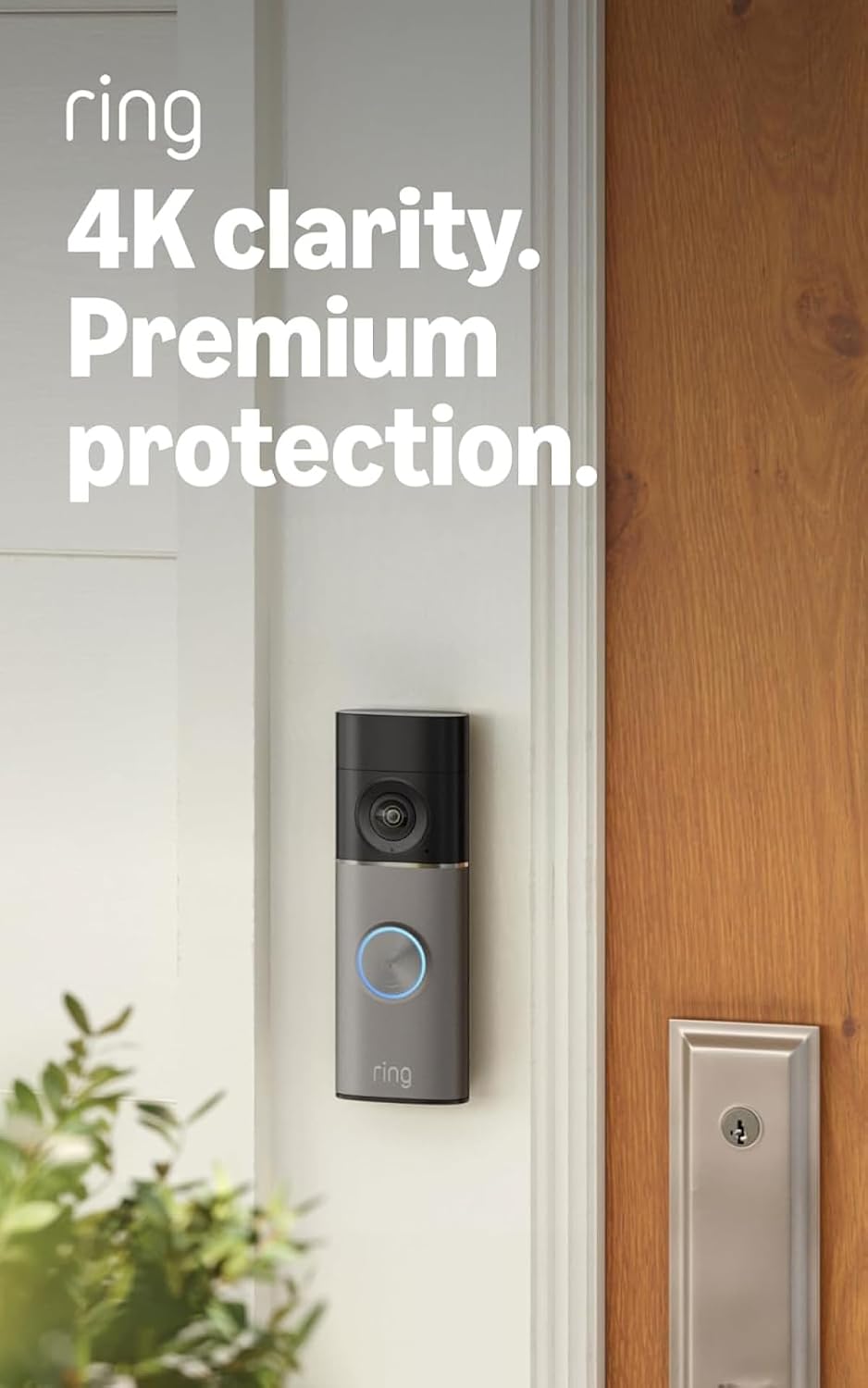
Design-wise, the Ring Battery Video Doorbell Pro looks modern and a bit techy. It’s finished in Deep Silver with a black camera area, and it’s taller than some older doorbells I’ve seen. With the wall mount, it’s about 14.7 cm high and 5.36 cm wide, so people will definitely notice it on your wall. Personally, I don’t mind that; it kind of doubles as a visual deterrent. If someone thinks twice before messing around at your door, that’s already something.
The layout is simple: camera up top, big button with an LED ring below. The ring lights up when someone presses it or when it’s in setup mode, and it’s bright enough to be visible even in daylight. At night, that glowing ring makes it obvious where to press, which sounds basic, but some cheaper smart doorbells skip this and people end up jabbing randomly at the device. Here, it’s clear and intuitive, even for guests who’ve never seen a Ring before.
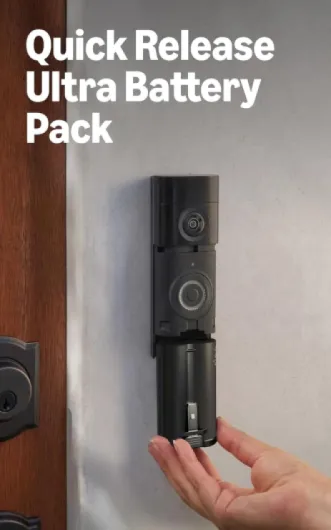
Installation-wise, the design helps a bit. The universal mounting plate and corner kit give you some flexibility if your door frame is at a weird angle. I like that you can tilt it slightly to better see people standing close to the door instead of just filming your front step. The quick-release battery design also means you don’t have to unmount the whole thing to charge it, which is a relief. You just slide the bottom latch, pop the battery out, and put it on charge.
On the downside, the finish does pick up dust and fingerprints a bit, especially around the button. It’s not a big deal, but if you’re picky about looks, you’ll probably wipe it down now and then. Also, there’s only one color (Deep Silver) in this bundle, so if you wanted something that matches a darker or lighter facade perfectly, you’re stuck or you’ll need to buy a different faceplate separately. Overall, I’d call the design practical and modern, not stylish for the sake of it, and it fits fine on most door frames.
Battery life: good, but depends heavily on how busy your front door is
The doorbell runs on the Quick Release Ultra Battery Pack, which they present as their fastest-charging battery yet. In real life, the biggest advantage is not the charging speed itself, but the fact that you can pop it out easily without removing the whole doorbell from the wall. There’s a latch at the bottom, you slide it, the battery comes out, and you plug it into a charger. For people who don’t want to mess with wiring, this is way less hassle than a fully wired setup.
Battery life will vary a lot. In my case, with motion alerts on, some packages delivered, and a few doorbell presses per day, I’m seeing roughly 4–6 weeks per charge so far. That’s with 4K recording and 3D Motion Detection enabled. If you live on a busy street or have the motion sensitivity too high, it’s going to drain faster. If you’re in a quiet cul‑de‑sac with fewer events, you might get longer. The app does give you a battery percentage and some tips if it notices you’re using a lot of power.
Charging time is reasonable. From low to full, it took me a few hours using a standard USB charger. Not lightning fast, but you can easily do it overnight. If you really want zero downtime, you can buy a second battery and swap them, but that’s an extra cost. While the doorbell is charging, it obviously won’t work unless you wired it into an existing doorbell transformer, which this one does support (8–24 VAC). I didn’t wire mine, so I just picked a time when I didn’t expect deliveries.
Overall, I’d say the battery system is practical and pretty solid, but you need to accept that recharging will be part of your routine every month or so. If you hate that idea, you might want a fully wired model instead. For me, the trade-off is fine: no electrician needed, a bit of charging now and then, and clear feedback in the app when it’s time to top it up.
Durability and reliability: built for outdoors, but time will tell
The doorbell is rated for -20.5°C to 48.5°C and has weather resistance (IPX), so it’s clearly meant to live outside year-round. I’ve had it through some rain and a couple of colder nights, and so far there’s been no moisture inside the lens, no fogging, and no weird behavior. The casing feels solid enough, not cheap plastic, and the button has a firm click that doesn’t feel like it will wear out quickly. It doesn’t flex or creak when you press it, which is reassuring.
From a security and longevity angle, Ring promises software security updates for at least four years after the device is last sold new on their site. That’s decent, especially for a connected device. It means you’re not buying something that becomes unsupported in a year. There’s also a one-year limited warranty with theft protection, which is nice given it’s literally mounted outside where anyone can see it. You still need to read the fine print, but it’s better than nothing if someone decides to yank it off your wall.
Reliability has been mostly fine in my use. The doorbell hasn’t frozen, and the app hasn’t lost it randomly, except once when my router rebooted. After the network came back, it reconnected by itself. The Chime has been stable too: it stays linked and rings every time someone presses the button or motion triggers (depending on how you set it). No random disconnects or missed rings so far, which is kind of the bare minimum, but some cheaper brands struggle with that.
The only long-term concern I’d have is the battery aging. Like any lithium battery, it’ll probably hold less charge after a couple of years. That’s not unique to Ring, but something to keep in mind, especially since replacement batteries aren’t free. Overall though, the build and specs give me the impression it’s meant to last a few years without drama, as long as you don’t smash it or mount it in a completely exposed, harsh spot with no shelter at all.
Performance: strong video and motion, but depends on your Wi‑Fi
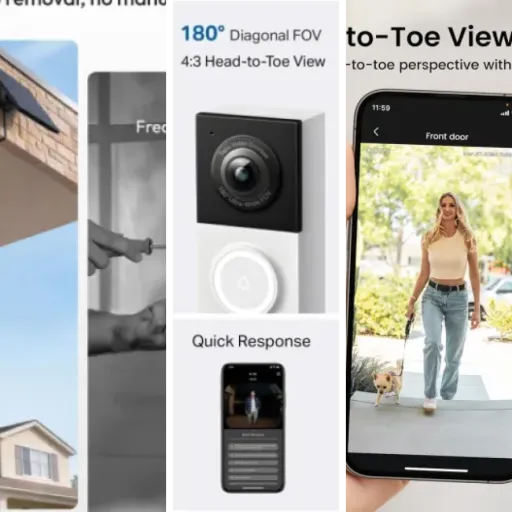
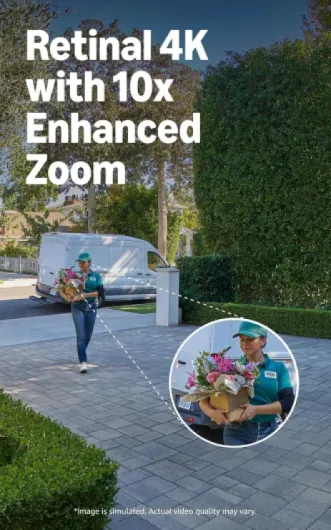
The main selling point here is the 4K video with up to 10x enhanced zoom and that 140x140 head‑to‑toe field of view. In practice, the image is very sharp when your internet upload speed is good (they recommend at least 15 Mbps). Faces are clear, text on packages is often readable, and the wide square image lets you see both the person’s face and what they’re holding, plus any parcels on the ground. Compared to my old 1080p cam, it’s a clear step up, especially when you zoom in on recordings.
Motion detection with the 3D Motion Detection is also pretty solid once you tweak it. Out of the box, it was a bit too sensitive and kept alerting me for people just walking past on the sidewalk. After adjusting the motion zones and distance, it calmed down and mostly only triggered when someone actually came onto the property. The alerts come through quickly on my phone, usually within a couple of seconds of movement, and the Chime rings almost immediately when the button is pressed.
Night vision is decent. You get color for longer in low light, and then it switches to black and white infrared in complete darkness. In real use, faces are still recognizable at night, and you can tell what’s going on, which is what matters. It’s not cinema-level, but it’s definitely usable. The 10x zoom is helpful when you want to check a detail on a recording, but don’t expect magic—if the lighting is bad or the person is too far, zooming just makes the noise more obvious. Still, for checking plates on a car parked close or reading a label, it’s handy.
The weak point is when your connection isn’t great. If the Wi‑Fi signal is spotty at the door, or your upload speed is below 15 Mbps, the video can drop in quality or stutter. I had one day where my internet was acting up and the live view was borderline unusable. That’s not really Ring’s fault, but it means this product is not very forgiving if your network is mediocre. So performance is strong, but only if your home setup can support it.
What you actually get with this bundle
Out of the box, the bundle is fairly complete. You get the Battery Video Doorbell Pro (they call it 2nd gen), the Quick Release Ultra Battery Pack, a universal mounting plate, a corner kit, a faceplate, screws and tools, a setup guide, and a little security sticker. On top of that, there’s the separate Chime (3rd gen) that plugs into a wall socket. So you don’t need to buy extra mounting hardware unless your wall is weird or you want custom anchors.
The doorbell itself is a tall, slim rectangle in a Deep Silver finish. It’s not tiny, but it doesn’t look cartoonishly big either. Ring claims “Retinal 4K with 10x enhanced zoom” and a 140x140 field of view, so basically you get a wide, square-ish image that shows the person from head to toe. It also has 3D Motion Detection, Wi‑Fi 6 support, and two-way audio. Most of that only matters once you dive into the app, but it’s good to know you’re not buying a barebones device.
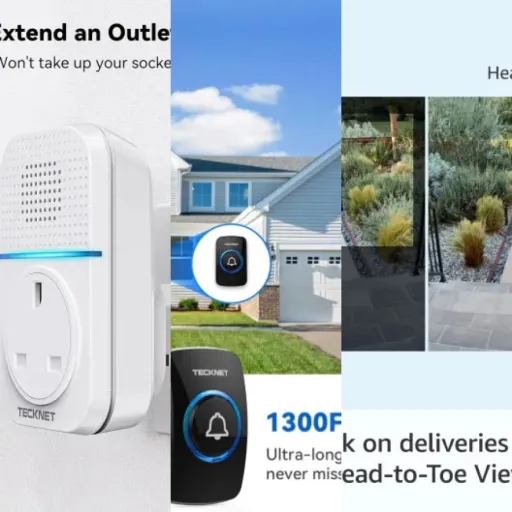
The Chime 3rd gen is just a small white box that goes into a wall outlet. Setup is done over Wi‑Fi or Bluetooth, and you can pick different tones and set the volume in the app. In practice, it just saves you from relying only on your phone. If you live in a bigger place, having the chime ring when someone presses the doorbell or when motion is detected is actually pretty handy. It’s louder and clearer than the old chimes I’ve tried from cheaper brands.
The big catch in the presentation is the subscription angle. You get a 30-day free trial of the Ring Subscription Plan, which unlocks video history (up to 180 days), smart alerts, and a bunch of “nice to have” features. After that, if you don’t pay, it still works as a live-view doorbell with alerts, but you lose recordings. For a product that sells itself on security, that feels a bit limiting. It’s not a scam or anything, but you should factor that into the total cost over a few years.
Pros
- Very clear video with wide head-to-toe field of view and decent night vision
- Quick Release Ultra Battery Pack makes charging easy without removing the whole doorbell
- Chime (3rd gen) is loud, clear, and avoids missing visitors when your phone is away
Cons
- To get video history and smart features you basically need a paid Ring subscription after 30 days
- Performance heavily depends on having strong Wi‑Fi and at least 15 Mbps upload speed
Conclusion
Editor's rating
Overall, the Ring Battery Video Doorbell Pro with the 3rd gen Chime is a pretty solid option if you want a serious upgrade from a basic doorbell and don’t mind dealing with apps and subscriptions. The video quality is sharp, the wide field of view actually helps in real life, and motion alerts are fast once you dial in the settings. The battery system is practical, especially if you don’t want to touch wiring, and the Chime means you hear the doorbell anywhere in the house, not just on your phone. For day-to-day use, it does what it’s supposed to do: you see who’s at your door clearly and you can talk to them from anywhere.
That said, it’s not perfect and it’s not the cheapest way to secure your front door. The need for a strong Wi‑Fi connection and at least 15 Mbps upload speed is real—without that, the 4K promise doesn’t mean much. The subscription requirement for video history is also something you have to accept from the start; otherwise you’re paying a premium price for live view only. If you’re okay with those trade-offs and want a well-rounded, reliable smart doorbell, this bundle makes sense. If you hate ongoing fees or have weak internet, you might be better off with a simpler, cheaper model, even if the video isn’t as sharp.