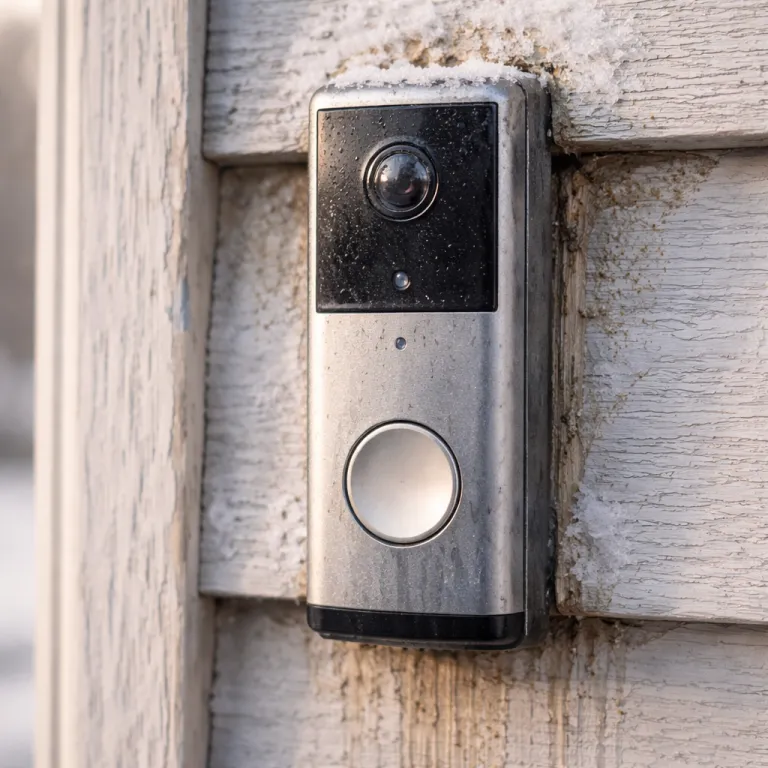

Why smart doorbell cold weather durability matters more than IP ratings
Smart doorbell cold weather durability becomes obvious the first time a courier rings and the app never pings. When the temperature hovers below freezing for weeks, the battery in a video doorbell drains faster, the camera struggles, and wifi radios start to misbehave in ways that glossy spec sheets rarely admit. If you care about front door security in a real winter climate, you need to understand how the device, the power system, and the camera lens age over several seasons, not just during a lab test.
Most brands highlight an IP rating and a wide operating temperature range, yet those numbers say little about what happens after five freeze thaw cycles and a summer of direct sun on satin nickel trim. Long term owner reports and independent testing from groups such as Consumer Reports indicate that the first weak points in many doorbells are the rubber gaskets around the doorbell camera housing, the adhesive used in quick installation brackets, and the wifi module that slowly loses range after repeated thermal stress. A smart doorbell that looks sleek on day one can become unreliable security gear by the third winter if the housing warps, the lens fogs, or the doorbell battery no longer holds enough power to run the video camera reliably.
Ring doorbells, Nest models, Eufy units, and Arlo doorbell cameras all claim resilience in cold weather, yet their real battery performance diverges sharply once the temperature drops below zero degrees Celsius. Manufacturer specifications typically quote operating ranges down to around minus twenty degrees Celsius, but aggregated owner surveys and field tests show that battery doorbell designs relying on a removable lithium ion pack often deliver battery life of one to six months in marketing, while in a harsh winter climate that same battery can require charging every two to three weeks. Wired options such as a Ring Doorbell Pro or a Nest Doorbell wired avoid the constant charging cycle, although they still depend on stable power and careful installation to keep the video quality and camera lens performance consistent over years of winter storms.
What actually fails first in cold climates by brand family
Patterns emerge when you read long term owner reviews of each major smart doorbell brand through several winters and compare them with manufacturer documentation. With Ring doorbells, the most common early failure in cold weather is a sharp drop in battery life combined with intermittent wifi connection, followed later by lens fogging if the housing seal weakens. Owners of the battery doorbell versions often report that the device will not start charging properly until the battery warms above freezing, which leaves the front door without video security during the coldest nights.
Ring Video Doorbell 3 and Ring Video Doorbell 4 units tend to keep their camera lens clear for the first couple of winters, but some users in very cold temperature regions see the plastic around the lens hairline crack after repeated ice buildup. The Ring Doorbell Pro line, which relies on wired power instead of a doorbell battery, avoids many battery performance issues yet can still suffer from wifi radio drift, where the video feed becomes unstable even though the home router has not moved. When that happens, the Ring app may show delayed alerts or frozen video, undermining the whole point of a smart doorbell for security conscious homeowners.
Google Nest models show a different pattern, especially the Nest Doorbell battery and the older Nest Hello wired doorbell camera. In cold weather, Nest battery devices often throttle features to preserve power, reducing video quality or motion detection sensitivity, which can mean missed package alerts in winter. Wired Nest units handle power more gracefully, but long term reports mention gasket degradation around the camera lens and occasional water ingress after several winters of driving rain and snow, issues that echo broader concerns about IoT camera vulnerability and weather sealing raised in independent security analyses such as those discussed in recent coverage of smart doorbell risks.
The cold weather battery truth behind smart doorbell runtimes
Battery powered smart doorbells are marketed with generous runtime estimates, yet cold weather turns those numbers into wishful thinking. A lithium ion battery loses capacity as the temperature drops, so a doorbell that lasts three months in mild weather can struggle to work for three weeks when the thermometer stays below freezing. If you live in a region with long winter seasons, you must treat the quoted battery life as a best case scenario rather than a guarantee.
Real world reports from homeowners in northern climates and controlled tests that log runtime at specific temperatures show that a Ring doorbell or Nest Doorbell battery can burn through a full charge in under a month when motion alerts, live video, and frequent wifi reconnects pile on. Every time the device wakes to record video or stream to your phone, it draws a surge of power from the doorbell battery, and that surge is less efficient at low temperature. The result is a cycle of constant charging, where you remove the battery doorbell from its mount or bring the entire device indoors, leaving your front door without active security for hours.
To judge smart doorbell cold weather durability, look beyond the headline battery performance and ask how the device behaves when the battery is nearly empty in winter. Some Ring doorbells and Google Nest models reduce video quality or disable non essential features to stretch remaining power, while others simply shut down until you recharge. If you cannot easily access the mounting bracket or if your installation relies on a high entrance, repeated charging becomes a safety and convenience issue, which is why many cold climate homeowners eventually switch to wired power or hybrid designs that combine trickle charging with a backup battery.
Water ingress, mounting failures, and how to survive freeze thaw cycles
Cold weather rarely arrives alone; it brings moisture, ice, and repeated freeze thaw cycles that test every seam of a smart doorbell. The first winter is critical because small leaks around the camera lens or the backplate can let in condensation that only shows up as foggy video months later. If you see even minor misting inside the doorbell camera window after a storm, treat it as a red flag while the warranty still covers the device.
Water ingress often starts where the housing meets the wall, especially when the original installation relied on thin adhesive pads instead of solid screws and a weatherproof gasket. As the wall and the doorbell expand and contract with temperature swings, that adhesive can let go, tilting the device and exposing the wiring cavity to rain and snow. Over time, this movement stresses the power connections, degrades wifi signal alignment, and can even crack the satin nickel or plastic trim around the camera lens, all of which reduce both video quality and long term security.
To improve smart doorbell cold weather durability, mount the device on a rigid, flat surface using stainless steel screws and a proper backplate, even if the manufacturer includes peel and stick options. Seal the top and sides with a thin bead of exterior grade caulk, leaving the bottom edge open so any trapped moisture can drain instead of freezing behind the doorbell. For more detailed guidance on how a technological house can integrate robust smart video doorbells into the building envelope, resources that explain how a modern home transforms its front door with smart video doorbells offer practical examples of weather aware installation strategies.
When to repair, when to replace, and how to choose for the long haul
Every smart doorbell eventually reaches a point where repair becomes a stopgap rather than a solution. The signs are usually clear; the device misses rings, the video doorbell feed stutters, the wifi connection drops on calm days, or the camera lens shows permanent haze that cleaning cannot fix. When these symptoms persist after firmware updates and power checks, the underlying hardware has likely degraded beyond reliable security use.
Battery related issues are sometimes fixable, especially if your model allows a user replaceable lithium ion pack or an upgraded doorbell battery with better cold weather performance. If the smart doorbell still works well on a warm day but fails repeatedly in winter, a fresh battery or a shift to wired power can extend its life by a couple of seasons. However, when water ingress has corroded internal contacts or when the camera module itself has failed, repair costs often approach the price of a new device, making replacement the more rational choice for long term security.
When selecting a replacement, prioritize smart doorbell cold weather durability over the latest novelty features, and weigh whether a wired Ring Doorbell Pro, a battery based Nest Doorbell, or another brand fits your climate and wiring. Look for clear operating temperature ranges, honest battery life explanations, and housing designs that protect the camera lens and electronics from both cold and heat. For a deeper look at how connectivity standards such as Bluetooth Low Energy and other wireless protocols shape the next generation of smart doorbells, analyses of how BLE and Bluetooth influence smart doorbell design can help you understand which devices are most likely to keep working reliably after many winters on your wall.
Security, subscriptions, and the hidden costs of long term ownership
Durability is not only about hardware; it also includes the long term security and software support that keep a smart doorbell safe to use. A video doorbell that survives ten winters physically but stops receiving security patches becomes a liability, especially as new wifi vulnerabilities and IoT camera exploits emerge. Before you subscribe to any cloud recording plan, check how long the manufacturer commits to updates and how they handle older doorbells when new models arrive.
Ring, Google Nest, and other major brands tie many advanced security features to subscription plans, which can influence how you use the device over time. If you stop paying to subscribe, you may lose access to cloud video history, advanced motion detection, or rich notifications in the Ring app or Google Home app, even though the doorbell camera still works at a basic level. That shift can change how often you review footage, how quickly you notice signs of hardware degradation such as video quality drops, and how much value you get from the device during harsh winter seasons.
Long term owners also need to watch for policy changes that affect data retention, sharing with law enforcement, or integration with other security systems, because these factors shape whether a smart doorbell remains a trustworthy part of your home security. A durable device is one whose hardware, software, and privacy posture all hold up under the pressure of time, temperature swings, and evolving threats. For ongoing context about how IoT camera vulnerability news affects smart doorbells, independent reporting from organizations such as Consumer Reports, the Electronic Frontier Foundation, and national cybersecurity agencies offers valuable perspective beyond manufacturer marketing.
Key statistics on smart doorbell cold weather durability
- Battery powered smart doorbells commonly advertise one to six months of runtime per charge, yet in sub zero temperatures many owners report real world battery life dropping to under three weeks.
- Wired video doorbells only remain fully functional during power outages when paired with a battery backed transformer or whole home backup system, a detail that is often buried deep in technical documentation.
- Long term failure modes in cold and wet climates frequently include lens fogging, gasket degradation, adhesive mount failure, and gradual wifi radio drift that reduces connection stability over several winters.
- Homeowners in regions with sustained winter temperatures below minus ten degrees Celsius are significantly more likely to switch from battery doorbells to wired or hybrid power solutions after two to three seasons.
Frequently asked questions about smart doorbell cold weather durability
How cold is too cold for a battery powered smart doorbell to work reliably ?
Most battery powered smart doorbells are rated to operate down to around minus twenty degrees Celsius, but practical reliability often starts to suffer once temperatures stay below freezing for long periods. In that range, lithium ion chemistry loses capacity, motion events draw more power, and the device may shut down to protect the battery. If your winters regularly reach those lows, a wired model or a hybrid design with continuous trickle charging is usually a better choice.
Why does my video doorbell battery drain so fast in winter compared with summer ?
Cold weather slows the chemical reactions inside a lithium ion battery, effectively shrinking its usable capacity and forcing the smart doorbell to work harder for each motion event. At the same time, winter often brings more motion triggers from blowing branches, passing vehicles, and people wearing bulky coats that confuse motion algorithms. The combination of reduced capacity and increased activity can cut battery life from months to weeks, especially if you frequently check live video or use high resolution recording.
How can I tell if water ingress is damaging my doorbell camera after a storm ?
Early signs of water ingress include intermittent fogging inside the camera lens cover, random reboots after heavy rain, and corrosion or discoloration around screws and seams. If you notice these symptoms during the first winter, document them with photos and contact the manufacturer while the warranty still applies. Waiting often allows minor moisture problems to become permanent damage that affects video quality and long term reliability.
Is a wired Ring Doorbell Pro or Nest Doorbell always better than a battery model in cold climates ?
Wired models such as Ring Doorbell Pro and certain Nest Doorbell versions avoid many battery related issues in cold weather, but they are not automatically superior in every situation. They depend on existing doorbell wiring, a stable transformer, and sometimes a backup power solution to stay online during outages. If your wiring is old or absent, a high quality battery doorbell with careful installation and realistic charging expectations can still provide strong security.
When should I replace my aging smart doorbell instead of trying to repair it ?
Replacement makes sense when core functions such as motion detection, video streaming, or reliable ringing fail repeatedly despite good wifi, stable power, and up to date firmware. Persistent lens haze, visible cracks in the housing, or recurring shutdowns in moderate temperatures usually indicate hardware degradation that simple repairs cannot fix. At that stage, investing in a newer model with better weather sealing and clearer cold weather specifications will provide more dependable front door security.