
Summary
Editor's rating
Value for money: worth it if you hate subscriptions
Design and build: chunky but feels solid
Battery life: decent, but depends a lot on how you use it
Durability and reliability: hardware seems fine, software is the question mark
Video, detection and app: good picture, mixed experience
What you actually get and what it really does
Pros
- No mandatory subscription thanks to 8 GB built‑in local storage
- Clear 2K video with useful dual‑camera view for visitors and parcels
- Includes indoor chime and all mounting hardware, easy to install
Cons
- Noticeable delay on notifications and live view compared to big brands
- App is functional but not very intuitive or fast
- Some reports of firmware/Wi‑Fi issues affecting long‑term reliability

Specifications
View full product page →| Brand | youkey |
A doorbell for people who are tired of subscriptions
I picked up the youkey Dual-cam Video Doorbell mainly because I was fed up with paying a subscription for my old Ring. I wanted something that records locally, shows parcels on the ground, and doesn’t nag me every month to renew a plan. On paper, this thing ticks all those boxes: dual cameras, 2K video, 8 GB built‑in storage, and no mandatory cloud. So I installed it on my front door and used it as my main doorbell for a couple of weeks.
Right away, the first thing that stood out was how complete the box is. You get the doorbell, a chime, screws, wedge, cable, even a little pin to detach it. No hunting around for random bits in the toolbox, which I appreciated. Setup through Bluetooth and Wi‑Fi was fairly quick, and I had it on my network and in the app in under 10 minutes. So in terms of first contact, it starts off strong.
But once you start using it day to day, you notice both the good and the annoying parts. Video quality is genuinely clear, and the second camera that points down at the doorstep is actually useful if you get a lot of deliveries. On the other hand, notification delay and the app experience aren’t on the same level as the big brands. You notice a bit of lag between someone pressing the button and your phone waking up, and that matters if you’re trying to catch couriers in time.
Overall, after some time with it, I’d say this doorbell is pretty solid if your top priority is no monthly fee and local storage, and you’re okay with a few software rough edges. If you’re used to the polish and speed of Ring or Nest, you’ll feel the difference. It’s not trash, but it’s not perfect either. It’s a trade‑off: save money on subscriptions, accept a slightly clunkier experience.
Value for money: worth it if you hate subscriptions
When you look at the feature list versus the price, the youkey doorbell is good value on paper. Dual cameras, 2K video, local 8 GB storage, chime included, dual‑band Wi‑Fi, Alexa/Google support – you usually pay more for that kind of package from the big names, and then you still have to add a monthly subscription on top. Here, you pay once and you’re basically done unless you decide to add optional cloud storage.
The key question is: are you okay with a slightly rougher user experience in exchange for saving on subscriptions? If your answer is yes, then this thing makes sense. You avoid the ongoing Ring/Nest fees, you still get clear footage and decent battery life, and you can review roughly up to 60 days of events locally. For someone who just wants to see who’s at the door and keep an eye on parcels without paying every month, it’s a pretty reasonable compromise.
On the other hand, if you’re used to Ring’s faster notifications, slick app, and more mature ecosystem, you may feel this is a downgrade. One reviewer literally went back to Ring after trying this because they preferred the speed and reliability, even if it meant renewing the subscription. That’s the trade‑off in a nutshell: you save money, but you sacrifice some polish and responsiveness. If you’re very picky about app smoothness and instant alerts, the value equation tilts back toward the more expensive brands.
Overall, I’d rate value as good but not mind‑blowing. It’s not the absolute cheapest camera doorbell out there, but you’re getting a decent amount for your money, especially the dual‑cam and local storage. If you’re budget‑conscious and mainly care about cutting subscription costs, it’s a sensible choice. If you want the most reliable, fastest system and don’t mind paying every year, then this is more of a side‑grade than a real upgrade.
Design and build: chunky but feels solid
Design‑wise, the youkey doorbell is fairly straightforward: a tall black rectangular unit with the main camera on top, the lower camera at the bottom, and the button in the middle. It’s not stylish or eye‑catching, but honestly that’s fine for a doorbell. It doesn’t scream “expensive gadget” on your wall, which I kind of like. It looks more like a practical piece of kit than a design object. The size is a bit on the larger side, but not worse than most video doorbells with big batteries.
The build quality feels pretty solid for the price. The plastic doesn’t creak, the button has a firm click, and once it’s clipped onto the mounting plate it doesn’t wobble around. The IP65 rating means it should handle rain and dust. I had it on an exposed doorway over a few wet days and it didn’t complain. The little LEDs at the bottom that act as downlights are actually useful in the dark, and visitors noticed that the button area lights up clearly, so they know where to press.
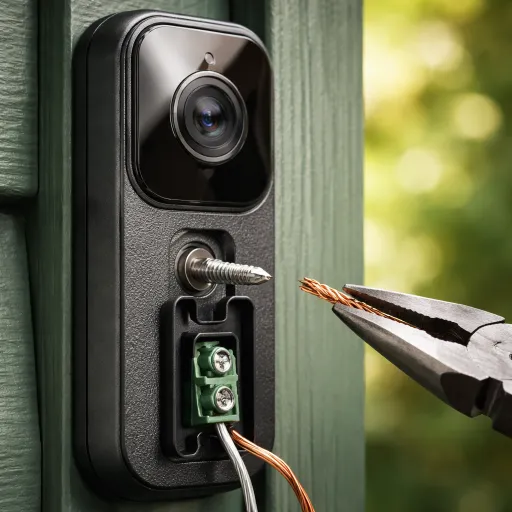
Installation is simple: screw the bracket to the wall, clip the doorbell on, and use the small metal pin to remove it when you want to charge it. There’s also a 15° wedge if your entrance is at an awkward angle. What I liked is that you don’t have to hardwire it if you don’t want to. You can run it fully on the battery and just take it off to charge it. If you do have doorbell wiring, there’s a hardwired pack included, but I used it battery‑only and it was fine.
On the downside, because it’s clip‑on and not bolted through the body, it’s not the most theft‑proof design out there. If someone really wants it, they could probably pry it off with some force. That’s pretty common with battery doorbells, to be fair, but it’s something to keep in mind, especially if your door opens straight onto the street. Overall, design is functional, not fancy. It looks decent, feels sturdy enough, and the dual‑cam layout makes sense. Nothing to brag about, but nothing that really bothers me either.
Battery life: decent, but depends a lot on how you use it
The brand claims up to 180 days of battery life from the 6400 mAh pack, based on 20 events per day at 15 seconds each. That’s the usual optimistic lab scenario. In reality, it depends heavily on how busy your door is and how often you open live view. During my use, with a mid‑traffic door (several deliveries a week, some motion events from people passing, and me checking the feed a few times a day), the drain was noticeable but not crazy. After about two weeks, the percentage had dropped a fair bit but wasn’t anywhere near empty, so I’d say a realistic range is more like 2–3 months for a normal household.
One Amazon reviewer mentioned only using about 3% in two weeks, which sounds possible if you have very few events and don’t constantly open the app. On the flip side, another user said they had to recharge after a couple of weeks because they were checking videos a lot and motion detection wasn’t very efficient. That lines up with my experience: if you’re constantly reviewing clips or live streaming, the battery will go down fast. This is not unique to this doorbell – it’s basic math – but it’s worth knowing.
Charging itself is straightforward: you pop the doorbell off the mount with the little key and plug it into USB‑C. No weird proprietary cable. The downside is that while it’s charging, you’re without a doorbell unless you have it wired. You could run a long cable and charge it in place, but that looks messy. I ended up charging it indoors and just accepting that the doorbell is offline for a few hours. The app showing the exact battery percentage is a nice touch though – better than some brands that just give you a vague icon.
Overall, I’d call the battery life decent but nothing special. It’s not terrible, it’s not magical. If your door is quiet, you’ll go months between charges. If you’re on a busy street or you’re the type who checks every motion event, you’ll be recharging more often than the marketing suggests. For the price range, it’s acceptable, but don’t expect to forget about it for half a year unless your usage is really light.
Durability and reliability: hardware seems fine, software is the question mark
From a pure physical durability angle, the youkey doorbell feels okay. The IP65 rating is standard for outdoor gear, and the housing didn’t show any issues with a bit of rain and cold. The button still clicked properly, no moisture under the lens, and the mount stayed firmly attached to the wall. The plastic doesn’t feel premium, but it doesn’t feel flimsy either. For a mid‑range price, the build is in line with what I’d expect.
Where I’m a bit more cautious is long‑term reliability and firmware. One buyer mentioned that after two charges, the unit basically “bricked” and refused to reconnect to Wi‑Fi, likely due to a firmware loop. That hasn’t happened to me personally, but it’s the kind of failure that’s hard to ignore when you’re looking at a product’s lifespan. If your doorbell just stops connecting one day, all the nice hardware doesn’t matter. The brand does at least offer a 30‑day return and a 6‑month free replacement for quality issues, plus 24/7 support, which helps if you get a bad unit.
The app and server side are another weak point. Because notifications and remote access go through youkey’s servers, you’re dependent on their uptime and speed. If they ever shut down the service or have frequent outages, the doorbell loses a lot of its smart value. Local storage means your recordings are still there, but the “smart” part (alerts, live view from outside your Wi‑Fi) could become unreliable. That’s a risk with almost every smart doorbell, but with smaller brands it’s a bit more of a concern than with giants like Amazon or Google.
So, durability is basically: hardware seems robust enough for outdoor use, but software and ecosystem are the big question marks. If you’re okay with the idea that you might need support or even a replacement in the first months, and you value the low price and no subscription, it’s a reasonable gamble. If you want something you install once and forget for years, the mixed user feedback on reliability might push you back toward the more established brands, even if they cost more in the long run.
Video, detection and app: good picture, mixed experience
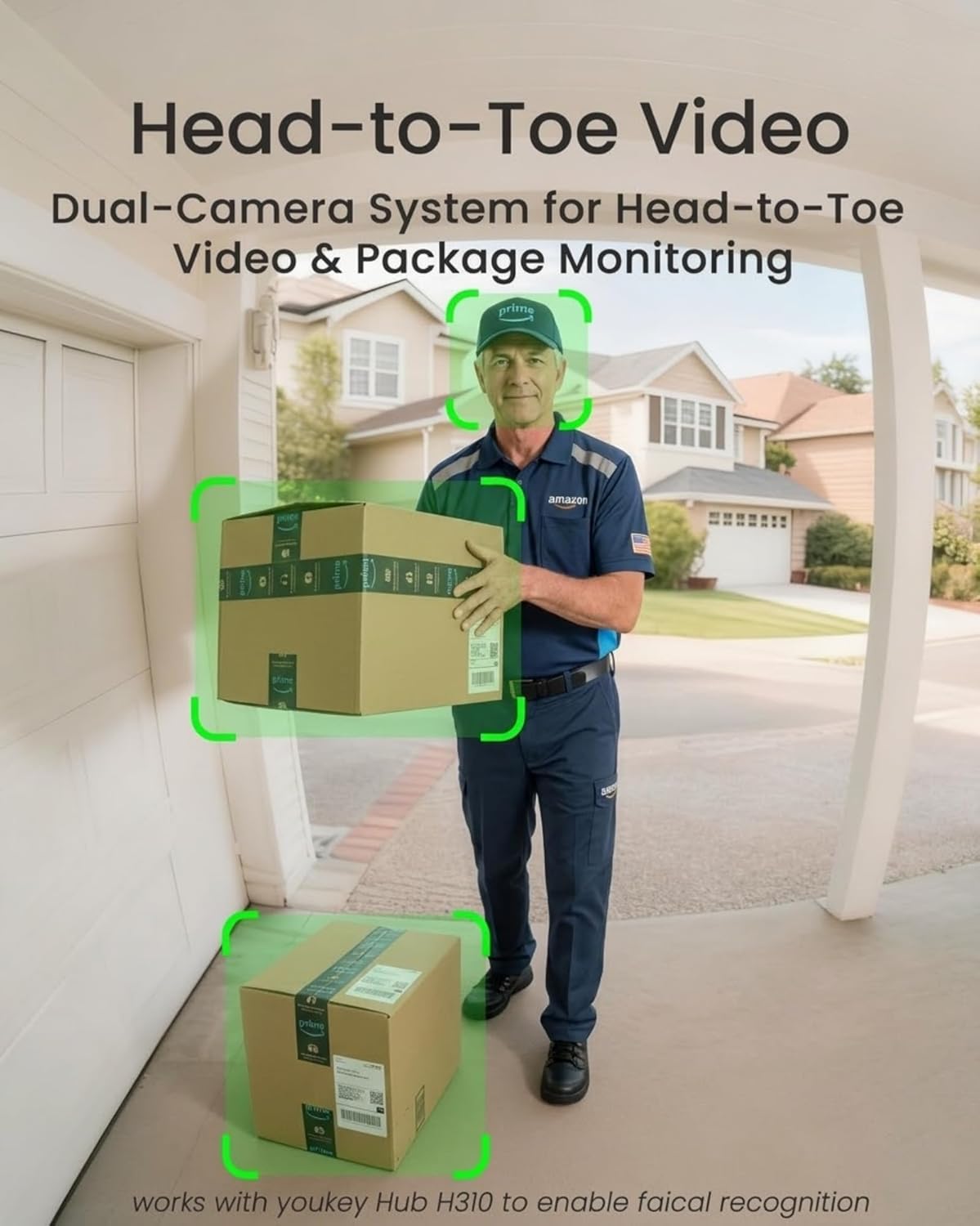
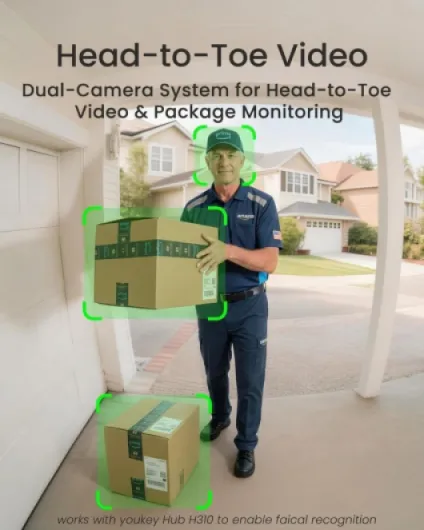
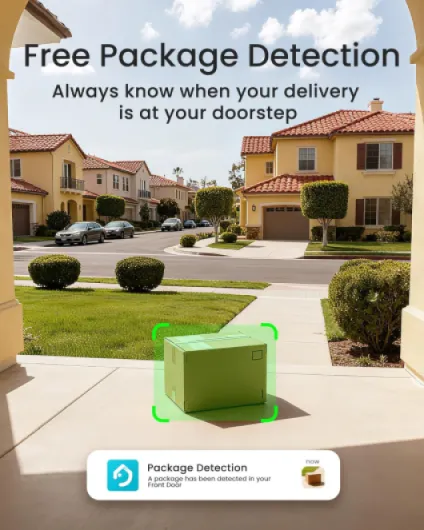
In terms of pure video quality, this doorbell is pretty solid. The 2K resolution actually makes a difference compared to older 1080p stuff. Faces are clear, you can read delivery labels if the person is reasonably close, and the wide 160° angle covers a good chunk of the entrance area. The second camera pointing at the ground is not a gimmick either: you can clearly see parcels left by the door without them being cropped out. For anyone who gets a lot of deliveries, that’s genuinely useful.
Daytime footage looks sharp, colours are decent, nothing to complain about. At night, the camera switches to night vision with infrared, and if someone gets close the small LEDs help enough to keep things visible in colour at short range. You’re not getting cinema‑grade footage, but for security and checking who’s there, it’s more than enough. The chime volume is also good – you can hear it easily from another room. So on the hardware side (camera, mic, speaker, chime), I’d say it does its job well.
Where things get a bit more “meh” is the speed and the app. Several users mention, and I noticed too, that there can be an annoying delay between someone pressing the doorbell and your phone actually ringing. The path is doorbell → router → youkey servers → back to your phone, which adds a couple of seconds. If your Wi‑Fi or their servers are having a slow moment, it can be longer. For casual visitors it’s okay, but for delivery drivers who only wait 10–15 seconds, you sometimes open the live view just as they’re walking away. It’s not unusable, but it’s clearly slower than Ring or Nest.
The app itself is functional but not very intuitive. Menus feel a bit clunky, some options are buried, and it’s not the fastest to load history. It works, and I didn’t have major crashes, but you can feel that it’s a cheaper ecosystem. Motion detection also needs some tweaking. Out of the box, I had either too many false alerts or too few, and it took a bit of time adjusting zones and sensitivity. Once dialled in, it was okay, but don’t expect perfect detection logic. Overall, performance is a mix: good image and audio, average software experience, and noticeable notification delay.

What you actually get and what it really does
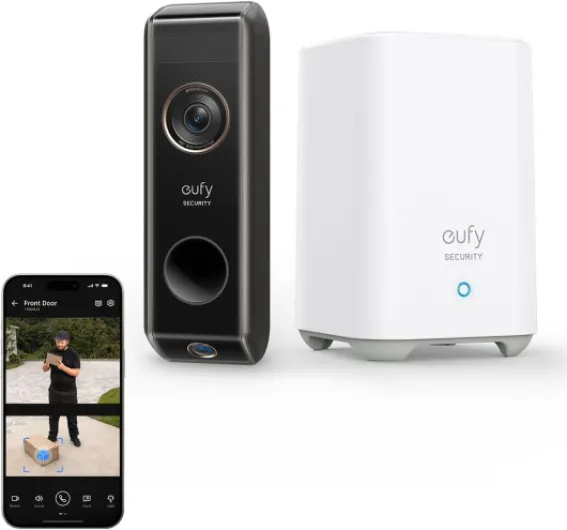
On paper, the youkey DB312 tries to cover a lot of ground. You’ve got two cameras: one main 2K lens with a 158° field of view and a second lower one (around 120°) aimed at the doorstep to watch parcels. It runs on a 6400 mAh battery that the brand claims can last up to 180 days if you only trigger about 20 short events a day. There’s 8 GB of built‑in eMMC storage, which means it records clips locally without a subscription. If you want, you can still pay for cloud or hook it into a youkey hub, but it’s optional.
Connectivity‑wise, it’s more modern than a lot of budget doorbells: dual‑band Wi‑Fi (2.4 GHz and 5 GHz) plus Wi‑Fi 6 support, and Bluetooth just for pairing. It works with Alexa and Google Assistant, so you can pull the feed up on an Echo Show or a Nest Hub with voice commands. In the box you also get a separate chime that plugs into a socket indoors, so you don’t rely only on your phone ringing. There’s also a wedge mount if you need to angle it, screws, and a USB‑C cable for charging.
In practice, the main functions it covers are pretty standard: motion alerts, human/package detection, two‑way audio, night vision with a colour mode at close range, and a spotlight / downlight that comes on when someone is near the door. The app lets you tweak detection zones, sensitivity, and notifications. It’s not overloaded with fancy features, but the basics are there. You can scroll through recordings stored locally for roughly up to 60 days, depending on how many events you get and how long they are.
Functionally, it gets the job done as a budget‑friendly, no‑subscription doorbell with a couple of extra tricks like the dual camera and local storage. The catch is that the “smart” experience is a bit less polished than the big names: menus are not super intuitive, and there can be delays when connecting to live view. If you’re okay with something more utilitarian than slick, it’s acceptable. If you’re expecting the same smoothness as Ring, you might be a bit disappointed.
Pros
- No mandatory subscription thanks to 8 GB built‑in local storage
- Clear 2K video with useful dual‑camera view for visitors and parcels
- Includes indoor chime and all mounting hardware, easy to install
Cons
- Noticeable delay on notifications and live view compared to big brands
- App is functional but not very intuitive or fast
- Some reports of firmware/Wi‑Fi issues affecting long‑term reliability
Conclusion
Editor's rating
After using the youkey Dual-cam Video Doorbell for a while, my feeling is pretty straightforward: it’s a solid no‑subscription option with a few rough edges. The hardware is better than I expected for the price. The 2K video is clear, the dual camera actually helps with parcels, the chime is loud enough, and the battery life is decent as long as your door isn’t insanely busy. Local 8 GB storage is a big plus if you’re tired of paying for cloud plans, and having both Alexa and Google support is handy.
Where it falls short is mainly on the software side and the overall polish. The app works but feels clunky, and the delay between someone pressing the doorbell and your phone alert can be annoying, especially if you’re trying to catch delivery drivers. There are also a few worrying user reports about units bricking after a while, which makes me a bit cautious about long‑term reliability, even though the brand does offer returns and replacements.
If you’re the kind of person who wants a one‑time purchase, no monthly fee, and you can live with an average app and some delay, this doorbell makes sense. It’s especially suited for people who mainly care about reviewing recordings and checking parcels rather than having instant, super‑responsive two‑way conversations every time. If, on the other hand, you’re picky about performance, want near‑instant notifications, and prefer a very polished app, I’d say stick with Ring, Nest, or another big brand and accept the subscription cost. This youkey is a decent, practical choice, but it’s not the best in class.