
Summary
Editor's rating
Value for money: good features, but the resolution and subscriptions hold it back
Design: clean look, small footprint, but some practical quirks
Power and wiring: always on, but setup can be a pain
Durability and reliability: feels solid, but time will tell
Performance: motion alerts are good, video quality is just okay
What this Nest Doorbell actually offers in real life
Pros
- Reliable wired power with no need to recharge batteries
- Smart detection for people, packages, animals, and vehicles without a subscription
- Clean, discreet design that integrates well with Google Home and Alexa devices
Cons
- Only 720p video resolution, lower than many cheaper competitors
- Free event history is limited to 3 hours, pushing you toward a Nest Aware subscription
- Requires compatible doorbell wiring and transformer, making installation harder for some homes

Specifications
View full product page →| Brand |
A solid smart doorbell if you already live in Google's world
I’ve been using the Google Nest Doorbell (Wired, 2nd Gen, Linen color) for a few weeks, and I’ll be straight: it’s a pretty solid wired video doorbell, especially if you’re already deep into Google Home. It does what you expect: shows who’s at the door, sends alerts for people and packages, and lets you talk through your phone. It’s not perfect, and there are a couple of details that annoyed me, but overall it gets the job done.
The main thing to understand is that this is a wired doorbell that still technically has a backup battery, but it’s really meant to be powered from your doorbell transformer 24/7. So this is not a drop-in, stick-on-the-door type gadget. You need existing doorbell wiring or you’ll have to do a bit of electrical work or pay someone. Once it’s up, though, you don’t have to worry about recharging anything, which is a big plus compared to battery models.
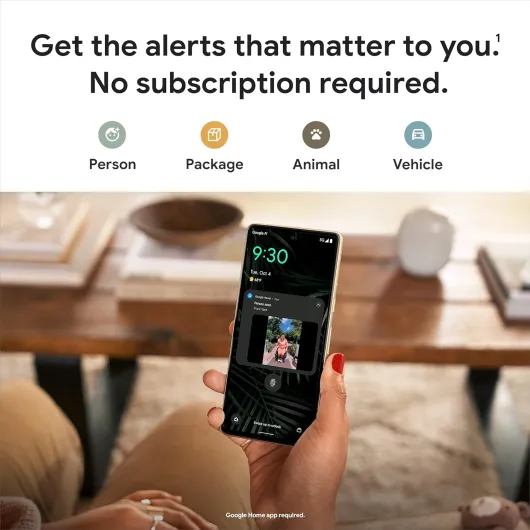
What pushed me to try this one instead of some cheaper brands was the smart alerts and the integration with Google Assistant. It can tell the difference between a person, a package, an animal, and a vehicle without a paid subscription, which is better than a lot of budget options that just send a motion alert for every leaf that moves. I wanted fewer useless notifications and more relevant ones.
If you’re expecting super high resolution and full-time recording out of the box, you might be disappointed. The video tops out at 720p and you only get 3 hours of event history for free. For longer history or continuous recording, you need Nest Aware, which adds to the total cost. So in this review I’ll go through what works well, what’s just decent, and where I think Google cut corners a bit for the price.
Value for money: good features, but the resolution and subscriptions hold it back
When you look at the Nest Doorbell (Wired, 2nd Gen) purely on features, it’s pretty complete: smart alerts for people and packages, 2‑way audio, night vision, Google Assistant and Alexa support, and wired power so you don’t mess with charging. But then you look at the price and the 720p resolution, and it feels a bit off. There are cheaper doorbells that offer 1080p or higher, local storage, and no subscriptions. So you’re clearly paying here for the Google ecosystem and the smarter detection.
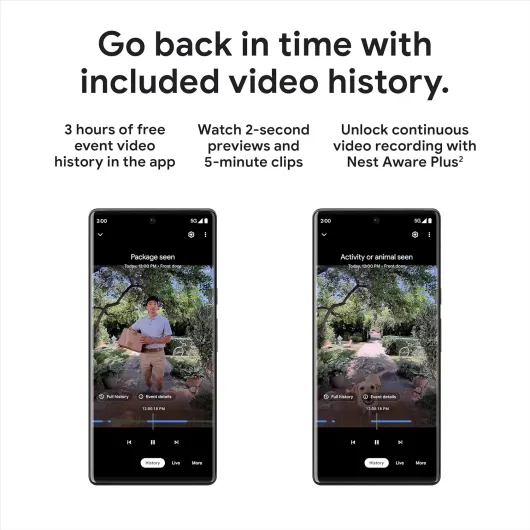
The free tier is usable but limited: only 3 hours of event video history. That’s honestly pretty tight. If something happens while you’re at work and you only check in the evening, the clip might already be gone. To really feel safe that you can go back and review things, Nest Aware almost feels required, and that’s a monthly or yearly cost. Nest Aware Plus adds continuous recording, which is nice if you care about full timelines, but again, you’re stacking subscriptions on top of a not-cheap doorbell.
On the positive side, the integration with Google Home is smooth once set up. If you already have Nest cameras, Google speakers, or displays, it fits in nicely. Being able to use Nest or Alexa speakers as chimes and pull up the video on a Nest Hub or a Fire TV is handy. If you’re already in that ecosystem, the value looks better because it ties everything together instead of juggling multiple apps and brands.
If you’re on a tight budget or you don’t want any subscriptions, this is probably not the best value. You can get functional video doorbells for less that give you more free storage and higher resolution, even if the AI detection is less smart. If you’re okay paying a bit extra for cleaner integration and better motion filtering, then the price is easier to swallow. Overall, I’d rate the value as decent but not great — it’s good for Google users, just average for everyone else.
Design: clean look, small footprint, but some practical quirks
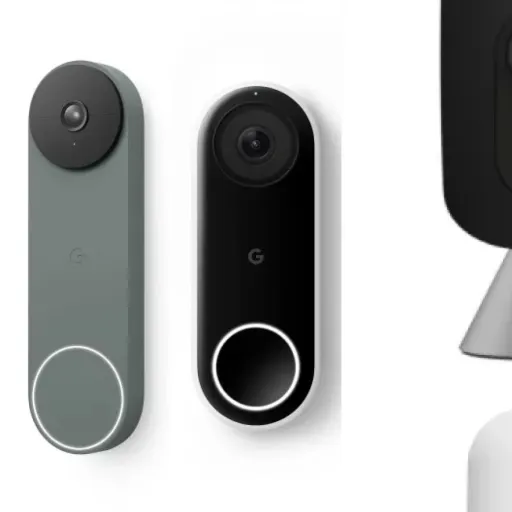
The first thing you notice is the look. The Linen color is basically an off‑white / light beige that blends in nicely with most door frames and walls. It’s not flashy at all, which I liked. It looks modern without screaming “security device”. The unit itself is fairly slim and tall (around 131 x 42 x 28 mm), so it fits on narrow door frames better than some bulky video doorbells. If you care about your entry not looking like a gadget showroom, this one is pretty discreet.
Google includes a 20° wedge in the box, which is actually useful. On my door frame, mounting it flat would have made it mostly see the stairs and not much of the person. With the wedge, the camera is angled more towards the person at the door, so faces are centered better. Installation-wise, the base plate + wedge system is pretty straightforward: screw the plate, snap the doorbell in, and secure it with the small security screw at the bottom. It feels reasonably secure, though a determined thief with tools could still yank it off like most doorbells.
In terms of build, it feels solid but not heavy. It’s made with some recycled materials (Google says 43% post‑consumer recycled plastic), which is nice in theory, but what matters more to me is how it holds up outside. Under rain and dust (IP54 rating), it’s handled a few storms fine so far. The button has a clear click, and there’s a ring light around it that glows so visitors know where to press even at night. That’s a small detail, but it matters in the dark.
My main gripe with the design is that the camera resolution is only 720p, which feels a bit outdated in 2026 when plenty of cheaper competitors offer 1080p or even higher. For a Google-branded wired doorbell, I expected sharper video. Also, the color choice is nice, but if your walls are dark, this Linen color stands out a bit too much. A darker option might fit better for those setups. Overall, though, the design is clean and practical, and it doesn’t look cheap on the wall.
Power and wiring: always on, but setup can be a pain
Even though the listing mentions a battery, this model is really designed as a wired doorbell. It needs a 16–24 VAC, 10–40 VA transformer and a compatible chime. If your house already has a normal wired doorbell, you’re probably fine, but older or low-power transformers might not cut it. In my case, I had a standard wired doorbell and transformer, and it worked, but I had to install the included chime puck inside the existing chime box, which is a bit fiddly if you’re not comfortable around wiring.
Once everything is wired, the big advantage is that you never have to recharge anything. The doorbell is always powered, which means you can actually use features like continuous recording (with Nest Aware Plus) without worrying about battery life. Compared to battery-only doorbells I’ve used, this is way less maintenance. No ladders every couple of months, no low-battery alerts, and no gaps in recording because the battery died.
On the downside, if you don’t already have wiring, this is not a 10‑minute install. You either run new low-voltage wires from a transformer or pay an electrician. That adds cost and hassle. Also, if your transformer is weak, you may need to replace it with a 16–24 VAC / 10–40 VA one, which is more work. This is clearly not a product aimed at renters who can’t touch the building wiring. It’s more for homeowners comfortable with minor electrical projects or willing to pay someone.
In terms of stability, once powered correctly, the doorbell has been very consistent. No random shutdowns, no missed rings because the unit went to sleep, which I’ve seen with some battery models trying to save power. So if you want something that behaves like a traditional doorbell but smarter, the wired approach makes sense. Just be prepared that the "battery" mention in the specs is misleading; in normal use, you should treat this as a wired-only device.
Durability and reliability: feels solid, but time will tell
In terms of build and durability, the Nest Doorbell (Wired, 2nd Gen) feels decent for outdoor use. It has an IP54 rating, which means it’s protected against dust and splashes of water, but it’s not something you’d want to blast with a pressure washer. Mine has been through rain, wind, and a couple of cold nights, and there’s been no condensation inside the lens or weird behavior. The plastic body hasn’t discolored yet, but that’s something that only really shows after a year or more in direct sun.
The button mechanism feels sturdy. Visitors press it like a normal doorbell, and there’s a clear tactile click. No mushy feel, and it doesn’t seem like it will fall apart quickly. The mounting plate and security screw keep the unit firmly attached to the wall. I tugged on it a bit to see how solid it is, and it didn’t wobble. Again, if someone really wants to rip it off, they probably can, but that’s true for most consumer doorbells. At least it doesn’t feel flimsy.
On the software side, reliability has been mostly good. The camera reconnects to Wi‑Fi after router reboots on its own, and I haven’t had to manually reset it so far. There were a couple of moments where the live stream took longer than usual to load, but that seemed more related to my network than the device itself. Firmware updates happen quietly in the background, usually at night, and I haven’t noticed any crashes or random offline periods longer than a minute or two.
Long-term, the main concern with these kinds of products is not just the hardware but how long Google keeps supporting it. Their track record is mixed: some Nest products get years of updates, others feel abandoned sooner than you’d like. For now, this is a current model, so support and updates are there. Hardware-wise, it feels like it should easily last several years outside if you don’t abuse it. I’d call the durability solid but not bulletproof — fine for normal home use, not something for harsh industrial environments.
Performance: motion alerts are good, video quality is just okay
On the performance side, the Nest Doorbell (Wired, 2nd Gen) does pretty well with motion detection and smart alerts. It reliably spots people walking up to the door, and the package detection is honestly one of the most useful things. When a courier drops a box, I get a specific notification that says it saw a package, not just generic motion. Same with animals: when a cat crosses the porch, I don’t really care, but it’s nice that I can filter or adjust what triggers alerts. Compared to cheaper cameras that ping you every time a car passes, this one is more focused.
The weak point is the video resolution. It’s only 720p, and you can see that when you zoom in trying to read small details, like a logo or a face further away. Up close, faces are clear enough to recognize, but if someone is at the edge of the frame or a bit further down the path, it quickly becomes grainy. For basic security and knowing who is at the door, it’s fine, but it’s not crisp. Night vision is usable: the scene is bright enough, and you can see people and packages without trouble, but again, don’t expect razor-sharp clarity.
Latency is decent. With a good Wi‑Fi connection, live view loads in a couple of seconds in the Google Home app. There’s a slight delay in the video and audio, but that’s normal for cloud-based systems. For answering the door in real time, it’s fine. I did notice that if my Wi‑Fi was under heavy load (streaming, downloads), the stream sometimes dropped to lower quality or took longer to connect. That’s not unique to this device, but it’s worth knowing: a weak or congested Wi‑Fi will hurt the experience.
Overall, performance is good enough for everyday use: it alerts quickly, it records the important moments, and it handles day and night situations reasonably well. Just don’t expect premium-level sharpness or zero delay. If you’re picky about video quality, the 720p limit is going to feel like a compromise, especially for the price bracket this sits in.
What this Nest Doorbell actually offers in real life
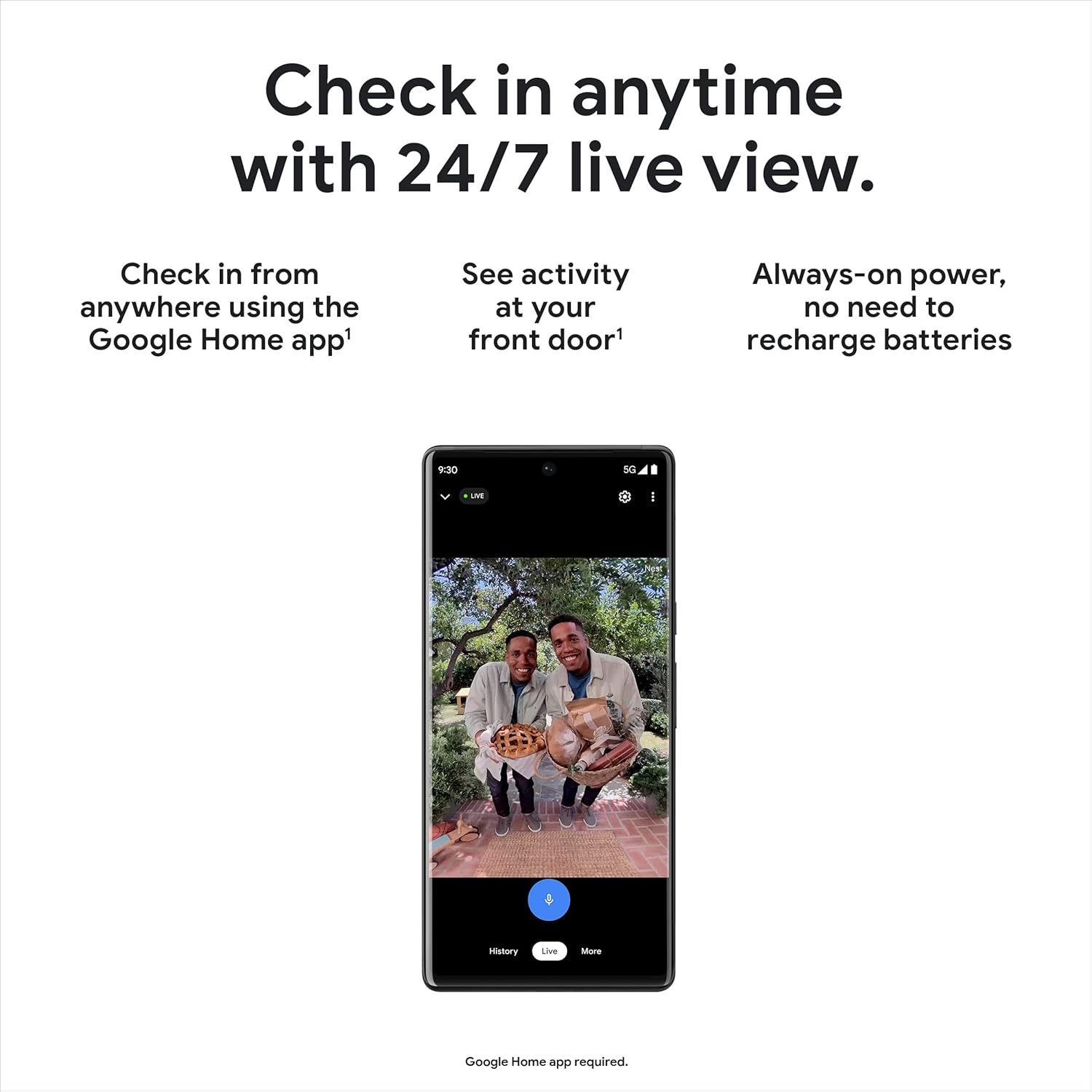
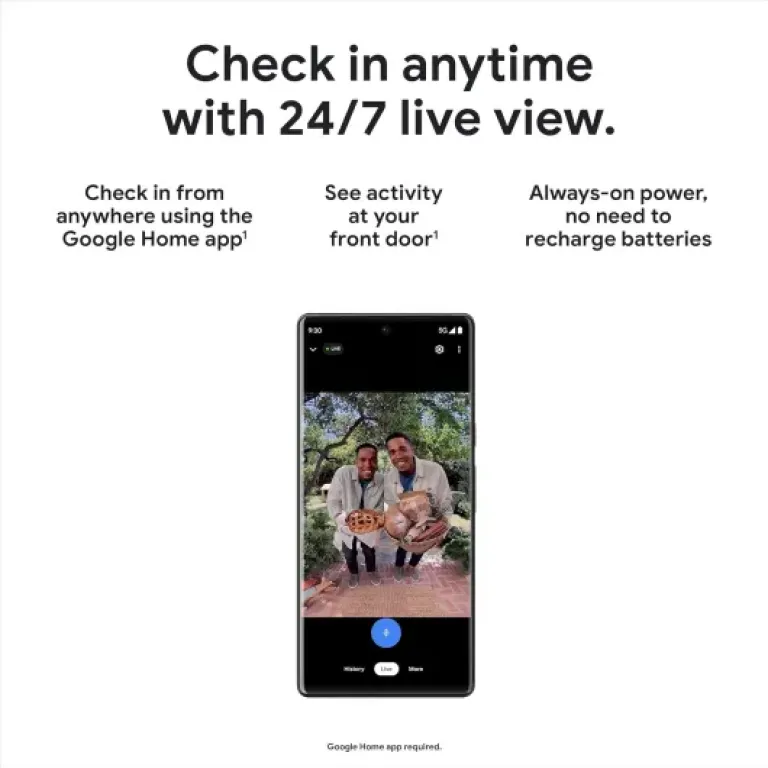
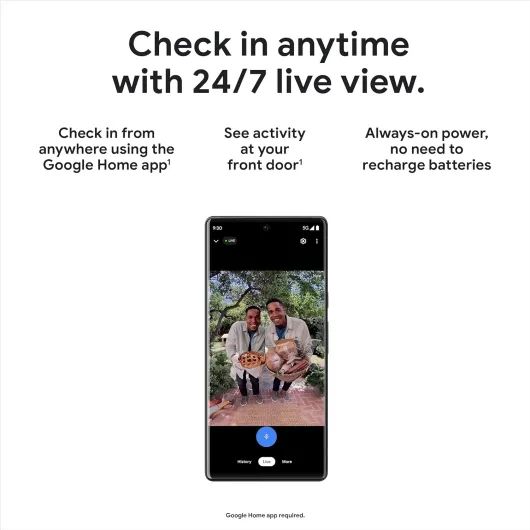
On paper, the Nest Doorbell (Wired 2nd Gen) sounds pretty complete: 24/7 power, smart detection (people, packages, animals, vehicles), 2-way audio, night vision, Wi‑Fi support (2.4 and 5 GHz), and IP54 weather resistance. In practice, it’s basically your front-door security camera plus intercom. You open the Google Home app, tap the camera, and you see what’s happening live or check the last few events. If someone presses the button, your phone rings and your chime rings inside the house (if you wired it correctly).
The free part: you get 3 hours of event history. That means if something happened at 2 p.m., by 5:30 p.m. it might be gone unless you have Nest Aware. For people who check their phone regularly, that might be enough. But if you’re away from your phone for half a day, you’ll miss clips. With Nest Aware, you can get up to 30 days of events, and with Nest Aware Plus you can get up to 10 days of continuous recording, but that’s a monthly subscription on top of an already not-cheap device.
Another important point: this doorbell only works with the Google Home app, not the old Nest app. If you’ve used older Nest cameras or thermostats and you liked the Nest app, you’re forced to move this one into Google Home. The app is usable, but it still feels less focused than the old Nest app. For example, jumping quickly between live view and history is fine, but some settings are a bit buried compared to older Nest gear.
Overall, in daily use, the feature set is decent: alerts for motion and doorbell rings, live view, night vision, talk-back, and integration with smart speakers as extra chimes. It covers the basics properly. Just be aware that the full experience (long history, familiar face alerts, continuous recording) lives behind a subscription, so the real long-term cost is higher than the box price suggests.
Pros
- Reliable wired power with no need to recharge batteries
- Smart detection for people, packages, animals, and vehicles without a subscription
- Clean, discreet design that integrates well with Google Home and Alexa devices
Cons
- Only 720p video resolution, lower than many cheaper competitors
- Free event history is limited to 3 hours, pushing you toward a Nest Aware subscription
- Requires compatible doorbell wiring and transformer, making installation harder for some homes
Conclusion
Editor's rating
The Google Nest Doorbell (Wired, 2nd Gen) in Linen is a solid choice if you want a clean-looking, always-powered doorbell that plugs nicely into the Google Home ecosystem. The strong points are the reliable wired power, the smart alerts for people and packages, and the overall ease of use once it’s installed. You don’t have to worry about charging batteries, and the person/package/animal/vehicle detection really cuts down on useless notifications. For everyday use — seeing who’s at the door, talking to delivery drivers, checking the porch at night — it does the job well.
But it’s not perfect. The 720p video resolution feels dated at this price, and the free 3‑hour event history is pretty limited. To get the full benefit (longer history, familiar face alerts, continuous recording), you basically need a Nest Aware subscription, which adds ongoing cost. Installation can also be a bit of a project if your existing doorbell wiring or transformer isn’t up to spec, so this isn’t ideal for renters or anyone who doesn’t want to touch electrical stuff.
If you’re already using Google Home or other Nest devices and you want a wired doorbell that slots into that setup, this model makes sense and you’ll probably be happy with it, as long as you accept the subscription angle. If you’re starting from scratch, don’t care about Google integration, or want the sharpest image and more free storage, you can find better value with other brands. Overall, I’d say it’s a good, practical product with a few compromises you should be aware of before buying.