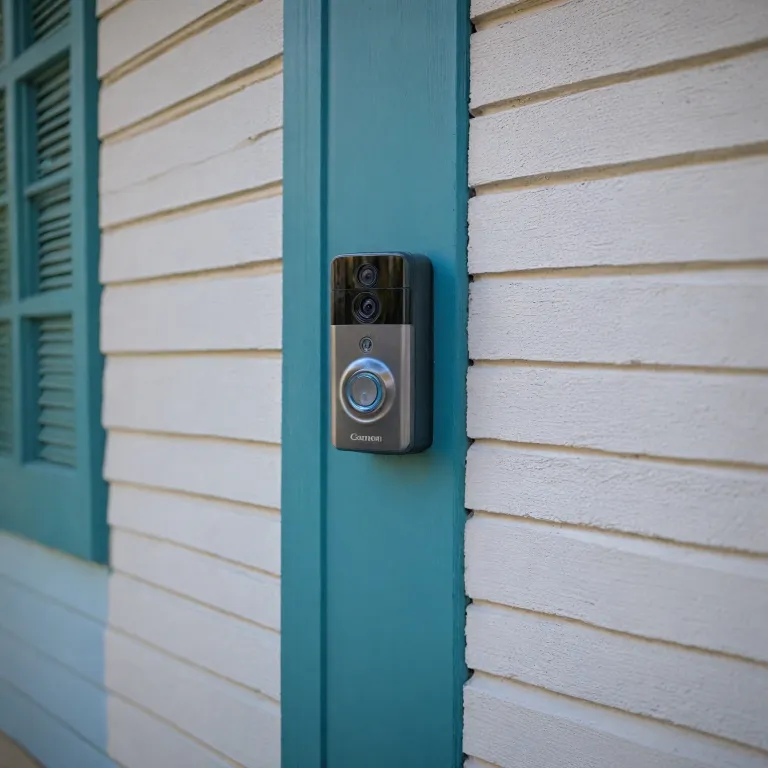

Why antenna gain dBi matters for every smart doorbell user
Smart doorbells rely on a stable wireless link, and antenna gain dBi is central to that reliability. When a doorbell antenna offers higher gain, it focuses power more efficiently, improving range and field strength between the doorbell and the home router. For people frustrated by missed alerts, understanding how an antenna radiates and how gain dbi shapes coverage can be as important as choosing the right camera.
Engineers define antenna gain as the ratio between the power radiated in a specific direction and the power an ideal isotropic radiator would emit. In practice, this means a gain antenna with higher dBi or dBd values can send more energy toward your router, but it narrows the radiation pattern and beamwidth. Smart doorbell antennas dbi therefore involve a trade off between wide coverage and focused directivity, which directly affects signal range through walls and around corners.
Most compact smart doorbells use a small dipole antenna or a printed wave dipole, designed to balance radiation efficiency with discreet size. Compared with an isotropic antenna, a dipole antenna typically has a gain relative of about 2.15 dBi, which manufacturers sometimes express as 0 dBd. When you read antenna dbi specifications on packaging, you are seeing how much stronger the directional coverage is compared with that theoretical isotropic source.
For households with thick masonry or long driveways, high gain antennas can help maintain dbm levels that keep video streaming smooth. However, higher dBi values also mean more directional behavior, so the antenna direction must align with the router for optimal power density. Understanding these antenna gain dbi fundamentals helps smart doorbell owners interpret marketing claims and make evidence based installation choices.
From isotropic models to real walls: how gain, dBi and dBd shape performance
In radio engineering, the isotropic antenna is a mathematical construct that radiates energy equally in every direction. Antenna gain dBi compares a real gain antenna to this isotropic radiator, while gain in dBd compares it to a standard half wave dipole. When a manufacturer lists both antenna dbi and dBd, the difference of about 2.15 units reflects that the dipole antenna already concentrates radiation compared with the isotropic model.
For smart doorbells, this distinction matters because the home environment is rarely isotropic, with walls, metal frames and vegetation distorting the field. A directional antenna with higher dBi can push more power toward the router, but reflections and absorption can still reduce effective field strength. Careful testing with different antenna directions and placements often reveals that moderate gain dbi values provide more reliable coverage than extreme high gain options.
Installers sometimes use handheld meters to measure dbm levels and power density around the property during test runs. This testing helps map the radiation pattern, identify dead zones and optimize beamwidth for both front door coverage and indoor connectivity. When combined with a driveway alert system, as explained in this guide on enhancing your smart doorbell experience with driveway alerts, a well tuned antenna gain strategy can extend awareness beyond the doorstep.
Because smart doorbells are compact, designers often integrate miniature gain antennas directly into the housing. These antennas dbi values are chosen to balance radiation efficiency, half power beamwidth and aesthetic constraints, avoiding bulky external elements. Understanding how dbi dbd relationships translate into real world range helps users decide when repositioning the router is more effective than chasing ever higher dbi specifications.
Radiation patterns, beamwidth and coverage around the front door
The way an antenna radiates in space is visualized through its radiation pattern, which shows how energy spreads in different directions. For a smart doorbell, this pattern determines whether the signal reaches the indoor access point, nearby repeaters and any secondary devices that rely on the same field. A gain antenna with a narrow beamwidth can deliver strong field strength toward the router but may leave side areas with weaker coverage.
Manufacturers design smart doorbell antennas dbi to achieve a practical compromise between directional focus and omnidirectional coverage. A modest high gain design might provide a few dBi of antenna gain, improving dbm levels without making the radiation pattern too sharp. In practice, this means the antenna direction is forgiving enough that small mounting errors do not completely break connectivity.
Radiation efficiency also plays a crucial role, because even a high gain antenna can underperform if internal losses waste power. Smart doorbell housings must accommodate the wave dipole or printed dipole antenna in a way that minimizes detuning from nearby metal or concrete. During testing, engineers adjust the layout until the half power beamwidth and gain relative to the isotropic radiator match the design targets.
Coverage is not only about connectivity for hearing users but also about accessibility for everyone in the household. When paired with visual alert systems for people with hearing impairments, as detailed in this article on enhancing accessibility with visual alerts, reliable antenna gain dbi performance ensures that every ring triggers timely notifications. By understanding how antennas dbi, beamwidth and radiation patterns interact, homeowners can better position both the doorbell and network equipment.
Balancing power, range and field strength in complex home environments
Smart doorbells operate at limited transmit power levels, so antenna gain becomes a primary tool for extending range. When a gain antenna concentrates energy, the effective field strength at the receiver increases without violating regulatory power limits. This is why antenna gain dBi figures, combined with dbm transmit levels, are central to predicting whether a signal will cross a large garden or thick exterior wall.
However, higher dBi values do not magically overcome every obstacle, because materials absorb and scatter radiation. Brick, reinforced concrete and metal doors can distort the radiation pattern, reducing radiation efficiency and creating unpredictable coverage gaps. In such cases, adjusting antenna direction or relocating the router can be more effective than simply seeking higher dbi gain antennas.
Field testing remains essential, especially in multi storey homes where the isotropic model fails to capture vertical propagation challenges. Installers often perform a test walk with a smartphone, monitoring dbm readings and latency while moving between floors and around the entrance. This practical testing reveals how the antenna radiates in real conditions, highlighting where additional access points or mesh nodes might be needed.
For users integrating their smart doorbell with broader home automation, including advanced connectivity hubs like those described in this analysis of the ZBT 2 Home Assistant for smart doorbell security and connectivity, antenna dbi choices affect the stability of every linked device. A well chosen combination of moderate high gain antennas, thoughtful placement and realistic expectations about power density can deliver robust performance. By treating antenna gain dbi as one variable among many, rather than a magic number, homeowners achieve more consistent results.
Directional versus omnidirectional antennas in smart doorbell installations
When selecting or evaluating a smart doorbell, it helps to understand the difference between directional and more omnidirectional gain antennas. A directional antenna focuses energy in a specific direction, increasing antenna gain and field strength along that path while reducing coverage elsewhere. For a front door facing a distant router, such directional coverage can transform marginal dbm levels into a stable connection.
Omnidirectional designs, often based on a vertical dipole antenna or wave dipole, spread radiation more evenly around the device. Their antennas dbi values are usually lower, but the broader beamwidth supports flexible placement and less precise antenna direction. In compact smart doorbells, designers frequently favor these moderate gain dbi solutions to accommodate varied home layouts and user installation habits.
Some advanced systems allow external high gain antennas to be added, offering higher dBi and more pronounced directivity. While this can improve power density toward the router, it also increases the risk that small misalignments will reduce radiation efficiency and effective range. Users must therefore balance the appeal of higher dbi specifications against the practical need for forgiving installation tolerances.
In professional testing, engineers compare antenna dbi and dbd values across prototypes, examining how each design radiates in cluttered environments. They analyze gain relative to an isotropic radiator, half power beamwidth and overall radiation pattern stability when the device is mounted on different surfaces. For most households, a carefully engineered built in gain antenna with moderate antenna gain dBi offers the best compromise between performance, simplicity and aesthetic integration.
Interpreting antenna specifications when choosing a smart doorbell
Product sheets for smart doorbells often list antenna gain dBi, transmit power in dbm and sometimes equivalent gain in dBd. To interpret these figures, remember that antenna dbi expresses gain relative to an isotropic radiator, while dBd uses a dipole antenna as the reference. Adding about 2.15 to a dBd value gives the corresponding dbi, reflecting the inherent gain of the dipole compared with the isotropic model.
When comparing models, look for how antennas dbi values align with your home layout and router position. A modest high gain antenna, perhaps in the 2 to 5 dBi range, usually offers a good balance between directional focus and broad coverage. Extremely high gain antennas may promise longer range, but their narrow radiation pattern can be unforgiving if the antenna direction is not perfectly aligned.
Also consider whether the manufacturer provides any data on radiation efficiency, beamwidth or measured field strength during testing. Even without full radiation pattern plots, references to half power beamwidth or practical range in metres can help translate antenna gain into real expectations. If possible, choose products whose documentation explains how the antenna radiates in typical brick or timber homes rather than only in idealized free space.
Finally, remember that gain antennas are only one part of a larger connectivity strategy that includes router placement, mesh nodes and interference management. A balanced approach that respects the limits of power density regulations and realistic dbm levels will usually outperform a narrow focus on higher dBi alone. By reading antenna gain dbi specifications with a critical, informed eye, smart doorbell buyers can select devices that match their actual living spaces.
Key statistics about antenna gain and smart doorbell connectivity
- In many suburban homes, moving a router by 2 to 3 metres can change received field strength at the doorbell by more than 6 dB, equivalent to roughly doubling effective power.
- Typical compact smart doorbell designs integrate antennas with gain between 1 and 4 dBi, balancing radiation efficiency with discreet form factors.
- Every 3 dB increase in antenna gain, assuming constant transmit power in dbm, approximately doubles the power density in the main lobe of the radiation pattern.
- Walls made of reinforced concrete can attenuate smart doorbell signals by 10 to 20 dB, often outweighing modest differences in antenna dbi between competing models.
- In controlled testing, optimizing antenna direction and mounting height has been shown to improve smart doorbell connectivity as much as upgrading to a higher gain antenna.
Common questions about antenna gain dBi and smart doorbells
How does antenna gain dBi affect my smart doorbell’s range ?
Antenna gain dBi indicates how much the antenna concentrates energy compared with an isotropic radiator, so higher values can extend range in the main direction of radiation. For a smart doorbell, this means a gain antenna can improve dbm levels at the router, especially when walls and distance already weaken the signal. However, because the radiation pattern becomes more directional, careful alignment and placement are essential to benefit from that extra antenna gain.
Is a higher dBi antenna always better for smart doorbells ?
Higher dBi antennas dbi can increase field strength in a specific direction, but they also narrow beamwidth and reduce coverage to the sides. In real homes, where the router position or reflections may change over time, extremely high gain antennas can be less forgiving. Many users achieve better reliability with moderate gain dbi values combined with thoughtful router placement and, if needed, additional access points.
What is the difference between dBi and dBd in antenna specifications ?
The unit dBi measures antenna gain relative to an ideal isotropic antenna, while dBd measures gain relative to a standard dipole antenna. Because a dipole antenna already has about 2.15 dBi of gain, a value in dBd will always be lower than the corresponding antenna dbi figure. Converting between them helps smart doorbell buyers compare products that use different reference standards in their documentation.
Can I improve my smart doorbell signal without changing the antenna ?
Yes, many connectivity issues can be resolved by repositioning the router, adjusting antenna direction or adding a mesh node closer to the entrance. These changes can increase effective field strength and improve the radiation pattern path without altering antenna gain dBi. In many cases, such environmental adjustments deliver more benefit than replacing the device with a model that simply advertises higher dBi.
Why do some smart doorbells still disconnect even with good antenna gain ?
Even when antenna gain and dbm levels look adequate, interference from neighboring networks, thick walls or metal structures can disrupt the field. Variations in radiation efficiency, power density limits and device firmware also influence real world stability. Reliable performance therefore depends on a combination of suitable antenna dbi, careful installation and a clean wireless environment.