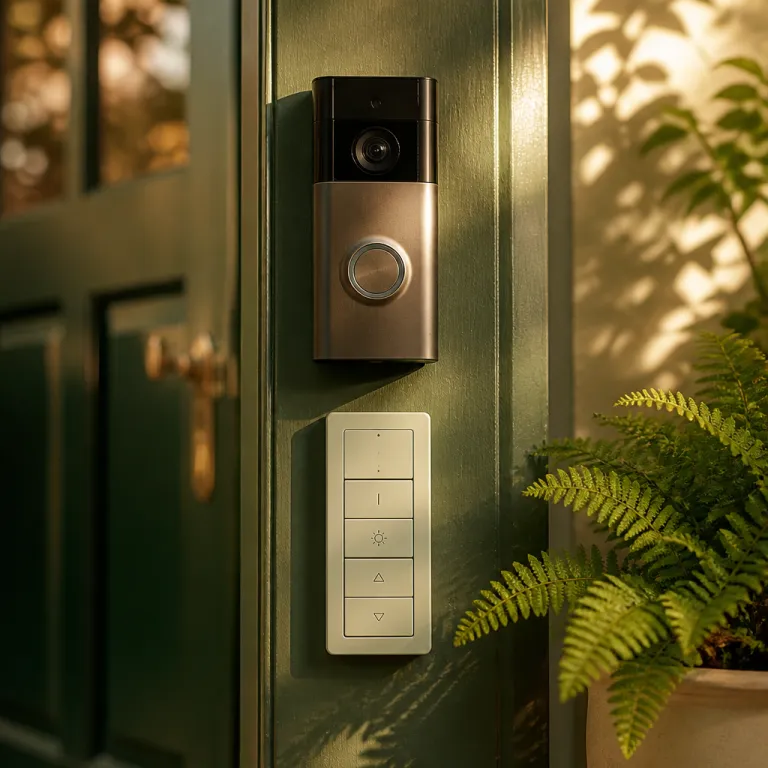

Why residential lighting control systems matter for front door security
Residential lighting control systems transform a basic porch light into a powerful front door security asset. When a smart doorbell detects motion at your entrance, the lighting system can automatically manage fixtures around the doorway, pathway, and driveway, creating a bright, wide, and intimidating field of view for any visitor. This coordinated control lighting strategy makes your home appear occupied, reduces dark corners where someone could hide, and supports both safety and energy efficiency.
In a typical house, a smart lighting system links exterior lights, indoor hallway lights, and even garden LED spotlights to one central control system or hub. The same wireless network that connects your smart doorbell can also connect lighting controls, motion sensor units, and sensor timers that respond to movement or schedules. With this setup, the lighting control does more than switch lights on and off, because it becomes a responsive security layer that reacts in real time to events at the front door and nearby gate.
Modern residential lighting uses LED lights and smart switches that integrate with a smartphone or tablet app, a wall mounted panel, or voice assistants such as Amazon Alexa and Google Assistant. These lighting systems can be based on Bluetooth mesh or Wi‑Fi, allowing each lighting unit to communicate with the others and with the smart doorbell. When the system is configured correctly, you can control lights remotely, check details about which light switches are active, and verify that your entrance remains well lit whenever someone approaches, even if you are away from home.
Coordinating smart doorbells with exterior lighting controls
Smart doorbells become far more effective when they work in tandem with exterior lighting controls and motion activated security lighting. If your camera only records in low light, the system may miss important details of a face, licence plate, or vehicle colour, while a well designed lighting system ensures that every frame is clear. By linking the doorbell to residential lighting control systems, you can trigger specific lights whenever the motion sensor detects movement near the door or driveway.
Many homeowners now pair their smart doorbell with a set of wireless lighting controls that manage porch lights, pathway lights, and driveway LED fixtures. These control systems can be programmed so that when someone presses the doorbell, the control lighting rules brighten the entrance and nearby lights for a set duration, such as two to five minutes. This approach not only improves video quality but also signals to visitors that the property uses smart technology and active monitoring, which can discourage opportunistic intruders and package thieves.
For deeper guidance on how connected devices reinforce the entrance, you can study this analysis of intelligent front door security with smart doorbells. In practice, the same control system that manages your exterior lights can also integrate with gate motors, intercoms, and other security products. When all these systems share data about sensors, timers, and events, your home gains a coordinated defence that goes beyond a single product or standard porch light.
Using interior lighting systems to simulate presence when you are away
Residential lighting control systems do not only protect the doorstep, because they also help your home look occupied when you travel. Smart lighting scenes can turn interior lights on and off in different rooms, while your smart doorbell continues to monitor the front door and send alerts. This combination of interior lights and exterior sensors makes it harder for someone to judge whether the house is empty or simply following a normal routine.
A well planned lighting system uses sensor timers and programmed schedules that vary slightly each day, which avoids the obvious pattern of a single lamp switching on at the same time every evening. You can create scenes based on typical routines, such as kitchen lights at dinner time, hallway lights in the early evening, and bedroom lights later at night. These scenes are managed through a central control system that also receives data from the smart doorbell, allowing you to adjust the behaviour quickly if you notice suspicious activity or repeated motion alerts.
Some advanced control systems integrate with gate automation and access control, as explained in this guide on how gate automation and smart doorbells work together. When your smart doorbell detects someone at the gate, the lighting controls can activate pathway lights and porch lights simultaneously, guiding the camera view and improving safety for legitimate visitors. At the same time, you can use a smartphone or tablet to control lights manually, check live video, and decide whether to speak through the doorbell, open the gate, or keep the property locked.
Choosing the right lighting control system for a smart entrance
Selecting a lighting control system for front door security starts with understanding your existing wiring and fixtures. Many homes already use LED lights and standard switches, which can often be upgraded to smart switches without major electrical work. However, a lot of in‑wall smart switches require a neutral wire in the box, so older properties may need an electrician to add one or use battery powered wireless keypads instead. These smart lighting products allow you to control lights individually or in groups, using either a dedicated remote, a smartphone or tablet, or voice commands.
When comparing residential lighting control systems, pay attention to whether they support Bluetooth mesh, Wi‑Fi, or a proprietary wireless protocol such as Zigbee or Z‑Wave. Bluetooth mesh lighting systems are designed so that each light unit relays signals to the next, which can improve reliability around thick walls and exterior spaces. Wi‑Fi based systems may offer easier integration with Amazon Alexa, Google Assistant, and other cloud services, but they can also place more load on your home router and may depend more heavily on an internet connection.
For a front door setup, look for lighting controls that integrate directly with your chosen smart doorbell brand and with platforms such as Alexa, Google, or Google Assistant. Some products, such as Philips Hue, Lutron Caséta, or TP‑Link Kasa, allow you to create routines where the motion sensor in the doorbell triggers specific light switches, while others require a separate hub or bridge. For example, Philips Hue typically uses a Hue Bridge for full automation and remote access, while many TP‑Link Kasa switches connect directly over Wi‑Fi. If you want a fully wireless system, confirm that every lighting control unit, sensor, and switch can communicate without extra cabling, and that the app provides clear details about status, schedules, and manual overrides.
Practical configurations that link smart doorbells, motion sensors, and lights
Once you have the right hardware, the way you configure residential lighting control systems will determine how well they protect your entrance. A common pattern is to link the smart doorbell motion sensor with at least two exterior lights, one above the door and one covering the path or driveway. When the sensor detects movement, the control system turns on these lights at full brightness, improving the camera view and signalling that the property is monitored and occupied.
Another effective configuration uses layered lighting systems that combine always on low level LED lighting with brighter security scenes. For example, you might keep a soft light on near the door during the evening, while the control lighting rules increase brightness only when the doorbell detects motion. This approach balances energy efficiency with security, because the lights do not run at full power all night, yet the system still provides strong illumination when it matters. A simple automation checklist is to set a dusk‑to‑dawn schedule for low level lighting, add a motion rule that boosts brightness to 100 % for a few minutes, and then return to the dim scene automatically.
Homeowners who want more advanced features can integrate wireless lighting controls with a dedicated security camera that offers 2K resolution, auto tracking, and colour night vision, such as the model reviewed in this guide to a wireless outdoor camera with smart control. In such setups, the lighting system, the smart doorbell, and the camera all share data about motion events, which allows the control systems to respond intelligently. You can then use a smartphone or tablet app to fine tune sensor timers, adjust brightness levels, and review recorded clips that show exactly how the lights and cameras behaved during each incident.
Energy efficiency, privacy, and long term reliability
Security lighting around the front door must balance visibility with energy efficiency, especially when lights operate for many hours each night. LED lights consume far less energy than older incandescent bulbs, and when combined with smart lighting controls they only run at full power when needed. This reduces both electricity costs and the environmental impact of keeping your entrance well lit, as highlighted by U.S. Department of Energy Energy Saver guidance on solid state lighting, which reports that LEDs typically use at least 75 % less energy and last up to 25 times longer than incandescent lamps.
Residential lighting control systems also help protect privacy by allowing you to define precise rules for when sensors and cameras activate. You can set the control system so that the smart doorbell and motion sensor ignore movement from the street, while still reacting to someone who steps onto the porch. These details matter in dense neighbourhoods, where constant recording and bright lights could disturb neighbours or capture more of the public view than necessary. It is also worth checking whether your smart doorbell requires a cloud subscription for video history and how long clips are stored, so you can align retention settings with your privacy preferences.
For long term reliability, choose lighting systems and smart switches that comply with recognised electrical standards and offer firmware updates through a secure app. A robust wireless protocol such as Bluetooth mesh or a well supported Wi‑Fi platform ensures that each lighting unit and control system remains responsive over time. Regularly reviewing your lighting control scenes, checking the status of sensor timers, and testing the integration with Amazon Alexa, Google Assistant, or other platforms will keep your front door security effective as technology and threats evolve.
Key figures on smart doorbells and residential lighting control systems
- According to Parks Associates’ Smart Home Tracker (2023), around one fifth of broadband households in North America own at least one smart home security device, and adoption of smart doorbells has risen by more than ten percentage points since the late 2010s, which increases the relevance of integrated lighting control systems. The firm’s tracker reports that video doorbells are now among the fastest growing smart entry products.
- Data from the U.S. Department of Energy’s Energy Saver resources on solid state lighting report that LED lighting typically uses at least 75 % less energy and lasts up to 25 times longer than incandescent lighting, making LED based residential lighting an efficient foundation for always ready security scenes and dusk‑to‑dawn operation.
- Research summarised by the Lighting Research Center at Rensselaer Polytechnic Institute indicates that well designed exterior lighting can support crime reduction in residential areas by improving visibility and natural surveillance, especially when lights are controlled by motion sensors and timers rather than left on continuously, which also reduces light pollution.
- Consumer surveys from firms such as Statista, including the Smart Home Report series, show that more than half of smart home users control lights through a smartphone or tablet, and a significant share link those lights to voice assistants like Amazon Alexa and Google Assistant for hands free operation and voice triggered security scenes.
- Industry analyses of Bluetooth mesh and other wireless protocols, such as Bluetooth SIG white papers on connected lighting, show that mesh based lighting systems can improve reliability and coverage in multi room homes, which is critical when connecting smart doorbells, sensors, and lighting units across large properties and outdoor areas.
FAQ about smart doorbells and residential lighting control systems
How do residential lighting control systems improve smart doorbell video quality ?
Smart doorbell cameras perform best when the entrance is evenly lit, and residential lighting control systems ensure that LED lights activate automatically whenever motion is detected. By linking the doorbell motion sensor to nearby light switches, the control system brightens the scene before recording begins. This reduces shadows, improves facial recognition, and makes recorded details more useful for security or insurance purposes, especially when combined with high resolution video.
Can I integrate my existing exterior lights with a new smart doorbell ?
In many homes, existing exterior lights can be upgraded with smart switches or wireless modules that connect to a central lighting control system. As long as the wiring and fixtures meet current electrical standards, an electrician can usually replace standard switches with smart lighting controls that communicate with the doorbell. Once configured, you can control lights through a smartphone or tablet app and create routines that respond to doorbell events, such as turning on porch and pathway lights when someone presses the button.
Is Bluetooth mesh better than Wi‑Fi for residential lighting control systems ?
Bluetooth mesh lighting systems excel when you have many LED fixtures spread across the property, because each unit relays signals and extends coverage. Wi‑Fi based control systems may offer simpler integration with Amazon Alexa, Google Assistant, and cloud services, but they can strain the home router if many devices connect directly. The best choice depends on your house layout, the number of lights, and whether you prioritise local control, mesh reliability, or cloud based features such as remote access and voice routines.
How can I reduce energy use while keeping my front door secure ?
Using LED lights, motion sensors, and timers within residential lighting control systems allows you to keep lights dim or off until movement occurs. You can design scenes where only essential lights turn on at full brightness when the smart doorbell detects a visitor, while other areas remain at low levels. This approach maintains strong security around the entrance while significantly improving overall energy efficiency, especially when combined with dusk‑to‑dawn schedules and presence simulation indoors.
Do I need a hub to connect smart doorbells with lighting controls ?
Some smart doorbells and lighting products connect directly through Wi‑Fi and work together via cloud services, while others require a dedicated hub or bridge to coordinate control systems locally. A hub, such as Samsung SmartThings, an Amazon Echo model with built in hub, or a proprietary bridge from your lighting brand, can improve reliability and reduce latency, especially when you use many wireless lighting units and sensors. Before purchasing, check whether your chosen smart doorbell brand supports direct integration with your preferred lighting system or recommends a specific hub, and review any subscription requirements for advanced automation or extended video storage.