Why the architecture of your video doorbell matters more than the megapixels
When people compare smart video doorbell options, they usually start with resolution, field of view, and price. The real decision hiding underneath those specs is doorbell AI on device vs cloud processing, which quietly determines who actually controls your data and how your front door behaves. Once you understand this split between an edge device that thinks locally and a cloud based system that ships every frame to distant servers, the rest of the feature list suddenly looks very different.
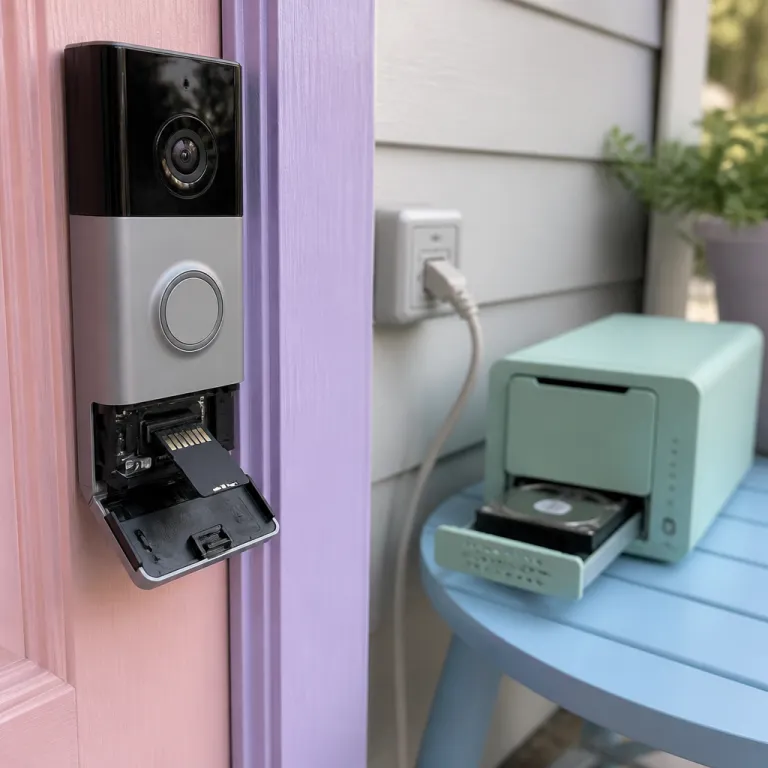
On-device artificial intelligence means the doorbell has enough computing power to run its own models for person, package, vehicle, and sometimes face recognition directly on the device. These edge devices use dedicated chips for machine learning inference, such as low power NPUs inside system-on-chip designs from vendors like Google (Tensor), Apple (Neural Engine), or Ambarella, so they can process data in real time without sending raw video to the cloud for analysis. In practice, that turns your doorbell into a small edge computing box at the front door, where most data processing happens before any data cloud storage is even considered.
Cloud first designs flip that logic and treat the doorbell as a thin client that streams video continuously to remote servers. The cloud computing back end then runs heavier artificial intelligence models, performs analytics, and stores data processed from thousands or millions of devices together. This architecture is attractive for manufacturers because it simplifies how they build and deploy new applications, but it also means your home’s most sensitive footage lives inside a corporate data edge ecosystem you do not control.
In the United States, video doorbell adoption has reached roughly four out of ten households, according to national survey data reported by Petapixel in coverage of a large consumer technology poll, which makes this architectural choice a mainstream privacy question rather than a niche tech debate. When a brand leans on cloud based processing, every motion event becomes part of a larger pool of training data that can improve future models but also expands the attack surface for hackers and law enforcement requests documented in multiple transparency reports. With on-device processing, data stays mostly on the edge device, so the benefits edge homeowners gain in responsiveness come bundled with a quieter but very real upgrade in privacy and autonomy.
Think about a typical evening when your kids come home, packages arrive, and the neighbor’s dog roams past the porch. A doorbell that uses edge computing can run face recognition or at least familiar person detection locally, trigger smart notifications, and process data into short clips without ever sending full resolution video to the cloud unless you explicitly choose to back it up. A cloud centric model, by contrast, will often stream that same video continuously to remote servers, where data processed from your household merges with data cloud archives from millions of other homes to feed future machine learning training cycles described in provider support pages and product documentation.
How on-device AI actually works at the edge of your network
Under the glossy plastic of a modern video doorbell, the most important component is no longer the camera sensor but the small system on a chip that handles edge computing. That chip runs compact artificial intelligence models that have been pruned and quantized so they can perform inference efficiently on a low power device mounted by your front door. When manufacturers talk about understanding edge workloads, they are really describing the trade off between how much data processing happens locally and how much is pushed to remote servers.
In a strong on-device design, the doorbell continuously analyzes video frames on the edge device, looking for motion, shapes, and patterns that match its training data for people, vehicles, animals, and packages. Only when the model is confident that an event matters does it save a clip or send a notification, which dramatically reduces the amount of processing data that ever needs to leave your home network. Independent benchmarks of consumer edge inference hardware show that modern low power chips can run person detection models locally at frame rates in the 10–20 frames per second range, which is sufficient for real time alerts without continuous streaming to the cloud for inference.
From a privacy and data protection standpoint, the key is where the raw video and audio live during and after this process. With true on-device AI, most data processed for detection never leaves the device, and only short encrypted clips may be uploaded to the cloud for backup or remote viewing. That sharply limits the volume of data cloud providers can mine for analytics, and it narrows the window in which attackers or overbroad legal requests could access your front door history.
Cloud heavy systems take the opposite route and treat the doorbell as a sensor that streams everything to a central platform for analysis. Those platforms use large scale cloud computing clusters to run more complex models, aggregate data from many devices, and refine future training pipelines, which is why brands are so invested in this architecture. Industry analyses of cloud computing costs estimate that video analytics workloads can consume on the order of a few dollars per active device per month in storage and processing expenses, which explains why many manufacturers push subscription plans to offset the ongoing cost of keeping data cloud infrastructure online.
There is also a security dimension that goes beyond encryption and passwords, and it concerns the broader Internet of Things attack surface. When your doorbell depends on remote servers for basic intelligence, it inherits every risk associated with smart home connectivity, from misconfigured APIs to large scale credential stuffing attacks described in independent reporting on smart doorbell IoT risks. A design that keeps most inference on the device shrinks that surface, because far less sensitive data is ever exposed to the wider internet during routine data processing, and security research into Internet of Things ecosystems has repeatedly found that reducing the amount of data sent off device and limiting external APIs can significantly shrink the attack surface.
Latency is where the difference between doorbell AI on device vs cloud processing becomes obvious in daily use. An edge device can run face recognition or at least person detection in real time, trigger your chime, and start recording within fractions of a second, even if your broadband is congested. A cloud based model has to send video upstream, wait for analytics to run, and then push a notification back, which can easily add several seconds of delay at exactly the moment you care about responsiveness.
Cloud processing, subscriptions, and what happens when the internet goes down
Cloud centric doorbells exist because they solve real problems for manufacturers, not necessarily for homeowners. When every device streams video to a central platform, companies can run unified analytics, test new models, and roll out features without worrying about the limited computing edge resources on each unit. That makes it easier to build and deploy new applications, but it also locks you into a subscription model where your own front door footage becomes part of the product.
Most cloud based ecosystems are designed around recurring revenue, which is why so many smart video doorbell brands gate basic features behind monthly fees. Continuous recording, advanced motion zones, and rich face recognition alerts often require a subscription, because the cost of cloud computing, storage, and ongoing machine learning training has to be covered somehow. When more of the intelligence moves to the edge device, those economics shift, and the case for paying indefinitely to access data processed from your own porch becomes much weaker.
Reliability is where the trade off between doorbell AI on device vs cloud processing stops being theoretical and starts affecting whether you catch a porch pirate. If your internet connection drops or your provider has an outage, a cloud dependent model can lose most of its smart features, because it cannot send video to the servers that run inference and analytics. A doorbell with strong edge computing support keeps detecting motion, recording locally, and triggering chimes, because the core data processing happens on the device itself.
Some manufacturers try to hedge by adding cellular backup or IoT SIM cards to keep smart doorbells online when Wi Fi fails. That can help maintain connectivity for critical alerts, but it also means more continuous data cloud exposure, more potential for tracking, and higher ongoing costs for connectivity plans. If the doorbell already has enough power to run its own models locally, many homeowners will reasonably ask why they should pay extra just to keep sending video to remote servers during rare outages.
There is also a subtle but important question about how long your data lives in remote systems once it leaves the edge. Cloud computing platforms are optimized to retain data processed from many devices because it is valuable for future artificial intelligence training, fraud detection, and product analytics. Cloud based smart doorbell platforms routinely store motion event clips for periods ranging from about 14 to 180 days by default, which can create large archives of data processed from residential entrances that are potentially accessible to company staff, law enforcement, or attackers if security controls fail, even when companies offer deletion tools.
From a home security perspective, the smartest setup is often a hybrid that uses on-device intelligence for real time detection and only uploads clips you explicitly want to keep. That approach lets you pair your doorbell with motion triggered porch lights or other smart devices without flooding the network with unnecessary video streams. When the edge device handles most of the heavy lifting, the cloud becomes a backup and remote access layer rather than the primary brain of your front door.
Privacy, face recognition, and practical steps to keep control of your footage
Once you start looking at doorbell AI on device vs cloud processing through a privacy lens, the stakes become clearer. A system that performs face recognition or person detection entirely on the device generates far less sensitive data cloud exposure than one that uploads every frame for analysis. For households in dense neighborhoods or multi unit buildings, that difference can decide whether your video history quietly becomes an unintentional archive of everyone who passes your door.
Face recognition is particularly sensitive because it turns ordinary video into biometric data that can be searched, shared, or misused. When those models run on an edge device and only store hashed templates locally, the risk surface is limited to someone physically compromising the doorbell or your home network. When the same recognition models run in the cloud, every face that passes your camera can become part of a much larger dataset that fuels future artificial intelligence training and cross platform analytics.
For a tech savvy homeowner, the practical question is how to evaluate whether a given video doorbell truly keeps data processing on the edge. Marketing pages often highlight on-device AI, but some brands still upload clips for secondary analysis, feature testing, or quality control, which means more data processed in remote systems than the box implies. Reading privacy policies, checking whether features work during internet outages, and testing how the device behaves when you block outbound connections can reveal how much the model really depends on cloud computing.
There are also concrete configuration choices that can tilt the balance toward privacy without sacrificing too much convenience. Disabling unnecessary cloud based sharing features, shortening retention windows to the minimum offered, and turning off experimental analytics options will reduce the volume of data cloud platforms can mine from your home. At the same time, enabling strong encryption, using unique passwords with a password manager, and keeping firmware updated will help ensure that whatever data edge remains on the device is harder for attackers to access.
Integration with the rest of your smart home is another place where architecture matters more than marketing slogans. When your doorbell acts as a capable edge device, it can trigger local automations such as turning on porch lights or locking a smart deadbolt without routing every command through remote servers. That reduces latency, keeps more process data inside your home network, and makes your overall system more resilient if a cloud based service has an outage or changes its terms.
For many households, the most balanced path is to treat the cloud as a tool for remote access and backup rather than the default destination for every second of video. Let the edge computing hardware in your doorbell handle real time inference, person detection, and other core applications, and reserve cloud storage for the rare incidents you truly need to archive. In a market where manufacturers have strong incentives to centralize analytics and training, choosing products that keep more intelligence on the device is one of the few levers homeowners still control.
Key figures that frame the on-device versus cloud debate
- Roughly 39 % of United States households now own at least one video doorbell, making it the most widely adopted smart security device and turning architectural choices about data processing into mainstream privacy issues rather than niche concerns (Petapixel reporting, based on national survey data from a large consumer technology poll).
- Cloud based smart doorbell platforms routinely store motion event clips for periods ranging from about 14 to 180 days by default, which can create large archives of data processed from residential entrances that are potentially accessible to company staff, law enforcement, or attackers if security controls fail (as documented in multiple transparency reports and support pages from major providers).
- Independent testing of edge computing hardware in consumer cameras shows that modern low power chips can run person detection models locally at frame rates in the 10–20 frames per second range, which is sufficient for real time alerts without continuous streaming to the cloud for inference.
- Industry analyses of cloud computing costs estimate that video analytics workloads can consume on the order of a few dollars per active device per month in storage and processing expenses, which explains why many manufacturers push subscription plans to offset the ongoing cost of keeping data cloud infrastructure online.
- Security research into Internet of Things ecosystems has repeatedly found that reducing the amount of data sent off device and limiting external APIs can significantly shrink the attack surface, which supports the argument that keeping more intelligence on the edge device is not only a privacy win but also a concrete security improvement.