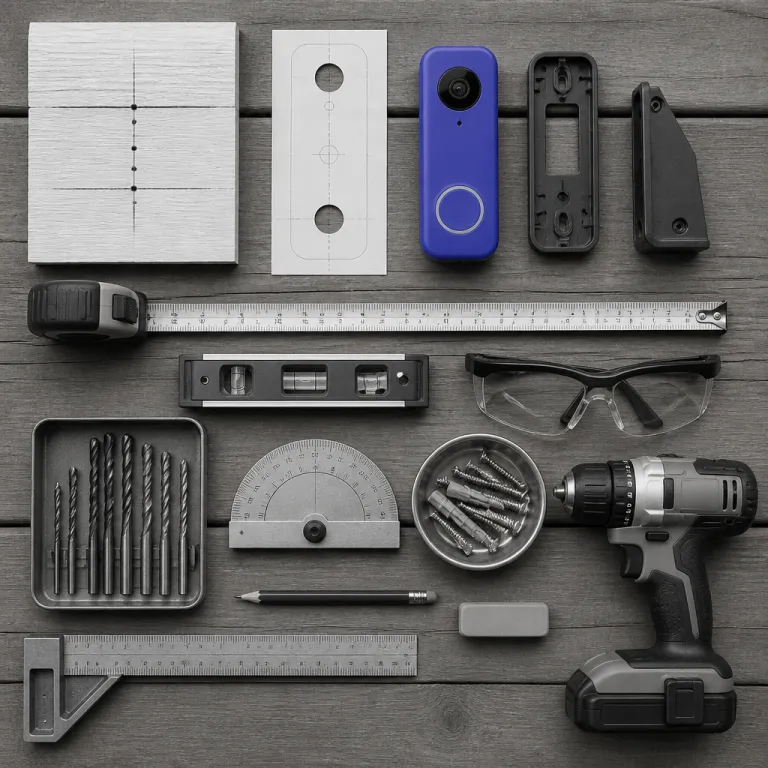
The 48 centimeter rule for smart doorbell mounting height
For most homes, the sweet spot for a smart doorbell is a lens center at about 120 centimeters from the porch floor. That height lines up with average chest level, which gives your doorbell camera a balanced camera view of faces, torsos, and the package zone without wasting field view on sky or ceiling. Stay within roughly 10 centimeters above or below that 120 centimeter target and your smart doorbell mounting height angle will usually work well for both tall and shorter visitors.
Think of the smart doorbell as a smart device that must frame a scene, not just a gadget you bolt near the door. When you place the doorbell too high, the video doorbell tends to capture the tops of heads and the far end of your driveway, while too low a mount shows torsos and shoes but misses the approach and weakens doorbell security. The right installation height lets the camera doorbell use its vertical field view efficiently, so you can clearly view visitors and still see parcels left close to the front door.
Most modern video doorbells advertise wide vertical viewing angle numbers between 150 and 180 degrees. Those specifications only translate into useful video quality if the mount bracket sits at a sensible height and the angle is tuned to your porch depth and step layout. Before you drill, hold the smart device roughly at 120 centimeters, open the live video on your phone, and walk through the scene to judge the footage in real time.
When to break the rule for tall doors and tricky porches
Not every front door is standard, and your smart doorbell mounting height angle should adapt to the architecture. Tall double doors, deep porches, and high steps can all change how the doorbell camera sees the space and how the motion detection behaves. In these cases, the best place to mount the doorbell is sometimes 10 to 15 centimeters higher or lower than the usual 120 centimeter guideline.
If your front door sits at the top of several steps, mounting the smart doorbell slightly lower can keep the camera view from tilting down too aggressively toward the landing. That lower installation height helps the camera doorbell maintain a better viewing angle on approaching faces while still capturing the package drop zone near the door. On deep porches, a slightly higher mount can extend the field view so you view visitors earlier as they walk in from the driveway or garden path.
Homes with shared entries or duplex layouts introduce another layer of complexity for doorbell security. When more than one household answers the door, you may need to angle the smart device carefully so the video doorbell respects privacy lines while still covering the shared front door area, and resources like this guide on smart doorbells for duplexes and shared entries can help you plan. In all these edge cases, use the live view feature on your smart devices to test different doorbell heights and angles before committing to a permanent mount bracket position.
Getting the angle right with wedges and tilt mounts
Once the height is set, the next decision is the smart doorbell mounting height angle relative to the door and the porch. Most brands include a basic flat mount bracket, but wedge kits and tilt plates are often essential if your door frame sits on a side wall or if the porch is unusually shallow. A small change in angle can dramatically improve the video quality and the usefulness of your recorded footage.
Side mounted doorbells benefit from a horizontal wedge that turns the camera doorbell toward the front door, which improves the camera view of faces and lets you view visitors head on instead of in profile. A vertical wedge that tilts the device down by about 5 degrees can shift the field view toward the doorstep, giving better coverage of parcels without losing the approach path. Push that tilt to 10 degrees and you gain more of the drop zone but sacrifice some of the early motion coverage as people walk up.
Brands like Eufy, Ring, and Google Nest sell dedicated angle kits that match their wired and battery powered video doorbells, and a Eufy tilt mount can be particularly helpful on high porches where you must angle the smart device downward. If your doorbell integrates with Amazon Alexa or Google Assistant, you can use voice commands to bring up the live video on a smart display while you adjust the wedges. For more advanced perimeter coverage, pairing the doorbell camera with a separate sensor, such as the type discussed in this article on how a driveway alert can enhance your smart doorbell experience, can fill in blind spots that no amount of angle tweaking will fix.
Installation on brick, wood, stucco, and vinyl without ruining the view
The surface behind your smart doorbell matters as much as the height and angle you choose. Brick, stucco, wood, and vinyl each demand different screws and anchors, and the wrong hardware can loosen over time and subtly change the camera view. A sagging mount bracket can tilt the device just enough to cut off the package zone or push faces out of the center of the frame.
On brick or concrete, use masonry bits and wall plugs rated for exterior use, then test the smart doorbell mounting height angle with the plate loosely attached before fully tightening the screws. For wood trim around the door, pre drilling small pilot holes prevents splitting and keeps the mount square, which preserves the intended viewing angle and protects video quality. Vinyl siding often needs a specialty mount that levels the doorbell camera against the sloped panels so the field view does not tilt awkwardly upward or downward.
Whatever the surface, avoid the classic mistake of drilling once and measuring after, because even a few millimeters off center can skew the way you view visitors in the frame. Instead, tape the mount bracket in place, open the live video feed, and mark the exact screw points only when you are satisfied with the footage and motion coverage. This careful installation process protects both doorbell security and the long term power and stability of the smart device, whether it is wired or battery powered.
The 30 minute live view test for real world framing
Before you commit to any permanent holes, run a 30 minute live view test of your chosen smart doorbell mounting height angle. Hold or temporarily tape the doorbell camera at the planned height and angle, then watch the live video on your phone or a smart display while someone walks up, rings, and leaves a package. This simple exercise reveals more about real world video quality and motion behavior than any marketing image or spec sheet.
During the test, pay attention to how early the motion alerts trigger and whether the camera view keeps faces centered as people move from the edge of the field view to the front door. Check that you can clearly view visitors in both bright daylight and shade, and that the night vision mode still shows the doorstep and any parcels without blowing out faces near the lens. If the footage looks skewed toward the sky or the floor, adjust the mount bracket angle by a few degrees and repeat until the framing feels natural.
Households with accessibility needs should also think about how the smart device works for people who rely on visual alerts instead of sound, and resources on enhancing accessibility with visual alerts can guide those decisions. When the doorbell integrates with Amazon Alexa or Google smart devices, test how quickly the live video appears on each screen and whether the camera doorbell framing still makes sense from across the room. A careful test session now means your video doorbells will deliver reliable, readable footage for years without constant adjustment.
FAQ
What is the best mounting height for a smart doorbell camera ?
For most homes, a smart doorbell works best with the lens centered around 120 centimeters above the porch floor. That height balances the camera view between faces, torsos, and the package zone while keeping the field view efficient. Staying within about 10 centimeters of this height usually preserves strong video quality and reliable motion detection.
How much should I tilt my smart doorbell down toward the doorstep ?
A slight downward angle of about 5 degrees is often enough to bring the doorstep and parcels into frame without losing the approach path. If you tilt the device 10 degrees or more, you gain more of the drop zone but may lose some early motion coverage as visitors walk up. Use the live video feed to fine tune the smart doorbell mounting height angle until both faces and packages appear clearly.
Should I choose a wired or battery powered smart doorbell for better video ?
Both wired and battery powered smart doorbells can deliver excellent video quality when mounted at the right height and angle. Wired models avoid battery changes and can support continuous recording, while battery powered versions offer easier installation where no existing doorbell wiring exists. The mounting position and viewing angle usually have a bigger impact on usable footage than the power source alone.
How do I mount a smart doorbell on brick or stucco without damaging it ?
On brick or stucco, use a masonry drill bit and appropriate wall plugs, then attach the mount bracket with corrosion resistant screws. Always test the camera view with the bracket temporarily fixed before fully tightening, so you can adjust the smart doorbell mounting height angle if needed. Sealing around the holes with exterior grade sealant helps protect both the wall and the device over time.
Why does my smart doorbell show only the top of people’s heads ?
If your footage mostly shows the tops of heads, the doorbell is probably mounted too high or tilted too far downward. Lowering the installation height toward 120 centimeters and reducing the downward angle usually brings faces back into the center of the frame. A wedge kit or adjustable mount bracket can help you correct the viewing angle without drilling new holes.