
Summary
Editor's rating
Value for money: good features, small compromises instead of subscriptions
Design: not pretty, not ugly, just functional
Battery life: solid, but the 150 days claim is optimistic
Durability & weather resistance: feels sturdy, time will tell
Performance: good image, decent AI, a few minor annoyances
What you actually get and how it works day to day
Pros
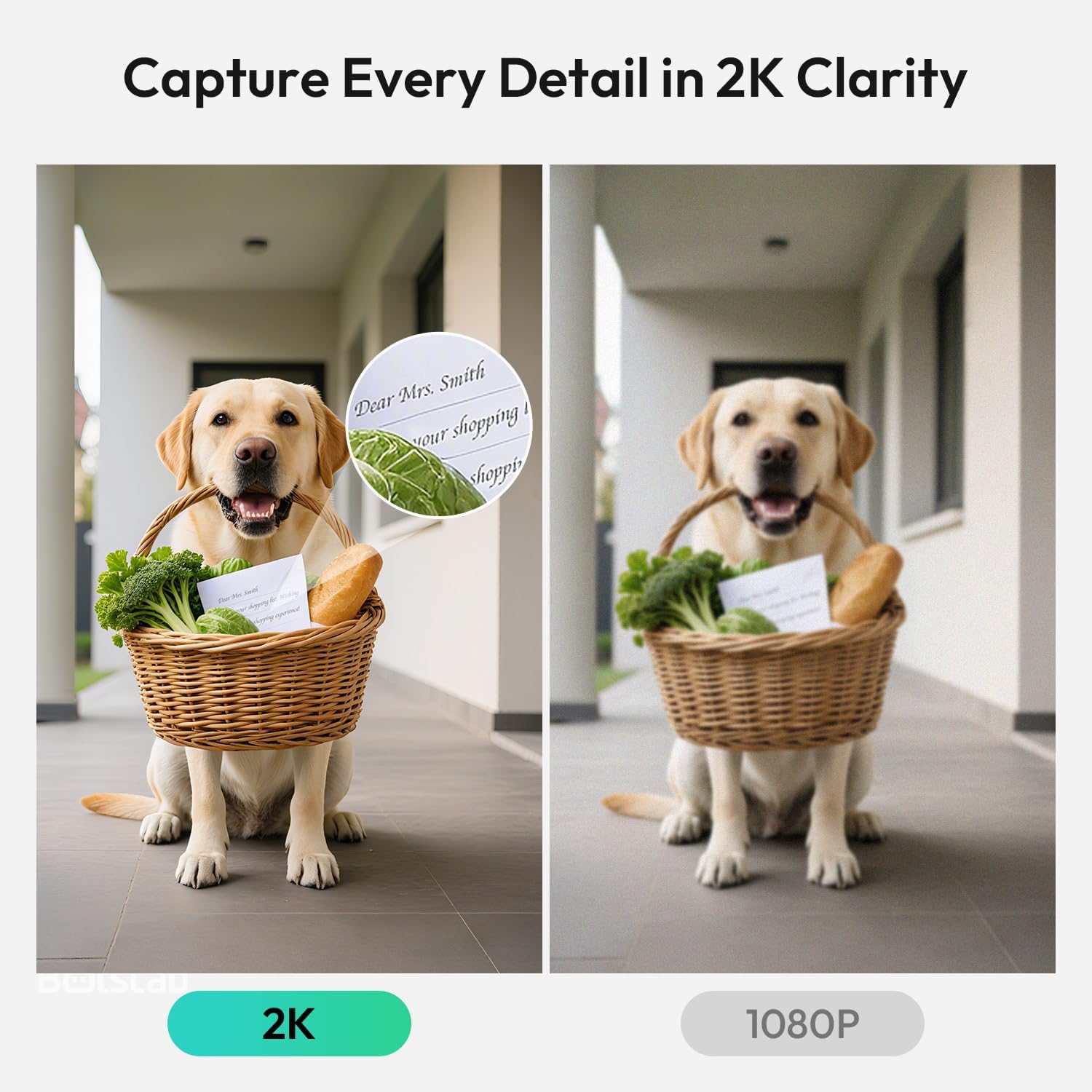
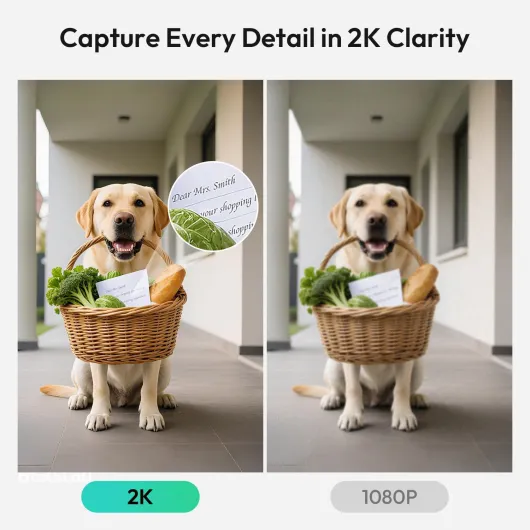
- 2K head-to-toe video is clear enough to see faces and package details
- Local storage on the indoor base station means no mandatory subscription and better security if the doorbell is stolen
- Good battery life in real use (around 2–3 months for medium traffic), with option to wire it for near‑continuous power
Cons
- App and AI detection are usable but not very polished, with occasional mis-detections and small delays
- 150-day battery claim is optimistic unless you have very low motion activity at your door
- MicroSD card not included and setup can be a bit fussy on busy WiFi networks

Specifications
View full product page →| Brand | BOTSLAB |
A wireless video doorbell that actually feels usable day to day
I’ve been using the BOTSLAB 2K Video Doorbell R810SE for a few weeks now on my front door, replacing a basic wired chime and a cheap WiFi camera I had before. I wanted something battery-powered, no forced subscription, and that my partner could use easily without calling me every time the app did something weird. On paper, this one ticks a lot of boxes: 2K image, local storage on the base station, AI detection, and a pretty big 5200 mAh battery.
In practice, it’s a mix of pretty solid and slightly annoying. The picture quality and the head-to-toe view are clearly the strong points. You really see the person at the door and the package on the ground, which sounds basic, but my previous cam always cut off either faces or parcels. The wireless base station is also a plus, especially if your router is not right next to the door.
On the other hand, the whole setup process and app experience are not as smooth as the marketing suggests. It’s not horrible, but you need a bit of patience, especially if your WiFi is already loaded with other devices. Also, the AI features are cool when they work, but sometimes they feel more like a gimmick than something I rely on every day. Battery life is good, but the 150 days claim is clearly in the “ideal lab conditions” category.
Overall, I’d say it’s a good mid-range doorbell: better than the cheap no-name stuff, not as polished as the big brands, but you’re also not locked into a subscription. If you’re okay with a bit of tinkering at the start and you just want clear video and basic security, it does the job. If you want something ultra plug‑and‑play for non‑techy relatives, there are easier options out there, but they’ll usually cost more over time with cloud plans.
Value for money: good features, small compromises instead of subscriptions
In terms of price, the BOTSLAB R810SE sits in that mid-range zone: cheaper than the big-name doorbells once you factor in their monthly cloud fees, but more expensive than the ultra-budget no-brand stuff. The big selling point here is clearly the no mandatory subscription and the local storage on the base station. If you’re like me and you hate the idea of paying every month just to see who rang your bell, that alone makes this product more attractive.
You do have to add the cost of a decent microSD card, though, since it’s not included. It’s not a huge expense, but it’s part of the real price. On the flip side, once you’ve bought the card, you’re basically done. No recurring costs unless you choose to pay for more cloud storage. For most people, a 64 or 128 GB card will be plenty for rotating doorbell footage. You also get decent 2K video, AI detection, Alexa/Google integration, and a proper base station that boosts the signal. That’s a pretty solid package for what it costs.
Where you feel the price difference compared to the more expensive competitors is mainly in the software polish and the small UX details. The app is okay but not slick, the AI is helpful but not flawless, and the setup can require a bit of patience. If you’re not tech-savvy at all, you might prefer to pay more for something more plug‑and‑play. But if you’re comfortable spending 20–30 minutes tweaking settings and reading a basic manual, you get a lot of functionality for the money.
So in the end, I’d say the value is good, not mind-blowing. It’s the kind of product where you feel you got what you paid for: solid hardware, strong core features, a few rough edges on the software side, and no ongoing fees if you don’t want them. If your priority is long-term cost and local control over your footage, this one makes sense. If you want the smoothest app and ecosystem and don’t mind subscriptions, there are better but pricier options.
Design: not pretty, not ugly, just functional
Design-wise, the BOTSLAB R810SE is very straightforward. It’s a tall, rectangular block with a big camera eye at the top and the button below. Nothing fancy, nothing that screams premium, but it doesn’t look cheap either. It’s the kind of gadget you stop noticing after a week, which is honestly what I want for a doorbell. The dimensions (around 16 x 5.6 x 3.8 cm) make it a bit taller than some competitors, but still manageable on most door frames. If you’ve got a really narrow frame or an awkward corner, you might have to get creative with placement.
The button has a decent click, and it lights up, so visitors know where to press even at night. I’ve had people miss the button on other models because it was tiny or not clearly marked. That doesn’t happen here. The front plastic feels reasonably solid, not rubbery or flimsy. Is it premium? No. But for an outdoor device that might get kicked, bumped, or splashed, I’d rather have something that just takes a beating and keeps working than a fancy finish that scratches easily.
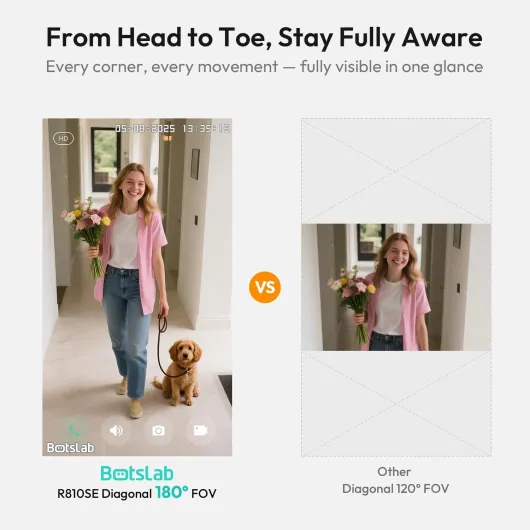
One thing I liked is the head-to-toe fisheye lens. It does make the video look slightly curved at the edges, but in real life, that’s better than not seeing the parcel on the floor or the person’s feet. If your main concern is “Can I see the package and who’s standing there?”, this design choice makes sense. It’s clearly built around coverage rather than aesthetics. At my door, I can see from just above the person’s head down to the doormat without needing to angle the doorbell weirdly.
As for the base station, it’s a small, plain white box that just sits near your router or a power outlet. Again, nothing special visually, but it doesn’t take up much space and blends into the background. I’d say the overall design is practical and low-key. If you want a stylish gadget that matches your designer door hardware, this isn’t it. If you just want a doorbell that doesn’t look like a toy and doesn’t draw attention, it does the job.
Battery life: solid, but the 150 days claim is optimistic
The doorbell uses a 5200 mAh battery, which is on the larger side for this kind of device. BOTSLAB claims around 150 days of use if you get 20 detections per day, each 20 seconds long. In real life, that kind of scenario is very specific. In my case, in a medium-traffic street with a few neighbours walking past and some deliveries, I’m seeing something closer to 2–3 months on a charge, not 5. Still decent, but not as magical as the box suggests.
One thing they mention, and it’s true, is that the doorbell might not arrive fully charged. When I first installed it, the app showed around 60–70%. I’d strongly recommend doing what they say: charge it to 100% before mounting it. Otherwise, you’ll be climbing the ladder again way sooner than expected. Charging is done via a standard cable (you’ll probably already have one), and it’s straightforward. The app gives you a battery percentage, which is more useful than just a vague icon.
Battery drain depends a lot on your motion settings and how often you open the live view. If you crank the sensitivity to max, record every tiny movement, and constantly check the feed, the battery will obviously drop faster. Once I tuned the detection to something reasonable and stopped checking the camera for every noise outside, the drain stabilized. For someone who lives in a very quiet area with only a few visitors a day, I can see it getting closer to the advertised numbers.
There’s also the option to wire it in, which basically turns the battery into a backup. I didn’t test that long term, but if you already had a wired doorbell and don’t mind doing a bit of electrical work, that’s probably the best setup: you keep the wireless flexibility but don’t have to think about charging. In short, the battery life is good enough that it’s not a daily or even weekly concern, but don’t buy it expecting to forget about charging for half a year unless your front door is basically in the middle of nowhere.
Durability & weather resistance: feels sturdy, time will tell
The doorbell is rated IP66, which in normal-person terms means it should handle heavy rain and dust without drama. I’ve had it exposed to a couple of solid downpours and some windy days with dust and pollen flying around. So far, no water in the lens, no fogging, and the button still clicks like day one. The plastic doesn’t feel premium, but it also doesn’t creak or flex when you press on it, which is usually a good sign for durability.
Temperature-wise, I haven’t hit extreme heat or deep winter with it yet, but it handled a few colder nights and some sunny afternoons without any error messages or weird reboots. Some cheaper cameras I’ve tried in the past would overheat and crash in direct sun; this one hasn’t done that so far. The seal around the lens and the edges looks decent, and there are no obvious gaps where water would easily get in. Still, I wouldn’t mount it where it gets direct pressure from a hose or something like that if you can avoid it.
The base station is indoors, so not much to say there. It just sits on a shelf, and as long as you don’t drop it or spill coffee on it, it should be fine. The main durability question for products like this is usually the mounting hardware and the risk of theft. The mount is basic but functional; it holds the doorbell well, but if someone really wants to rip it off, they probably can. The good thing is that your footage is on the SD card in the base station inside, so you don’t lose the recordings if someone walks off with the unit.
Overall, the build and weatherproofing feel reassuring enough for a typical house. It doesn’t have that super rugged, industrial feel, but for a consumer doorbell, it’s fine. If you live in a place with very harsh winters or scorching summers, I’d keep an eye on it for the first year and make use of the extended warranty if anything starts to fail. At least BOTSLAB offers an extra 6 months on top of the 2 years if you activate it in the app, which is a small comfort if you’re worried about long-term reliability.
Performance: good image, decent AI, a few minor annoyances
The 2K video quality is probably the main strong point of this doorbell. During the day, faces are clear, text on parcels is readable if they’re not too far away, and the wide field of view covers the whole entrance. Compared to my older 1080p camera, the extra detail actually matters when you’re trying to see who rang or check a package label from the office. At night, the IR night vision is okay up to the advertised ~7–8 meters. You won’t get cinema-level clarity, but you can easily recognize people who are reasonably close to the door.
Motion detection is mostly reliable, but you do need to tweak it. Out of the box, I was getting too many alerts from cars and people just passing on the sidewalk. After adjusting the sensitivity and detection zones in the app, it calmed down a lot. The AI part (BOTSLAB IQ) tries to describe what’s happening like “a man in black clothes is passing by”. When it works, it’s actually handy, because you can glance at the notification text and know if it’s just someone walking past or someone actually at your door. But it’s not perfect: sometimes it mislabels colors or just says something generic.
Latency is acceptable but not instant. When someone rings, the notification comes pretty fast, but opening the live view usually takes a couple of seconds to load. On a decent 2.4 GHz WiFi network, that’s fine. On a congested or weak network, I had times where it took 5–6 seconds, which feels long when a delivery guy is already walking away. Audio quality is okay: you can understand each other, but there is a slight delay and a bit of compression. It’s good enough to say “leave the package by the door” or “I’m coming”, but not something you’d want to use for a long conversation.
Overall, the performance is good for the price range: clear video, usable night vision, motion detection that works once tuned, and AI that’s a nice bonus but not something I fully trust yet. If you need rock-solid, zero-lag performance for a busy business entrance, I’d look higher-end. For a normal home, it’s more than enough, as long as you’re okay with the occasional mis-detection and a bit of delay when opening the camera.
What you actually get and how it works day to day
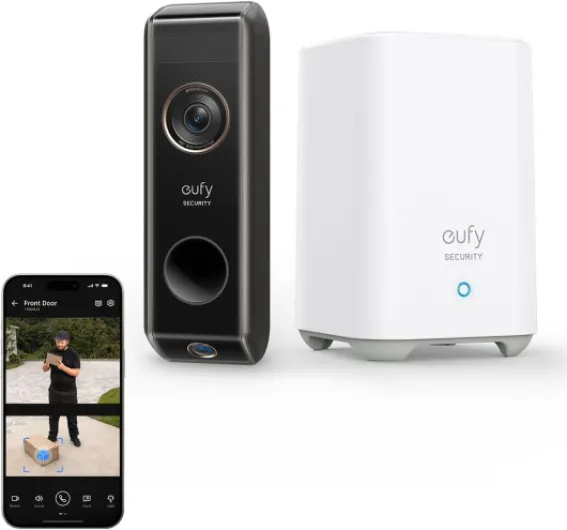
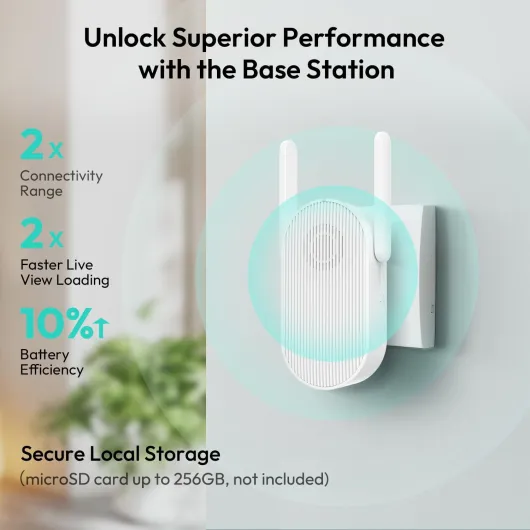
Out of the box, you get the doorbell unit itself and the WiFi base station. No microSD card is included, which is a bit annoying since local storage is one of the main selling points. You need to buy a 32–256 GB card separately and plug it into the base station, not the doorbell. That’s actually smart for security (if someone steals the doorbell, you keep the footage), but it’s one more thing to remember and pay for. There’s no separate indoor chime included, so the base station acts as your chime and notification hub.
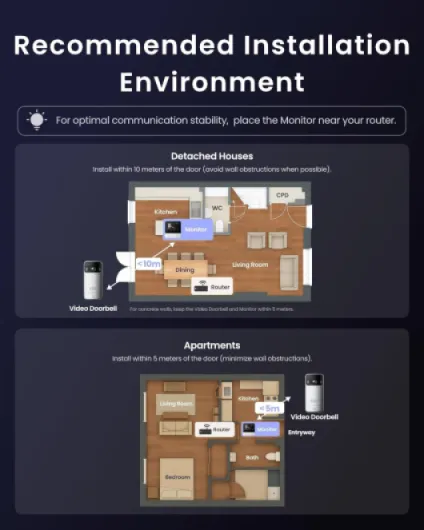
The basic idea is simple: the doorbell connects wirelessly to the base station, and the base station connects to your 2.4 GHz WiFi. You then use the BOTSLAB app to see live video, talk through the two-way audio, and review recordings stored locally or in the (optional) cloud. You get 48 hours of free cloud storage, which is fine for testing, but long term you either pay or rely on the SD card. I went straight for local storage because that’s why I bought this model instead of a more locked-down brand.
In daily use, I mainly rely on three things: motion alerts, ring alerts, and quick playback of recent clips. The alerts do come through, but sometimes there’s a 1–3 second delay before the live view loads. Not dramatic, but if you’re expecting instant response like a regular intercom, you’ll notice the lag. The AI detection tries to filter people vs other movement, and you can adjust sensitivity in the app, which helps avoid every car or cat triggering it. Still, in a busy street, you’ll need to tweak the settings or you’ll get too many notifications.
Overall, the product is fairly complete for the price: 2K video, night vision, local storage, Alexa/Google support, and battery or wired power options. It feels like a “do a bit of everything” doorbell rather than a super polished ecosystem piece. If you’re okay with that and you want to avoid mandatory subscriptions, the feature set is pretty good for a mid-range device. Just don’t expect miracles from the AI or from the app; it’s usable, but clearly not on the same level as the big-name players’ software.
Pros
- 2K head-to-toe video is clear enough to see faces and package details
- Local storage on the indoor base station means no mandatory subscription and better security if the doorbell is stolen
- Good battery life in real use (around 2–3 months for medium traffic), with option to wire it for near‑continuous power
Cons
- App and AI detection are usable but not very polished, with occasional mis-detections and small delays
- 150-day battery claim is optimistic unless you have very low motion activity at your door
- MicroSD card not included and setup can be a bit fussy on busy WiFi networks
Conclusion
Editor's rating
After using the BOTSLAB 2K Video Doorbell R810SE for a while, my feeling is pretty clear: it’s a solid, practical doorbell with good image quality and sensible features, but it’s not flawless. The 2K video and head-to-toe view actually make a difference in real life — you can see faces clearly and check packages on the ground without playing with the angle. The local storage on the indoor base station is a big plus if you don’t want to depend on cloud services or monthly fees, and the 5200 mAh battery gives you enough autonomy that you’re not charging it every few weeks.
On the downside, the app and AI features feel a bit rough around the edges. They work, but not at the same level as the top brands. Setup can be slightly fussy if your WiFi is crowded, and the 150 days battery claim is optimistic unless your entrance is very quiet. Still, for the price, you get a pretty complete package: WiFi base station, 2K video, night vision, two-way audio, Alexa/Google support, IP66 weatherproofing, and no forced subscription. I’d recommend it for people who want good image quality and local storage without paying every month, and who don’t mind tweaking settings a bit. If you want something ultra-polished with zero thinking required, or if you’re very picky about app design, you might be happier paying more for a bigger brand.