
Summary
Editor's rating
Value for money: better than many subscription doorbells, but not perfect
Design and build: solid enough, not premium
Build quality and long-term reliability concerns
Video, audio and detection: good overall, with a few quirks
What you actually get and what it really does
How well it works as an actual intercom and access control
Pros
- Clear 2K video with wide 162° field of view and usable night vision
- Local microSD recording up to 512 GB with no mandatory subscription
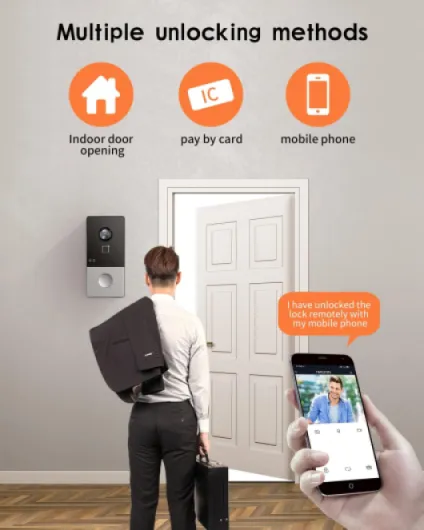
- Three unlocking methods (RFID, indoor screen, app) that work well for everyday access
Cons
- Some reports of units failing after a few months raise reliability concerns
- Wiring and setup can be confusing if reusing old cables or if you’re not comfortable with low-voltage installation

Specifications
View full product page →| Brand | EZVIZ |
A wired doorbell that tries to replace Ring without the subscriptions
I’ve been using the EZVIZ CP7 wired video intercom for a while now, replacing a basic chime and a separate Wi‑Fi doorbell that constantly dropped out. I wanted something more “old school” in terms of reliability (wired, indoor monitor) but still with app control and decent video. No subscriptions and local recording were also important for me, because I’m tired of paying monthly just to see who rang the bell yesterday.
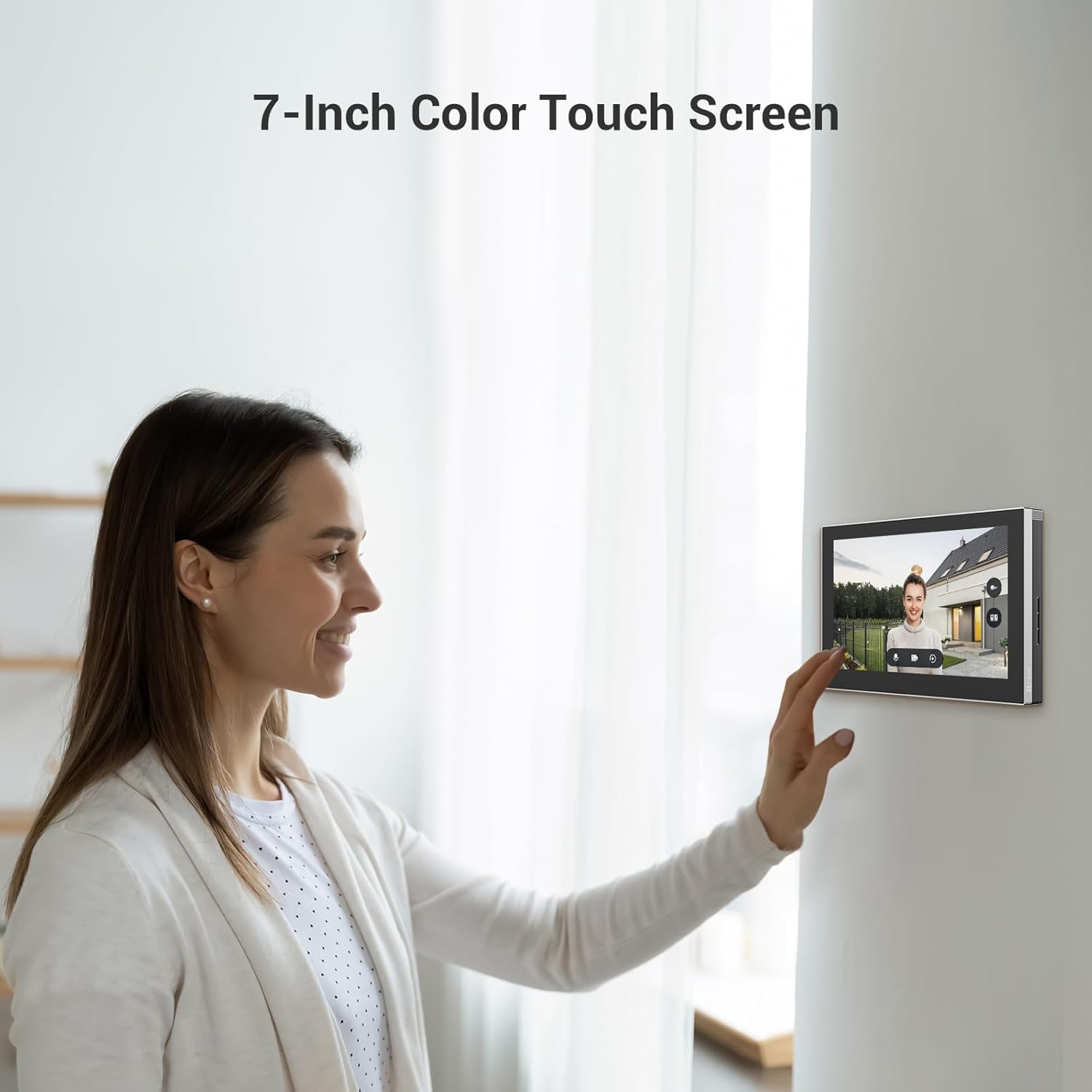
On paper, this thing ticks a lot of boxes: 2K video, 7‑inch indoor touch screen, RFID tags to unlock, dual‑band Wi‑Fi, and support for up to 512 GB microSD. It’s clearly aimed at people who want a proper intercom for a gate or front door, not just a little battery doorbell stuck to the wall. The idea is: you wire it once, and then you control everything from the screen or your phone.
In everyday use, the product is pretty solid overall, but not perfect. Some parts feel well thought out, like the instant ringing on the phone and the clear image, and other bits feel a bit rough, like the setup quirks and the fact that some units seem to die after a few months according to a few reviews. So it’s not a flawless product, but it’s a decent step up from cheaper Wi‑Fi chimes.
If you’re expecting luxury build quality and plug‑and‑play simplicity, you’ll probably be a bit disappointed. If you’re okay spending some time on installation and you mainly want a reliable wired system with no obligatory monthly fee, then it starts to make more sense. The rest of this review is just how it behaved in normal daily use, without the marketing gloss.
Value for money: better than many subscription doorbells, but not perfect
From a value perspective, the EZVIZ CP7 sits in an interesting spot. It’s not the cheapest thing out there, but for what you get—a wired 2K camera, 7‑inch indoor screen, RFID access, local SD recording up to 512 GB, and no forced subscription—the price is fairly reasonable. Compared to a Ring or similar system where you often end up paying monthly just to get recordings and proper notifications, the CP7 can save you money over time.
The fact that the microSD card is not included is slightly annoying, but honestly, even a 32 GB or 64 GB card is cheap now, and as one reviewer said, 32 GB only filled to around 20% after more than a week. So you don’t actually need 512 GB unless you want a crazy amount of history. The included 24 V transformer and installation accessories also add some value, since you don’t need to buy extra bits to get started, apart from the SD card.
Where the value equation gets more complicated is the risk of defects. If you get a unit that fails after a few months, then the cost in time and hassle is high, even if you get a refund or replacement. One reviewer had to send one back because it stopped detecting the camera after a few hours. That kind of inconsistency is annoying, especially for something that’s wired into your wall. So the value is good if you get a solid unit, less so if you have to play the return-and-replace game.
Overall, I’d say: for someone who wants a proper wired intercom with local storage and no subscription, the CP7 offers good value for money. It replaces both a doorbell and a basic CCTV camera at the entrance, and you get a big screen inside plus full app control. If you’re extremely risk‑averse and want guaranteed long‑term reliability with perfect support, you might want to look at more expensive brands or professional systems. But for a home user who doesn’t want to keep paying monthly fees, the price/features balance is pretty attractive.
Design and build: solid enough, not premium
Design-wise, the EZVIZ CP7 sits somewhere between “security equipment” and “consumer gadget”. The indoor 7‑inch screen looks fine on the wall, not particularly stylish but not ugly either. It’s reasonably thin, with a clean front and touch controls. It doesn’t scream high-end, but once it’s on the wall you stop thinking about it. The bezel is a bit thick compared to tablets, but for a door monitor it’s acceptable.
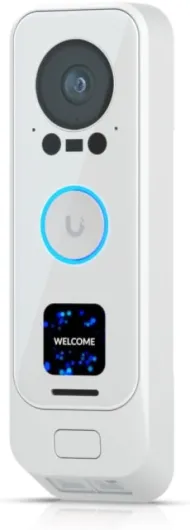
The outdoor unit is more functional than pretty. It’s clearly built to sit at a gate or next to a front door and handle weather. The camera lens, call button, microphone, speaker, and RFID area are all visible and easy to understand. The button has a clear click, which is important so visitors know they actually rang. The finish feels like typical sturdy plastic, and it doesn’t feel like it will fall apart easily, but it’s not the kind of material that makes you go “wow”. It’s just decent and feels like hardware rather than a gadget.
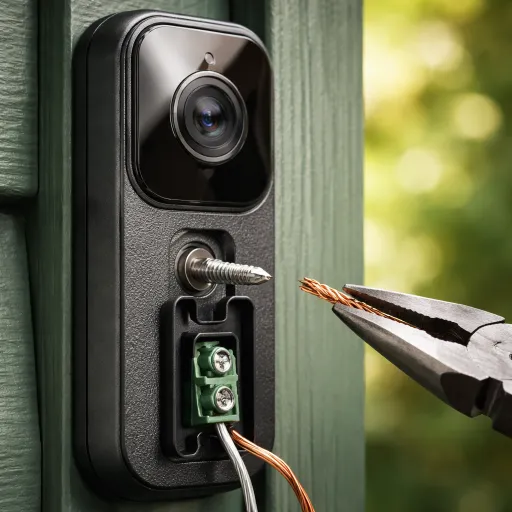
One thing I liked is that the package comes with mounting templates, screws, and even a small screwdriver, which makes positioning and drilling easier. It’s a small touch but it shows they expect normal people, not only electricians, to install it. That said, the design of the wiring posts and connectors could be clearer. The +/- markings make you think it’s just power, but the same two wires are for data too, which caused confusion for at least one user who reused old cabling and had to troubleshoot for a couple of hours.
In daily use, the layout works: when someone rings, the screen lights up automatically, and you immediately get a large image of the person at the door. The speaker and mic positions avoid weird echo most of the time. If you’re picky about aesthetics, you might find it a bit utilitarian, but in a hallway or near the entrance it blends in. Overall, design is practical, not fancy, and that’s probably what most people want in a door intercom.
Build quality and long-term reliability concerns
In terms of physical durability, both the indoor screen and outdoor unit feel solid enough. The outdoor part is built for weather, and the plastics don’t feel flimsy. Buttons and connectors don’t give the impression they’ll fall apart with normal use. After installation and a bit of rain and sun, there were no obvious signs of wear, yellowing, or water ingress. So from a purely physical standpoint, it seems fine for typical outdoor mounting.
However, electronic reliability is where I’m a bit more cautious. Some user reviews mention the system dying after about six months: the indoor unit no longer shows the camera, it stops ringing, and the app says “device not found”. That’s not something you want from a wired system that you’ve gone to the trouble of installing. My own unit hasn’t failed yet, but I obviously haven’t had it for years, so I can’t claim it’s rock solid long term. The fact that a few people had total failures means I’d keep the box and invoice handy in case of warranty claims.
One thing that can also affect perceived durability is installation quality. Since power and data go over the same pair of wires, using old or damaged cabling can cause weird connection issues, like the camera powering on but not talking to the indoor unit. One reviewer spent two hours troubleshooting because of that. If you reuse old doorbell wiring, make sure the cable is in good condition and follow the wiring diagram carefully. A poor connection can look like a device fault when it’s actually the wiring.
Overall, I’d say the build feels robust enough for home use, but there’s some risk of early failures based on other people’s experiences. It’s not catastrophic across the board, given the 4.2/5 average rating, but it’s something to keep in mind. I wouldn’t call it bulletproof industrial gear; it’s more like decent consumer hardware that you hope will last, but you should be ready to contact support if you’re unlucky.
Video, audio and detection: good overall, with a few quirks
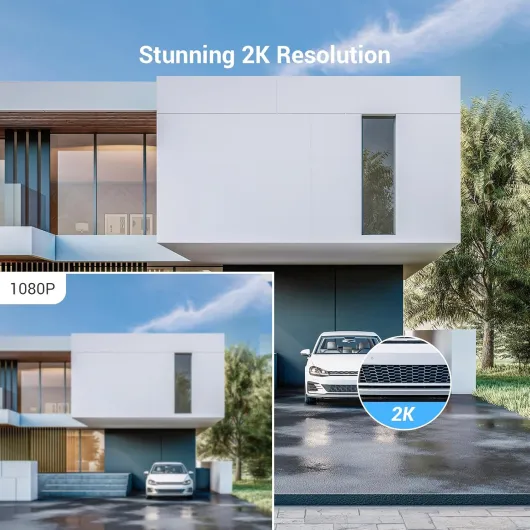
On the performance side, the video quality is genuinely good for a doorbell. The 2K resolution and wide 162° field of view mean you see the whole person, even if they stand close to the door. Text on delivery labels is usually readable, and faces are clear enough to recognise people easily. Compared to cheaper 1080p Wi‑Fi doorbells I’ve had, this is definitely a step up. Night vision is decent within the 5‑metre range; you won’t read a licence plate at the end of the driveway, but for the doorstep it’s fine.
The audio is okay but not perfect. You can hear people clearly most of the time, and they hear you, but the sound is a bit compressed and sometimes slightly tinny, like most doorbells. There is also this voice-changing feature (smurf‑like or deeper voice) which is more of a gimmick but actually fun when you know the person at the door. In terms of delay, the talk/listen latency is pretty low when your Wi‑Fi is solid, so conversations feel natural enough. It’s not like a phone call, but it’s close enough to be usable without shouting over each other.
For detection, the human detection works fairly well once you tweak the sensitivity and detection zones. By default it can be a bit chatty if your door faces a street with cars and people walking by. After adjusting zones to just cover the doorstep and gate area, I got fewer alerts and mostly relevant ones. The option to record everything but only notify on humans is practical: you still have footage if you need it, but your phone doesn’t buzz every time a car passes.
In real use, when someone presses the button, my phone rings almost instantly, which is a big improvement over some apps that just send a delayed notification. The indoor screen also reacts quickly. The only real concern on performance is reliability over time: a small number of users mention units dying after a few months (no camera detected, device not found). Mine hasn’t failed so far, but it’s something to keep in mind. Day to day though, video, audio and alerts do the job well, and the experience is better than some mainstream battery doorbells I’ve tried.
What you actually get and what it really does
Out of the box, the EZVIZ CP7 is basically two main pieces: the outdoor doorbell/camera unit and the indoor 7‑inch touch screen monitor. You also get a 24 V power supply, some cables, mounting hardware, drilling template, and a few RFID tags for unlocking. It’s clearly designed as a full intercom system, not just a little camera. The indoor screen acts as your main control hub: you see visitors, talk to them, and unlock the door/gate from there.
The camera records in 2K (about 3 MP) with a 162° field of view and has about 5 metres of infrared night vision. It supports human detection and custom detection zones, so you can reduce useless alerts from cars or trees as much as possible. Storage is local via microSD up to 512 GB (card not included), and you can also use EZVIZ CloudPlay if you want, but it’s optional. That was important for me: the product works fine without a subscription, which is not the case with some big brands.
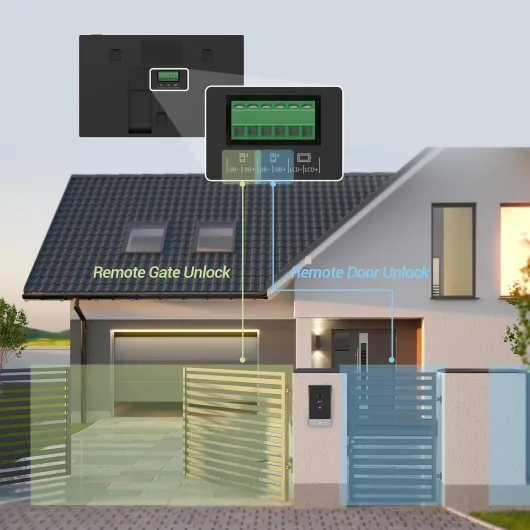
Connectivity-wise, the indoor screen connects to your 2.4 or 5 GHz Wi‑Fi, and then the camera is linked via the two-wire (or four‑wire compatible) connection. The app (EZVIZ) lets you receive calls directly on your phone when someone presses the button, like a normal phone call instead of just a small push notification. You can also unlock remotely from the app, which is handy for deliveries or letting family in when you’re not home.
Overall, the feature set is pretty complete for the price. You get:
- Wired power and data between screen and doorbell
- App control on iOS/Android
- RFID, monitor, and app unlocking
- No mandatory cloud thanks to SD card support
How well it works as an actual intercom and access control
As an intercom and access system, the CP7 is generally effective. The main thing I wanted was to be able to see who’s at the gate, talk to them, and open the gate remotely. On that, it delivers. When someone presses the button, the indoor monitor lights up, I see them clearly, talk, and with one tap I can trigger the door/gate relay. From the app, it’s similar: I get a call-like notification, answer, and can unlock from anywhere as long as my phone has data.
The three unlocking methods are genuinely useful in daily life:
- RFID tags for family members or kids who don’t want to use a key
- Indoor screen for when you are at home and want to open quickly
- App control for remote access
For notifications and recordings, the combination of human detection and local SD storage works well. The doorbell records whenever there is motion, but you can limit notifications to human events. That way, you can scroll back over the day if something happens near your door, without having to pay a cloud fee. In my case, a 32 GB card handled more than a week of events without filling up, similar to what one of the Amazon reviewers mentioned. With 512 GB, you’d get a lot more history, but honestly for most people 64–128 GB would be plenty.
It’s not perfect: there can be occasional missed detections if someone runs past quickly, and the app could be smoother in some places. Also, if your Wi‑Fi is weak where the indoor screen is, remote calls can be slower or fail. But with a stable network and proper setup, the CP7 does what an intercom should do: you know who is there, you can speak to them, and you can control access without walking to the door every time.
Pros
- Clear 2K video with wide 162° field of view and usable night vision
- Local microSD recording up to 512 GB with no mandatory subscription
- Three unlocking methods (RFID, indoor screen, app) that work well for everyday access
Cons
- Some reports of units failing after a few months raise reliability concerns
- Wiring and setup can be confusing if reusing old cables or if you’re not comfortable with low-voltage installation
Conclusion
Editor's rating
The EZVIZ CP7 is a practical wired video intercom for people who want a bit more than a simple smart doorbell. The 2K video is clear, the 7‑inch indoor screen is genuinely handy, and the three unlocking methods (RFID, screen, app) make daily life easier if you have a gate or electric lock. The fact that it records locally to microSD and doesn’t force you into a subscription is a big plus, especially if you’re coming from a brand that charges just to access your own footage.
It’s not without flaws. Installation is not plug‑and‑play if you’ve never touched low‑voltage wiring, and the two‑wire data/power design can be confusing if you reuse old cables. A few users also report units dying after several months, which raises some doubts about long‑term reliability. The audio is decent but not great, and the app, while usable, could be smoother and better integrated with things like Apple Watch. Still, in everyday use, it does the main job: you see who’s there, you can talk to them, and you can open the door from your phone or the screen without paying a monthly fee.
I’d recommend the CP7 to homeowners with an existing wired doorbell or gate, who are comfortable doing a bit of installation or calling an electrician, and who care about local storage and no subscription costs. If you live in a flat where wiring is tricky, or if you want something absolutely rock solid with zero reported failures, you might want to look at higher‑end intercom brands or stick to a simpler battery doorbell. But if you’re after a reasonably priced, feature‑rich wired system that mostly just gets the job done, the EZVIZ CP7 is a solid option with a few caveats.