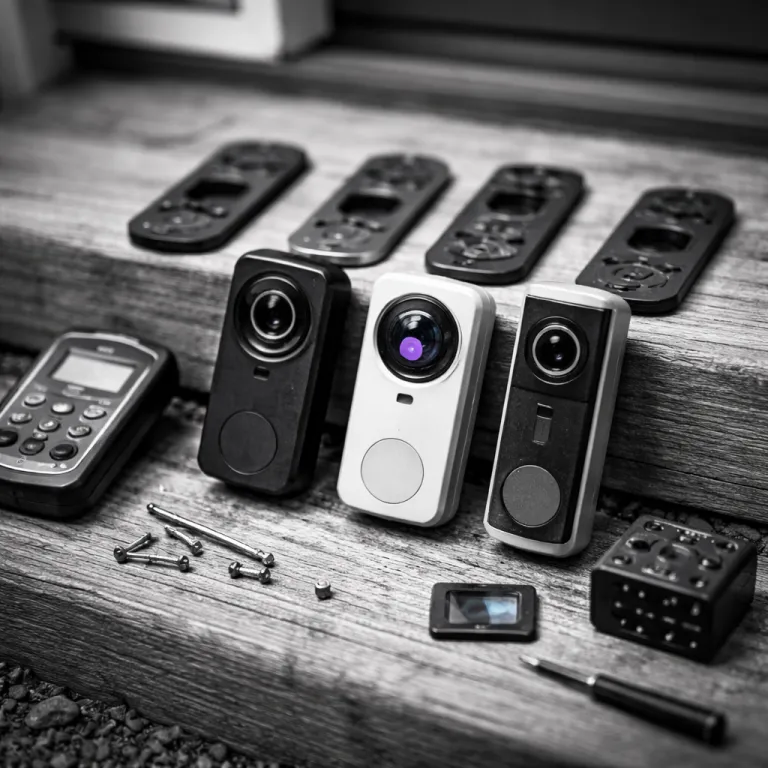
Why the best doorbell camera for night vision starts with your porch light
Your search for the best doorbell camera for night vision should begin with one question. How dark is your porch at two in the morning when a courier drops a late package or someone checks whether your home security is asleep. Until you know that, every smart doorbell spec sheet about night vision and video quality is just marketing poetry.
Most color night vision doorbell cameras need roughly 2 lux of ambient light, which is about a dim street lit sidewalk rather than a pitch black driveway. Below that threshold, even an advanced video doorbell with a high resolution camera quietly falls back to infrared night mode and you only notice when faces turn into grey blobs during motion. That is why the best doorbell camera for night vision is often the one paired with a simple 5 watt warm porch bulb on a dusk to dawn sensor rather than the flashiest doorbell pro model on a glossy page.
You can measure that light level with a free lux meter app on your phone while standing where a visitor would trigger motion detection. Take one reading with your existing porch light on, then another with it off, and save both as a baseline for your future smart doorbell choice. If the reading drops close to zero, you should prioritise a doorbell camera with strong infrared night vision and reliable motion alerts over a battery powered model that only promises colourful video in perfect conditions.
Think about how far from the doorbell your visitors usually stand, because most doorbells give their sharpest night security detail within 2 to 3 metres. If your steps push people farther back, you want a video doorbell that keeps facial features clear at 4 to 5 metres, even when the only light comes from its own infrared LEDs. That is where a wired doorbell with constant power can drive brighter infrared for better video quality than a small battery doorbell that must ration every second of video storage and every burst of light.
Infrared versus color night vision: what actually lets you see faces
Infrared night vision on a smart doorbell is the honest mode, because it shows you exactly what the sensor can see without pretending your porch is brighter than it is. In this mode, the doorbell camera uses invisible infrared light to create a monochrome video where contrast matters more than colour, and a well tuned camera can still show a face clearly at 2 to 3 metres. When you review video doorbells footage the next morning, you care more about recognising a delivery driver than admiring the colour of a jacket.
Most modern doorbell cameras use 850 nanometre infrared LEDs, which cast a faint red glow that some people notice at night, while newer smart doorbell models from brands like Eufy and Aqara are moving to 940 nanometre infrared that is fully invisible but slightly shorter in range. That trade off means a battery powered doorbell might keep your entryway more discreet but lose some distance, so you should check whether the claimed 10 metre night vision range was measured in a lab corridor rather than on a real porch with dark brick. When a manufacturer boasts about 20 metres of night vision range, assume that is the distance to a vague silhouette, not a face you could identify in a security incident.
Color night vision on a video doorbell can look impressive when there is enough ambient light from a street lamp or a bright porch fixture. The camera keeps its colour mode active by boosting gain and slowing the shutter, but that combination makes moving subjects smear into noise when motion detection triggers recording. If you see streaky video in your cloud storage clips whenever someone walks quickly past, your best doorbell camera for night vision might be one that lets you lock the camera into infrared mode for more reliable security footage.
Hybrid systems that mix infrared and colour are now common in mid tier video doorbell pro models, and they try to give you the best of both worlds. These smart doorbells use infrared for basic illumination but keep some colour information when the scene is bright enough, then switch to full monochrome when the lux level drops too low. If you care about keeping video storage efficient while still getting useful night security footage, look for a doorbell pro that lets you choose between these modes rather than hiding them behind automatic decisions.
For homeowners who want to keep footage off remote servers, pairing a strong infrared system with local storage can be a smart move. A doorbell camera with a microSD slot or a base station that handles local video storage avoids the recurring cost of cloud storage subscriptions while still capturing clear night vision clips. If you want a deeper breakdown of which doorbell cameras handle local storage best, a dedicated guide to a doorbell camera with local storage can help you compare specific models and their security trade offs.
Power, wiring, and subscriptions: what really shapes night performance
Power is the quiet factor that separates a merely good smart doorbell from the best doorbell camera for night vision on a difficult porch. A wired doorbell that taps into your existing doorbell transformer can drive stronger infrared LEDs and process more advanced motion detection without worrying about draining a small battery. In contrast, a battery powered doorbell must constantly balance video quality, motion sensitivity, and battery life, especially during long winter nights when motion events spike.
When you compare a wired video doorbell with a battery doorbell, look at how each handles motion zones, pre roll video, and clip length, because these features directly affect both night security and subscription costs. A model that records a few seconds before motion detection triggers can show you how someone approached your door, but that pre roll often requires constant low level recording that uses more power and more cloud storage. If you prefer to avoid a subscription, choose a smart doorbell that offers flexible local storage or limited free cloud storage without crippling core security features.
Ring and Google Nest are the two ecosystems most homeowners encounter first, and both tie their best features to paid services. A Ring video doorbell without a Ring Protect subscription loses long term cloud storage and rich notifications, while a Nest doorbell without a Nest Aware plan keeps only a narrow slice of recent video history. That does not mean these doorbells are poor choices, but you should treat the subscription as part of the real price of night vision security rather than an optional extra.
Some video doorbells from brands like Eufy or Reolink lean on local storage to avoid mandatory subscriptions, storing encrypted video on a base station inside your home. This approach can be attractive if you are wary of cloud storage, but you still need to check how the system handles remote access, firmware updates, and security patches over time. A smart doorbell that promises free video storage but rarely updates its software is not a good long term security partner.
If you rent or cannot touch existing doorbell wiring, a battery powered smart doorbell remains your main option, and you should plan around its limits. Look for models that let you tune motion detection zones tightly, reduce unnecessary alerts from passing cars, and adjust clip length to preserve both battery life and video storage. For more detail on renter friendly options that avoid drilling yet still offer solid night vision, a guide to a smart doorbell for apartments can help you match power constraints with realistic security expectations.
Real world testing: how to judge night vision beyond the spec sheet
The most reliable way to judge the best doorbell camera for night vision is to run your own two in the morning test. After installing any smart doorbell, walk through three simple scenarios at night and then review the video doorbells clips the next day. You want to know whether you can recognise a face, read a package label, and see what a person is doing with their hands.
Start by standing 2 metres from the doorbell camera and looking directly at it, then step back to 4 metres and turn your head slightly, because that is how a real visitor behaves. Trigger motion detection by walking across the field of view, not just straight toward the lens, and note whether the camera captures your full approach or only the moment you reach the mat. When you replay the footage, check whether the video quality holds up in low light or turns into a noisy blur whenever there is motion.
Repeat the same test with your porch light on and off to see how much the extra illumination helps the night vision system. If the difference is dramatic, a small upgrade to your lighting may do more for security than paying for a higher tier doorbell pro model with only marginally better hardware. A 5 watt warm LED bulb on a dusk to dawn sensor often costs less than a month of a cloud storage subscription yet transforms what your doorbell cameras can see.
Pay attention to how quickly your smart doorbell sends alerts to your phone when motion detection triggers, because a delayed notification can make two way audio almost useless. Some systems buffer video to the cloud before pushing alerts, while others prioritise live view and send the clip to cloud storage or local storage afterward. If you often miss visitors because the alert arrives late, consider a model that offers faster push notifications even if its video storage options are simpler.
Finally, test how your chosen doorbell handles integration with voice assistants like Alexa and Google, because these links can change how you use night vision in daily life. Being able to say a quick command to a smart display and see the live video doorbell feed when an alert sounds can make you more likely to check suspicious motion. If you live in an apartment or shared building, a focused guide to top smart doorbells for apartments can help you find models that balance privacy, shared entrances, and reliable night security.
Choosing between Ring, Nest, and alternatives for night focused security
When you narrow your search for the best doorbell camera for night vision, you usually end up comparing Ring, Nest, and a few strong alternatives. Ring offers a wide range of video doorbells, from basic battery powered units to wired doorbell pro models with advanced motion detection and better video quality. Google Nest focuses on tighter integration with the Google Nest ecosystem and smart displays, which can make night alerts more visible in a busy household.
Ring video doorbells pair best with a Ring Protect subscription, which unlocks extended cloud storage, rich notifications, and more flexible video storage options. Without Ring Protect, you still get live view and basic alerts, but you lose the ability to review older night vision clips after a security incident. If you rely heavily on night security footage, treat the subscription as part of the total cost and compare it with the price of alternatives that lean on local storage instead of cloud storage.
The Nest doorbell line, including both wired and battery models, leans on the Nest Aware subscription for longer video history and more advanced detection features. These smart doorbells can distinguish between people, packages, and general motion, which helps cut down on false alerts from passing cars or swaying trees at night. When paired with Google Nest hubs, a Nest doorbell can show a live video feed automatically when someone presses the doorbell, which is particularly useful in homes where phones are often on silent.
Alternative brands such as Eufy, Reolink, and Aqara often emphasise local storage and reduced reliance on subscriptions, which appeals to homeowners wary of recurring costs. Many of these doorbell cameras store encrypted video on a base station inside your home, giving you control over video storage while still offering remote access through a secure app. The trade off is that integration with Alexa and Google can be less polished than with Ring or Nest, so you should test how quickly alerts appear on your preferred smart displays.
Whichever ecosystem you choose, focus on how the doorbells handle night vision in your specific environment rather than chasing the highest resolution or the longest claimed range. Look for clear examples of night footage from real porches, not just staged marketing clips, and pay attention to how faces look at typical visitor distances. If a brand cannot show you honest night video from its doorbell cameras, it probably does not deserve to guard your front door.
FAQ
How bright should my porch be for color night vision to work well
Color night vision on a doorbell camera usually needs around 2 lux of ambient light, which is similar to a dimly lit street or a porch with a small lamp. If your porch is darker than that, the camera will often switch back to infrared night mode, even if the app still shows a colour preview. Adding a low power warm LED bulb on a dusk to dawn sensor is often enough to keep colour night vision usable without wasting energy.
Is a wired doorbell always better than a battery powered model at night
A wired doorbell generally has an advantage for night security because it can power stronger infrared LEDs and more advanced motion detection without worrying about battery drain. That said, a well designed battery powered smart doorbell with efficient video storage and tuned motion zones can still perform very well on a typical suburban porch. Your choice should depend on whether you can access existing doorbell wiring and how often you are willing to recharge or swap batteries.
Do I really need a subscription for good night time security footage
You do not always need a subscription, but many popular video doorbells from Ring and Google Nest reserve longer cloud storage and some advanced features for paying customers. If you want to avoid subscriptions, look for doorbell cameras that support local storage on a microSD card or a base station while still offering secure remote access. Just remember that without any form of cloud storage, a thief who steals the doorbell could also remove recent footage unless it has already synced elsewhere.
How can I test whether my doorbell camera is good enough at night
The simplest test is to record yourself approaching the door at night from different distances and angles, then review the clips the next day. Check whether you can clearly recognise your own face at 2 to 4 metres, read a package label, and see what is in your hands. If the video turns into a noisy blur whenever you move, your porch lighting or camera settings probably need adjustment.
Is infrared night vision safe for people and pets
Infrared night vision used in consumer doorbell cameras operates at power levels considered safe for everyday exposure by international standards. The 850 nanometre LEDs may show a faint red glow, while 940 nanometre versions are invisible, but both are designed for continuous use around people and animals. If you have concerns, you can position the doorbell slightly off direct eye level while still keeping visitors clearly visible in the frame.