Summary
Editor's rating
Is it worth the price?
Design: simple, discreet, and very Google
Battery life: good, but depends a lot on how busy your door is
Build quality and how it holds up outside
Video, detection and day-to-day performance
What you actually get and how it fits into a normal home
Pros
- Clear HD video with decent night vision for normal home use
- Easy setup and strong integration with Google Nest speakers and displays
- Reliable notifications and configurable motion zones once tuned
Cons
- Battery needs periodic recharging and can drain faster in busy areas
- Price is on the higher side compared to basic wireless doorbells

Specifications
View full product page →| Brand |
A wireless doorbell that finally behaved the way I expected
I’ve been using the Google Nest Doorbell (Battery) for a few weeks now, and I’ll be blunt: I mainly bought it because I was sick of missing parcels and I already had a couple of Google Nest speakers at home. I didn’t want to run new cables or call an electrician, so the battery version made sense. My expectations were pretty basic: clear video, reliable notifications, and something that doesn’t die every few days.
Out of the box, it looks like a pretty standard smart doorbell, nothing fancy. The thing that pushed me to actually buy it was the promise of easy setup with the Google ecosystem and the fact that the reviews were solid. I’m not chasing the latest gadget; I just wanted something that I can install myself in under an hour and forget about most of the time.
Over these weeks, I tested it in normal everyday use: deliveries, friends showing up, late-night door knocks, and a couple of false alerts from passing cars and neighbors. I tweaked the motion zones, tried different notification settings, and played a bit with the night vision to see if it could actually show who is at the door when it’s dark.
Overall, it does what it says. It’s not perfect and it’s not cheap, but it’s decent at the basics: you see who’s at the door, you can talk to them, and the app doesn’t make you want to throw your phone away. If you’re already using Google Nest stuff, it fits in nicely. If you’re not, you’ll want to read the rest before deciding.
Is it worth the price?
On the money side, the Nest Doorbell (Battery) sits in the mid-to-high range for smart doorbells. It’s not the cheapest option, and you can definitely find simpler wireless doorbells for less if all you want is a chime when someone presses the button. Where this one tries to justify its price is in the combination of HD video, night vision, motion detection, and the whole Google Nest integration. If you don’t care about seeing your door on your phone or talking to delivery drivers remotely, you’re overpaying.
Compared to cheaper no-name brands I’ve tried before, the difference is mainly in reliability and app experience. Notifications are more consistent, video loads faster, and the app doesn’t feel like it was made in a rush. That being said, you’re also paying for the brand and ecosystem. If you already have Google speakers and displays, the value is better because everything works together nicely: doorbell rings, your Nest Hub shows the feed, and your speakers can announce someone is at the door.
One thing to keep in mind is any optional subscription for extra features (longer video history, smarter alerts, etc.). If you go for those, the total cost over time goes up, and that changes the value equation. If you just use the basic features without going overboard, it’s more reasonable. Still not cheap, but more justifiable if you use it regularly and actually benefit from the features.
So in my opinion, value is decent if you’re already in the Google ecosystem or plan to use the smart features a lot. If you just want a simple ding-dong and don’t care about video or remote access, there are cheaper, simpler products that will do the job. This one makes sense for people who actually want to check their door from their phone and use the smart side on a daily basis.
Design: simple, discreet, and very Google
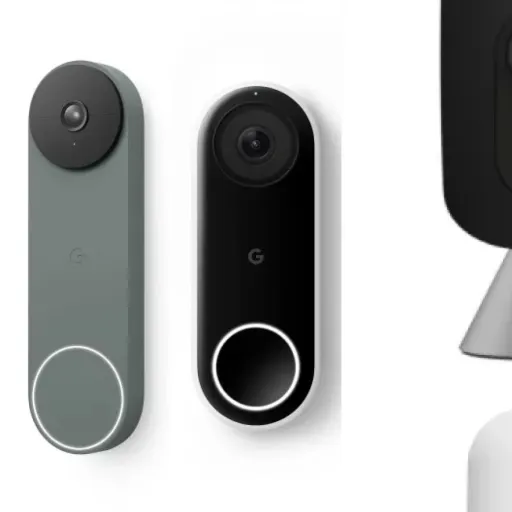
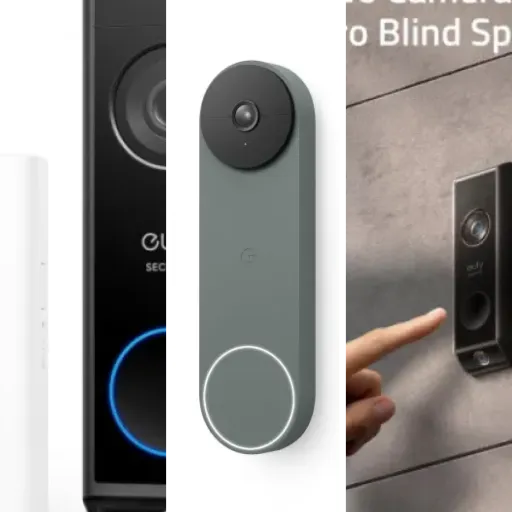
Design-wise, the Nest Doorbell (Battery) is pretty low-key. Mine is the black version, and on the wall it just looks like a slim vertical bar with a camera eye and a button. No flashy lights, no bulky housing. If you want something that doesn’t scream “security gadget” from the street, this does the job. It’s not a decoration piece, but it’s clean and neutral enough for most doors and walls.
The layout is practical: camera on top, button on the bottom with a clear ring area where visitors press. People instinctively know where to push, which sounds trivial, but I’ve had guests confused with other brands that hide the button too much. The LED ring around the button is visible but not aggressive, so at night people still see where to press. The overall shape is slim enough that it doesn’t look bulky even on a narrow door frame.
The water-resistant rating is important if your door isn’t fully sheltered. Mine is semi-covered: it gets wind and some rain, but not a full downpour all the time. So far it’s handled drizzle and a couple of heavier rain days without any issue. There’s no rubber flap or weird cover; everything is sealed in. I wouldn’t mount it where it takes direct hose water all day, but for normal outdoor exposure it feels fine.
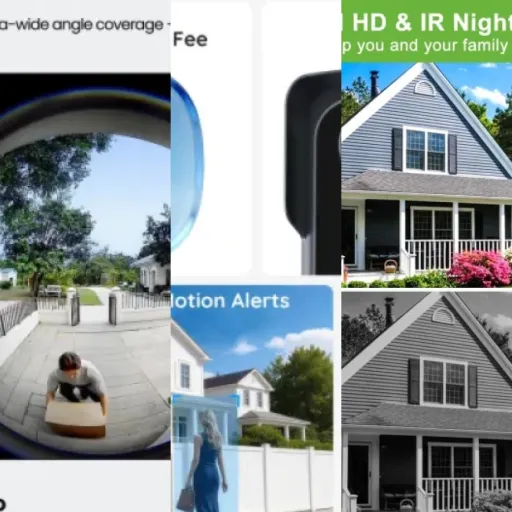
From a usability angle, the design works: the camera has a wide enough field of view to see people standing close to the door as well as parcels left on the ground. It doesn’t stick out too much, so there’s less chance of someone bumping into it. Is it beautiful? Not really. But it’s tidy, discreet, and doesn’t look cheap, which is what matters to me for something that sits on the front of the house 24/7.
Battery life: good, but depends a lot on how busy your door is
The big question with the battery version is always: how often do you have to charge it? In my case, with moderate traffic (a few deliveries a week, some motion from neighbors, and me testing the live view every now and then), the battery held up for several weeks before dropping to the point where I felt I should recharge. It’s not something you’re charging every few days, but don’t expect it to last forever either. Usage and motion activity have a huge impact.
Charging is straightforward: you take the doorbell off its mount, plug it in with a cable, and wait. That’s the slightly annoying part: the doorbell is offline while charging. For me, that meant picking a time when I knew I wouldn’t get many visitors, like overnight or during a quiet weekday. If your entrance is very busy, this will be more annoying, and you might want to plan a regular charging schedule. There’s no swappable battery system, so you can’t just pop in a fresh one.
The app gives you a percentage indicator and rough estimates, so you’re not caught off guard. After about two weeks of normal use, I was still well above half. When I cranked up motion sensitivity and checked the live view constantly out of curiosity, the percentage dropped faster, which is expected. So if you’re the kind of person who loves to peek at the camera feed all the time, don’t be surprised if you’re recharging more often.
In short, battery life is decent but not magical. For a normal household with tuned motion zones, you’ll probably charge it every month or so, maybe less if your door is quiet. If you live on a busy street or in an apartment hallway with constant movement, expect more frequent charges or consider wiring it instead. It’s workable, but you do have to think about it every now and then.
Build quality and how it holds up outside
In terms of durability, the Nest Doorbell (Battery) feels solid in the hand. It’s not ultra-heavy, but the 0.41 kg weight gives it a sturdy vibe, not like a hollow plastic toy. Once mounted, there’s no wobble or flex. The mounting plate locks it in place firmly, and you need the release tool (or a similar thin object) to take it off, which also helps a bit against casual theft.
The water-resistant design has handled regular outdoor conditions fine so far: light rain, wind, and temperature changes between day and night. I don’t live in an extreme climate, so I can’t speak for snowstorms or desert heat, but for a typical European-style or temperate environment, it seems well built. No signs of condensation inside the lens, no weird fogging, and the button still clicks properly even after being pressed a bunch of times with wet hands.
The finish doesn’t scratch easily with normal contact. I’ve accidentally brushed it with bags and keys a couple of times, and it didn’t leave visible marks. The lens is slightly recessed, which protects it from direct hits and from people touching it by mistake. Dust and dirt do accumulate a bit at the edges, but a quick wipe with a cloth cleans it up. Nothing special, just normal outdoor maintenance.
Overall, I’d say build quality is pretty solid for a consumer doorbell. It feels like it will last several years if not abused. There are probably more rugged, industrial-style options out there, but for a regular house or apartment entry, this is more than enough. Just don’t expect it to survive a direct hit from a football or constant high-pressure water and you’ll be fine.
Video, detection and day-to-day performance
On the performance side, the basics are covered pretty well. The HD video is clear enough to recognize faces, license plates at close range, and read logos on delivery uniforms. It’s not cinema-quality, but for a doorbell it’s more than enough. During the day, colors are decent and the image is sharp. At night, the night vision switches to black and white, and you can still clearly see who’s at the door within a couple of meters. Beyond that, it gets a bit grainy, but still usable.
The motion detection is where you’ll spend some time adjusting things. By default, it can be a bit chatty, especially if your door faces a street or a busy walkway. I had to set up activity zones so it focused on my porch and not every car passing by. Once that was dialed in, notifications were much more reasonable. It recognizes people better than random movement, so you don’t get pinged every time leaves move, but it’s not perfect. I still get the occasional pointless alert when someone just walks past on the sidewalk.
Latency is acceptable. When someone rings, my phone buzzes within a couple of seconds, and my Nest Hub pops up the live feed almost instantly. Talking through the doorbell works fine: there’s a slight delay, but conversation is still possible. I’ve used it to tell delivery drivers where to leave packages and to ask unexpected visitors what they want, and they could hear me clearly. The built-in mic picks up voices okay, though background street noise can sometimes drown things out a bit.
Overall, in practice, the performance is solid for typical home use: you see, you hear, and you can respond without feeling like you’re fighting the tech. It’s not perfect for very busy streets or people who want ultra-precise detection, but for a standard house or apartment entrance, it’s more than good enough. Just be ready to spend the first couple of days fine-tuning the motion zones and sensitivity to match your environment.
What you actually get and how it fits into a normal home
In the box, it’s very minimal: the Nest Doorbell (Battery) itself, basic mounting hardware, and the usual paperwork. No chime included, no fancy extras, just the core unit. It weighs around 0.41 kg, which is a bit heavier than it looks in photos, but once it’s on the wall you don’t really care. It’s a single piece, black color, with the camera on top and the button at the bottom. That’s it. Very straightforward.
Setup is done through the Nest/Google Home app. I paired it with my phone and my existing Nest speakers. The process was mostly painless: scan the QR code, connect to Wi‑Fi, name the device, set your zones. It took me roughly 20–30 minutes including the actual physical installation. You’ll need a drill if you’re mounting it into concrete or brick, but on wood or softer surfaces it’s even quicker. There’s no tuner or TV-style stuff to worry about; the “UHF” and “frequency range” specs feel more like technical internals than anything you’ll touch in real life.
From a feature standpoint, you get HD video, night vision, motion detection, and two-way audio. It’s all controlled from the app: you can define activity zones, tweak sensitivity, and decide what triggers notifications (people, packages, general motion). For a normal user, the main thing is: do I get a clear picture on my phone when someone is at the door, and can I talk back? In my case, yes, reliably.
If you’re already in the Google world with Nest Mini, Nest Hub, or other speakers, it slides right in. My Nest Hub shows the camera feed automatically when someone rings, and that’s honestly where this product makes the most sense. If you don’t use any Google devices and you’re just looking for a standalone doorbell, it still works, but you’re paying partly for that integration, so keep that in mind.
Pros
- Clear HD video with decent night vision for normal home use
- Easy setup and strong integration with Google Nest speakers and displays
- Reliable notifications and configurable motion zones once tuned
Cons
- Battery needs periodic recharging and can drain faster in busy areas
- Price is on the higher side compared to basic wireless doorbells
Conclusion
Editor's rating
After using the Google Nest Doorbell (Battery) for a while, my conclusion is pretty straightforward: it’s a solid smart doorbell that does what it’s supposed to do without too much hassle, especially if you’re already using Google Nest devices. Video quality is clear, night vision is usable, motion detection is flexible once you tune the zones, and the app is stable. Day-to-day, it just quietly does its job: you see who’s at the door, you can talk to them, and you stop missing deliveries.
It’s not perfect. Battery life is good but not mind-blowing, and how often you charge it will depend a lot on how busy your entrance is and how much you play with the live view. The price is also on the higher side compared to basic wireless doorbells, and the product really makes the most sense if you lean into the Google ecosystem. If you want something ultra-rugged for extreme conditions or you live in a high-traffic area with constant motion, you might want to look at wired options or more specialized systems.
If you’re a typical user with a house or apartment door, a home Wi‑Fi network, and maybe a Nest Hub or Nest Mini already in place, this is a pretty solid choice. It’s simple to install, easy to use, and it feels reliable so far. If you’re on a tight budget or don’t care about the smart side and video, you can safely skip it and go for something cheaper and more basic.