
Summary
Editor's rating
Enhanced audio is better than before, but still not home intercom quality
Value depends heavily on whether you’re already in the Blink ecosystem
Simple, compact design that blends in and doesn’t scream "gadget"
Battery life: long on paper, decent in practice if you tweak settings
Weather resistance is fine, long-term reliability is more of a question mark
2K video and head‑to‑toe view: solid, but not flawless in real life
What you actually get and what they don’t shout about
Pros
- Clear 2K video with useful head‑to‑toe, 1:1 field of view for seeing visitors and packages
- Long battery life on three AA lithiums if motion settings are tuned reasonably
- Easy installation and good integration if you already have a Blink Sync Module and cameras
Cons
- Key features feel limited or unreliable without a paid cloud subscription, despite local storage support
- Night vision is weaker than Blink’s dedicated outdoor cameras and only decent for close‑up use
- Sync Module required but not included, which raises the real cost for new users

Specifications
View full product page →| Brand | Blink |
A decent 2K doorbell with some annoying strings attached
I’ve been using the Blink Battery Doorbell 2K+ for a bit now, as an add-on to an existing Blink setup with a Sync Module 2. I bought it mainly to replace an older 1080p doorbell and to get that head‑to‑toe view so I could actually see parcels on the ground. On paper it ticks a lot of boxes: 2K video, better audio, long battery life, IP65, and it runs on AA lithiums so no wiring drama. In practice, it’s a bit of a mixed bag.
The first thing I noticed is that the video quality and field of view are genuinely better than the old Blink doorbell. Faces are clearer, and I can see right down to the doormat, which is what I wanted. Motion alerts come through reasonably fast, and doorbell presses ring my phone and my indoor chime reliably when the system behaves. So the basics are there: see who’s at the door, talk to them, and check deliveries.
Where it starts to get annoying is the whole cloud vs local storage situation and the dependency on the Sync Module. The listing says the Sync Module is required but sold separately, which is already another cost. If you’re hoping to just use USB storage on the module and skip the subscription, be ready for some compromises. After cancelling the trial, some features feel crippled: push alerts and thumbnails don’t work the same way, and you spend time digging through settings just to understand what you actually get for free.
So overall, first impression: hardware is pretty solid for the price, software and ecosystem feel half-open and half-locked. If you’re already in the Blink world and don’t mind paying a small subscription, it fits in nicely. If you want a fully functional, no-subscription setup out of the box, this doorbell can get frustrating fast. It’s not terrible, but it’s definitely not the clean, plug‑and‑forget experience the product page suggests.
Enhanced audio is better than before, but still not home intercom quality
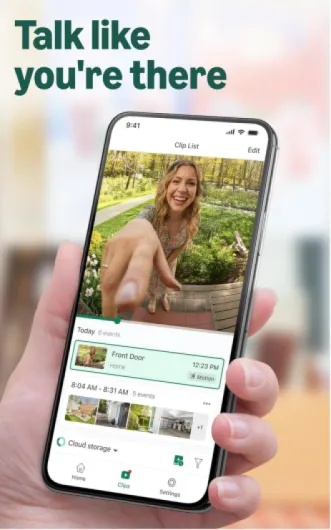
The two-way audio on this Blink doorbell is an improvement over the older model I had. Voices come through clearer, and the noise cancellation helps cut down on background hum from the street. When someone is at the door and I answer from my phone, I can hear them just fine and they can usually hear me without asking me to repeat. For quick "leave the parcel there" type conversations, it works well enough.
That said, don’t expect crystal‑clear, zero‑lag sound. There’s still a small delay between speaking and hearing the response, and sometimes the audio breaks up if the Wi‑Fi signal isn’t strong. Compared to a wired doorbell system or a proper intercom, it’s obviously weaker. The speaker volume on the doorbell is acceptable, but if there’s a lot of traffic noise or wind, the person outside might struggle to hear you unless they’re standing close and speaking up.
One thing I do like is that audio stays fairly natural indoors on the phone side. It doesn’t sound like a walkie‑talkie, it’s more like a slightly compressed phone call. For visitors, though, it still has that "talking to a gadget" feel. It’s not a deal breaker, but if you’re hoping to have long back‑and‑forth chats at the door, you’ll notice the limitations. For quick instructions, it’s perfectly fine.
Overall, I’d say the audio is good enough for normal door use, better than the first‑gen Blink doorbell, but not something I’d brag about. It does what you need: you can tell delivery drivers what to do and confirm who’s there. If you’re picky about audio quality or have a noisy street, you might find it just okay rather than great.
Value depends heavily on whether you’re already in the Blink ecosystem
On pure hardware, the Blink Battery Doorbell 2K+ is good value for money: 2K video, wide field of view, IP65, and long battery life for a relatively low upfront cost. The catch is that this add‑on version doesn’t include the Sync Module, and the product really expects you to have one. If you don’t, you’ll need to buy it separately, which pushes the real price of a working system up. Then there’s the cloud subscription question, which is where the value starts to look less clear.
If you’re already using Blink cameras with a Sync Module 2 and maybe you’re already paying for the cloud, this doorbell slots in nicely. In that case, the cost is just the doorbell itself, and you get consistent alerts, cloud storage, and a single app for everything. The integration is smooth enough that it feels like a logical upgrade from the old 1080p doorbell. You get sharper video, better field of view, and slightly better audio without changing your whole setup.
If you’re trying to run it without a subscription, the story changes. Yes, you can use USB storage on the Sync Module 2, but several users (and my own tests) show that you lose some quality-of-life features: no thumbnails on notifications, different behaviour for motion alerts, and in some cases, recording issues after cancelling the cloud trial. For a budget-conscious buyer who specifically wants to avoid monthly fees, that undermines the value quite a bit. You end up with a product that technically works but feels intentionally limited unless you pay.
So in terms of value, I’d split it like this: for existing Blink users who are okay with the subscription, it’s a pretty solid upgrade doorbell at a fair price. For new users who want a fully functional, no‑fee system out of the box, I’d say the value is just "meh". There are competing doorbells that either include more in the box or are more transparent about what you lose without a subscription. The 3.2/5 Amazon rating matches my feeling: decent product with some ecosystem catches that drag its value down.
Simple, compact design that blends in and doesn’t scream "gadget"
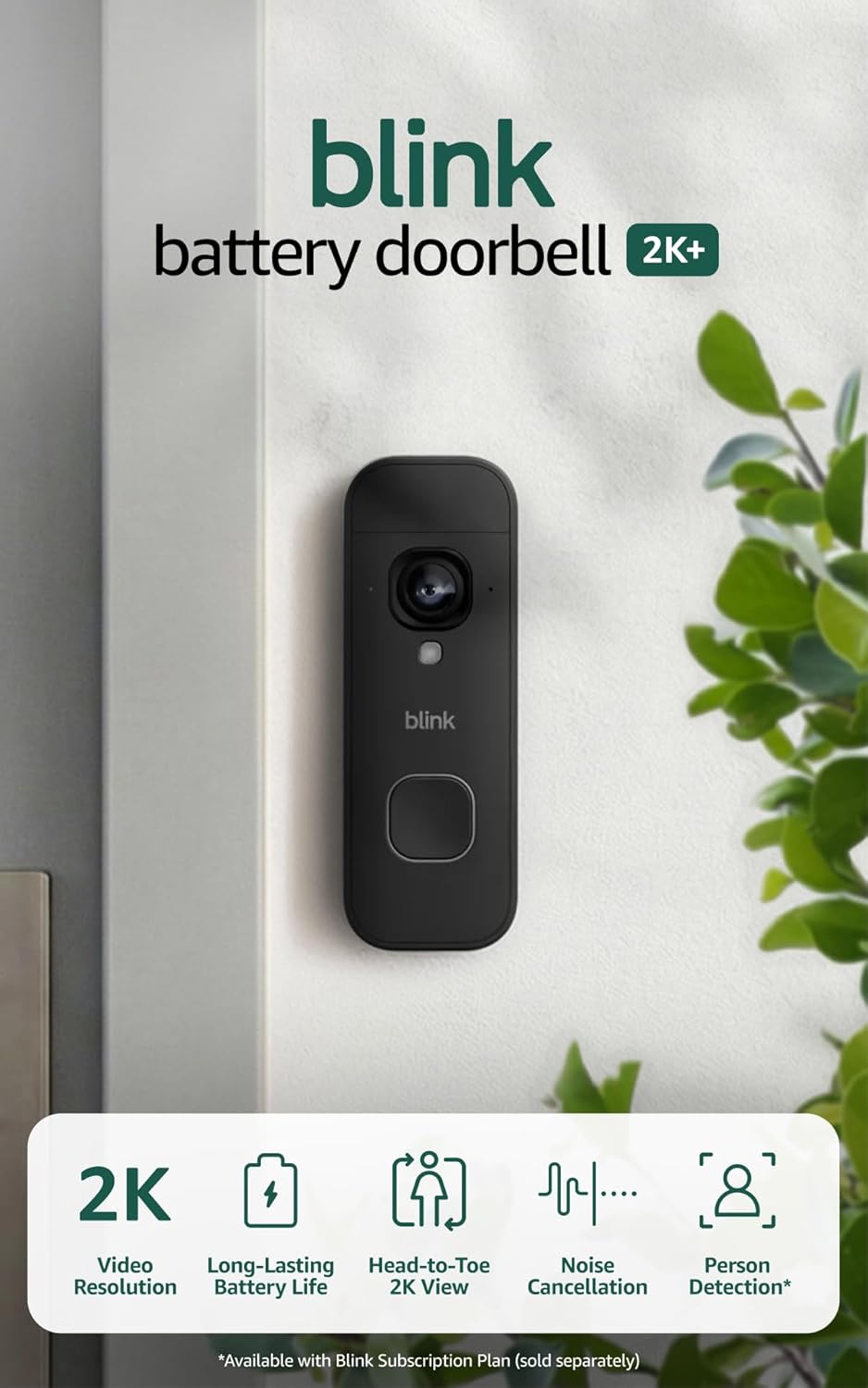
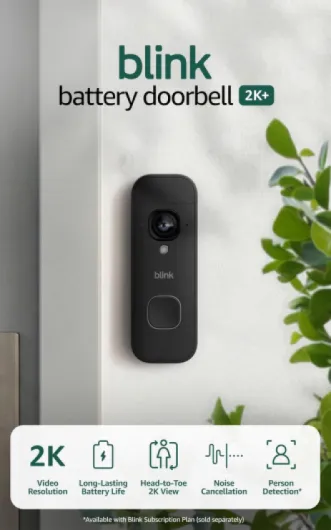
Design-wise, the Blink Battery Doorbell 2K+ is pretty low-key, which I like. The black version I tested is just a rectangular block (roughly 130 x 48 x 34 mm) with the camera on top and the button below. No shiny chrome, no huge branding, just a small logo. On a darker door frame or brick, it blends in fine and doesn’t look like some sci‑fi gadget. For a front door, that’s a plus – you want visitors to see the button, not stare at a tech showpiece.
The button ring LED and the small recording indicator are functional. The LED helps people see where to press, especially in low light. It’s not blinding, and it looks clean. There’s no physical chime unit in the box, so visually you just deal with the doorbell itself. The back plate and mounting system are basic plastic, but they’re not flimsy. You can tell it’s built to be cheap to manufacture, but it doesn’t feel like a toy either.
One thing I appreciate is that the 1:1 aspect ratio and head‑to‑toe view actually match the physical design. The camera sits high enough on the unit to catch the full body and packages on the floor. Compared to older, wider‑but‑shorter doorbells, this square framing makes more sense. You don’t get that weird feeling of seeing half a person and no idea what’s at their feet. It’s not a style point, but in practical use it matters more than a fancy finish.
Overall, I’d call the design functional and discreet. Nothing here feels premium, but nothing feels cheap enough to worry about either. If you want a doorbell that looks like a normal doorbell, just with a camera built in, this fits the bill. If you’re into metal housings, glass fronts, and fancy colours, this isn’t that. It’s a plastic, utilitarian box that gets the job done visually, and that’s about it.

Battery life: long on paper, decent in practice if you tweak settings
The big selling point here is the battery life claim of up to 21 months on three AA 1.5V lithium batteries. That number is based on Blink’s ideal conditions and default settings, which usually means not too many motion events per day and moderate temperatures. In the real world, with a busy street and a few doorbell presses daily, you shouldn’t expect nearly two years, but you can still get a respectable run time if you’re careful with settings.
In my use, after dialing back sensitivity and cutting out some of the constant motion alerts from the road, the battery drain looked reasonable over a couple of weeks. If I extrapolate, I’d guess something like 6–12 months is realistic for an average household with a fair number of events, especially if you don’t live in very cold conditions. The operating temperature range is -20° to 45°C, but cold weather always hits batteries harder, so outdoor winter use will shorten that lifespan.
The fact that it takes standard AA lithium batteries is a plus and a minus. Plus, because you can just swap them yourself and not worry about proprietary packs or wiring. Minus, because they’re not rechargeable and good lithium AAs aren’t super cheap. If you’re going through a set every few months due to heavy use, the running cost adds up. I’d rather have the option of a rechargeable pack or at least a clear battery percentage in the app. You do get battery status, but it’s not super granular.
Overall, I’d say the battery life is pretty solid if you manage your settings and don’t live in extreme conditions. It’s definitely better than some Wi‑Fi doorbells that need charging every 1–2 months. Just don’t take the "up to 21 months" line as a promise. Treat it as a best‑case scenario, and you won’t be disappointed. For most people, changing batteries once or twice a year is acceptable, but if your door is a high‑traffic area, be ready for more frequent swaps.
Weather resistance is fine, long-term reliability is more of a question mark
The doorbell is rated IP65, which basically means it’s dust‑tight and can handle low‑pressure water jets. In normal terms: rain, splashes, and general outdoor conditions shouldn’t be a problem. I’ve had it mounted outside through several rainy days and some wind, and there’s been no sign of water ingress, fogging in the lens, or weird behaviour due to moisture. The plastic housing wipes clean easily, and the button still feels firm after regular use.
Temperature tolerance is listed as -20° to 45°C, which covers most climates. I haven’t tested it in heavy snow or extreme heat, but in regular cool and mild weather it behaves normally. The unit doesn’t get hot, and the video feed stays stable. If you live somewhere with harsh winters, the main impact will likely be battery life rather than the doorbell dying. The included Energizer lithium batteries are better than standard alkalines for this kind of use.
Where I’m less confident is long-term reliability of the electronics and software. Some user reviews mention issues like the doorbell failing to record certain events, or the system going weird after cancelling the cloud trial. That’s more of a software/firmware ecosystem problem than physical durability, but for a security device, it matters just as much. Hardware can survive the weather, but if the software acts up, the end result is the same: you miss important footage.
Given Blink is on its third generation of this type of product and there’s a two‑year limited warranty, I feel reasonably okay about hardware lasting a couple of years outdoors. I’d worry more about how many firmware updates they push, how long they keep fixing bugs, and whether features change behind a subscription wall. So physically, it seems durable enough. Reliability-wise, it’s decent but not bulletproof, especially if you’re trying to run it without a cloud plan.
2K video and head‑to‑toe view: solid, but not flawless in real life
On the performance side, the 2K video is clearly a step up from the older Blink 1080p doorbell. The resolution is 1920 x 1920 in a square 1:1 ratio, and you really notice it when you zoom in on faces or small details like parcel labels. Edges look sharper, colours are more accurate in daylight, and the 140° x 140° field of view actually lets you see from the visitor’s head down to packages on the ground. For basic monitoring and checking who’s at the door, it’s more than enough.
Motion detection with person detection is decent, but you need to tweak the sensitivity and zones. Out of the box, it picked up every car passing by, which gets old fast. After a bit of tuning in the app, it behaved better and focused more on people near the door. The good thing is that when it works, you get fewer useless alerts. The bad part is that some users, and I’ve seen this myself once or twice, report situations where a doorbell press right after motion doesn’t always generate a saved clip. That kind of bug is annoying because it’s exactly the moment you want recorded.
Night vision is where I’d say it’s serviceable but nothing special. In low light with some ambient street lighting, the colour night vision hangs on for a while, which is nice. Once it switches to black and white IR, the image is okay but softer and grainier than the daylight feed. Compared to Blink’s dedicated outdoor cameras, the night performance feels a bit weaker. If you’re trying to monitor a car several meters away, it’s not ideal. For close‑up door use, you can still see faces, but don’t expect crisp detail.
Latency for live view and alerts depends heavily on your Wi‑Fi and the Sync Module placement. With a decent 2.4 GHz signal, I usually see a 1–3 second delay between motion and phone notification. That’s perfectly usable for answering the door in real time. When the Wi‑Fi is weak or the Sync Module is too far, delays get longer and sometimes the live view refuses to load on the first try. So performance is good when your network is good, but it’s not very forgiving if your setup is marginal.
What you actually get and what they don’t shout about
Out of the box, you get the doorbell itself, three AA Energizer lithium batteries, a mounting kit, a removal tool, and a drill template. No Sync Module, no chime, no USB stick. So if you’re starting from zero, factor in at least the price of a Sync Module 2 on top, and possibly a chime solution if you want an indoor ring. The good part is the hardware feels fairly compact and light at about 113 g, so it doesn’t look ridiculous on the wall.
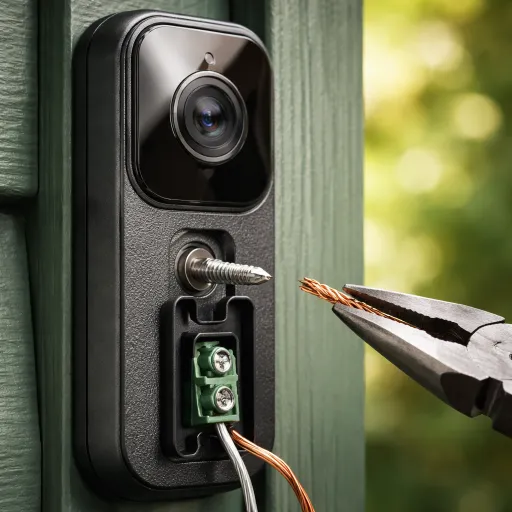
Setup through the Blink Home Monitor app is straightforward as long as you already know how Blink works. You scan the QR code, add it to your existing system, and link it to the Sync Module. It took me around 15–20 minutes including drilling the holes and aligning the template. Wi‑Fi is 2.4 GHz only, which is pretty standard for these devices, but keep it in mind if you’ve pushed everything to 5 GHz at home. Signal strength matters a lot for delay and reliability.
One thing that’s not very clear from the product page is how much behaviour changes once the free cloud trial ends. At first, you get full push notifications with thumbnails, motion clips saved in the cloud, and everything feels smooth. After you cancel the trial or it expires, you realise that without a subscription, some things either don’t work at all or work in a clunky way with local storage on the Sync Module. For a security product, that uncertainty is annoying. You shouldn’t have to guess which alerts you’ll still get after 30 days.
So in terms of presentation, I’d say: hardware offer is clear, software offer is fuzzy. The box contents are honest, the specs match what you see (2K, 1:1 aspect ratio, 140° x 140° field of view, IP65, etc.), but the real‑world usage depends heavily on whether you’re ready to pay for Blink’s cloud. If you go in knowing that, you’ll be less disappointed. If you expected a full-featured, subscription‑free experience, this is where the product starts to feel a bit misleading.
Pros
- Clear 2K video with useful head‑to‑toe, 1:1 field of view for seeing visitors and packages
- Long battery life on three AA lithiums if motion settings are tuned reasonably
- Easy installation and good integration if you already have a Blink Sync Module and cameras
Cons
- Key features feel limited or unreliable without a paid cloud subscription, despite local storage support
- Night vision is weaker than Blink’s dedicated outdoor cameras and only decent for close‑up use
- Sync Module required but not included, which raises the real cost for new users
Conclusion
Editor's rating
The Blink Battery Doorbell 2K+ is a solid but imperfect wireless doorbell. On the hardware side, it does what you expect: clear 2K video, a genuinely useful head‑to‑toe view, weather resistance, and respectable battery life on AA lithiums. Daytime image quality is good, audio is usable, and installation is straightforward if you’re even slightly handy. If you already own a Blink Sync Module and maybe other Blink cameras, this doorbell fits in smoothly and feels like a natural upgrade over the older 1080p model.
Where it loses points is the software and ecosystem side. The way features change after the free cloud trial ends is not very clear up front, and trying to rely only on local USB storage through the Sync Module can be frustrating. Some people have run into missing recordings or reduced notifications once they cancelled the trial, and that’s not great for a product meant for home security. Night vision is also just okay, not great, especially if you want to monitor more than just the immediate doorstep.
I’d recommend this doorbell mainly to existing Blink users who are already in the ecosystem and either already pay for the cloud or don’t mind adding a small subscription. In that setup, it’s a decent, budget‑friendly way to get better video at your front door. If you’re starting from scratch and you absolutely want a full-featured, no‑subscription doorbell, I’d look around a bit more. This one works, but the hidden compromises without the cloud plan make it less attractive as a standalone solution.