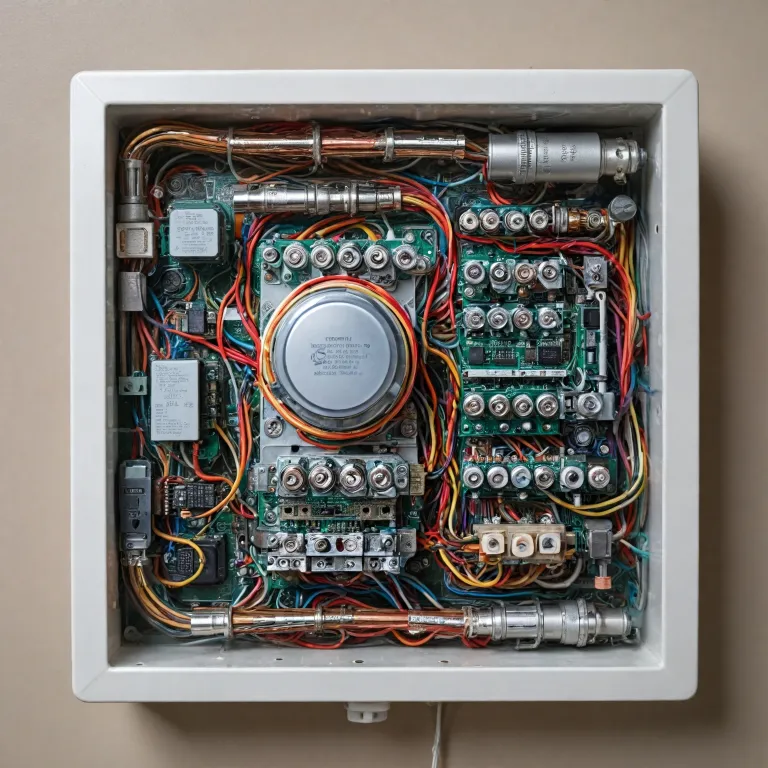

Why thermostat wiring matters for smart doorbells
Why Your Thermostat Wiring Impacts Smart Doorbell Installation
When considering a smart doorbell, most people focus on features like video quality, motion alerts, or app integration. But the wiring behind your walls—especially the thermostat wiring—plays a crucial role in whether your new device will work smoothly. Many smart doorbells require a constant source of low voltage power, often provided by the same transformer that powers your HVAC system, thermostats, and sometimes even your air conditioning or heating system.
Thermostat wires are designed to carry low voltage signals between your HVAC system, thermostat, and other connected devices. These wires can include connections for heat, cooling, fan, and even more advanced functions like a heat pump or reversing valve. The way these wires are set up in your home can directly affect the compatibility and performance of a smart doorbell.
- Power supply: Many smart doorbells need a steady power wire, often the same one labeled "C" or "common wire" in thermostat wiring. If your system lacks this, your doorbell may not function reliably.
- Shared circuits: In some homes, the transformer that powers the thermostat and HVAC system also supplies the doorbell circuit. This can create challenges if the wiring isn’t compatible or if the transformer isn’t strong enough to handle the extra load.
- System variations: Different HVAC systems—like heat pumps, air handlers, or traditional heating and cooling setups—use different wiring configurations. This can impact which wires are available at your doorbell location.
Understanding your thermostat wiring is the first step to a successful smart doorbell installation. If you’re unsure about your wiring setup or whether you have the necessary wires, it’s worth learning more about using smart devices without a neutral wire. This knowledge can help you avoid common pitfalls and ensure your smart doorbell works as intended.
Common thermostat wiring configurations
Typical Wiring Setups in Homes
When it comes to installing a smart doorbell, understanding the existing thermostat wiring in your home is crucial. Most homes use low voltage wiring for their HVAC systems, which can impact how your smart doorbell receives power and communicates with other devices. Here’s a breakdown of the most common thermostat wiring configurations you might encounter:
- Single-stage heating or cooling: This setup usually has a basic set of wires: R (power from the transformer), W (heating), Y (cooling), and G (fan). Sometimes, a C (common wire) is present, which is especially important for smart devices that need constant power.
- Multi-stage systems: These systems offer more precise control over heating and cooling. You’ll see additional wires like W2 or Y2 for second-stage heating or cooling, and possibly an O/B terminal for heat pump reversing valves.
- Heat pump systems: Heat pumps require more complex wiring. Along with the standard wires, you’ll find connections for the reversing valve (O/B), and sometimes auxiliary heat (AUX or E). The air handler and compressor are controlled through these wires.
- Boiler or radiant heating: These systems might use only two wires, typically labeled R and W. They control the heating circuit or valve directly.
Each wire connects to a specific terminal on the thermostat, and the labeling helps identify its function. The presence or absence of a common wire (C wire) is a key factor for compatibility with smart doorbells, as it provides continuous power. If your system lacks a C wire, you may face challenges when installing devices that require more power than traditional thermostats.
For more details on how smart home hubs can interact with your wiring and devices, check out this guide on how a Z-Wave hub enhances your smart doorbell experience.
Understanding your wiring setup now will help you avoid surprises later, especially when you’re checking your existing wiring or troubleshooting compatibility issues.
Potential wiring challenges when installing a smart doorbell
Unexpected Wiring Obstacles During Smart Doorbell Installation
When you’re ready to install a smart doorbell, the wiring behind your existing thermostat or HVAC system can present a few surprises. Many homes have unique heating and cooling setups, and not all wiring configurations are compatible with smart doorbells that require constant power. Here are some common challenges you might encounter:- Lack of a Common Wire (C-Wire): Many smart doorbells need a constant power source, often supplied by a common wire. Older thermostat wiring may only have wires for heating or cooling (like R, W, Y, G), but no dedicated C-wire. Without it, your doorbell may not function reliably or at all.
- Low Voltage vs. High Voltage Systems: Most smart doorbells are designed for low voltage (24V) systems, which are standard for modern HVAC setups. However, some homes use high voltage (110V or 240V) heating systems, which are incompatible and can damage your device if connected incorrectly.
- Complex HVAC Systems: If your home uses a heat pump, air handler, or has a reversing valve, the wiring can be more complicated. Multiple thermostat wires may connect to terminals labeled for heating, cooling, compressor, or reversing valve. Identifying which wire does what can be confusing, especially if the wiring isn’t labeled clearly.
- Shared Circuits: Sometimes, the power wire for the thermostat is shared with other devices, leading to voltage drops or interference. This can cause your smart doorbell to reboot or lose connection.
- Old or Damaged Wires: In older homes, thermostat wires may be brittle, corroded, or have poor insulation. This can lead to unreliable connections or even short circuits when you attempt to connect a new device.
How to check your existing wiring safely
Staying Safe While Inspecting Your Thermostat Wiring
Before you start examining your wiring for a smart doorbell installation, safety is the top priority. Many HVAC systems, including those with heat pumps, air handlers, or traditional heating and cooling setups, use low voltage wiring. However, even low voltage can pose risks if not handled properly.- Turn off power: Always switch off the power to your HVAC system at the circuit breaker. This prevents accidental shocks when you touch any thermostat wire or terminal.
- Remove the thermostat cover: Gently take off the thermostat faceplate. Most covers pop off easily, but some may require a screwdriver.
- Identify the wires: Look for wires labeled with letters like R (power wire), C (common wire), W (heating), Y (cooling), G (fan), O/B (reversing valve for heat pumps), and others. Each wire connects to a specific terminal, controlling different parts of your HVAC system, such as the compressor or air conditioning.
- Take a photo: Before disconnecting anything, snap a clear photo of the wiring. This helps you remember where each wire was connected, especially if you need to reattach them later.
- Check for a common wire: Many smart doorbells require a C wire (common wire) for continuous power. If you see a wire connected to the C terminal, you’re likely in good shape. If not, you may need to explore solutions for wiring incompatibility.
- Inspect wire condition: Look for any frayed or damaged wires. If you spot issues, avoid touching them and consider calling a professional.
Solutions for wiring incompatibility
What to Do If Your Wiring Doesn’t Match Smart Doorbell Requirements
If you’ve checked your thermostat wiring and discovered it doesn’t align with what your smart doorbell needs, don’t worry—there are several practical solutions. Many homes have older HVAC systems or unique setups, so encountering wiring incompatibility is common.- Add a Common Wire (C-Wire): Many smart doorbells require a constant power source, often provided by a common wire. If your system lacks a C-wire, you can run a new wire from your HVAC system’s transformer to the doorbell location. Some manufacturers offer C-wire adapter kits that simplify this process.
- Use a Power Adapter: For homes without accessible low voltage wiring, a plug-in power adapter can supply the necessary voltage to your smart doorbell. This option bypasses the need to modify your existing thermostat wiring.
- Install a Power Extender Kit: Some smart doorbells come with a power extender or power kit. These devices help bridge the gap when your wiring doesn’t provide enough consistent power, especially in systems with heat pumps, air handlers, or complex heating and cooling circuits.
- Check for Unused Wires: Sometimes, extra wires are tucked behind your thermostat or in the wall. If you find an unused wire labeled for a terminal like "C" or "common," you may be able to repurpose it for your smart doorbell’s power needs.
- Consider Wireless Options: If rewiring isn’t feasible, some smart doorbells operate on battery power. While this doesn’t solve all wiring challenges, it’s a workaround for homes with incompatible HVAC wiring or limited access to a transformer or low voltage circuit.
When to call a professional for help
Recognizing When Expert Assistance Is Needed
Smart doorbell installation can seem straightforward, but the reality is that thermostat wiring, HVAC systems, and power circuits can be complex. If you encounter any of the following situations, it’s best to consult a professional:
- Unfamiliar wire labels or colors: If your thermostat wires are not clearly labeled or don’t match standard color codes, identifying their function (such as heating, cooling, or common wire) can be risky without expertise.
- Multiple or old HVAC systems: Homes with more than one heating or cooling system, or older wiring setups, may have non-standard configurations. This can include heat pumps with reversing valves, air handlers, or dual transformer systems.
- Missing common wire (C-wire): Many smart doorbells require a constant power source. If your thermostat wiring lacks a dedicated common wire, retrofitting one involves working with low voltage circuits and possibly your HVAC system’s transformer.
- Uncertain about power or voltage: If you’re unsure whether your system provides the correct voltage or if you need to connect to a specific terminal, a professional can safely test and confirm the circuit requirements.
- Complex heating or cooling modes: Systems with advanced features like multi-stage heating, cooling, or heat pumps with reversing valves may require specialized wiring knowledge to ensure compatibility and safety.
Benefits of Hiring a Professional
Working with a certified HVAC technician or electrician ensures that your smart doorbell is installed safely and functions as intended. Professionals can:
- Identify and connect the correct thermostat wires, including those for heating, cooling, and power.
- Safely handle low voltage and high voltage circuits.
- Upgrade your wiring or transformer if needed for your smart system.
- Test the entire system, including the air conditioning, heating, and any connected devices, to ensure everything works together.
Attempting to wire a smart doorbell without the right knowledge can lead to damage to your HVAC system, thermostat, or even pose a safety risk. When in doubt, reaching out to a professional is the best way to protect your home and investment.