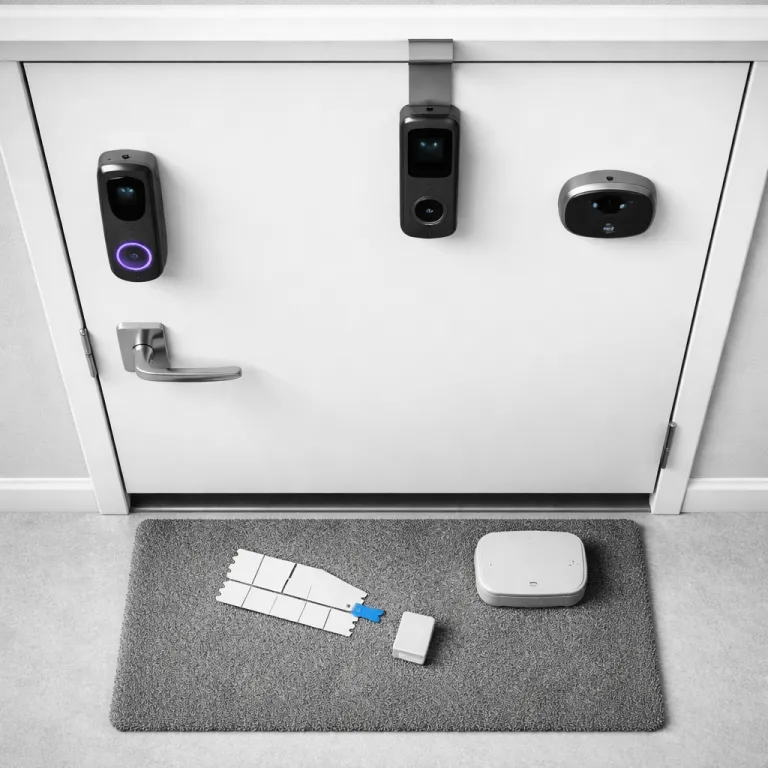

Why a smart doorbell for apartments needs different rules
A smart doorbell for apartments solves problems that house-focused reviews often ignore. Renters usually cannot touch the wired door chime, drill into the front door frame, or leave any trace when the product eventually moves out with them. That means the best doorbells for apartments are almost always wireless, battery powered, and designed to mount cleanly on metal, wood, or even glass without risking your deposit.
Think of a modern video doorbell as a compact security camera with a button, a microphone, and a speaker that lives at your front door. It streams video to your phone, records clips when motion detection triggers, and lets you talk to visitors from the sofa or from another country, which is especially useful when parcels arrive during work hours. For apartment dwellers, the right smart doorbell camera also needs strong night vision, reliable Wi‑Fi in a crowded hallway, and a form factor that fits narrow door frames or shared entryways without annoying neighbours.
Battery doorbell designs are the safest bet for most leases because they avoid any contact with building wiring. A battery powered video doorbell camera sticks to the door or frame with a certified adhesive mount, and you recharge the battery every few months depending on traffic and settings. This approach keeps the smart product portable, so you can remove the doorbell cameras in minutes, save your recordings in cloud storage or locally, and reinstall the same model at your next address without asking a landlord again.
Choosing the right battery powered model for your door type
The right smart doorbell for apartments depends heavily on what your actual door is made of. Steel fire doors common in city blocks behave differently from old wooden doors or modern glass and fiberglass panels, and each surface changes how wireless doorbells mount and how their cameras see the hallway. Before comparing features like field of view or night vision, match the product to your door type so the camera lens, motion detection zone, and button height all make sense for daily use.
On steel doors, adhesive backed battery doorbell plates work well if you clean the metal thoroughly and warm the tape before pressing, because 3M VHB style mounts are designed to hold several kilograms when applied correctly. A compact video doorbell such as the Nest Doorbell battery, reviewed in detail in this wireless doorbell camera test, keeps weight low while offering a wide field of view that still captures visitors even when mounted close to the edge. For wood frames, you can often use tiny screws into the trim if the lease allows, but many renters still prefer wireless adhesive mounts so they can remove the doorbell camera later and save time on repairs.
Glass and fiberglass doors demand more care because you cannot easily patch holes and some adhesives show through. In those cases, look for a smart battery powered model with a flat back plate and lighter generation battery pack, then mount it on the frame rather than the glass itself to protect both the door and the camera. Whether you choose a Ring battery video doorbell, a Tapo smart model, or another brand, confirm that the product is certified for outdoor use, supports Alexa or Google voice assistants if you want that, and offers either cloud storage or local recording so your security cameras remain useful after you move.
No drill installation: how to mount and remove a wireless doorbell cleanly
Most leases treat the front door and frame as building structure, so drilling for a wired doorbell is often banned even when the landlord likes the idea of extra security. A no drill installation using a wireless battery doorbell and a strong adhesive plate respects those rules while still giving you a smart video doorbell at eye level. The process is simple but unforgiving, because a sloppy mount can ruin motion detection angles, block the camera, or leave residue when you eventually move out.
Start by choosing the exact spot where the doorbell camera will sit, usually on the handle side of the door about 140 centimetres from the floor, which keeps the field of view centred on faces rather than torsos. Clean the surface with isopropyl alcohol, let it dry fully, then press the adhesive backed mount firmly for at least thirty seconds, because this step determines whether the battery powered product stays put through heat, cold, and repeated button presses. Many modern video doorbells ship with a cardboard jig that helps you align the camera and mark the outline, and some wireless models such as those covered in this wireless smart video doorbell review even include wedge kits to angle the lens away from a side wall.
When removal time comes, you want the door to look untouched so the landlord sees no trace of the smart doorbell for apartments. Gently heat the adhesive with a hairdryer, then twist the mount sideways rather than pulling straight out, which reduces stress on paint or varnish and helps you save the plate for the next place. Any remaining residue usually wipes away with adhesive remover, leaving the door ready for inspection while your battery doorbell, cameras, and saved clips travel with you.
Hearing the chime inside: wireless kits, quick replies, and voice assistants
Apartment layouts often put the front door far from the living area, so relying only on phone notifications from a smart doorbell for apartments can mean missed visitors. Wireless chime kits solve this by pairing a plug in speaker with your battery powered video doorbell, letting you hear a classic ding dong even when the phone is charging in another room. Because these chimes do not connect to any wired doorbell circuit, they are ideal for renters who cannot touch building wiring or shared hallway systems.
Brands like Ring, Tapo, and others sell compact chimes that plug into a wall socket and link over Wi‑Fi or a proprietary radio channel to the doorbell camera at the front door. Once paired, you can adjust volume, choose tones, and sometimes set quiet hours, which matters in thin walled apartments where late night deliveries might otherwise wake children or neighbours. Some video doorbells also support quick replies, short pre recorded messages that play through the camera speaker when you cannot answer live, telling couriers where to leave parcels or asking unexpected visitors to return at a better time.
If you already use Alexa or Google smart speakers, you can route doorbell alerts through those devices instead of or alongside a dedicated chime. A Ring battery video doorbell, for example, can announce visitors on Echo speakers and show live video on compatible screens, while other models integrate with Google Nest displays to show the camera feed automatically. This flexibility lets renters build a whole home feeling security system around a single battery doorbell and a few smart speakers, without installing any traditional security cameras or touching the wired infrastructure of the building.
Subscriptions, storage, and how to stay portable as a renter
Every smart doorbell for apartments has to answer one big question before you buy it. Where will your video clips live, and what happens to them when you move or cancel a plan that a subscription required in the first place? The answer shapes not only your monthly costs but also how portable your security setup feels when you change buildings or even countries.
Cloud storage plans such as Ring Protect keep video doorbells recording around the clock or on motion, then store clips online for a set number of days, which can be useful if a package goes missing and you only notice later. The trade off is that each month you pay a fee per doorbell camera or per household, and if you stop paying, the cameras usually revert to live view only with no history, which weakens security in shared apartment corridors. Some renters accept that cost because they value the convenience of scrolling through video on any device, while others prefer models that save clips locally to a base station or microSD card so the product keeps working even without a subscription.
Battery powered models from several brands now offer hybrid options, combining limited free cloud storage with local recording so you can save important events without locking yourself into long term fees. When comparing smart doorbells, read the fine print about how many days of history you get, whether person detection or advanced motion detection zones require a subscription, and how easy it is to export clips before you move. For renters who expect to change apartments within a year, a flexible storage setup and a portable battery doorbell can be more valuable than the fanciest camera features, because your security cameras should adapt to your life rather than anchoring you to one address.
Security, privacy, and getting landlord approval without losing your deposit
Smart doorbell for apartments buyers often focus on video quality and battery life, but building rules and neighbour privacy matter just as much. Before you stick anything to the front door, read your lease and building policies, then email the landlord with a short description of the product, how it mounts, and how you will remove it, ideally with photos of the certified adhesive system. This paper trail protects you later and shows that the doorbells, cameras, and mounts are temporary, which reassures owners who worry about damage.
From a security perspective, a well placed video doorbell acts as both a deterrent and a source of evidence, especially when combined with clear night vision and reliable motion detection that avoids constant false alerts from a busy corridor. Choose a model with adjustable zones so the camera focuses on your own front door area rather than the entire hallway, which helps respect neighbours while still giving you useful clips of visitors, deliveries, or attempted tampering. If you want extra coverage, consider pairing the doorbell with one or two indoor security cameras pointed at entry points, rather than adding more devices to shared spaces where privacy expectations are higher.
Battery health also plays into long term security, because a depleted generation battery turns even the smartest video doorbell into a dead button. Look for honest runtime estimates based on events per day, and plan a simple routine, such as recharging the Ring battery or equivalent pack every second month, so the product never fails silently. When you eventually move, remove the wireless doorbell carefully, save any important clips from cloud storage or local memory, and reset the model so it is ready for the next apartment without carrying over old Wi‑Fi details or user accounts.
Top battery powered picks by apartment scenario and door style
Choosing a smart doorbell for apartments becomes easier when you match real life scenarios instead of chasing specs. For a steel fire door in a long corridor with poor lighting, prioritise a compact battery powered video doorbell with strong night vision, a wide field of view, and a proven adhesive mount that will not peel under heat. In a small building with only a few neighbours and a sheltered entrance, you might instead value longer battery life, louder chimes, and integration with Alexa or Google speakers over extreme camera performance.
Renters who want a mainstream ecosystem often gravitate toward a Ring battery video doorbell or a higher end Ring Doorbell Pro, which pair well with Ring Protect plans and other security cameras from the same brand. These models offer polished apps, reliable motion detection, and a range of accessories, but they lean heavily on cloud storage and usually have a subscription required for full features, so budget carefully for the monthly cost. If you prefer a more flexible approach, look at alternatives from Tapo and other brands that offer both cloud and local storage, solid night vision, and wireless chimes, giving you most of the same features without locking every camera into one service.
For renters who want to compare a broader range of wireless doorbells, including lesser known product lines and certified models, independent lab style reviews such as this camera doorbell test can highlight real world strengths and weaknesses. Pay attention to how each video doorbell handles quick replies, how long the generation battery lasts between charges, and whether the doorbell cameras stay responsive after months of hallway dust and temperature swings. In the end, the best smart model for your apartment is the one that fits your door, respects your lease, keeps your front door secure, and can move with you without drama when life changes.
| Model example | Typical battery life* | Mounting style | Subscription for full features |
|---|---|---|---|
| Ring Battery Video Doorbell | 2–4 months in a busy corridor | Adhesive plate or screw-in bracket | Ring Protect recommended for clip history |
| Nest Doorbell (battery) | 1–3 months with frequent motion | Adhesive or screw mount with wedges | Google Nest Aware for extended storage |
| Tapo wireless video doorbell | 3–6 months in moderate traffic | Adhesive back plate, optional screws | Cloud plan optional; local microSD often available |
*Battery life figures are approximate and based on independent lab-style testing in realistic apartment conditions with motion detection enabled.
Key figures about smart doorbells and apartment security
- According to a report from Parks Associates, more than 20 percent of broadband households in the United States now own at least one video doorbell, showing how quickly smart entry products have moved from niche gadgets to mainstream security tools (Parks Associates, “Security Buyers: Purchase Trends and Triggers,” 2022).
- Consumer testing by several independent labs has found that battery powered video doorbells typically run between two and six months per charge in moderate traffic environments, with heavy motion activity cutting that duration roughly in half (for example, results published by organisations such as Consumer Reports and Which?).
- Surveys of renters by property management associations indicate that visible security cameras and smart doorbells at unit entrances can reduce reported package theft incidents by around 30 percent, especially in buildings with unsecured lobbies (for instance, data cited by the National Apartment Association and similar groups).
- Data from major smart home platforms shows that more than half of video doorbell owners connect their devices to at least one voice assistant, with Amazon Alexa and Google Assistant accounting for the vast majority of integrations, according to internal platform usage summaries shared in industry briefings.
- Industry analyses of subscription plans reveal that ongoing cloud storage for a single doorbell camera often costs between 3 and 10 in local currency per month, for example roughly 3–6 USD, 3–5 GBP, or 4–8 EUR, which can exceed the original hardware price over a typical multi year tenancy.
FAQ about smart doorbells for apartments
Can I install a smart doorbell in my apartment without landlord permission ?
Most leases require permission for any modification to the front door or frame, so you should always check the contract and ask in writing before installing a smart doorbell. Many landlords are comfortable with wireless, battery powered models that use removable adhesive mounts, because these do not alter wiring or leave permanent holes. Clear photos of the product, the mounting method, and your plan for clean removal usually help secure approval.
How often will I need to recharge a battery powered video doorbell ?
Battery life depends on how many motion events and button presses your doorbell camera handles each day, as well as Wi‑Fi strength and temperature. In a typical apartment corridor with moderate traffic, many modern models last between two and four months per charge, while very busy hallways can shorten that to a few weeks. Choosing a doorbell with a removable battery pack makes recharging easier, because you can swap in a charged pack without leaving the front door unprotected.
Do I need a subscription for my smart doorbell to be useful ?
Live video, two way audio, and basic alerts usually work without any subscription, so the doorbell remains useful even on a free tier. Paid plans mainly add cloud storage for recorded clips, advanced motion detection features, and sometimes extended warranties, which can be valuable if you rely on footage for security or package disputes. Renters who move frequently often prefer models with local storage options, so they can save recordings without committing to long term monthly fees.
Will a smart doorbell work on a steel apartment door ?
Yes, many wireless video doorbells are designed to mount on steel doors using strong adhesive plates that do not require drilling. The key is to clean the surface thoroughly, follow the mounting instructions carefully, and choose a model with a suitable field of view for your hallway layout. Steel can sometimes affect wireless signals, so placing your Wi‑Fi router closer to the door or using a mesh node nearby can improve reliability.
How can I avoid recording my neighbours by accident ?
Most modern smart doorbells let you set motion zones and privacy masks, which limit where the camera looks for movement and where it records. By narrowing the detection area to your own front door and immediate threshold, you reduce unnecessary alerts and respect the privacy of people passing by. Positioning the doorbell slightly toward your unit and away from shared spaces also helps keep footage focused on your visitors rather than the entire corridor.