
Summary
Editor's rating
Is it worth the money once you add the subscription?
Chunky but decent-looking, with a very practical field of view
Battery life and charging: good but depends on how busy your door is
Build quality, weather resistance and how sturdy it feels
Video quality, motion alerts and how it behaves in real life
What you actually get and how it fits into a normal home
Pros
- Clear 1536p video with useful head-to-toe view that shows people and packages properly
- Quick-release battery and simple DIY install make it easy to live with
- Polished app with privacy zones, quick replies and reliable notifications when Wi‑Fi is decent
Cons
- Most useful features (recording, person/package alerts) require a paid subscription
- Battery life depends heavily on motion activity and may need charging every 4–6 weeks
- Occasional delay opening live view, especially on weaker Wi‑Fi

Specifications
View full product page →| Brand | Ring |
A doorbell that finally stopped me missing deliveries
I’ve been using the Ring Battery Video Doorbell Plus with the 3rd gen Chime for a few weeks now, replacing a very basic wired doorbell that came with the house. I’m not a smart-home geek, I just wanted to stop missing parcels and see who’s hanging around the front door. So this is very much a normal user view, not someone trying to justify a big tech purchase. I installed it myself, no electrician, just the included tools and a drill.
In day-to-day use, the main thing I noticed is that it actually does what I bought it for: I get alerts when someone shows up, I can talk to them from my phone, and the image is sharp enough to see faces and packages clearly. No magic, just functional. It’s not perfect though. The app can be a bit slow to open sometimes, and if your Wi‑Fi is average like mine, you’ll see that in the video quality and delay.
One key point: to get the most out of it (video history, person/package alerts, etc.), you basically need the Ring subscription. Without it, you still get live view and notifications, but you can’t go back and check footage. That’s a running cost people often forget, and it adds up over a couple of years. I don’t love subscriptions, but I ended up paying because otherwise you lose half the interest of having a camera there.
Overall, after a few weeks, I’d say it’s a pretty solid upgrade over a dumb doorbell. It’s easy to live with, the battery system is practical, and the Chime is handy if you don’t always have your phone on you. At the same time, it’s not cheap once you count the subscription, and the small delays and Wi‑Fi quirks remind you this is still just a consumer gadget, not some pro security system.
Is it worth the money once you add the subscription?
On price, this sits in the mid-to-upper range for consumer video doorbells, especially with the Chime included. You’re paying for the Ring ecosystem, the app, and the cloud features. Out of the box, you get live view, notifications, and two-way talk for free. That’s good, but the real usefulness (recordings, person and package alerts, longer storage) is locked behind the Ring subscription. That’s a monthly or yearly cost on top of the device, and realistically, most people will end up paying it.
In my case, I signed up for the basic plan so I could keep recordings for a few weeks and check back when something happened. Without that, if you miss a notification, the event is basically gone. For a security-type product, that feels a bit limiting. The subscription itself isn’t crazy expensive, but over 3–4 years it adds up. So you have to see this as an ongoing expense, not a one-time purchase. If you absolutely hate subscriptions, this might not be the best pick for you.
Compared to cheaper no-name doorbells I’ve tried, the Ring does feel more polished: the app is more reliable, the video is sharper, and features like privacy zones and quick replies are more thought-out. On the other hand, there are some competitors that offer local storage with no subscription, so if you’re willing to deal with SD cards or a base station, you might save money long term. It really comes down to whether you prefer convenience and a well-known ecosystem, or you want to avoid ongoing fees.
For me, I’d say value is decent but not outstanding. You get a solid product that does what it says, but you pay for it, and the subscription is basically part of the deal. If you catch it on a discount or bundle, it starts to look more attractive. If you’re paying full price plus a subscription and you’re on a tight budget, there are more basic options that still get the job done, just with fewer bells and whistles.
Chunky but decent-looking, with a very practical field of view
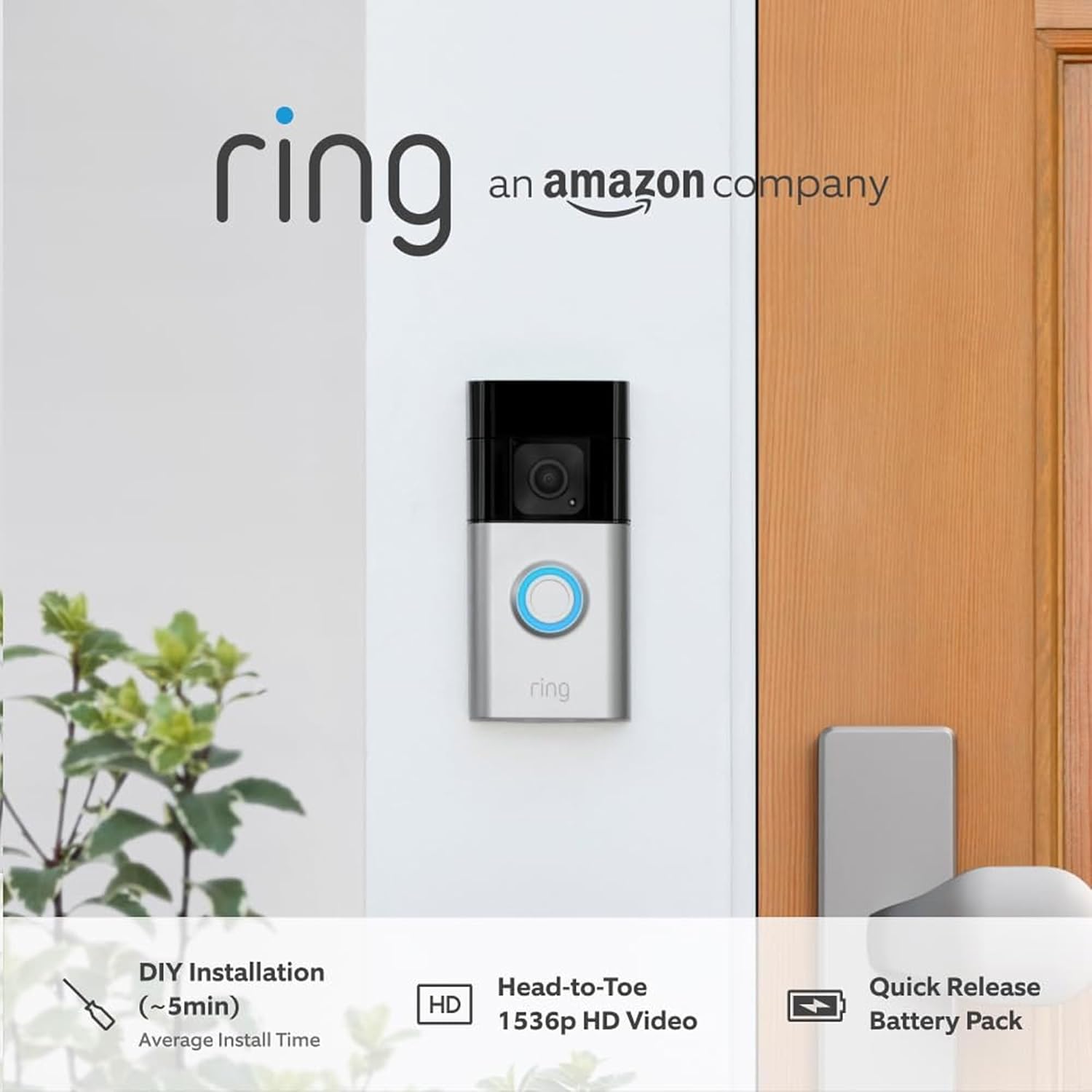
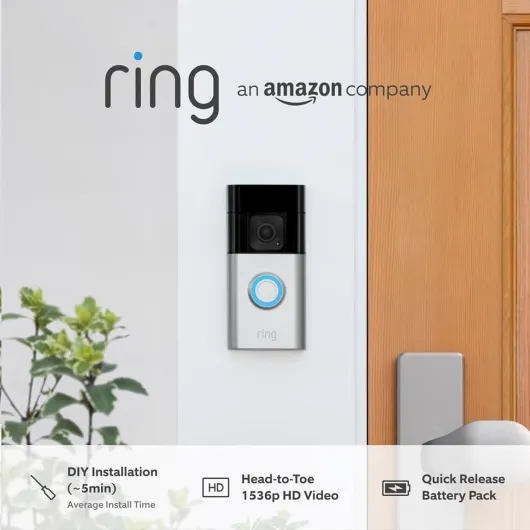
Design-wise, it’s not going to win any beauty contests, but it looks fine on the wall. It’s a fairly chunky rectangle with a big camera lens and a round button. The Satin Nickel faceplate is neutral enough that it blends in with most doors. It doesn’t scream “security camera” as loudly as some other models, but it’s obviously more than a normal doorbell. If you care a lot about aesthetics, you’ll probably say it’s okay but nothing special.
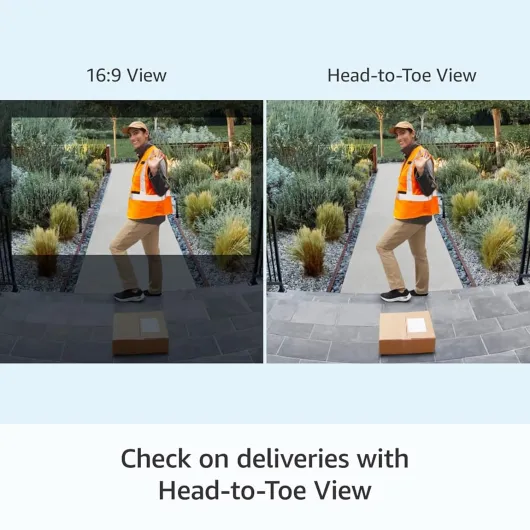
The part I actually like is the 1:1 aspect ratio and head-to-toe view. In simple terms, the video is more square, and the field of view is 150° both horizontal and vertical. That means you see the whole person, from their face down to their feet and packages on the floor. Compared to older 16:9 cameras I’ve used, you don’t end up guessing what’s just out of frame at the bottom. I can clearly see parcels left right up against the door, which is exactly what I wanted.
The unit sticks out a bit from the wall (about 2.8 cm deep), so if your doorway is very narrow, it’ll be noticeable. But the shape is practical: battery slides out from the bottom with a release tab, and the front plate clips on. It feels thought-through from a usability point of view. The small corner wedge that comes with it is also handy if your door frame is set back or you’re on a busy street and want to narrow the view a bit.
The 3rd gen Chime is a small white box that plugs into a socket. It’s very plain, just a couple of LEDs and a volume button on the side. It doesn’t take much space and doesn’t attract attention, which I like. Overall, the design is simple, a bit bulky, but clearly focused on function. It’s the kind of thing you stop noticing after a week, which for a doorbell is pretty much what you want.
Battery life and charging: good but depends on how busy your door is
The quick release battery pack is honestly one of the better parts of this product. It’s a removable block that slides into the bottom of the doorbell. When it runs low, you press the release, slide it out, charge it with the USB cable, then slide it back in. You don’t need to unscrew the whole unit from the wall, which makes battery swaps pretty painless. I charged it fully before install, and the app gives a percentage so you’re not guessing.
Battery life will depend heavily on how much motion it detects and how many times you view the live feed. In my case (quiet cul-de-sac, maybe 10–20 events a day), I’m seeing roughly 4–6 weeks per charge with standard settings. If you live on a busy street and have motion alerts going off constantly, you’ll drain it faster. You can tweak motion sensitivity and recording length to stretch the battery, but then you risk missing some events. It’s a trade-off. I’d call the battery life decent but not mind-blowing – acceptable for a wireless doorbell.
Charging from empty to full takes a few hours via USB. During that time, if you only have one battery, your doorbell is basically offline unless you have it hardwired. That’s why a lot of people end up buying a second battery so you can swap them and keep the doorbell running. Of course, that’s extra cost on top of an already not-cheap unit. There are also optional solar chargers and panels, but again, that’s more money and only really worth it if your door gets a lot of direct sun.
If you have existing doorbell wiring, you can also hardwire it (8–24 VAC) so the battery is basically kept topped up. I didn’t bother, but if I was installing it in a house I owned long-term, I’d probably do that to stop thinking about charging. In short: the battery system is practical and fairly well designed, but don’t expect to forget about it. You’ll be taking it down to charge every month or two unless you hardwire or add solar.
Build quality, weather resistance and how sturdy it feels
The doorbell feels solid enough in the hand. The plastic casing doesn’t feel cheap or flimsy, and once it’s screwed into the wall with the security screws, it sits tight with no wobble. I’ve had it up through a mix of rain, wind and a couple of cold nights down close to freezing, and it hasn’t shown any issues so far. It’s rated from -20.5°C to 50°C, so in theory it should handle most European weather without drama.
The front lens is slightly recessed, which helps protect it from rain and random knocks. Water does collect a bit on very wet days, and I’ve had a couple of recordings with droplets on the image, but it hasn’t blocked the view completely. A quick wipe with a cloth sorts it out. I live on a fairly open street, and it’s taken a couple of light hits from kids’ footballs and still looks fine, so from a basic toughness point of view, I’m not worried.
The included security screws at the bottom are meant to deter theft. Let’s be honest: if someone really wants to rip it off, they probably can, but Ring does offer theft protection under the warranty, which is at least some reassurance. For normal day-to-day life, I’m more concerned about it surviving bad weather and not fading or cracking, and so far it’s holding up well. The Chime inside obviously doesn’t face weather, and it just sits in a plug without any drama.
Time will tell how it looks after a couple of years in full sun and rain, but based on the feel and Ring’s track record with older models I’ve seen at friends’ houses, I’m reasonably confident it will last. It’s not some tank-like industrial device, but it feels like a normal, decent-quality consumer product that should handle outdoor use as advertised, as long as you don’t abuse it.
Video quality, motion alerts and how it behaves in real life
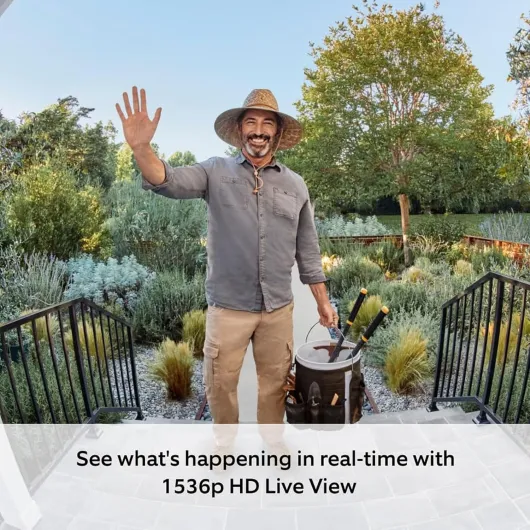
The 1536p HD video is genuinely decent. On my phone, faces are clear, I can read logos on jackets, and I can usually make out small details like parcel labels if I zoom a bit. It’s obviously not cinema quality, but for a doorbell, it’s more than enough. The colour night vision is also better than I expected: under my weak porch light, I still get colour, and I can see who’s there without everything turning into a blurry mess. In complete darkness, it switches to more of a greyish view, but still usable.
Motion detection is where things get a bit mixed. You get customisable motion zones, which helps a lot. I had to tweak them the first few days, because at the start it was triggering for every car going past. Once I narrowed the zone to just my path and doorstep, the false alerts dropped a lot. There’s also the option for person and package alerts, but those are tied to the subscription. They work, but they’re not perfect – sometimes it calls a plastic bag a package, and occasionally it misses that a parcel has been dropped if it’s right at the edge of the zone.
Latency-wise, from the moment someone presses the button to when my phone rings, I usually see a delay of 1–3 seconds on decent Wi‑Fi. That’s okay. Opening the live view can take a bit longer, especially if my internet is busy. Sometimes it connects in 2–3 seconds, sometimes it sits at “activating device” for 8–10 seconds, which is a bit annoying if the person is already walking away. This isn’t really Ring-specific; most Wi‑Fi doorbells I’ve tried behave like this, but it’s worth knowing if you expect a totally instant connection.
Audio performance is fine. The two-way audio with noise cancellation does the job: I can hear visitors clearly most of the time, and they can hear me. If there’s strong wind or a lot of street noise, it becomes harder, but that’s just physics. The main point: I can tell the delivery driver where to leave the parcel without shouting, and that’s what I wanted. Overall, performance is solid, but you feel the limits of Wi‑Fi and cloud processing here and there.
What you actually get and how it fits into a normal home
Out of the box you get the doorbell unit, one quick-release battery, a Satin Nickel faceplate, a small corner kit, USB charging cable, basic tools (screws, anchors, a tiny level, screwdriver), and the 3rd gen Chime. So it’s basically everything you need for a simple install, assuming you’ve got a drill and can reach your door frame safely. I mounted mine on brick by the front door and used the corner kit to angle it slightly toward the path.
Setup is done through the Ring app. You create an account, scan the QR code on the back of the doorbell, connect it to your 2.4 GHz Wi‑Fi, and then do the same for the Chime. It took me about 15–20 minutes in total, including drilling holes and messing with the angle. The “5 minutes” they advertise is optimistic unless your wall is already pre-drilled or you’re just sticking it on with some heavy adhesive. Still, for a DIY job, it’s straightforward enough, and the in-app instructions are clear.
Day to day, the system works like this: someone walks up, the motion sensor triggers, you get a push notification, and if they press the button you also hear the Chime inside. You can open the app to see a live view or let it record automatically if you have the subscription. You can also set up Quick Replies, which is basically an answering machine for your door. I tried that a few times for deliveries when I couldn’t answer, and it did the job, though some drivers clearly don’t listen and just drop the parcel anyway.
So in practice, what you’re buying here is a mix of doorbell, basic CCTV for the front door, and a bit of convenience when you’re not home. If you just want a ding-dong sound, it’s overkill. But if, like me, you’re tired of the “we missed you” cards from couriers and want proof of what’s been left at the door, it fits quite well into a normal home setup without being too techy or complicated.
Pros
- Clear 1536p video with useful head-to-toe view that shows people and packages properly
- Quick-release battery and simple DIY install make it easy to live with
- Polished app with privacy zones, quick replies and reliable notifications when Wi‑Fi is decent
Cons
- Most useful features (recording, person/package alerts) require a paid subscription
- Battery life depends heavily on motion activity and may need charging every 4–6 weeks
- Occasional delay opening live view, especially on weaker Wi‑Fi
Conclusion
Editor's rating
After living with the Ring Battery Video Doorbell Plus and 3rd gen Chime, my overall take is pretty straightforward: it’s a solid, convenient wireless doorbell that does what most people actually need. The video is clear, the head-to-toe view is genuinely useful for seeing parcels, and the Chime means you still hear the door even if your phone is in another room. Installation is simple enough for a normal person with basic tools, and the quick-release battery makes maintenance bearable.
It’s not perfect. You feel the limits of Wi‑Fi with occasional delays, the motion alerts need some tuning at the start, and the whole thing makes a lot more sense if you pay for the Ring subscription. Once you factor that in, it’s not a cheap solution, and there are more budget-friendly options if you just want basic video and don’t care about cloud features or polished apps.
I’d recommend this to people who want an easy, mostly hassle-free way to monitor their front door, care about clear video and package detection, and don’t mind paying a small monthly fee for cloud storage. If you’re extremely price-sensitive, hate subscriptions, or have very patchy Wi‑Fi, I’d look at simpler or more local-storage-focused alternatives. For everyone else, it’s a pretty solid choice that gets the job done without turning your life into a tech project.