
Summary
Editor's rating
Value for money: solid deal if you accept the app quirks
Design and mounting: functional, a bit plasticky but thought-through
Battery life and power options: flexible but not perfect
Build quality and weather resistance: feels okay for long-term outdoor use
Video, motion detection and app: good core performance, rough edges on software
What you actually get and how it’s meant to work
Pros
- Dual-camera setup gives a clear view of both faces and packages at your door
- Local SD card storage and basic free cloud mean no mandatory monthly fees
- Good 2K video quality and reliable motion alerts with adjustable zones and sensitivity
Cons
- CloudEdge app feels clunky and has some minor notification/UX bugs
- Non-removable battery plus busy doorways can mean fairly frequent recharging unless wired in

Specifications
View full product page →| Brand | KAMEP |
A cheap-ish way to see who’s at the door
I’ve been using this KAMEP dual-camera video doorbell for a bit now, basically as a cheaper alternative to Ring or Nest. I wanted something that lets me see who’s at the door, talk to delivery drivers, and record clips without being locked into an expensive subscription. On paper, this thing ticks most of the boxes: 2K video, dual cameras (one straight ahead, one pointing down), battery or wired, local SD card, and it works with Alexa.
In practice, it’s a pretty solid product for the price, but it’s not perfect. The app (CloudEdge) is usable but a bit clunky, and you can feel that you’re not in the big-brand ecosystem. On the other hand, the core stuff you actually care about day to day – getting alerts in time, seeing a clear image, and being able to talk to people at the door – works better than I expected for this price range.
I mainly used it on battery, with a 2.4 GHz Wi‑Fi connection and an SD card for storage. I also linked it to an Echo Show so the live feed pops up when someone presses the bell. I’ll go through the parts that matter: how it’s built, how it performs, how annoying the app is, and whether it feels like something that will hold up outside.
If you want a polished, super-integrated smart home setup, this is probably not your final stop. But if you just want to see who’s at the door, get motion alerts, and avoid high monthly fees, this KAMEP doorbell gets the job done with some compromises you should be aware of.
Value for money: solid deal if you accept the app quirks
Price-wise, this KAMEP sits firmly in the budget to mid-range zone, especially compared to the big names. When you see Ring or Nest doorbells going for well over £150 plus subscription, this one at around a third of that (depending on discounts) starts to look pretty appealing. And importantly, you’re not forced into paying every month just to record video. The local SD card storage is a big win here – you can just stick in a card and have recordings saved without ongoing fees.
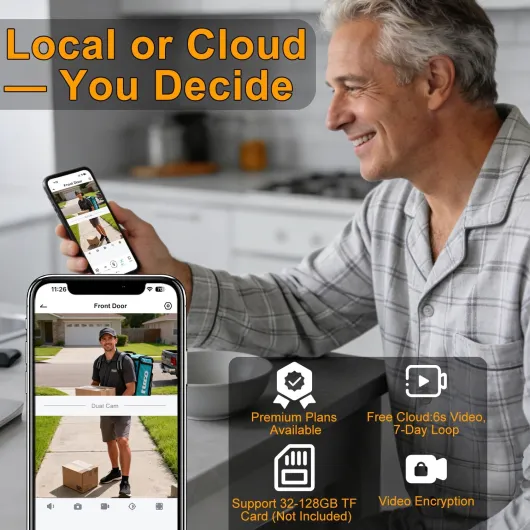
You do get a basic free cloud option (short 6-second clips on a 7-day loop), but the more advanced features like Delivery Guard are behind a subscription. Personally, I think the free cloud tier plus SD card is enough for most people. If something happens, you can still pull the footage from the card. If the camera gets stolen, you might lose the local recordings, but at least you had some clips in the cloud. It’s not perfect, but for the price, the storage options are more generous than some better-known competitors.
In terms of what you’re paying for, you get: dual cameras, 2K resolution, night vision, two-way audio, motion detection with zones, Alexa/Google integration, anti-tamper alarm, voice changer, indoor chime, and an adjustable-angle mount. For this price bracket, that’s a pretty loaded feature set. The trade-off is mainly on software polish and brand ecosystem. The CloudEdge app works but doesn’t feel as smooth or refined as Ring’s app. If you’re picky about app design and reliability, that’s the main thing you’re compromising on.
So in value terms, I’d say: if you want a no-fuss, super polished experience and don’t mind subscriptions, you’ll probably be happier with a big-brand doorbell. If you’re more budget-conscious and just want solid picture quality, dual cameras, and local storage without being milked by monthly fees, this KAMEP is good value for money. Not perfect, but the trade-offs feel fair for what you pay.
Design and mounting: functional, a bit plasticky but thought-through
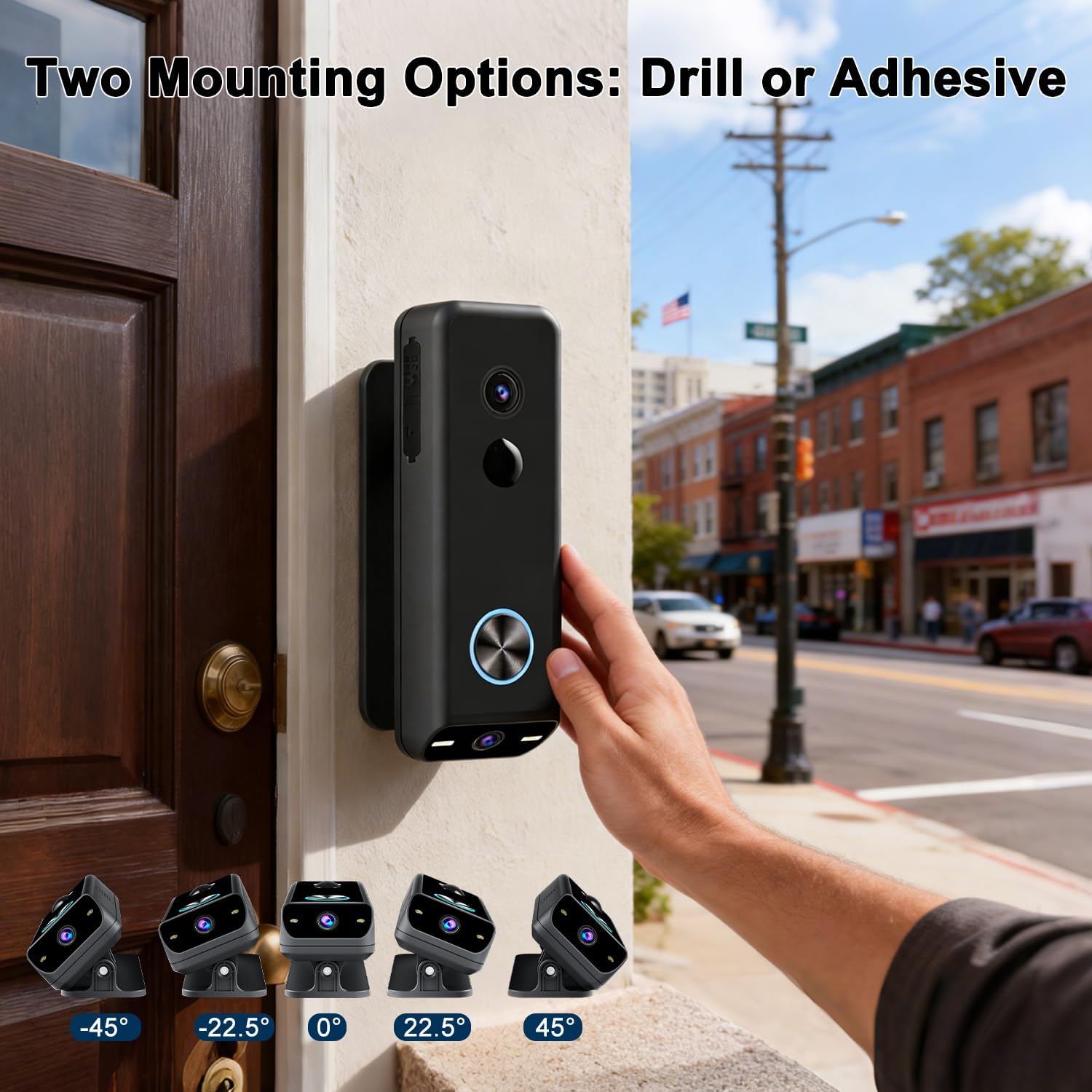
Design-wise, it’s not going to win any beauty awards, but it looks fine on a door frame. It’s a rectangular black plastic unit, fairly slim, with the main camera and button on the front and the downward camera tucked below. It doesn’t scream “cheap gadget” from a distance, though when you hold it you can tell it’s plastic and not some fancy metal build. For an outdoor camera that just sits there, I don’t really care, but if you want something that looks premium, this isn’t it.
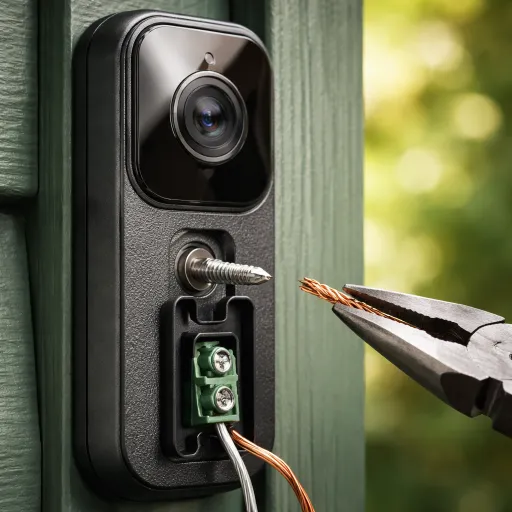
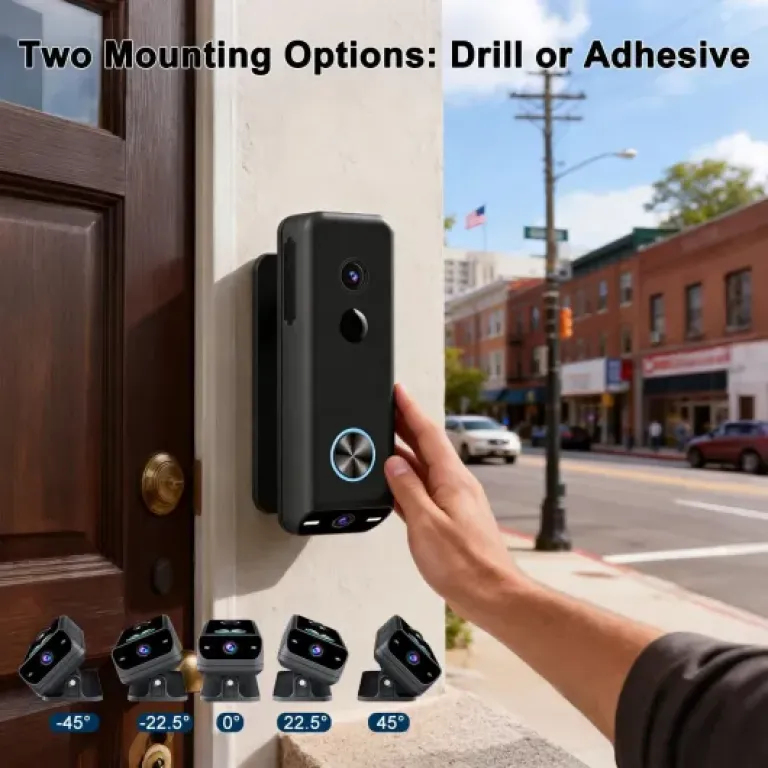
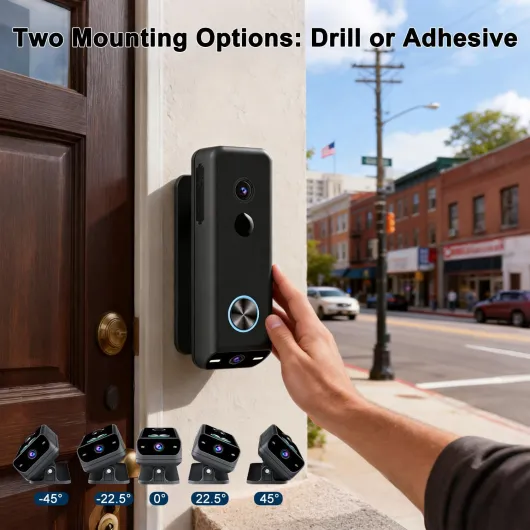
The mounting system is actually one of the better points. You get a multi‑angle bracket that lets you tilt the doorbell from -45° to +45° horizontally. That’s useful if your door is recessed or your wall is off to the side, so you can still point the camera towards the path or gate. You can either screw it into the wall or use the adhesive pads if you’re renting and don’t want to drill. Personally, I’d only trust the adhesive on smooth surfaces and with the anti‑tamper alarm switched on, because if someone really wants it, they’ll pull it off.
There’s also a security screw at the bottom. It’s small and a bit close to the edge, so you have to be careful not to strip it when tightening. But it does its job: you can’t just slide the doorbell off the mount by hand. Some users mentioned the supplied screws felt a bit weak; I had the same impression, so I swapped them for beefier wall plugs and screws. Once that’s done, the unit sits firmly and doesn’t wobble.
Overall, the design is practical: dual cameras, angle bracket, and a separate chime you can stick anywhere with USB power or batteries. It’s not sleek or fancy, but it’s discreet and does what it needs to do. The only real downside on design for me is the very “plastic gadget” feel, and that tiny security screw placement that needs a bit of care during installation.
Battery life and power options: flexible but not perfect
The doorbell has a built-in, non-removable battery, which is a bit of a double-edged sword. On the plus side, it keeps the design compact and sealed (better for weather resistance). On the downside, you can’t just swap in a fresh battery; you need to recharge the whole unit via USB or wire it to a 12–24 V transformer for continuous power. Out of the box, mine arrived with low charge, so I had to plug it in for a couple of hours before I could really set it up.
In normal use with motion detection on, a few alerts per day, and some live viewing, the battery holds up pretty well. You’re looking at several weeks to a couple of months depending on how busy your doorway is and how aggressive your settings are. If your door faces a busy street and you leave motion on high sensitivity, expect shorter life. If it’s a quiet side entrance with tuned zones and no constant live viewing, you’ll stretch it longer. That lines up with what other users reported – they got a month or two between charges.
If you hate the idea of taking the unit down to charge, the better move is to wire it to an existing 12–24 V doorbell transformer or run a dedicated line. In wired mode, the internal battery just stays topped up, and you basically forget about charging. Just keep in mind the battery is still there and doing the work; the wire is more like a permanent charger than a direct power source. If you’re renting or don’t want to mess with wiring, you’ll just plan a charge day every now and then.
The indoor chime is a bit different: it can run on AA batteries or 5 V USB power. That’s handy because you can put it basically anywhere – office, bedroom, kitchen – without needing a spare wall socket for a big plug-in chime. My only small gripe is the chime sound options: some are a bit cheesy and the nicer simple “ding-dong” only rings a couple of times, which can be easy to miss in a noisy house. But from a pure power and convenience point of view, the chime is flexible and low hassle.
Build quality and weather resistance: feels okay for long-term outdoor use
The unit is rated IP66 waterproof, which basically means it can handle heavy rain and dust without trouble. I’ve had it outside through a few wet, windy days and it hasn’t shown any signs of moisture getting in. The seams and buttons feel properly sealed, and there’s no rattling or loose parts when you tap or shake it. For an all-plastic device from a lesser-known brand, I was pleasantly surprised that it doesn’t feel flimsy once it’s on the wall.
The plastic housing itself is fairly thick and doesn’t flex much. It’s not premium, but it doesn’t feel like it’s going to crack at the first knock either. The only thing I’d watch out for is the mounting hardware. The supplied wall plugs and screws are on the small side. They work, but if your wall is crumbly or you’re in a high-traffic area where the doorbell might get bumped, I’d upgrade to better screws and plugs. Once I swapped the hardware, the doorbell felt rock solid and hard to yank off.
There’s also an anti-tamper alarm: if someone tries to remove the doorbell from the bracket, it triggers a siren on the device. It’s not going to stop a determined thief, but it does add a bit of deterrence, especially if you combine it with SD card + cloud storage so you still have footage if it gets taken. The housing doesn’t show scratches easily either, which is nice if it’s near a busy entrance where people might brush past with bags or keys.
Long term, I’d expect the plastic to fade a bit under constant sun, as with most black plastics, but that’s cosmetic. The important bits – lens cover, button, seals – seem decent. As long as you mounted it properly and don’t keep removing it every week, it feels like it should hold up fine as an outdoor security gadget. Not bulletproof, but good enough for typical front door use in normal UK/EU weather.
Video, motion detection and app: good core performance, rough edges on software
On the video side, it’s honestly better than I expected at this price. The 2K (1440p) image is clear enough to recognise faces, read parcels, and see what’s going on even a few meters away. The downward camera is genuinely useful: you can clearly see packages at your doorstep, and it removes that annoying blind spot right in front of the door. At night, the IR night vision kicks in and you still get a usable, sharp image out to the gate area. It’s not cinema-grade, but for a doorbell, it’s more than enough.
Motion detection is driven by a PIR sensor with AI to focus on humans. You can tweak sensitivity (5 levels) and set custom detection zones, which helps if your door faces a street or footpath. In my case, even on lower sensitivity it would sometimes pick up people walking past about 5 meters away, so I had to play with zones and schedules. Once dialed in, it mostly alerted me only for people actually coming to the door, not every random passer-by. You can also limit alerts to certain hours, which is handy if you only care about motion at night.
Response time is decent. When someone presses the bell, my phone usually gets the notification within 2–3 seconds, and the chime rings almost immediately. That’s much better than some older budget models I’ve tried where you’d only see the caller walking away. Of course, Wi‑Fi quality matters here. On a half-decent router, it’s fast enough to actually talk to delivery drivers before they leave. Motion alerts are also fairly quick, though sometimes the app opens a bit slowly or doesn’t immediately show the latest clip.
The weak point is the CloudEdge app. It works, but it feels a bit rough. Things I noticed: occasional buggy notifications (you click an alert and it doesn’t load the latest image right away), the back button sometimes dumps you out of the app instead of going to the main menu, and the constant “resident message service has been turned on” notification that you can’t fully dismiss if you want fast push alerts. Also, you can’t use the same login on multiple phones at the same time; you have to create separate accounts and share the device, which is slightly annoying but manageable.
What you actually get and how it’s meant to work
Out of the box, you get the main doorbell unit, a wireless indoor chime, a USB charging cable, screws and wall plugs, adhesive pads, and a small security screwdriver. No SD card included, so if you want local storage you need to buy one (up to 128 GB). The whole idea is simple: the doorbell connects to your 2.4 GHz Wi‑Fi, talks to the CloudEdge app on your phone, and the chime sits anywhere indoors and rings when someone presses the button.
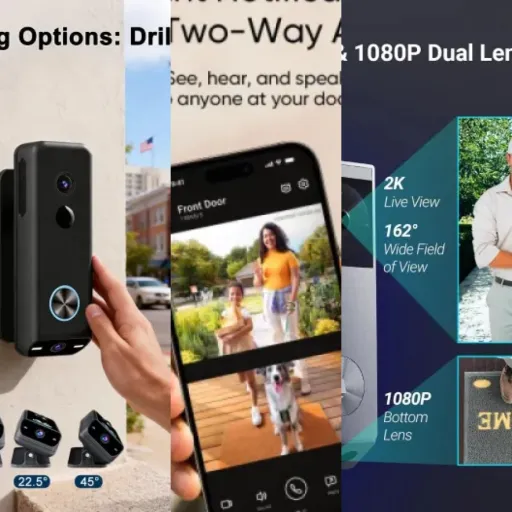
The doorbell itself has two cameras: one facing forward to catch faces, and a downward one to see packages or the floor area right in front of the door. The advertised field of view is basically wide enough that you don’t really have a blind spot at your feet, which is useful if you get a lot of deliveries. It records in 1440p (2K) and switches to IR night vision up to around 10 meters / 33 feet. You can store clips either on the SD card or on the cloud. The cloud has a free basic tier with 6‑second clips on a 7‑day loop, but the more advanced stuff like Delivery Guard needs a paid subscription.
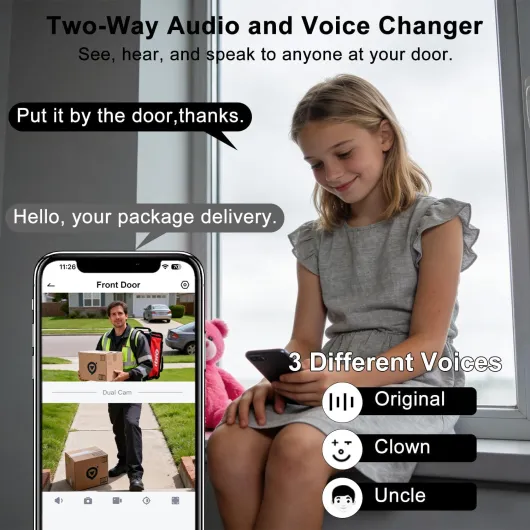
On the app side, you can do the usual: live view, two-way audio, motion detection settings, recording options, and sharing the device with other accounts. It also has a voice changer option (so you can sound different when talking to people) and you can pre‑record responses like “leave the parcel by the door”. It’s a bit gimmicky but can be handy when you’re busy and don’t feel like chatting. The doorbell can run on its built‑in battery or be wired to a 12–24 V transformer to keep it topped up.
So in short, the presentation is: budget-friendly Ring-style doorbell with local storage, dual cameras, and an indoor chime that doesn’t need a wall socket. The promise is good: basic home security, parcel visibility, and remote communication, without being forced into a pricey subscription. The rest of this review is basically checking how much of that promise holds up in daily use.
Pros
- Dual-camera setup gives a clear view of both faces and packages at your door
- Local SD card storage and basic free cloud mean no mandatory monthly fees
- Good 2K video quality and reliable motion alerts with adjustable zones and sensitivity
Cons
- CloudEdge app feels clunky and has some minor notification/UX bugs
- Non-removable battery plus busy doorways can mean fairly frequent recharging unless wired in
Conclusion
Editor's rating
Overall, the KAMEP dual-camera video doorbell does what most people actually need: it lets you clearly see who’s at your door, talk to them, and keep recordings without a mandatory subscription. The dual-camera setup is genuinely useful for parcels, the 2K image is clear day and night, and motion alerts are fast enough to catch callers before they walk away. The adjustable mount and IP66 rating also make it practical for different house layouts and weather conditions.
It’s not without issues. The CloudEdge app is the weakest part – functional but a bit clunky, with some small bugs and annoyances like the permanent notification and awkward multi-phone usage. The build is mostly plastic and the included mounting screws are a bit basic, so it’s worth upgrading the hardware if you want a really solid install. Battery life is decent, but if your doorway is busy you’ll either be charging it regularly or should consider wiring it in.
If you want a polished, brand-name smart home experience and don’t mind paying subscriptions, go with Ring or Nest. If you’re fine with a slightly rougher app and you care more about features per pound – dual cameras, SD storage, indoor chime, 2K video – this KAMEP doorbell is a pretty solid budget alternative. It gets the job done, offers good value, and the compromises are mostly on software smoothness, not on the core security functions.