
Summary
Editor's rating
Is it good value for the price?
Plain white plastic, but practical layout
Battery in the button and power in the receiver
Build quality and weather resistance in real life
Volume, range and daily use
What you actually get in the box
Pros
- Very loud with 5 volume levels, suitable for larger homes or people with hearing issues
- Easy installation: plug-in receiver and stick-or-screw outdoor button
- Good range and reliable connection, with LED flash for visual alerts
Cons
- Plastic feels a bit cheap and receiver has no battery backup
- Push button uses a CR2032 battery despite marketing hinting at no batteries
- Too many chimes, most people will only ever use one or two

Specifications
View full product page →| Brand | SECRUI |
A cheap wireless doorbell that just plugs in and works
I picked up the SECRUI wireless doorbell because I just needed something simple: no camera, no app, no subscription, just a doorbell people can actually hear. My old wired one was half-broken and I wasn’t in the mood to mess around with cables in the wall. This one caught my eye because it plugs straight into a socket, claims 1,000 ft range, and is loud enough for people with hearing issues.
I’ve been using it for a bit now, and overall it does what it says on the box: it rings when someone presses the button. That sounds basic, but with all the smart stuff on the market that wants your data and a monthly fee, having a simple unit like this is actually kind of refreshing. No app to set up, no Wi‑Fi, no QR code nonsense, just plug and stick.
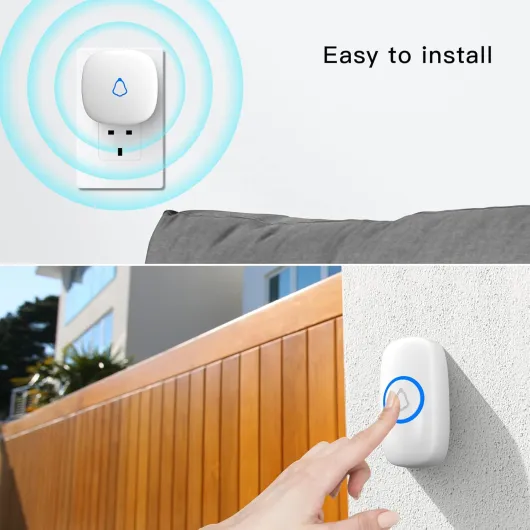
In daily use, the thing that stands out is how loud it can get and how easy the setup is. I had the receiver plugged in and the button stuck to the door frame in under 10 minutes, and most of that was just me choosing where I wanted it. The pairing is already done from the factory, so you’re not fiddling with codes or anything.
It’s not perfect though. The number of chimes is a bit overkill, the plastic feels a bit cheap, and if you hate ‘gadgety’ melodies you’ll need to spend a couple of minutes going through them to find a simple ding-dong. But for a basic, budget-friendly doorbell that gets the job done, it’s pretty solid so far.
Is it good value for the price?
For the price range this sits in, I’d say the value for money is pretty good. You’re getting a wireless doorbell with: long range, adjustable volume, a big choice of chimes, visual LED alert, and weatherproof outdoor button. No subscription, no app, no hidden costs. Once it’s installed, that’s it. The only future cost is maybe a CR2032 battery every few years, which is cheap.
Compared to video doorbells or smart doorbells that want you to pay monthly just to see who rang, this is obviously a different category. If you just want to know that someone is at the door and you don’t care about video, this makes a lot more sense financially. You can buy two or three of these for the price of some "smart" options, and you won’t be tied to any ecosystem or app updates breaking things.
On the flip side, there are slightly cheaper wireless doorbells on the market that do roughly the same thing. Where this one stands out a bit is the combination of loud volume, LED indicator, and claimed long range. If those matter to you (for example, someone in the house is hard of hearing, or you live in a larger home), then paying a few extra compared to the absolute cheapest models is reasonable.
Overall, I’d put it in the “good value, not mind-blowing” category. It’s not the cheapest, not the fanciest, but you get a solid feature set and so far reliable performance. For a simple plug-in doorbell that works out of the box and doesn’t feel like throwaway junk, the price makes sense.
Plain white plastic, but practical layout
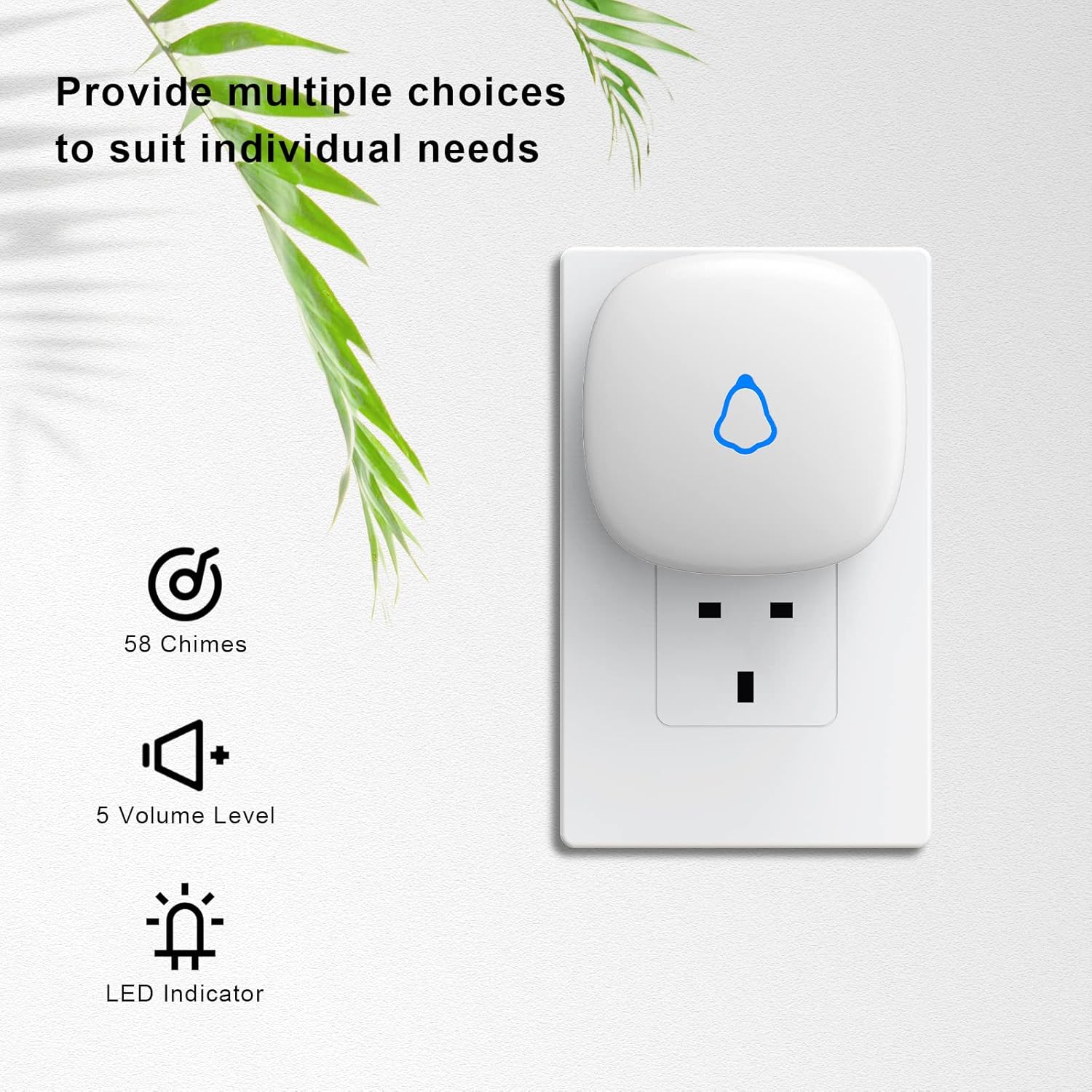
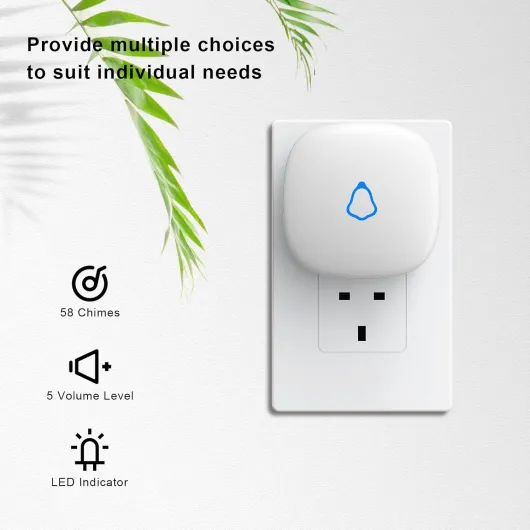
Design-wise, this doorbell is pretty plain. It’s all white ABS plastic, rounded edges, and a small footprint. The receiver is compact enough that it didn’t block the second socket on my double outlet, which is important if you’re already short on plugs. On the front you’ve got the speaker grill, a small button to cycle through chimes, and the LED ring that lights up in different colors when the bell rings.
The push button is also simple: one big button in the middle with a small indicator light. It looks fine on the door frame, not bulky, and not like some huge gadget stuck to your wall. The style is neutral, so it blends in whether your door is white or darker. It’s not something you’ll stare at and admire, but it doesn’t look tacky either. Just a basic, functional piece of kit.
In terms of practical design, the best part for me is the LED ring on the receiver. When someone presses the button, the light flashes, which is handy if you’re in a noisy room or you’ve muted the sound. The color cycling is a bit gimmicky, but the visual cue itself is useful. The buttons for volume and chime selection are on the side or top (depending on orientation), easy enough to reach without unplugging it.
The downside of the design is that the plastic does feel on the cheaper side. It doesn’t feel like it would survive being dropped and kicked around too often, and it definitely doesn’t give off a “high-end” vibe. But for a doorbell that just sits in a socket and a button that stays on the wall, I’m not too bothered. It looks clean and modern enough, just don’t expect anything fancy.
Battery in the button and power in the receiver
The power setup is pretty straightforward. The receiver runs on mains power only: you plug it into a wall socket and that’s it. No internal battery backup, so if the power goes out, you obviously lose the sound. That said, it does remember your last volume and chime settings when the power comes back, which is a nice touch. I tested it by unplugging and re-plugging it several times, and it always came back with the same settings.
The push button is where the battery comes in. It uses a CR2032 lithium coin cell, which is very common and cheap. The product description says ultra-low power consumption and up to 3 years of battery life, which sounds realistic given that the button is only used a few times a day at most. I haven’t had it long enough to confirm the full 3 years, but in my experience with similar devices, these batteries do last ages.
Changing the battery isn’t something you’ll do often, but it’s not too complicated. You pop open the back of the button (you might need a small screwdriver or something thin to pry it open), swap the coin cell, and close it again. It’s not tool-free, but nothing dramatic. The main thing is that you don’t have to worry about charging anything or replacing AA batteries every few months.
One thing to note: the Amazon listing saying “no batteries required” can be a bit misleading. It’s true for the receiver, but not for the button. If you’re buying this for someone who absolutely doesn’t want to deal with any batteries at all, that’s worth mentioning. For most people though, a single CR2032 every few years is not a big deal and much easier than running wires through walls.
Build quality and weather resistance in real life
In terms of durability, the doorbell feels decent but not bulletproof. The ABS plastic is light and a bit on the thin side, especially on the receiver. It’s fine as long as it stays plugged into the wall and nobody is yanking it out all the time. I wouldn’t give it to a kid to play with, but as a static device, it’s okay. The push button is a bit more solid since it has to live outside and handle people pressing it.
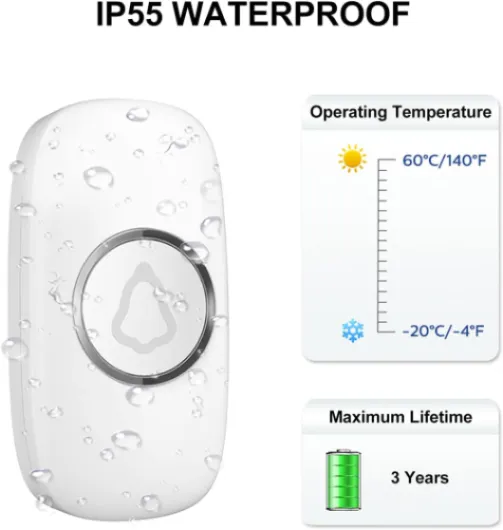
The button is rated IP55 waterproof, and the spec sheet says it can handle temperatures from -4°F to 140°F (-20°C to about 60°C). I’ve had it exposed to rain and some wind, and so far no issues: it still responds instantly when pressed and there’s no sign of water getting inside. I stuck mine on a door frame that gets a bit of rain splash, and after a few wet days it’s still working like day one.
As for the adhesive, the double‑sided tape they include is okay. I cleaned the surface first, pressed it firmly for a good 30–40 seconds, and it’s been holding fine. If your surface is rough or exposed to a lot of direct rain, I’d probably use the screws instead for long-term reliability. The last thing you want is your doorbell button falling off in winter. The fact they include both options is a plus.
Long term, I don’t expect this to feel like a premium, heavy-duty device, but I also don’t see any obvious weak spots for normal home use. The IP55 rating gives some confidence for outdoor use, and user reviews suggest people are happy with it over time. Just don’t expect it to survive being smashed or abused; it’s a lightweight, budget-friendly doorbell, not industrial hardware.
Volume, range and daily use
On performance, this thing is pretty strong for the price. The volume is no joke: at max (they claim 120 dB), it’s loud enough that I actually turned it down a notch or two. In a small flat, maximum volume is overkill. In a bigger house or if someone is hard of hearing, that extra volume is actually a plus. I tested it by walking to the farthest room with the door closed, and I could still hear it clearly on the second-highest setting.
The manufacturer says it has up to 1,000 ft (around 300 m) range. I obviously didn’t test 300 m, but I did try from my front door to the back of my house and even to the garden, with a couple of walls in between. It still rang without any delay or missed presses. For a normal house or small office, the range feels more than enough. I didn’t see any interference with Wi‑Fi, router, or other wireless gadgets at home either.
The chimes are a mixed bag. There are 58 of them, which is honestly too many. You’ll probably scroll through 10–15, laugh at a few annoying ones, and then pick a simple ding-dong or a basic melody and never touch it again. The good part is you can choose something that doesn’t drive you insane. The doorbell also remembers your chosen chime and volume after a power cut, which I tested by unplugging it. When I plugged it back in, it kept my settings, so that claim seems accurate.
Day to day, the performance is stable. No random ringing, no missed presses so far. The LED flash plus sound makes it hard to miss someone at the door, unless you’re wearing headphones and in another floor with the door closed, but that would be the case with most basic doorbells. For what it’s meant to do, the performance is solid and reliable.
What you actually get in the box
Out of the box, the SECRUI doorbell is very straightforward. You get one plug‑in receiver, one wireless push button, some double‑sided adhesive tape, a couple of screws with wall plugs, and a small user manual. No extra tools needed unless you want to screw the button into the wall instead of using the tape. The receiver plugs into a standard wall socket, and the button already has the CR2032 battery pre‑installed.
The manual is short but clear. It explains how to change the chime, adjust the volume, and pair extra receivers or buttons if you buy more of them. I didn’t need to re-pair anything out of the box: I plugged the receiver in, pressed the button, and it rang right away. So in terms of first contact, it’s very plug-and-play. You don’t get fancy packaging or anything like that, just a small box with everything tucked inside in plastic.
One important detail: the product listing says no batteries required, but that’s only true for the receiver because it runs off mains power. The push button itself does use a CR2032 battery. In my case it was already inside and working, but don’t expect some magic battery‑free technology. On the plus side, those batteries last a long time, and SECRUI claims around three years with low power use.
Overall, the presentation is basic but practical. Nothing premium, nothing flashy, but all the essentials are there and you’re not left wondering how to install it. For the price range, I’d rather see money spent on function than on fancy packaging, and that’s exactly what this feels like: cheap box, functional product.
Pros
- Very loud with 5 volume levels, suitable for larger homes or people with hearing issues
- Easy installation: plug-in receiver and stick-or-screw outdoor button
- Good range and reliable connection, with LED flash for visual alerts
Cons
- Plastic feels a bit cheap and receiver has no battery backup
- Push button uses a CR2032 battery despite marketing hinting at no batteries
- Too many chimes, most people will only ever use one or two
Conclusion
Editor's rating
After using the SECRUI wireless doorbell, my opinion is that it’s a solid, no‑nonsense choice if you just want a loud, reliable doorbell without getting into smart home stuff. It installs in minutes, the range is more than enough for a normal house, and the max volume is strong enough even for people who don’t hear that well. The LED flash is a nice bonus for visual notification, and the fact it remembers your settings after a power cut is practical.
It’s not perfect: the plastic feels a bit cheap, the marketing around “no batteries required” is slightly misleading because the button does use a coin cell, and those 58 chimes are mostly overkill. But in daily use, none of that really gets in the way. You plug it in, stick the button to the door frame, pick a sane chime, set the volume, and then you forget about it. It just works in the background.
I’d recommend it to anyone who wants a simple and loud wireless doorbell for a home, small office, or even for someone older who needs a clear ring and maybe the visual cue. If you’re looking for smart features, live video, or app integration, this obviously isn’t for you. But if you’re tired of overcomplicated gadgets and just want a basic doorbell that does its job for a reasonable price, this one is a good fit.