
Summary
Editor's rating
Is it worth the money once you add the subscription?
Slim, modern, but still with a couple of design annoyances
Power and installation: not plug-and-play, be warned
Build, weather, and how it handles real outdoor life
Video, motion, day/night: how it actually behaves
What this thing actually does (beyond the buzzwords)
Pros
- Very clear 4K video with useful zoom and wide 1:1 field of view
- Radar‑based 3D Motion Detection reduces a lot of false alerts once configured
- Reliable wired power, Wi‑Fi 6 support, and good integration with the Ring app and Alexa
Cons
- Requires wiring and possibly an electrician; transformer compatibility docs are vague
- Needs Ring subscription for video history and full features, increasing long‑term cost
- No built‑in weather/sun shield, so rain on the lens and bright light artefacts are still an issue

Specifications
View full product page →| Brand | Ring |
4K doorbell: cool gadget or overkill?
I’ve been using Ring doorbells for a while, and this new Wired Video Doorbell Pro (the 3rd gen, 4K one) is the first time I felt like they actually did a real jump forward, not just a small tweak. I swapped it in place of an older Ring model that was starting to feel a bit dated in terms of image quality and motion detection. I hardwired it to an existing chime transformer and ran it for a couple of weeks in a fairly typical UK semi with a small front garden and a street right in front.
The promise is simple: 4K video, better motion detection with radar, fewer false alerts, and better low light performance. On paper, it ticks all the boxes: Wi‑Fi 6, 140° x 140° field of view, 3D Motion Detection, and a bunch of software features if you pay for the Ring subscription. In reality, some of that is genuinely useful day to day, and some of it is more marketing than life‑changing tech.
My use case is pretty standard: I want to see who’s at the door, keep an eye on parcels, and know if someone is hanging around the front of the house at night. I don’t need cinema‑grade 4K, I just want to be able to recognise faces and maybe a car plate if someone stops right outside. With that in mind, I focused on video clarity, motion reliability, and how annoying (or not) the notifications are when you live on a street with cars and dog walkers.
Overall, this doorbell is pretty solid, but it’s not perfect. The 4K and radar stuff do bring real benefits, but you pay for it in price, installation hassle, and the usual Ring subscription story. If you’re expecting a plug‑and‑play toy, you might be surprised by how technical it can get, especially with power requirements and settings. If you’re already in the Ring ecosystem though, it feels like the natural upgrade.
Is it worth the money once you add the subscription?
Let’s be blunt: this is not a budget doorbell. You’re paying for 4K, radar motion, Wi‑Fi 6, and the “Pro” badge. On top of that, to really get the most out of it, you more or less need the Ring subscription. Without it, you only get live view and real‑time notifications. No video history, no ability to go back and see who came while you were away. The subscription itself isn’t crazy expensive per month, but over a few years it adds up, especially if you have multiple Ring devices.
In my case, I was already paying for a Ring plan because of other cameras, so adding this doorbell didn’t change my monthly cost. If you’re new to Ring, factor that in before buying. The upside is that the smart features actually work well: person detection, 3D motion zones, and the improved Wi‑Fi stability make the whole thing feel more reliable than cheaper, no‑name doorbells I’ve tried. The 4K clarity also gives you more usable footage if something actually happens outside your home – that’s where the extra money starts to make sense.
Where the value drops a bit is in installation and extras. If you need an electrician to install the transformer, that’s another chunk of money. If you have to buy the plug‑in adaptor or a PoE injector/switch, that’s extra. Then probably a small weather hood if your door is exposed. None of these are massive costs on their own, but together they push the total price quite a bit higher than what you see in the product listing.
So, overall value: if you’re already in the Ring ecosystem, have decent internet, and want the best wired Ring doorbell they offer right now, it’s good value for what it does, especially if you catch it on sale like some reviewers did. If you just want a basic doorbell camera and don’t care about 4K or fancy radar detection, there are cheaper options (including older Ring models) that will get the job done for less, especially once you factor in the subscription and install costs.
Slim, modern, but still with a couple of design annoyances
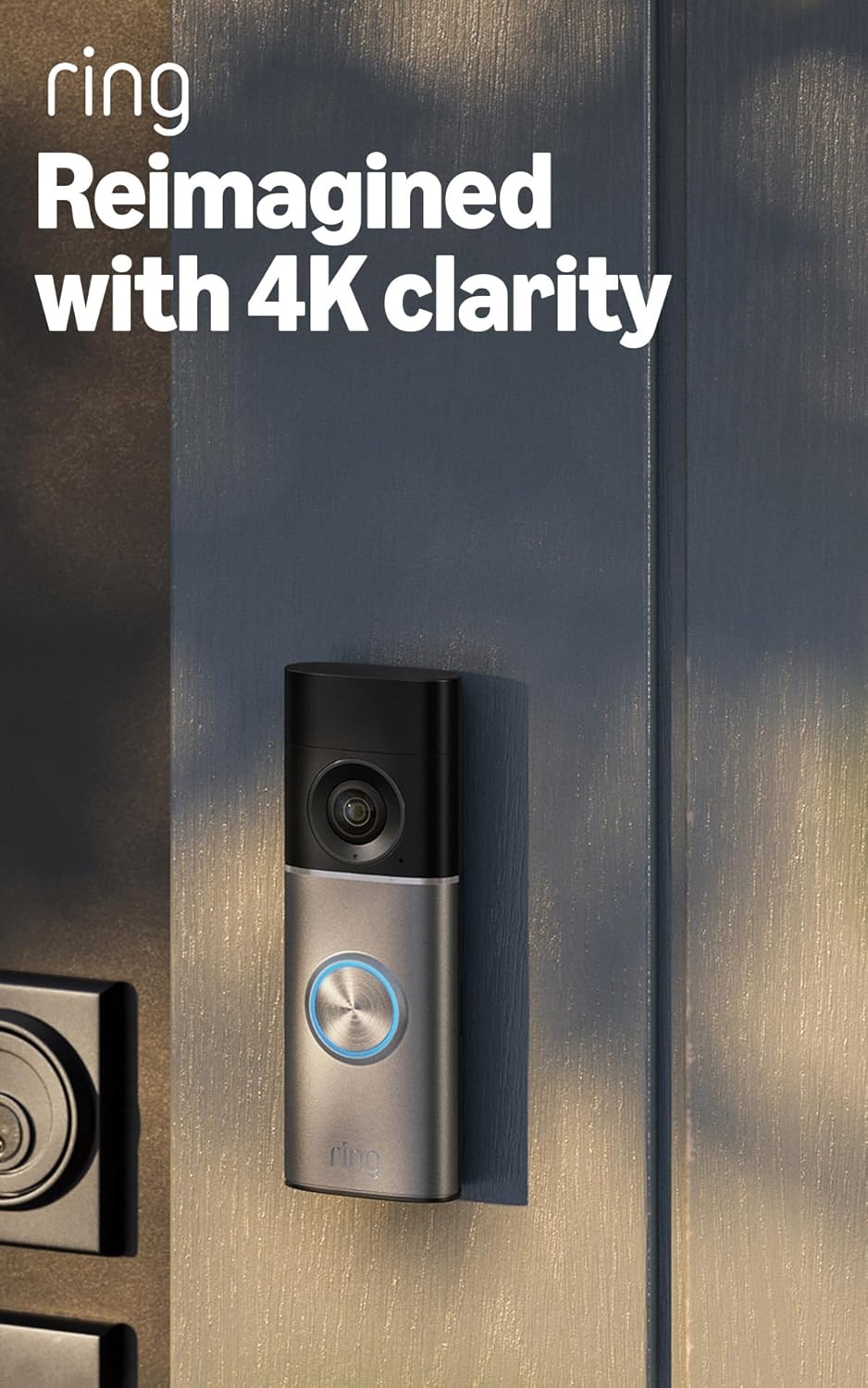
Physically, the Wired Video Doorbell Pro 3rd gen is fairly slim and modern‑looking. Compared to my older Ring, it takes up less space on the door frame and doesn’t stick out as much. The deep silver colour is neutral enough to blend in on most doors, and it looks more like a serious bit of kit than a toy gadget. If you care about curb appeal, it’s fine – it doesn’t scream “cheap plastic”, but it’s still clearly a tech device stuck on your wall.
The box includes a corner kit and mounting plate, which actually matters. In my case, the door is slightly recessed, and the corner mount helped angle the camera toward the path instead of facing the neighbour’s hedge. The field of view is so wide that you’ll likely catch most of what you need, but getting the angle right makes a big difference for motion alerts. Installation tools are included – tiny level, screws, wall plugs – so you’re not hunting for random bits.
On the downside, Ring still hasn’t solved the weather and sunlight issue properly. There’s no built‑in hood or shield, so if your doorbell is fully exposed to rain or direct sun, you’ll see some annoyances. In strong sunlight, the camera can show weird artefacts and washed‑out areas. In heavy rain, drops on the lens are still a problem and will blur the image. You can fix a lot of this by buying a third‑party cover or little visor, but for a top‑tier model, it’s a bit lazy that this isn’t addressed in the design.
One more thing: this doorbell is designed assuming a more “pro” install. The hardware and layout clearly expect either an existing wired system or someone comfortable drilling and routing cables. It’s not huge or heavy, but you can tell from the backplate and connectors that this isn’t a simple battery stick‑on doorbell. That’s fine if you know what you’re getting into, but if you live in a rental or can’t run cables, it’s not ideal and you should probably look at a battery version instead.
Power and installation: not plug-and-play, be warned
Despite the section title, this doorbell has no battery at all – and that’s the point. It’s fully wired, which is good for reliability but adds hassle for installation. You have three main options depending on the version you buy: hardwire with the included DIN Rail transformer, use a separate plug‑in adaptor (sold separately in some bundles), or power it via PoE+ if you go for the PoE variant. None of these are as simple as slapping a battery doorbell on the wall and calling it a day.
In my case, I had an existing doorbell transformer in the consumer unit, but it was an older, higher‑amp model. Ring’s documentation around compatibility isn’t very clear, and that’s a real weakness. One Amazon reviewer mentioned the same: they ended up replacing the transformer just for peace of mind because the paperwork doesn’t clearly say if the older 4A DIN transformer is OK. I did the same and had an electrician fit the included 24V DC transformer to avoid any risk of frying the doorbell. That’s an extra cost most people won’t think about at first.
If you don’t want to deal with the electrics, the plug‑in adaptor version is simpler: you plug the adaptor into a normal socket indoors and run the cable to the door. It’s not as clean visually, because you’ve got a cable running along the wall, but at least you’re not opening the consumer unit or calling an electrician. The PoE option is more for people who already have network cabling or know what they’re doing – you’ll need a PoE+ switch or injector that meets the IEEE 802.3at standard. That’s not exactly beginner territory.
Once it’s powered correctly though, you forget about it. No charging, no swapping batteries, no downtime. That’s the upside. But honestly, this is not a beginner’s install if you go the hardwired route. The product page saying “professional installation recommended” isn’t just legal fluff; for a lot of people, it will be necessary. So in terms of “battery/energy experience”: rock solid once done, but expect either a bit of DIY stress or an extra bill for an electrician at the start.
Build, weather, and how it handles real outdoor life
The doorbell is rated as weather resistant from -20°C to 48.5°C, which on paper covers most normal climates. The casing feels reasonably solid, not super premium but not flimsy either. After a couple of weeks of rain, cold nights, and a bit of direct sun in the afternoon, I didn’t notice any condensation in the lens or weird behaviour. It booted, recorded, and streamed without any obvious temperature‑related issues. So from a basic durability standpoint, it seems fine.
Where it shows its limits is in exposure to heavy rain and strong sunlight. Like I mentioned earlier, Ring still hasn’t integrated any real shielding into the design. When it rained, droplets on the lens were an issue and blurred those recordings. That’s not unique to Ring – most flat‑faced cameras suffer from this – but given this is their top wired model, I’d have liked at least a small built‑in visor. One Amazon reviewer pointed out the same thing, saying they had to buy a third‑party shield to fix both rain and bright light artefacts. I ended up ordering a cheap plastic cover as well.
On the software side, Ring says they guarantee security updates for at least four years after the device is last sold new on their sites. That’s decent, but not outstanding. For a doorbell that’s wired into your home, you’d ideally want to keep it running much longer than that. At least there’s a clear statement, which is more than some brands give, but don’t expect this to be a 10‑year, fully supported device.
There’s also a one‑year limited warranty with theft protection. If someone rips it off your wall, Ring will replace it, which is reassuring. In practice, the mount uses security screws, and it feels secure once it’s on. I don’t see it falling off or breaking easily from normal use. The weak point is more about long‑term exposure and the lens staying clean and clear, not the body cracking. So: build quality is decent and practical, but you’ll probably want a cheap accessory shield to really protect it from the elements if your door is not recessed.
Video, motion, day/night: how it actually behaves
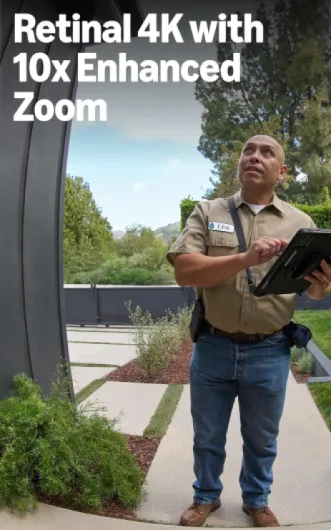
Let’s start with the video quality, because that’s basically why you’d pay extra for this model. During the day, it’s genuinely sharp. You see skin details, logos on jackets, labels on parcels – it’s a clear step up from older 1080p models. The 10x enhanced zoom isn’t just a gimmick: you can zoom in on a person’s face or a car across the small front garden and still make out useful detail. It’s not like a CCTV system with a big zoom lens, but for a doorbell, it’s very usable.
At night, the Low‑Light Sight and Adaptive Night Vision are decent. In very low light, you still get a colour image for longer than on older models, and when it does switch to more classic night vision, the contrast is better. You can actually see what’s happening instead of just vague grey shapes. That said, if there’s a bright porch light or a car headlight in the frame, it can still blow out parts of the image. It’s better than before, but not perfect. You might still want to play with your external lighting to get a clean picture.
On motion detection, the radar‑powered 3D Motion Detection is the main upgrade. After a bit of fiddling with the motion zones and distance settings, I ended up with fewer pointless alerts from cars and random movement on the pavement. The doorbell is much more focused on people actually walking up to the house. It’s not flawless: in windy conditions or when the postie walks quickly past without really stopping, it can still miss or delay an alert occasionally, but overall it’s more reliable than the previous gen I had.
In terms of connection, Wi‑Fi 6 and dual‑band (2.4/5 GHz) help. On my mesh network, the live view loads faster than my old Ring and I had fewer random disconnects. Video quality will still drop if your upload speed sucks – Ring recommends at least 10 Mbps upload, and I’d say that’s realistic if you want smooth 4K-ish footage. With slower internet, it still works, but don’t expect the full sharpness all the time. Overall, performance is good and consistent, as long as your network and power setup are solid and you invest a bit of time tweaking settings instead of leaving everything on default.

What this thing actually does (beyond the buzzwords)
On a basic level, this is a hardwired video doorbell that lets you see, hear, and talk to whoever is at your front door from your phone, tablet, or an Alexa screen. It records video when it detects motion or when someone presses the button, and if you pay for a Ring subscription, it stores those clips in the cloud for up to 180 days. Without the subscription, you still get live view and notifications, but no video history, which is worth keeping in mind before buying.
The big selling point here is the Retinal 4K video and up to 10x enhanced zoom. In practice, the image is much sharper than the older 1080p Ring models. Faces are clearer, text on parcels is easier to read, and if a car stops in front of the house, you have a decent chance of reading the plate if it’s not too far away. The field of view is 140° x 140° with a 1:1 aspect ratio, which means you see both the person and the package on the floor pretty well, not just a wide but squashed image.
Then there’s the 3D Motion Detection with radar. This is supposed to cut down on false alerts by actually measuring distance and movement more precisely, instead of just reacting to any pixel change. In my case, I set a motion zone that starts roughly at the front gate. After a bit of tweaking, it did a decent job ignoring cars on the street but still catching people walking up to the door. It’s not magic – you still need to adjust settings – but it’s an improvement over the usual motion-only stuff.
Finally, it ties into the Ring app and Alexa. On my Echo Show, I can say “Alexa, show the front door” and get the live feed, and my Echo Dot shouts when someone rings. The app itself is pretty mature: you can set custom motion zones, tweak sensitivity, and see a timeline of events if you’re subscribed. Just know that a lot of what makes this doorbell feel “smart” is locked behind that monthly fee, which adds to the total cost over time.
Pros
- Very clear 4K video with useful zoom and wide 1:1 field of view
- Radar‑based 3D Motion Detection reduces a lot of false alerts once configured
- Reliable wired power, Wi‑Fi 6 support, and good integration with the Ring app and Alexa
Cons
- Requires wiring and possibly an electrician; transformer compatibility docs are vague
- Needs Ring subscription for video history and full features, increasing long‑term cost
- No built‑in weather/sun shield, so rain on the lens and bright light artefacts are still an issue
Conclusion
Editor's rating
Overall, the Ring Wired Video Doorbell Pro (newest gen) is a strong but not flawless upgrade if you care about video clarity and smarter motion alerts. The 4K image, wide 1:1 field of view, and usable zoom actually help in real life: you can see faces, parcels, and even number plates much more clearly than with older 1080p models. The radar‑based 3D Motion Detection cuts down a good chunk of the usual “car drove past” spam, as long as you spend a bit of time dialling in the zones and distance. Wi‑Fi 6 support also makes the live view feel snappier and more stable, assuming your internet connection is decent.
But it’s not perfect. Installation can be a pain if you’re not comfortable with electrics; the documentation around transformer compatibility could be clearer, and you may end up paying an electrician. There’s no real built‑in shield for sun or rain, so you might need a third‑party cover to avoid lens drops and glare. And as usual with Ring, the product only really makes sense long‑term if you accept the ongoing subscription cost for video storage and advanced features.
I’d say this doorbell is for people who already like Ring or want a more serious, wired setup and are willing to invest a bit of time and money in doing it properly. It suits homeowners with a stable Wi‑Fi network, a busy front door, and a need for clear recorded footage rather than just a casual “who’s ringing?” gadget. If you’re renting, hate DIY, or don’t want another subscription, you’re probably better off with a cheaper, simpler battery model or a brand that offers free local recording. It gets the job done very well once installed and tuned, but you need to go in knowing the real total cost and effort.