
Summary
Editor's rating
Is it worth the money once you factor in the subscription?
Looks fine on the wall and doesn’t scream “spy gadget”
Battery life: better than I expected, but depends a lot on motion
Build quality and how it holds up outside
Video, motion detection and the stuff that actually matters day to day
What you actually get in the box and what it really does
Pros
- Clear 1536p head-to-toe video that shows both visitors and parcels on the ground
- Easy DIY installation with a removable quick-release battery and included corner kit
- Chime Pro extends Wi‑Fi for Ring devices and gives reliable indoor audible alerts
Cons
- Key features like video history and smart alerts require a paid subscription
- Motion detection can sometimes miss movement at the edge of the configured zones

Specifications
View full product page →| Brand | Ring |
A doorbell that’s basically a security camera on your wall
I’ve been using the Ring Battery Video Doorbell Plus with the Chime Pro for a while now, and it’s one of those gadgets that quietly becomes part of the daily routine. It’s not perfect, it’s not cheap once you count the subscription, but it does what most people want: it lets you see who’s at your door and whether your parcels are still there. If that’s your main goal, it gets the job done without much hassle.
Installation really was simple. I’m not a DIY expert and I had it on the wall and working in under 20 minutes, including drilling and messing around with the app. The claim of “5 minutes” is a bit optimistic unless you already have the holes and know exactly what you’re doing, but it’s still easy. No wiring needed if you stick to the battery, which is what I did.
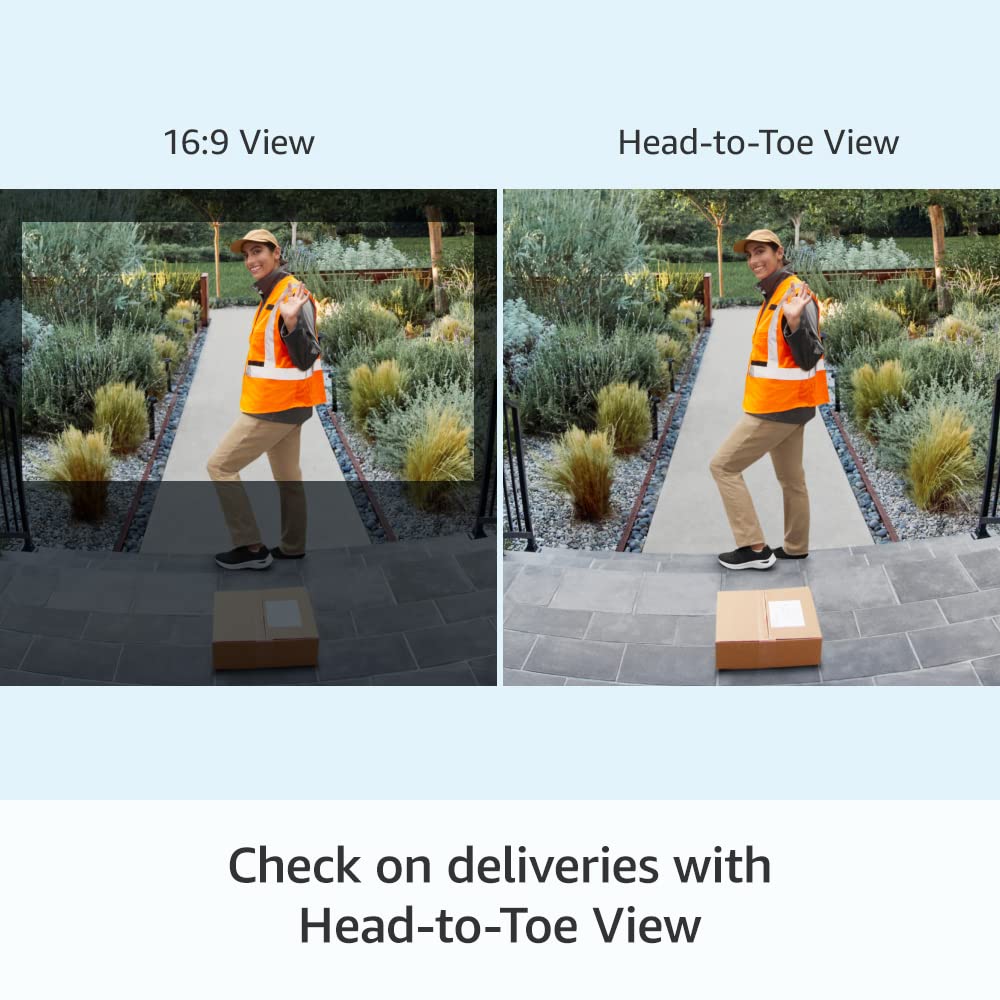
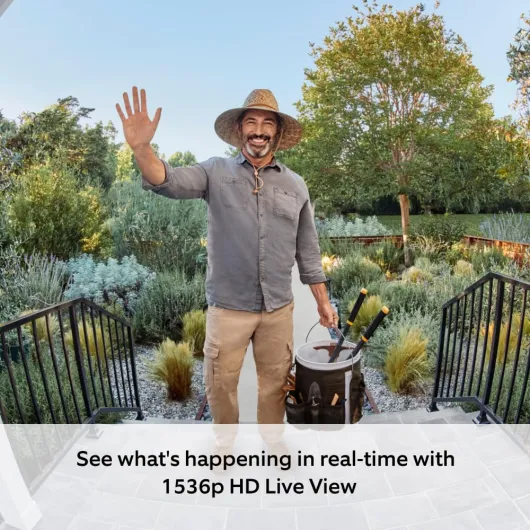
The first thing that stood out compared to older or cheaper doorbells I’ve seen is the head-to-toe view. You really do see the ground in front of the door, which is handy for parcels. I can open the app and instantly see if the box is still there or if someone has walked off with it. The 1536p video is sharp enough that you can clearly see faces, number plates are hit-and-miss depending on distance and light, but for a doorbell it’s more than enough.
Where it gets a bit less fun is the subscription side. Out of the box, everything feels full-featured, you get recordings, notifications, all the nice stuff. Then the trial ends and you realise that a good chunk of what makes it feel useful (recorded history, person/package alerts, proper timeline) is locked behind a monthly fee. The hardware is solid, but you need to mentally add the subscription to the price before deciding if it’s worth it for you.
Is it worth the money once you factor in the subscription?
This is where opinions will split. The hardware itself – the Battery Video Doorbell Plus + Chime Pro bundle – feels like good quality. You get clear video, useful features, easy installation, and a reliable chime and Wi‑Fi extender in one package. If you just look at the product as a one-time purchase, it’s a pretty solid setup for home monitoring around the front door. But the reality is that a lot of the extra value comes from the Ring Home subscription, which is a recurring cost.
Without the subscription, you still get live view, notifications when someone presses the doorbell or motion is detected, and two-way audio. For some people, that might be enough. You can answer the door from your phone and check what’s happening in real time. But you lose video history, person/package smart alerts, and you can’t go back and see what happened earlier in the day or week. That’s a big part of why people buy these devices in the first place. So if you’re not planning to pay the monthly fee, you need to be honest with yourself: are you okay with just live monitoring and no recordings?
Compared to some other brands that offer free limited recording or local storage, Ring’s subscription requirement is a downside. On the other hand, the app is mature, the ecosystem is big, and the features like package zones, privacy zones, and Quick Replies are genuinely useful. If you’re already in the Amazon/Ring ecosystem or plan to add more Ring cameras later, the subscription starts to feel more reasonable because it covers multiple devices and not just this one.
So in terms of value for money, I’d say: the hardware is fairly priced for what it does, the user experience is smooth, and the battery life and performance are solid, but you need to mentally add the subscription cost into the total. If you hate subscriptions on principle or want something that records for free out of the box, there are other brands to look at. If you’re okay paying a few extra pounds/euros per month to get the full feature set and you want a straightforward, reliable doorbell camera with good app support, this bundle makes sense.
Looks fine on the wall and doesn’t scream “spy gadget”
The design is pretty neutral. The Satin Nickel faceplate looks clean and modern, and it doesn’t stand out too much on most doors or walls. It’s not tiny, but it’s not a giant brick either: about 12.8 cm high, 6.2 cm wide, and 2.8 cm deep. On my door frame it looks normal, like a slightly chunky doorbell with a camera on top. If you’re worried about something ugly stuck next to your door, this one is acceptable and doesn’t look cheap.
The front is split into two main parts: camera and sensor area on top, button with LED ring on the bottom. The button ring light is clear enough that visitors understand where to press, even people who’ve never used a smart doorbell before. At night, that light ring also makes it obvious that it’s a doorbell, not just a camera. I’ve had delivery drivers use it without hesitation, which wasn’t the case with a basic camera I had before that had no button at all.
The included corner kit is more useful than it looks. Out of the box, the doorbell looks straight ahead. In my case, the door is slightly recessed and the street is off to one side. Tilting it with the corner mount made a real difference: I can see people walking up the path earlier, and the motion detection is more relevant. If you have a weird doorway or a tight entrance, that little piece of plastic is actually handy.
One thing I like is that it doesn’t feel fragile. The casing feels firm, the button doesn’t wobble, and the faceplate clicks in properly. It’s weather resistant and rated to work from -20.5°C to 50°C, which is more than enough for most climates. I’ve had it in rain and wind and it hasn’t shown any signs of water getting in or the lens fogging up. It’s not some premium-looking designer object, but for a practical doorbell-camera combo, the design is solid and low-key, which is what I prefer on the front of my house.
Battery life: better than I expected, but depends a lot on motion
The doorbell runs on a removable, rechargeable quick release battery pack, and this is one of the parts I was the most curious about before using it. I didn’t want to be charging it every week. In practice, battery life is pretty good, as long as your door isn’t facing a super busy street with constant motion. In my case (quiet residential street, a few visitors and deliveries per day), I’m getting roughly 2–3 months per charge with default settings and a mix of motion alerts and live views.
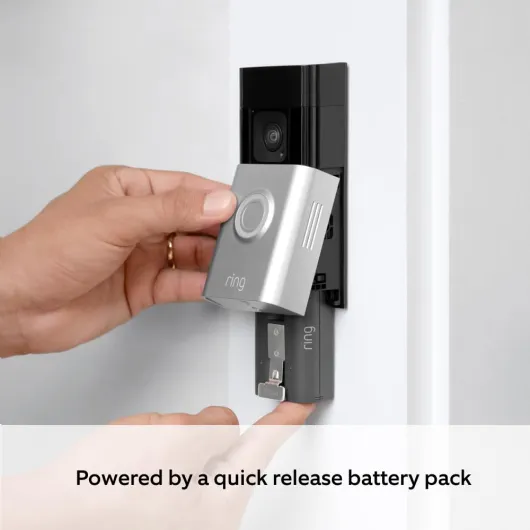
Charging is simple: you press the release tab, slide the battery out, and plug it into the included USB cable. It charges reasonably fast; from almost empty to full took me a few hours plugged into a normal USB charger. During that time, the doorbell is obviously offline unless you have a spare battery to swap in. I considered buying a second battery, but honestly, given how long the single one lasts, I haven’t bothered yet. I usually charge it overnight when I know I don’t have important deliveries coming.
Battery life will drop if you crank up motion sensitivity or if you live on a very busy street where it’s recording constantly. Also, using the live view a lot eats into the battery faster, because it’s basically streaming video non-stop while you watch. If you’re the type who opens the app every hour just to check the front of the house, expect shorter intervals between charges. But for normal use – a few checks per day and regular motion events – it holds up well.
The advantage of the quick release design is that you don’t have to unmount the whole doorbell from the wall or mess around with cables outside. Slide out, charge inside, slide back in. If you really want zero downtime, you can buy a second battery and just rotate them. There’s also the option to hardwire it to an existing doorbell transformer or use accessories like a solar charger, but I haven’t tested those. For a pure battery setup, I’d say the performance is solid enough that it’s not annoying, which is all I really wanted.
Build quality and how it holds up outside
From a durability point of view, the doorbell feels sturdy enough for outdoor use. The plastic casing doesn’t creak, the faceplate snaps on firmly, and the button still feels the same after months of presses. It’s weather resistant, and where I am it’s dealt with rain, wind, and a couple of cold nights without any issues. No water ingress, no weird fogging on the lens, no random reboots. The temperature rating of -20.5°C to 50°C is more than what most people will throw at it, unless you live in extreme conditions.
The Chime Pro also feels like a normal, decent-quality plug-in device. It lives indoors, so it doesn’t have to survive rain or cold, but it hasn’t overheated or made strange noises. It just sits in a socket and does its job. The plastic isn’t premium, but it doesn’t feel flimsy either. I’ve unplugged and moved it a few times to find the best location for Wi‑Fi extension, and it’s handled that just fine.
One thing I like is the theft protection policy mentioned by Ring: there’s a one-year limited warranty including theft protection, which means if someone actually rips it off your wall and runs away with it, Ring will replace it (within their conditions). Obviously you still have to deal with the hassle of re-installing and the fact someone stole from your property, but it’s better than nothing. The mount itself screws into the wall, and the doorbell locks onto the mount with small security screws, so it’s not something you can just yank off in one second without tools.
Over time, the only thing I’d keep an eye on is the faceplate finish. The Satin Nickel look is nice out of the box, but like any outdoor metal-look plastic, I expect it might pick up small scratches or dull a bit with years of sun and rain. So far, after months of use, it still looks decent with just the usual dust and a few spots from rain. Overall, in terms of durability, it feels like a practical, solid device, not something you have to baby, which is exactly what you want for something screwed to the outside of your house.
Video, motion detection and the stuff that actually matters day to day
On the performance side, the video quality is pretty solid. The 1536p resolution is a step up from older 1080p models I’ve seen. Faces are clear, you can see clothing details, and the 1:1 head-to-toe view really does cover the whole person plus the doormat. During the day, the image is sharp and colours look natural. At night, the colour night vision kicks in when there’s some ambient light, and it stays usable. If it’s really dark, it switches to a more classic low-light look, but you can still see who’s there without guessing.
The motion detection is decent but not perfect. You can set custom motion zones and even privacy zones to block areas you don’t want recorded, which is important if your camera points partly at a neighbour’s property or a busy street. In practice, once I tweaked the zones and sensitivity, it stopped spamming me with every passing car. However, like one of the Amazon reviews mentioned, it does occasionally miss motion on the edges of the frame. I’ve had one or two cases where someone walked close to the edge of the detection zone and it didn’t trigger, but when people walk straight up to the door, it reliably records.
The person and package alerts (with subscription) are actually useful. The package zone in particular works well: I drew a box around the area in front of the door, and now I get a specific “package detected” notification when something appears there. It’s not perfect 100% of the time, but most of the time it correctly recognises a parcel drop. For me, that’s one of the main reasons to stick with Ring instead of some cheaper camera that just records generic motion.
Audio performance is fine. The two-way audio with noise cancellation does what it should. I can talk to delivery drivers without yelling, and they hear me clearly on their side. There’s a tiny delay, but nothing dramatic. The Quick Replies feature is surprisingly handy when I’m busy. I’ve set it to play a short message telling them to leave the parcel by the door. Is it essential? No. But it’s one of those small things you end up using more than you’d expect, especially if you get a lot of deliveries.
What you actually get in the box and what it really does
In the box you get the Battery Video Doorbell Plus, a quick release battery, a Satin Nickel faceplate, a corner kit, a small bag of screws and anchors, a USB charging cable, some basic tools (little screwdriver etc.), a user manual, and a security sticker. With this bundle you also get the Chime Pro, which is basically a plug-in speaker that also extends your Wi‑Fi for Ring devices. So it’s a complete kit: you can go from nothing to a working smart doorbell without buying anything else.
The doorbell itself is a self-contained camera with a button. It runs off the rechargeable battery, connects to 2.4 GHz Wi‑Fi, and streams 1536p HD video in a square-ish 1:1 aspect ratio. That square format looks a bit odd at first if you’re used to normal wide video, but in practice it makes sense: you see a lot of vertical space, from the visitor’s face down to their feet and the doormat. For parcels and seeing if someone is crouched down at your door, it’s pretty handy.
On the software side, it has motion detection with custom zones, two-way audio, colour night vision, and some extra features if you pay for the Ring subscription: person and package alerts, longer video history (up to 180 days), and the option to save and replay events. There’s also Quick Replies, which is basically a small answering machine. If someone presses the bell and you don’t answer, it can play a pre-recorded message like “Please leave the package” or “We can’t come to the door right now”. It’s simple, but I’ve used it a few times when I was in meetings.
Overall, in terms of what it actually does, it’s straightforward: it’s a smart doorbell that doubles as a basic security camera for your entrance. You see live video, you talk to people, you get alerts when something moves or someone presses the button. The extra stuff like privacy zones, package zones, and fancy alerts are useful bonuses, but you need to be okay with the idea that the full experience is tied to a recurring subscription. If you just want live view and instant notifications without caring about history, you can skip the subscription, but then you’re not really using half of what the device can do.
Pros
- Clear 1536p head-to-toe video that shows both visitors and parcels on the ground
- Easy DIY installation with a removable quick-release battery and included corner kit
- Chime Pro extends Wi‑Fi for Ring devices and gives reliable indoor audible alerts
Cons
- Key features like video history and smart alerts require a paid subscription
- Motion detection can sometimes miss movement at the edge of the configured zones
Conclusion
Editor's rating
Overall, the Ring Battery Video Doorbell Plus with Chime Pro is a practical, easy-to-live-with smart doorbell. The main strengths are the head-to-toe 1536p video, the reliable two-way audio, and the simple installation. The Chime Pro is useful if your router is far from the front door or if you want an audible chime inside the house without touching your existing wiring. Day to day, it just works: you see who’s there, you talk to them if needed, and you keep an eye on parcels. For most people, that’s exactly what they’re after.
It’s not perfect. The motion detection can occasionally miss things at the edge of the frame, and the subscription requirement for full features is the biggest downside. If you don’t want to pay monthly, you lose video history and some of the smarter alerts, which makes the device feel a bit underused. Also, if you’re in a very busy area, you might need to spend some time tuning motion zones so you don’t get spammed with alerts or drain the battery too fast.
Who is it for? It’s good for people who want a straightforward, battery-powered doorbell camera that they can install themselves, who are okay with using an app, and who don’t mind paying a subscription to get the full set of features. It’s also a decent choice if you get a lot of deliveries and want reliable parcel monitoring. Who should skip it? If you hate subscriptions, want local storage, or live in an apartment where drilling and mounting outside is a hassle, you might be better off with another setup. But if you just want something that’s solid, easy to use, and does the job at the front door, this Ring combo is a good fit.