
Summary
Editor's rating
Is it good value for money?
Design and build: plastic but decent for the price
Battery life and wireless convenience
Build quality, weather resistance and reliability over time
Video, motion detection and app: decent, with some quirks
What you actually get and how it works day to day
Pros
- Good 2K video quality and clear night vision for the price
- Fully wireless install with included indoor chime and IP66 weather rating
- Solid feature set (motion detection, two-way audio, Alexa support, cloud + AI options) at a budget price
Cons
- App and connection can be unreliable at times, with occasional dropouts
- Battery needs recharging every couple of months and requires taking the unit down
- Cloud recording and AI detection require a paid subscription after the 30-day trial

Specifications
View full product page →| Brand | AUE |
A budget smart doorbell that tries to do it all
I’ve been using this AUE wireless video doorbell for a little while now, and I went into it with pretty low expectations. It’s a brand I’d never heard of, the price is on the low side compared to Ring or Nest, and the listing is full of big promises: 2K video, PIR motion detection, night vision, Alexa support, cloud storage, the whole lot. I mainly wanted something cheap to see who’s at the door and to keep an eye on deliveries.
In daily use, it’s actually better than I expected in some areas and a bit annoying in others. The setup was quick, the picture is quite clear for the price, and the included indoor chime is handy so you don’t have to rely only on your phone. But you do feel that it’s a budget product, especially on the software side and the occasional connection hiccups.
I used it on a pretty standard UK-style front door with a porch, about 8–9 meters from my router through one brick wall. I didn’t do anything fancy with network gear or signal boosters, just normal home Wi‑Fi. I also didn’t pay for any cloud subscription yet, I only used the free trial period, so my view is more from a basic user than someone who wants deep integration or long recording history.
If you’re expecting something on the same level as a high-end Ring setup, you’ll probably be a bit disappointed. But if you just want a simple, battery-powered doorbell that lets you see and talk to people at the door without rewiring your house, this one is honestly not bad. It has a few rough edges, and reliability will really depend on your Wi‑Fi, but for the money, it’s at least worth considering.
Is it good value for money?
Looking at the price versus features, this AUE doorbell sits in a pretty attractive spot. You’re getting 2K resolution, night vision, PIR motion detection, two-way audio, an included indoor chime, IP66 weather resistance, Alexa support, and cloud + AI options. On paper, that’s a lot of stuff for a budget device. If you compare it to an entry-level Ring or other big brands, you’re paying noticeably less for similar core functions: see who’s at the door, talk to them, and get motion alerts.
The real question is how much you care about polish and reliability. The video quality and basic functions are good enough for most people. The app is a bit rough but usable. The cloud storage is only free for 30 days, then you’re into subscription territory if you want recordings and AI detection. That’s not unique to this brand—Ring and others do the same—but it’s something to factor in. If you refuse to pay any subscription at all, the “value” drops, because you’re mostly left with live view and notifications without proper recorded history.
Compared to more expensive competitors, you’re saving money but accepting a few compromises: occasionally flaky connection, less polished app, and the usual question mark around long-term support from a smaller brand. If you just want something affordable to keep an eye on deliveries, check on your front door when you’re away, and you’re okay with the odd hiccup, I’d say the value is pretty solid. It does the job without costing a fortune.
If you’re very picky about instant, always-reliable notifications, deep smart home integration, and long-term ecosystem stability, you might be better off spending more on a well-known brand. For renters, students, or anyone on a tighter budget who just needs the basics and doesn’t mind tweaking settings a bit, this AUE doorbell is a decent deal. Not perfect, but for what you pay, it’s hard to complain too much.
Design and build: plastic but decent for the price
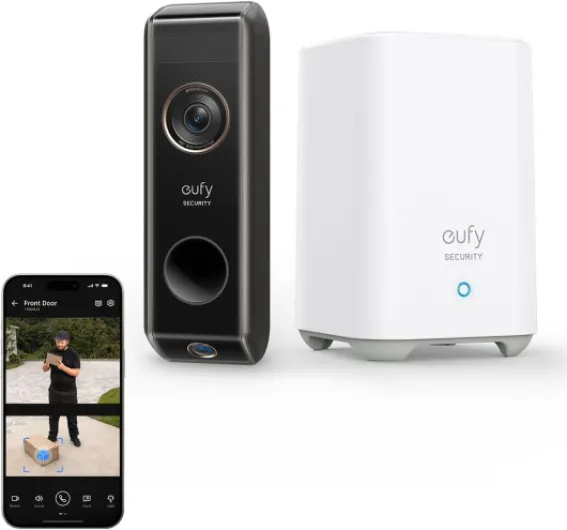
The overall design is pretty straightforward: a black plastic “bullet” style unit that mounts vertically on the wall. It’s not stylish or anything, but it doesn’t look cheap from a distance either. It’s slimmer than some of the chunkier video doorbells I’ve seen, and it doesn’t stick out too far from the wall, which I like. The camera sits at the top, the button with the ring light is at the bottom, and the PIR sensor is integrated in the front. It looks neutral enough that it shouldn’t clash with most doors or walls.
The housing is plastic, and you can feel that when you handle it. It’s not flimsy, but it doesn’t give you the same solid feel as a metal-bodied unit. That said, it’s IP66 waterproof, so it’s rated to handle rain and dust. Mine has seen a couple of heavy showers and some wind, and so far there’s no sign of water ingress or fogging on the lens. The unit only weighs about 230 g, so it doesn’t put much strain on the mounting surface, which is good if you’re using the adhesive option instead of screws.
Controls are minimal: there’s the front button, a reset slot, and the USB‑C port for charging hidden on the back/side depending on how you mount it. The included indoor chime is small and basic—just a little USB plug unit—but it works. I like that it doesn’t take up much space and you can move it to another room easily. There’s no physical volume wheel on the doorbell itself; you handle most settings through the app, which is a bit less convenient for quick tweaks.
One thing to note: if your door is set back in a recess or you need a strong angle to see along your path, you might need an angle bracket. Some buyers got one from the company after asking support. Without it, if your door is flush with a wall that’s at 90 degrees to your path, you might just see people when they’re right in front of the door, not as they walk up. Overall, the design is functional and low-profile. It looks like what it is: a budget doorbell camera that’s more about function than style, but it doesn’t look bad on the wall.
Battery life and wireless convenience
The doorbell runs on a 4800 mAh rechargeable battery, which is on the modest side compared to some bigger-name models, but it’s not bad. How long it lasts will depend heavily on how busy your front door is and how aggressive your motion settings are. With a moderate number of events (a handful of deliveries per week, a few motion triggers per day) and the sensitivity dialed back a bit, the battery life is acceptable.
One user mentioned being at around 60% after 2 months, which lines up roughly with what I’ve seen: you’re probably looking at somewhere in the 2–3 month range between charges for an average household, maybe shorter if your door faces a busy street or you’re constantly checking the live feed. If you crank the motion sensitivity up and have lots of false alerts, the battery will drain much faster. So the key is to spend some time in the app adjusting zones and sensitivity so it’s only recording when it really needs to.
Charging is done via USB‑C, which is nice—no weird proprietary connector. The downside is you have to physically take the doorbell off its mount to recharge it, unless you’ve run a cable out to it somehow, which most people won’t. That means your door is without the camera for a few hours while it tops up. It’s not the end of the world, but it’s something to think about if you’re away often or rely heavily on it for security. There’s no hot-swappable battery pack like some higher-end models offer.
Because it’s fully wireless, installation is easy and you don’t have to touch your existing doorbell wiring at all, which is a big plus. But the trade-off is regular recharging. For me, having to recharge every couple of months is acceptable given the price and the convenience of not rewiring anything. If you want something you can set up once and forget for a year or more, you might want to look at other options or wired models. Here, you’re trading long battery life for low cost and simple setup.
Build quality, weather resistance and reliability over time
In terms of durability, the AUE doorbell is clearly built to a budget, but it’s not flimsy. The plastic housing feels reasonably solid, and the IP66 rating is reassuring on paper. In real life, it’s handled rain and temperature changes without any obvious issues so far. No condensation inside the lens, no rust on screws, and the button still clicks properly after being pressed a bunch of times. For a lightweight plastic device, that’s about what I’d hope for.
The mount uses either screws or a self-adhesive backing. Personally, I’d go with screws if you can, especially if your wall gets very hot or cold or if the surface is a bit rough. Adhesive might work fine on a smooth door frame, but over months and weather changes, I don’t fully trust it for something that sits outside. The tamper alarm feature (it screams if someone tries to yank it off) is a nice touch, but of course it only helps if the device is still powered and connected.
Where durability is a bit more questionable is on the software and connectivity side. Some users report the doorbell dropping off the app and needing reinstallation. I’ve seen occasional disconnections, but nothing that made it unusable. Still, long-term, I’d be slightly worried about app updates, cloud services, and server reliability since this is a lesser-known brand. If they ever stop supporting the app or change their cloud model, the hardware might become less useful, which is always a risk with connected devices from smaller manufacturers.
That said, there are positive signs: one reviewer mentioned getting an extra year of warranty by registering, and the brand seems to respond to support requests (like sending an angle bracket). So they’re at least trying on the customer service front. Physically, I don’t see any immediate red flags: it’s light, weatherproof, and has survived normal outdoor use. But if you’re planning to keep a doorbell for 5–7 years and want something that feels bombproof in both hardware and software, this might not inspire as much confidence as a bigger name, even if it holds up fine for a few years.
Video, motion detection and app: decent, with some quirks
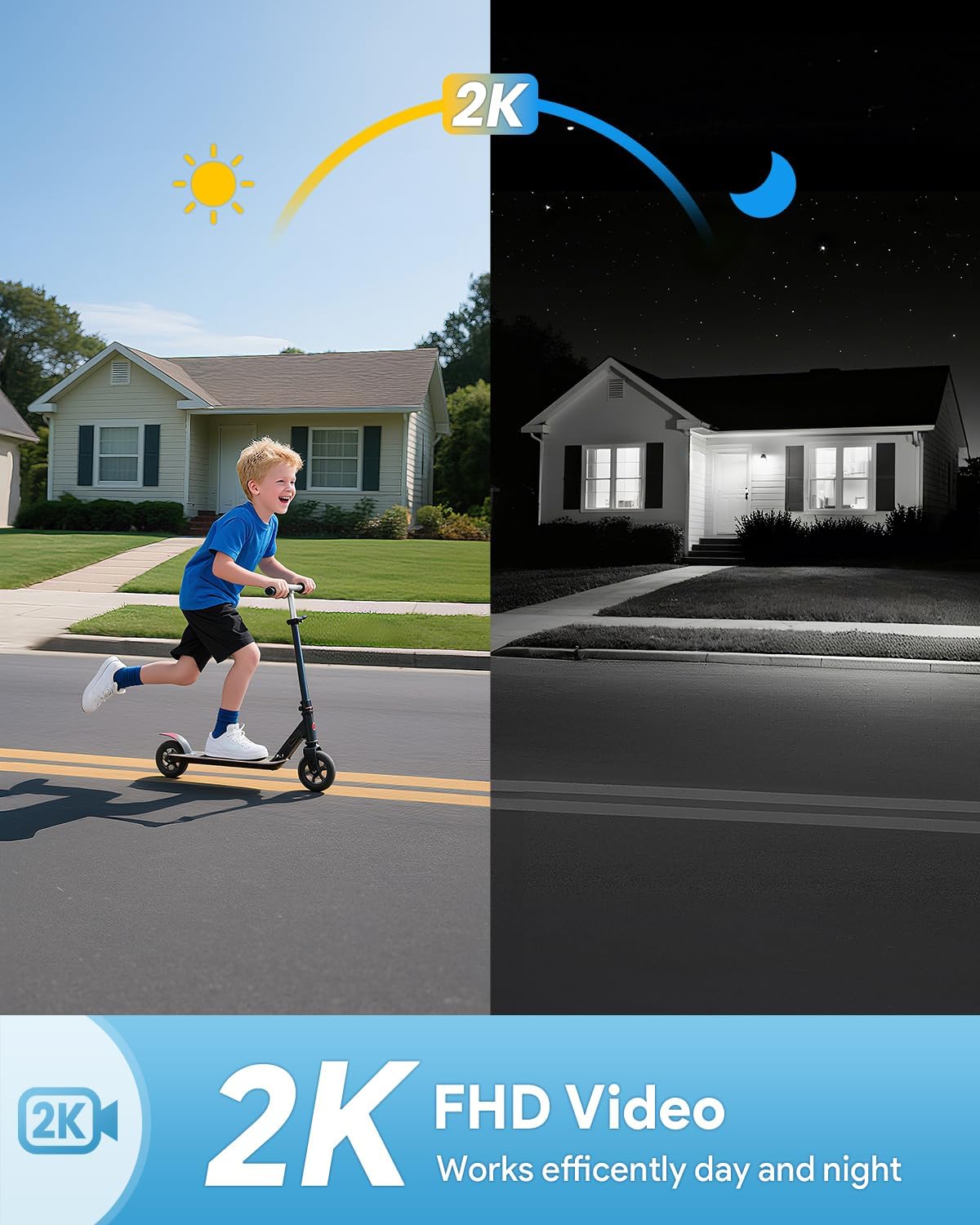
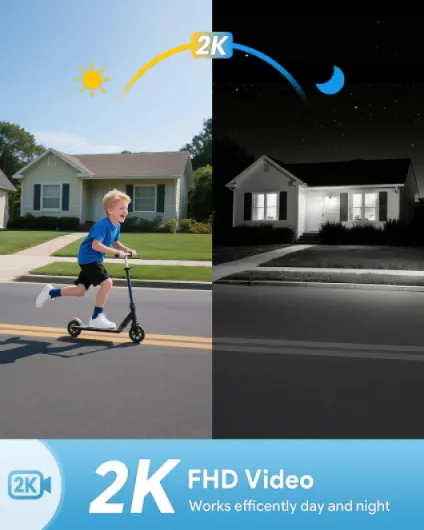
On the performance side, the 2K video quality is actually pretty solid for this price range. During the day, the image is sharp enough that you can clearly see faces, read package labels at close range, and generally know what’s going on. It’s not cinema-level, but it’s more than enough for security and checking who’s at the door. The 166° wide angle means you get a lot of the scene, sometimes even too much, which can trigger motion alerts from passing cars or people on the pavement if you don’t tune it.
Night vision is IR-based and rated up to about 10 meters / 33 feet. In real use, within 5–7 meters, it’s clear enough to recognise people and see what they’re doing. Beyond that, you can still see shapes, but details drop off. The switch between day and night mode is automatic. I didn’t notice any big lag when it switches, but you do get the usual black-and-white look at night. For a front door, it’s perfectly fine. If you’re trying to monitor a long driveway, this isn’t the right device anyway.
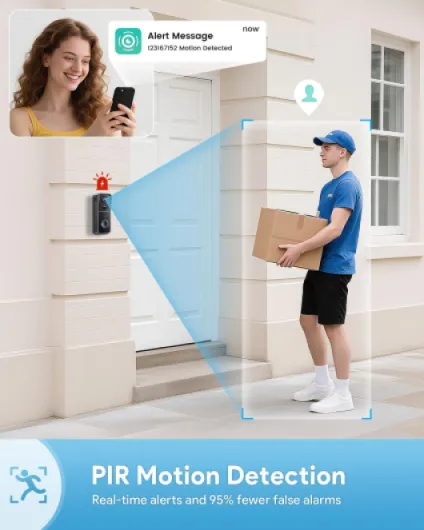
The PIR motion detection works, but you need to play with the sensitivity and detection zones in the app. Out of the box, it was picking up every car going past and some random movements from branches. After I lowered the sensitivity and limited the zone more towards the doorway, it calmed down a lot. The AI detection (people, animals, packages, cars) is part of the subscription add-on, and it does make the notifications a bit more useful, but it’s not magic. It still occasionally mislabels things, but it’s good enough to quickly see if it’s just a car or an actual visitor.
The weak point is the app reliability and connection stability. Most of the time, live view loads in a few seconds, but I did have moments where the camera “disappeared” from the app and needed a restart, or the live view failed to load on the first try. One of the Amazon reviews mentioned having to reinstall it regularly, and I can see how that could happen if your Wi‑Fi is borderline or if the app glitches. On my network, it was mostly okay, but not flawless. So performance overall: good video, workable motion detection once tuned, but software and connection can be a bit hit and miss depending on your setup.
What you actually get and how it works day to day
The AUE-BELL J9 is a battery-powered, 2.4 GHz Wi‑Fi video doorbell with a 2K (1440p) camera, PIR motion detection, night vision, two-way audio, and an IP66 weather rating. In the box you get the doorbell unit, a USB plug-in indoor chime, a USB‑C cable for charging, some basic mounting hardware, and a small user guide. No base station, no hub, just Wi‑Fi and your phone. It uses the Morecam app for control and notifications.
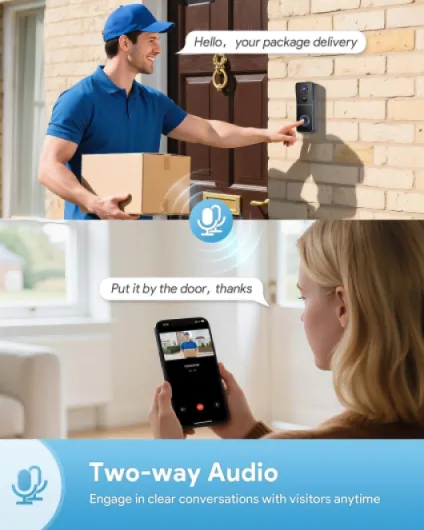
In practice, you mount the doorbell next to your door, pair it with your Wi‑Fi and app, plug the chime into a socket inside, and that’s basically it. When someone presses the button, the indoor chime rings and you get a push notification on your phone. You can then open the app, see a live video feed, and talk back. When motion is detected in the area you set, it records a short clip to the cloud (if you’re on the free trial or a paid plan) and sends an alert. The claimed field of view is 166°, which is wide enough to see someone standing close to the door and a bit of the surrounding area.
The doorbell is meant to be fully wireless, so no need to tap into existing doorbell wiring. That’s good if you’re renting or don’t want to drill into your electrical system. On the downside, it means you’re fully dependent on the battery and Wi‑Fi. The cloud storage is subscription-based after the 30‑day free trial, and there’s an optional AI plan that can distinguish between people, cars, packages, and animals. If you don’t pay, you’re basically limited to live view and maybe some very basic functionality, so keep that in mind.
Day to day, it does the basic job: it rings, you see who’s there, you can talk to them, and you get motion alerts. It’s not the slickest system I’ve used, and the app feels a bit generic, but for normal home use—keeping an eye on deliveries, checking on who’s at the door when you’re not home—it’s perfectly usable. Just don’t expect the same polish, ecosystem, or long-term software support that you’d get from bigger brands.
Pros
- Good 2K video quality and clear night vision for the price
- Fully wireless install with included indoor chime and IP66 weather rating
- Solid feature set (motion detection, two-way audio, Alexa support, cloud + AI options) at a budget price
Cons
- App and connection can be unreliable at times, with occasional dropouts
- Battery needs recharging every couple of months and requires taking the unit down
- Cloud recording and AI detection require a paid subscription after the 30-day trial
Conclusion
Editor's rating
Overall, the AUE Video Doorbell Camera Wireless is a budget-friendly option that covers the basics well enough. You get clear 2K video, workable night vision, an included chime, and truly wireless installation thanks to the built-in battery. Once you dial in the motion zones and sensitivity, it does a decent job of alerting you to visitors and deliveries without going too crazy with false alarms. For everyday use—seeing who’s at the door, talking to couriers, checking in when you’re away—it gets the job done.
On the downside, you can feel that it’s a cheaper product in terms of app polish and reliability. Some users report dropouts and having to reinstall it, and I’ve seen the occasional connection glitch myself. The battery life is okay but not outstanding, and you have to take the whole unit down to recharge it every couple of months, depending on how busy your door is. Plus, like most of these devices, the real value comes if you pay for the cloud and AI features after the free trial, which adds ongoing cost.
I’d say this doorbell is a good fit for people who want an inexpensive, no-wiring solution, are fine with a bit of tinkering in the app, and mainly care about basic monitoring rather than a fully polished smart home system. It’s less suited to anyone who demands rock-solid reliability, deep ecosystem integration, or long-term brand support. If you’re okay with those trade-offs and you just want a straightforward camera doorbell that does most of what the big names do for less money, this one is worth a look.