
Summary
Editor's rating
Value for money, especially if you already use Blink
Simple plastic brick that doesn’t try to be pretty
The two-year battery claim vs real life
Weather, build, and long-term use
Video, motion, and app: decent overall, with some lag
What you actually get (and what you don’t)
Pros
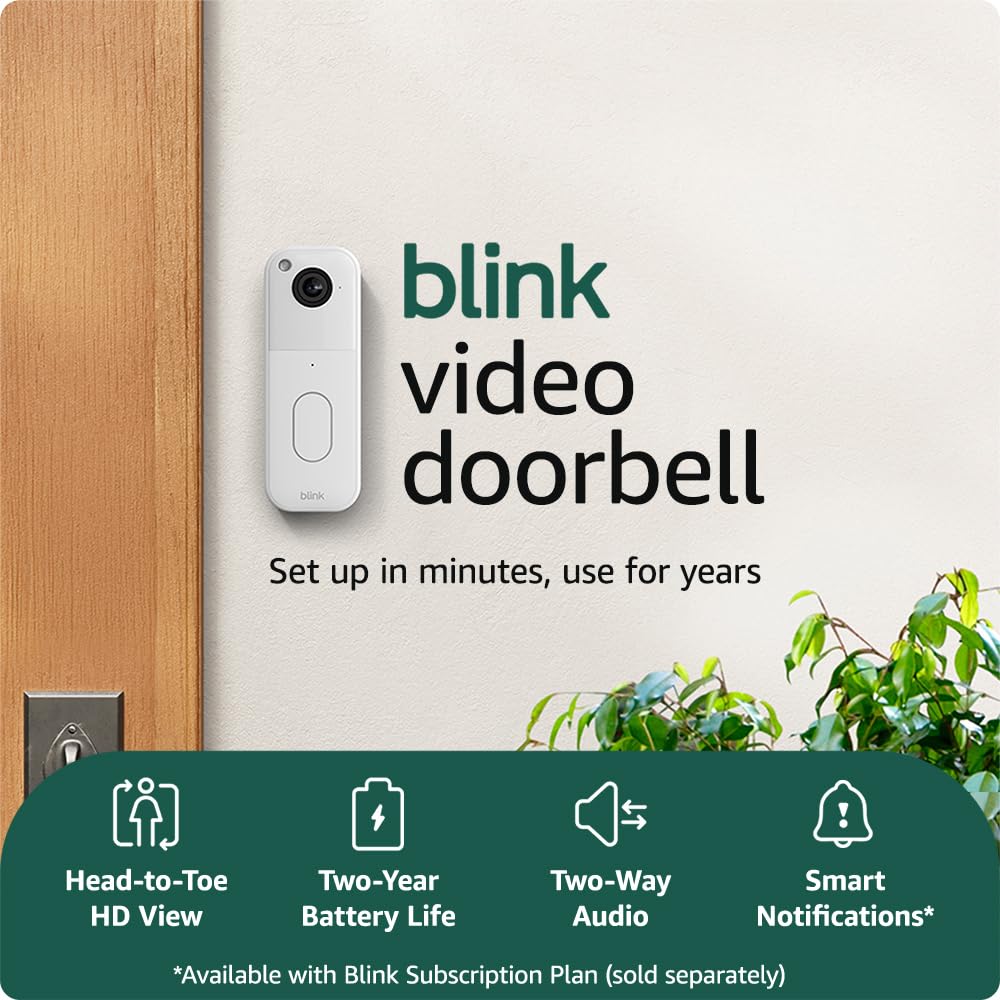
- Head-to-toe 1440x1440 video makes it easy to see people and parcels at the door
- Very easy wireless installation and simple app, especially if you already have Blink
- Uses standard AA lithium batteries and works well with Alexa for door announcements
Cons
- Two-year battery life claim is optimistic; real-world life can be much shorter
- Notifications and two-way talk can have noticeable delay, making real-time interaction hit or miss
- Cloud storage and some advanced features require a paid subscription after the trial

Specifications
View full product page →| Brand | Blink |
A no-fuss video doorbell for people already in the Blink ecosystem
I’ve been using Blink cameras for a while, so this Blink Video Doorbell "Add-on" felt like the logical next step for the front door. Just to be clear from the start: this version is meant for people who already have a Sync Module. If you don’t, you’ll need to buy that separately or pick the bundle, otherwise you’re going to be annoyed when you open the box. I already had a Sync Module, so for me it was just a matter of adding one more device in the app.
I set it up on a normal UK-style front door, slightly recessed, with a small porch. We get a mix of posties, Amazon drivers, and random door knockers, plus a fair bit of wind and rain. So it’s a decent test for motion detection, night vision, and general reliability. I’m not testing this in some perfect showroom; this is just a normal house with normal Wi‑Fi and a bunch of other devices competing for bandwidth.
My expectations were pretty simple: I wanted to see people from head to toe, see parcels on the ground, get a notification quickly enough to actually talk to whoever is there, and not have to change batteries every month. I wasn’t looking for fancy AI or a bunch of smart home tricks, just something that works consistently and doesn’t turn into a maintenance job.
After using it daily, I’d say it’s a pretty solid option if you’re already into Blink, but it’s not perfect. The camera and the app are decent, the field of view is genuinely useful, but there are a few annoyances around battery life expectations, delayed notifications, and the whole subscription/cloud storage story. If you expect miracles for cheap, you’ll be disappointed; if you just want something simple that mostly behaves, it’s alright.
Value for money, especially if you already use Blink
On price, this doorbell sits in that mid-budget range where you’re not paying a fortune, but it’s also not the cheapest no-name camera from random brands. If you already have a Blink setup and a Sync Module, the add-on pricing makes sense: you’re basically paying for one more camera at the door, and everything lives in the same app. In that case, I’d say it’s good value for money: simple to add, no new app to learn, and you reuse what you already own.
Where the value gets a bit more questionable is if you’re starting from zero. Then you need the doorbell plus a Sync Module, and probably a subscription if you actually want to keep recordings beyond the 30-day trial. Over a few years, the subscription cost plus lithium batteries adds up. It’s still cheaper than some high-end options, but the real cost is more than just the sticker price on Amazon. You have to be okay with the ongoing fees, or you’ll end up annoyed after the trial ends.
Compared to Ring, which is the obvious competitor, this Blink doorbell is simpler and usually cheaper, but also a bit more limited. The app is more basic, the ecosystem is smaller, and you don’t get as many advanced features. On the other hand, it’s less cluttered, and if you already have Blink cameras, it’s nice to keep everything in one place. Some users even prefer Blink over Ring for reliability and simplicity, as one of the Amazon reviews mentioned, saying it works better than Ring and is easier to set up.
So in value terms: if you’re already invested in Blink, this is a sensible, budget-friendly way to secure your front door. If you’re not, I’d compare it carefully with Ring and a couple of other brands, especially factoring in subscription prices and features. It’s not a rip-off, but it’s also not some miracle bargain. It’s a fair price for a straightforward, wireless video doorbell that mostly does what it says.
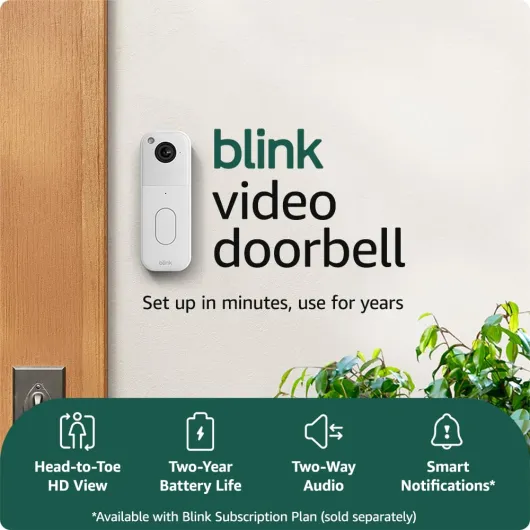
Simple plastic brick that doesn’t try to be pretty
Design-wise, the Blink Video Doorbell is very basic. It’s a tall, slim plastic rectangle with a camera on top and a button below. Mine is the white version, which blends okay with a white door frame but will obviously stand out on a dark door. If you want something that looks more premium or like a traditional doorbell, this isn’t it. It looks like a small security camera glued to your door, which is fine by me, but not stylish.
The build is light (around 113 g) and it definitely feels like plastic, not metal. On the plus side, it’s not heavy, so the mounting screws don’t have to fight gravity, and it doesn’t feel like it’s going to pull out of a weaker surface. On the downside, if you’re picky, it does feel a bit cheap in the hand compared to, say, some Ring models that feel a bit more solid. Once it’s on the wall, though, you don’t really touch it again, so I stopped caring after day one.
Blink includes a corner mount accessory in the full bundle (note: check what your specific package includes; the add-on listing can be confusing). That piece is useful if your door frame isn’t ideal and you need to angle the camera more towards the path or driveway. The camera has a 150° field of view, so you already see a lot, but the mount can help avoid just filming your wall. The button has a light ring around it, so visitors can actually see where to press, even at night. It’s not stylish, but it’s clear.
In day-to-day use, the design does what it needs: people instantly understand where to press, the camera lens is obvious, and the unit doesn’t look fragile. It’s not going to impress anyone with looks, but it’s discreet enough and doesn’t scream “expensive gadget” from the street, which I actually like from a security point of view.
The two-year battery claim vs real life
The big marketing point here is the two-year battery life with three AA lithium batteries and a Sync Module. In reality, this is best-case scenario stuff: default settings, not too many motion events, decent temperatures, and so on. In my use, with motion detection on, a few live views per day, and a regular flow of deliveries, I definitely don’t expect two full years. It’s too early to give an exact lifespan, but based on the drain I’m seeing and past Blink devices, I’d say realistic usage will probably be closer to several months to maybe a year, not a full two, unless your door is very quiet.
One Amazon user said their batteries died in under three weeks, which is brutal. That can happen if you have very high traffic, if you constantly open live view, or if your Wi‑Fi connection is weak and the camera is constantly trying to reconnect. Also, if the unit you get has batteries that were already partially discharged (for example, if it was a return), that doesn’t help. But still, the two-year claim sets expectations way too high. If you buy this thinking you’ll forget about batteries for multiple years, you might be disappointed.
On the positive side, the doorbell uses standard AA 1.5V lithium batteries, not some proprietary pack. So swapping them is easy and you can stock spares. Just don’t try to cheap out with alkaline or rechargeable NiMH; they won’t last nearly as long and Blink officially recommends lithium. The downside is that good lithium AAs aren’t exactly cheap, and over several years the cost adds up, especially if the battery life in your situation is on the lower side.
In practice, I see the battery story like this: it’s still better than needing to charge a built-in battery every few weeks, and not having to run doorbell wiring is a big plus. But I treat the two-year figure as marketing under ideal conditions, not a promise. If you’re okay with changing batteries every 6–12 months depending on usage, it’s reasonable. If that sounds like a pain, you might want a wired doorbell instead.
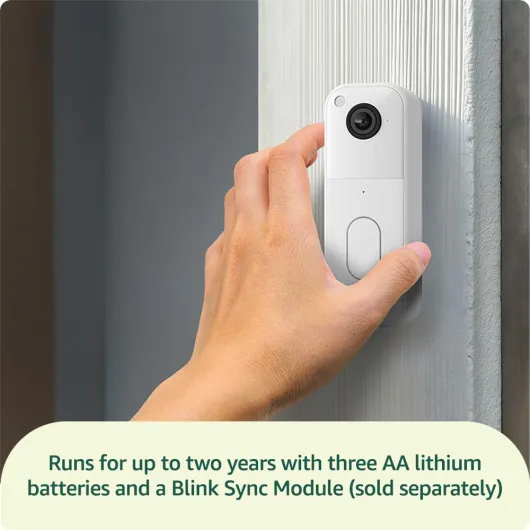
Weather, build, and long-term use
The Blink Video Doorbell is rated IP65, which basically means it’s protected against dust and low-pressure water jets. In normal language: it should handle rain, wind, and general outdoor grime without drama. My unit has already seen a few proper rainy days and some cold nights, and it hasn’t shown any issues so far. No fogging on the lens, no water getting into the button, and no random disconnects linked to weather.
The operating temperature range is -20°C to 45°C (-5°F to 113°F), which covers most climates except the really extreme ones. If you live somewhere that hits those extremes often, I’d expect battery life to dip in very cold weather, which is pretty standard for lithium cells. But the device itself should keep working. The plastic casing doesn’t feel premium, but it also doesn’t feel fragile. Once it’s mounted, there’s no flex or wobble, and the backplate holds it tight enough that you’re not constantly worried it will fall off when someone presses the button.
Blink also mentions software security updates for at least four years after the device is last sold new on their sites. That’s not forever, but it’s decent for a budget-friendly doorbell. It means you’re not buying something that’s going to be abandoned in a year. Given that this is the 2nd generation doorbell, I’d expect support to last a while. Obviously, if Blink ever shuts the servers or changes their policies, that could be a problem, but that’s true of most cloud-based cameras now.
Long-term, the main wear point is probably the button and the battery cover. The button has an LED ring and feels firm enough. It doesn’t feel like it will collapse after a year of kids hammering it, but only time will tell. For now, after regular daily presses, it still feels the same. Overall, durability seems decent for a plastic outdoor gadget. It’s not bombproof, but for normal home use in the rain and cold, I don’t see any big red flags so far.
Video, motion, and app: decent overall, with some lag
Let’s talk performance, because that’s what actually matters. The head-to-toe view is the part I noticed first. The 1:1 aspect ratio and 150° field of view do exactly what Blink claims: you can see people from top to bottom and you can see parcels left right under the door. Compared to older 16:9 cameras that cut people off at the chest, this is a real, practical improvement. For deliveries, it’s handy because you can confirm if a parcel is still there or if someone has grabbed it.
Video quality at 1440 x 1440p is good for this kind of device. It’s not cinema-level, but faces are easy to recognize during the day, and you can see enough detail (clothing, parcels, even small labels in decent light). At night, the infrared night vision is okay: people are clearly visible, but you do lose color and some detail, which is normal. If there’s a streetlight or a porch light, the image is quite usable. I wouldn’t rely on it to read a license plate at distance, but for basic security and knowing who’s there, it’s fine.
Motion detection is where things are a bit mixed. The camera does pick up people reliably once you tweak sensitivity and activity zones in the app. However, like one of the Amazon reviews said, notifications often arrive after the clip has basically finished recording. So by the time your phone buzzes and you open the app, the person has already walked away or is halfway down the path. You can still see what happened in the recording, but if your main goal is to catch the postie live and talk to them, the lag can be annoying. Some days it’s better, some days there’s a clear delay, which probably depends on your Wi‑Fi and the cloud too.
The app itself is simple. You get a timeline of clips, live view, and two-way talk. Two-way audio is usable: not crystal clear, but good enough to tell a courier where to leave a parcel. There is a slight delay, so don’t expect a perfectly natural conversation. With a Blink subscription, you also get person detection and some smarter alerts, which help reduce useless notifications, but again, it’s paid. Overall, performance is good enough for normal home use, but if you’re super picky about instant notifications and perfect audio, you might be a bit underwhelmed.
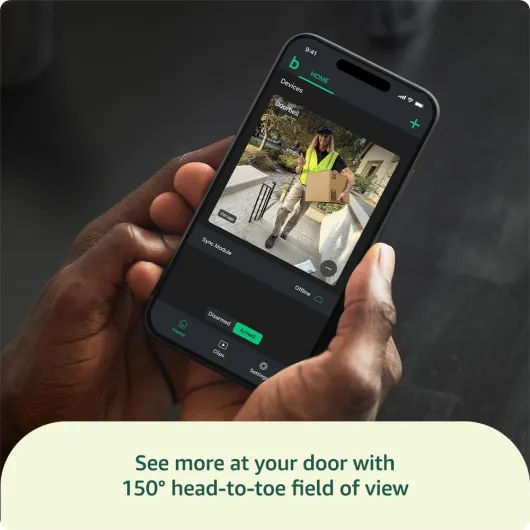
What you actually get (and what you don’t)
This specific product is the Blink Video Doorbell Add-on, which means it’s the doorbell only. No Sync Module in the box. You do get three AA Energizer lithium batteries and the basic mounting kit (screws, anchors, backplate), but that’s about it. So if this is your first Blink product and you accidentally buy the add-on instead of the bundle, you’re going to be frustrated. The doorbell technically can work in a limited way without the Sync Module, but the whole “two-year battery life” claim is tied to using it with the Sync Module, and the local-style features are basically not there without it.
Feature-wise, the pitch is simple: 1440x1440 head-to-toe HD video, 150° field of view, motion detection, two-way audio, and IP65 weather resistance. It talks to your Wi‑Fi at 2.4 GHz and then to the Blink app on your phone (iOS, Android, or Fire). It also hooks into Alexa, so you can get announcements on Echo devices or pull up the camera feed on an Echo Show. In practice, that part works quite well once set up, but there’s a bit of fiddling to get all the permissions right.
The cloud storage situation is where it gets a bit less friendly. You get a free 30-day trial of the Blink Plus subscription. After that, if you want to keep recordings in the cloud for up to 30 days, you have to pay. If you don’t want to pay, you’re basically stuck with live view and instant alerts, but no real history unless you manually download important clips during the trial or use a different Blink setup with local storage on older Sync Modules (this newer Core version is more cloud-focused). It’s not unique to Blink, but you should factor that monthly cost in your mental price.
Overall, the presentation is straightforward: it’s a battery-powered, Wi‑Fi video doorbell that leans on the Blink ecosystem and a subscription. Nothing fancy, but it covers the basics: see who’s at the door, talk to them, and record short clips when motion is detected. If that’s all you want, it’s fine. If you expect advanced AI features or free long-term storage, it’s not that kind of product.
Pros
- Head-to-toe 1440x1440 video makes it easy to see people and parcels at the door
- Very easy wireless installation and simple app, especially if you already have Blink
- Uses standard AA lithium batteries and works well with Alexa for door announcements
Cons
- Two-year battery life claim is optimistic; real-world life can be much shorter
- Notifications and two-way talk can have noticeable delay, making real-time interaction hit or miss
- Cloud storage and some advanced features require a paid subscription after the trial
Conclusion
Editor's rating
Overall, the Blink Video Doorbell Add-on is a solid, no-frills choice if you’re already in the Blink ecosystem and want a simple way to see who’s at your door. The head-to-toe view is genuinely useful, especially for parcels on the ground, and the video quality is good enough to clearly identify people in normal conditions. Setup is easy, the app is straightforward, and integration with Alexa works as advertised once everything is linked. For everyday stuff like checking on deliveries or seeing who rang while you were out, it gets the job done.
It’s not perfect, though. The two-year battery claim feels optimistic unless your front door is very quiet, and some users, plus my own experience, suggest you should expect something shorter in normal use. Notifications can be a bit slow, sometimes coming in after the clip is basically done, which is annoying if you want to catch people in real time. And the subscription model for cloud storage means the real cost isn’t just the device price. If you hate ongoing fees or want instant, super-responsive alerts, you might be happier with another brand or a wired solution.
So, who is this for? It’s a good fit if you already use Blink, want a wireless, easy-to-install doorbell, and you’re fine with “good enough” performance rather than perfection. If you’re starting from scratch and don’t care about Blink specifically, I’d say compare it with Ring and similar options before deciding. There’s better stuff out there if you’re willing to pay more and wire it in, but for a simple, battery-powered doorbell at a reasonable price, this one is a decent pick.