
Summary
Editor's rating
Is it worth the money compared to official Ring/Blink/Nest chimes?
Simple plastic bricks, but they blend in and do the job
Build quality and reliability over time
Performance: loud enough and instant… if your Wi‑Fi plays nice
What this thing actually is (and what it is NOT)
Does it actually solve the “I can’t hear my doorbell” problem?
Pros
- Two loud Wi‑Fi chimes in the box, good coverage across multiple floors
- Works reliably once connected, with clear LED flash and adjustable volume
- Brand‑agnostic approach can be reused if you switch between Ring/Blink/Nest
Cons
- 2.4 GHz Wi‑Fi only and setup can be fiddly with some routers
- Compatibility with certain Google Nest wired setups and some hubs is unclear or problematic
- Not a standalone doorbell; only extends existing smart doorbell alerts

Specifications
View full product page →| Brand | Satisure |
A Wi‑Fi doorbell chime that sounds great on paper
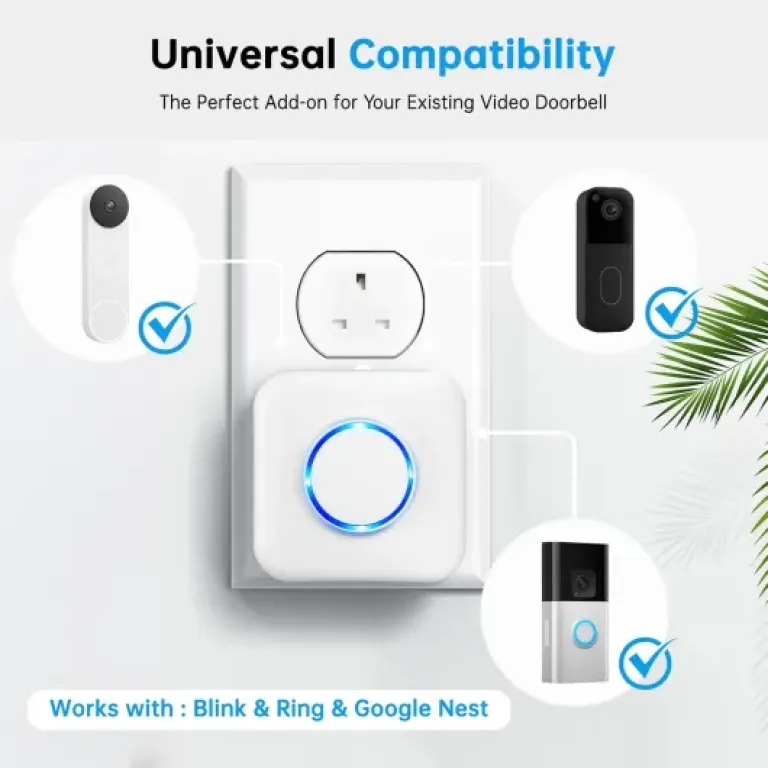
I picked up this Satisure Smart Wireless Doorbell Chime 2‑pack because my main issue at home was simple: I couldn’t hear my Ring doorbell from the back of the house. My old plug‑in chime was hit and miss with range, and I didn’t want to start running wires or buying more Ring‑branded stuff at higher prices. This one promised Wi‑Fi connection, compatibility with Ring/Blink/Google Nest, and two receivers in the box, so on paper it ticked a lot of boxes.
After a couple of weeks using it, I’d sum it up like this: when it connects properly, it does the job and solves the basic problem of “I don’t hear the doorbell”. The signal over Wi‑Fi is solid once set up, and the sound is loud enough to cut through TV noise and kids. But there’s one big condition: you need to have the right kind of Wi‑Fi (2.4 GHz only) and you need a bit of patience for the setup. If you expect it to just work with any router or every version of Nest/Ring without checking, you might be in for a headache.
What pushed me to try this instead of another Ring chime was the price and the promise that you can link up to 99 units over your Wi‑Fi. I only needed two, but I liked the idea that I could add more later if I wanted one in the garage or attic. Also, I already use SmartLife and Alexa at home, so I figured integration would be straightforward. In practice, it’s mostly true, but not as smooth as the product page suggests.
So overall, this is not some miracle gadget, but it’s a pretty practical little box if your expectations are realistic. It’s a Wi‑Fi extender for your doorbell sound, not a full doorbell system, not a camera, and definitely not a magic fix if your network is a mess. I’ll walk through where it works well, where it’s a bit annoying, and whether it’s worth the money compared to just buying the official chimes from Ring, Blink, or Nest.
Is it worth the money compared to official Ring/Blink/Nest chimes?
On value, I look at two things: what you pay versus what you get, and what the alternatives cost. With this Satisure pack, you get two Wi‑Fi chimes in the box. If you compare that to buying two official Ring or Nest chimes, you’re usually paying quite a bit more for the brand name, even if their integration is cleaner. So if your main goal is simply “I want loud chimes in two parts of my house without running wires”, this comes out pretty good on the price side.
Where you “pay” in a different way is in time and hassle. Because it’s not made by Ring, Blink, or Google, you sometimes have to jump through hoops: SmartLife app, maybe Alexa or Google Home routines, making sure your Wi‑Fi is 2.4 GHz, etc. If you’re not techy, that setup time has a cost too. For some people, it’s worth just buying the official chime and skipping the headache. For others who are used to mixing brands in their smart home, this Satisure option is a decent way to save money and still get the functionality.
Another thing in its favour is that it’s brand‑agnostic. If you ever decide to switch from Ring to Blink or Nest, you’re not stuck with a chime that only talks to one ecosystem. With some tweaking, you can usually keep using these receivers via SmartLife and your voice assistant routines. That’s not perfect, but it does mean you’re not throwing it away just because you swapped doorbell brands. From a long‑term value perspective, that flexibility is handy.
Overall, I’d say the value is good if you understand what you’re buying: a generic Wi‑Fi chime extender that might need a bit more setup work than an official accessory. If you’re expecting premium build, perfect first‑try compatibility with every hub, and zero fiddling, then the price might feel less attractive when you’re fighting with your router. But taken for what it is—a budget‑friendly way to get multiple loud chimes around the house—it’s pretty solid.
Simple plastic bricks, but they blend in and do the job
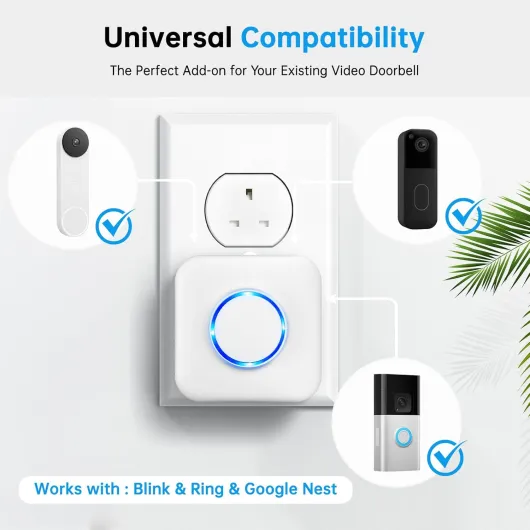
Design‑wise, these are pretty basic, which is not a bad thing. Each receiver is a small white square block, about 8 x 8 cm, so roughly palm‑sized. They’re not thin, but they’re not massive either. Once plugged into a socket, they stick out a bit but don’t dominate the room. They look like a typical Wi‑Fi extender or air freshener plug‑in, so they don’t scream “tech toy”. For a hallway, kitchen, or landing, they’re neutral enough to just disappear into the background.
The front has a circular LED indicator that lights up when someone presses the doorbell. It’s bright enough to notice in daylight and very obvious in the dark, which is helpful if you’re hard of hearing or you just want a visual cue while you’re listening to music or wearing headphones. On the side, there are small buttons to change the sound and volume. They’re a bit fiddly, but once you’ve set your preferred chime and volume, you’re not going to touch them often anyway.
One thing to note: they block one full socket. Because they’re square and not super compact, if you have a double wall socket and a chunky plug in the other side (like a big power brick), it can get cramped. In my case, I ended up moving one to a different outlet because it was fighting with the washing machine plug. So plan where you’re going to plug them in, especially in tight spaces like behind a TV or next to kitchen appliances.
There’s no mounting option, no screws, no adhesive pads. They’re clearly intended to just plug into a wall and stay there. If you were hoping to mount them higher up or hide them in a corner, you’re out of luck unless you use an extension lead, which looks messy. But overall, the design is straightforward: plain white plastic, no nonsense, and visually pretty discreet. Not pretty, not ugly, just practical.
Build quality and reliability over time
On durability, there isn’t a lot to dissect because it’s a very simple device: no moving parts, no battery, no outdoor exposure. It’s just a plastic shell with electronics inside that sits in your wall socket. In my couple of weeks using it daily, it hasn’t shown any signs of overheating, buzzing, or random resets. The plastic doesn’t feel premium, but it doesn’t feel flimsy either. It’s the same type of shell you see on cheap Wi‑Fi extenders or smart plugs.
The main durability question with these kinds of products is usually connection stability over time. If it keeps dropping Wi‑Fi and needing to be re‑paired, it becomes useless fast. So far, it has stayed connected through router reboots and power cuts. When I unplugged one unit to move it to another room, it reconnected on its own in under a minute without me having to redo the setup. That’s a good sign. Obviously I can’t speak for years of use, but nothing so far suggests weak hardware.
Heat is another thing I checked, because some cheap plug‑in electronics run hot. After several long days with multiple doorbell presses (kids love pressing it), the body was only slightly warm to the touch, nothing worrying. It’s designed for indoor use only, and I would stick to that. I wouldn’t put it in a damp garage or near a steamy bathroom outlet, because the casing doesn’t look sealed in any way.
Given the price point and the fact it’s made in China like most of these gadgets, I wouldn’t expect it to last forever, but for a basic chime extender that just sits in a socket, I don’t see any obvious weak spot. The bigger risk is more on the software side: if SmartLife or some integration changes in the future, you might need to tweak your setup. But physically, it feels like it will happily sit there and do its thing for a good while as long as your Wi‑Fi and power are stable.
Performance: loud enough and instant… if your Wi‑Fi plays nice
On performance, I’ll split it in two parts: once it’s connected, and getting it connected in the first place. Once it was actually paired with my Wi‑Fi and linked to my Ring, it worked well. The chime triggers almost instantly when someone presses the doorbell. There’s maybe a tiny delay of half a second compared to the Ring app notification on my phone, but nothing that matters in real life. I tried pressing the doorbell from different spots (front gate, directly at the door, etc.) and the chime fired every time.
Coverage‑wise, using Wi‑Fi instead of radio means that as long as your Wi‑Fi signal reaches the room, the chime works. In my house, one unit is downstairs near the kitchen and the other is upstairs in the hallway. Both get good Wi‑Fi, and both ring reliably, even when the router is handling streaming and other devices. I didn’t notice any missed presses or random disconnects once everything was set up. That part is solid and better than the cheap RF plug‑in chimes I’ve used before that sometimes dropped signal through thick walls.
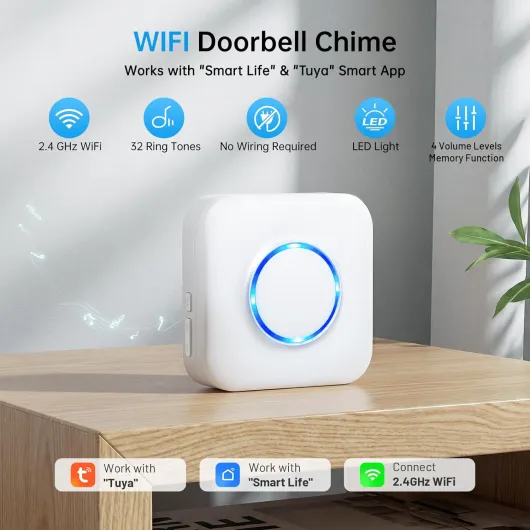
Now, the annoying bit: setup and compatibility. This thing is 2.4 GHz Wi‑Fi only. If your router merges 2.4 and 5 GHz into one network name and doesn’t let you split them, you may have issues. One Amazon review straight up said it wasn’t compatible with their home hub, and I can see how that happens. I had to temporarily force my router into 2.4 GHz only mode to get both units added through the SmartLife app, then switch the router back to normal. Not hard if you’re used to router settings, but if you’re not, it’s a pain.
Also, the “compatible with Ring, Blink, Google Nest” claim is a bit optimistic. With Ring and Blink, you can usually get it to work either via SmartLife integration or through Alexa routines. With some Nest setups, especially wired ones, it’s more hit and miss, and a few people flat out couldn’t get them to talk to each other. So performance is good once everything is linked, but the path to get there depends a lot on your specific gear and how comfortable you are with smart home apps. It’s not plug in and forget for everyone, despite what the listing suggests.
What this thing actually is (and what it is NOT)
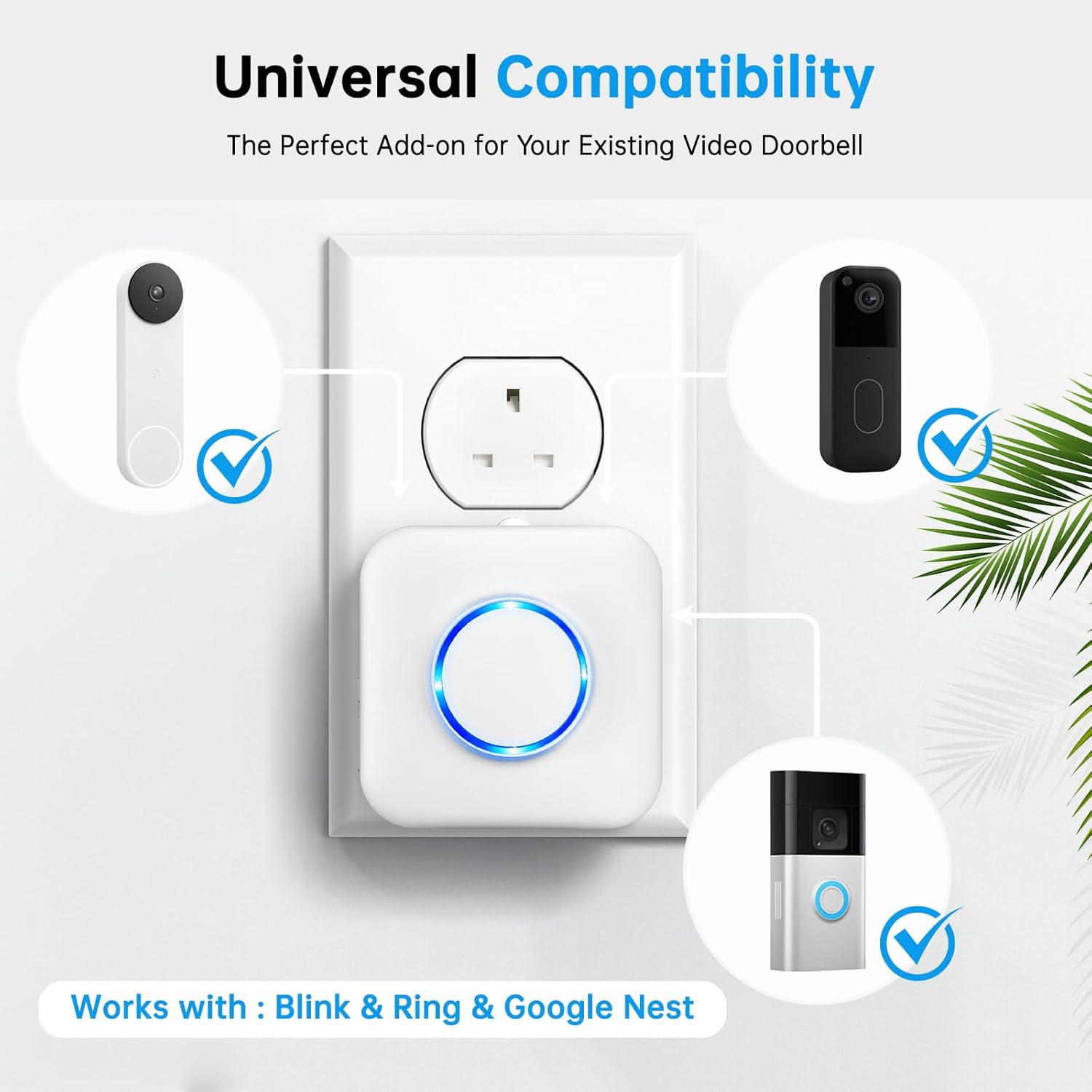
Let’s clear up the biggest confusion first: this Satisure device is basically a Wi‑Fi doorbell chime extender, not a complete doorbell. You don’t get a button, you don’t get a camera, you don’t get a video feed. It’s just the receiver side: it listens to your smart doorbell through Wi‑Fi and plays a sound when someone presses the doorbell. So if you don’t already have a Ring, Blink, or Google Nest doorbell (or another compatible one via SmartLife), this on its own is useless.
The box I received had two identical white plug‑in receivers. No batteries, no mounting kit, nothing fancy, just two units that go straight into a wall socket. Each receiver has a big LED ring on the front that lights up when it chimes, and buttons on the side to change the chime and volume. There’s no video, no microphone, no speakerphone conversation, just a chime and a flashing light.
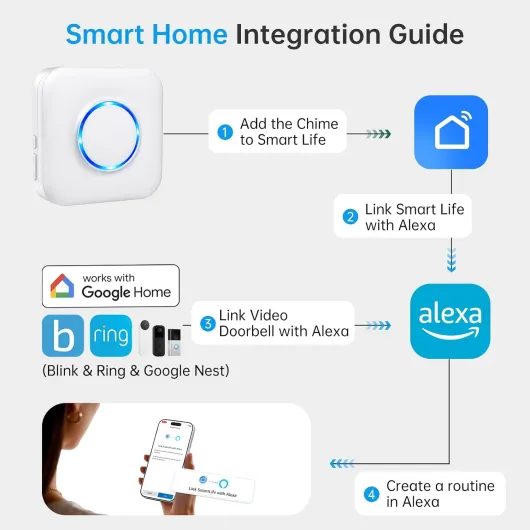
In terms of how it works in practice, you connect each receiver to your 2.4 GHz Wi‑Fi via the SmartLife app. Then you link it to your existing smart doorbell (Ring, Blink, Nest, or through Alexa/Google Home routines depending on your setup). Once that’s done, whenever the doorbell is pressed, the Satisure chimes ring and the light flashes. It’s basically replacing or extending the original doorbell sound you might already have on your phone or on the brand’s own chime.
Where a few Amazon reviewers got annoyed is that the product page makes it sound like it plugs directly into every version of Ring or Google Nest with zero fuss. In reality, it depends a lot on how your system is set up. Some people with certain Nest wired models or dual‑band routers struggled to get it to talk to their doorbell at all. So if you’re expecting a no‑brainer, plug‑and‑forget device, that’s not always the case. But if you’re used to SmartLife or basic smart home setups, it’s manageable, just not magic.
Does it actually solve the “I can’t hear my doorbell” problem?
In day‑to‑day use, the key question is simple: do I still miss people at the door? With this Satisure setup, the honest answer for me is: no, not anymore. With two chimes placed on different floors, I can hear the doorbell in pretty much every room. Before, when I only had phone notifications and the original Ring chime in the hallway, I’d miss deliveries if I was in the garden or had the extractor fan and TV going. Now, even with background noise, the 110 dB max volume is loud enough that you notice it.
You get 32 different chimes, but realistically I tried about 10 and then settled on one simple tone. Some of them are a bit cheesy or annoying, but that’s the same story with most cheap doorbell chimes. The handy part is the 4 volume levels. I ended up setting the downstairs one fairly loud and the upstairs one one step lower so it doesn’t blast at night. This flexibility is what actually makes it effective: you can tune each receiver to the room it’s in instead of using the same volume everywhere.
The LED flash is also more useful than I expected. In the kitchen, with the cooker hood and radio on, sometimes I notice the light before I register the sound. For someone with partial hearing loss, this could be a real bonus. It’s not a full accessibility solution, but it’s a nice extra cue. So in terms of pure functionality, it does what it’s supposed to do: it repeats your doorbell alert clearly and reliably throughout the house.
Where it’s less effective is for people who thought it would replace a chime that doesn’t exist. A few reviewers clearly expected it to act as a direct Nest chime without extra setup or to work without any existing chime or integration. That’s not how it’s built. It extends what you already have. If you know that going in and you’re fine using SmartLife/Alexa/Google, it’s a pretty solid fix for missed door knocks. If you want “plug into Nest and done”, you may be disappointed.
Pros
- Two loud Wi‑Fi chimes in the box, good coverage across multiple floors
- Works reliably once connected, with clear LED flash and adjustable volume
- Brand‑agnostic approach can be reused if you switch between Ring/Blink/Nest
Cons
- 2.4 GHz Wi‑Fi only and setup can be fiddly with some routers
- Compatibility with certain Google Nest wired setups and some hubs is unclear or problematic
- Not a standalone doorbell; only extends existing smart doorbell alerts
Conclusion
Editor's rating
After using the Satisure Smart Wireless Doorbell Chime 2‑pack for a while, my overall take is that it’s a decent, practical solution if your main problem is not hearing your Ring/Blink/Nest doorbell in every room. Once it’s set up properly on a 2.4 GHz Wi‑Fi network, it works reliably: the sound is loud, the LED flash is clear, and the coverage across floors using Wi‑Fi is better than the cheap RF chimes I’ve tried before. The design is basic but neutral, and having two receivers in the box makes it easier to cover a whole house without spending too much.
That said, it’s not perfect. The big caveats are compatibility and setup. It doesn’t play nicely with every router or every Nest configuration, and the product page glosses over that. If your router doesn’t let you separate 2.4 and 5 GHz, or if you’re allergic to smart home apps and routines, you might get frustrated quickly. Some reviewers clearly expected a simple “plug in and it just works with Nest or Ring” experience and didn’t get that. In reality, it’s more like a smart home accessory that needs a bit of tinkering.
I’d recommend this mainly to people who are already using SmartLife, Alexa, or Google Home and are comfortable poking around Wi‑Fi settings. For them, it offers good value and does the job well once configured. If you’re not into tech, or you’re using a wired Google Nest doorbell and want guaranteed direct compatibility, I’d lean toward the official chimes from your doorbell brand instead, even if they cost more. This Satisure chime is a solid budget extender, but not a magic plug‑and‑play fix for every setup.